A C6 that bangs into gear or slams every upshift is usually telling you one thing: line pressure is higher than it should be for the load the engine is under. The C6 is a three-speed with no computer. Ford's technician course describes one band, three disc clutches and a one-way clutch, controlled by a hydraulic system that reads engine load through a vacuum modulator [1]. When that load signal is wrong, or the valves that shape each shift are worn or stuck, the shift gets harsh.
The good news is that most harsh-shifting C6 units are fixed outside the case. Short version: check idle speed and the vacuum supply to the modulator first, then the modulator itself, the kickdown linkage and the fluid type, then pressure test before you touch the valve body. Ford built its own diagnosis charts around exactly these complaints, with separate charts for rough initial engagement, rough 1-2, rough 2-3 and rough 3-1 at closed throttle [1]. Sources are numbered and listed at the bottom.
Why a C6 shifts hard: the pressure logic
On a C6, line pressure rises as manifold vacuum falls. High vacuum at light throttle keeps pressure and shifts soft; near-zero vacuum at wide open throttle lets the modulator spring push pressure up so the clutches and band hold full torque. Ford's pressure test reflects this: control pressure is recorded in every range at above 18 in. Hg, at 10 in. Hg and at closed throttle, with a hand vacuum pump on the modulator to simulate load [1].
So anything that makes the modulator think the engine is loaded when it is not gives you full-throttle pressure on a part-throttle shift: a disconnected hose, a plugged line, a vacuum source that bleeds down, a big-cam engine with low idle vacuum, or the wrong modulator.
The other half of shift feel is timing and cushion. The C6 valve body has a 1-2 accumulator, a servo regulator, a 2-3 backout valve and a coasting valve that shape how quickly each element applies and releases. TransGo's C6 valve body layout labels every one of them [5]. When those springs fatigue or the valves stick in varnish, you get harsh shifts even with correct pressure.
Match the complaint to the cause
| Complaint | Check first | Then suspect |
|---|---|---|
| Harsh engagement into D or R | Idle speed, modulator vacuum at idle | High line pressure, wrong modulator, manual linkage |
| Every upshift firm or harsh | Vacuum hose and source, modulator | Pressure regulator spring, boost valve, fluid type |
| Harsh 1-2 only | Vacuum at light throttle | 1-2 accumulator springs, servo and apply lever combination |
| Harsh or bind-up 2-3 | Band adjustment, line pressure | Servo regulator, 2-3 backout valve, stuck valve |
| Clunk on 3-1 coastdown in D | Idle speed, closed-throttle pressure | Coasting and downshift valves, governor |
| Harsh forced downshift | Kickdown rod or cable adjustment | Downshift valve, high line pressure |
Step 1: Engine idle speed
This is step two on Ford's own diagnosis form, right after the fluid level: record the actual engine idle rpm against spec before you do anything else [1]. A C6 behind an engine idling 200 rpm fast will clunk into Drive and Reverse every time. Set the idle to the underhood or shop manual spec with the engine warm before you judge engagement quality.
Also rule out the driveline. Loose engine or transmission mounts, worn U-joints or axle backlash turn a normal engagement into a clunk.
Step 2: Vacuum supply to the modulator
TransGo's C6 instructions give two checks for gas engines that take five minutes and no gauges [5]:
- Hose check. With the engine idling, pull the hose off the modulator. The engine must speed up or idle rough. If it does not, the hose is on the wrong outlet or the line is plugged or pinched with debris or carbon. No vacuum means maximum pressure all the time.
- Trapped vacuum check. Start the engine in Park, shut it off, wait until it has completely stopped, count to five and pull the hose off the modulator while listening. If trapped vacuum escapes, the main vacuum hose is sucked shut or carboned, the brake booster check valve is bad, or a vacuum reserve canister is on the same firewall tree. TransGo's fix is to run the modulator line directly to the manifold.
- Sonnax, C6 Boost Valve Kit 36946-04K. Backs poor line rise, erratic shift timing, reverse shudder and direct clutch failure caused by wear at the inside diameter of the boost sleeve. sonnax.com
Better still, tee a vacuum gauge in and drive it: vacuum should drop smoothly with throttle and rise when you lift. B&M's C6 installation instructions list connecting the modulator to manifold vacuum as a required step on any unit with an automatic valve body [6], and a truck with a performance cam may not make enough vacuum at idle and light throttle to pull the modulator down at all.
Diesel C6 units
Diesels do not make manifold vacuum, so the C6 behind a diesel gets vacuum from a pump through a throttle-controlled vacuum regulator. TransGo calls diesel modulator adjustment "fussy" and gives the numbers [5]:
- Supply side of the regulator: 20-25 in. of steady vacuum.
- Normal readings at the modulator: 14-17 in. at closed throttle, less than 5 in. at wide open throttle. Vacuum drops as throttle increases and only rises when the throttle is lifted.
- Adjust hot, because heat affects regulator function; TransGo's target is 17 in., moved no more than a pencil-line width at a time.
- Use only the green stripe adjustable modulator. With 15 in. of vacuum applied, set the pin to stick out 0.675 in.
Step 3: The modulator itself
Pull the modulator and check three things. First, the vacuum side should be dry. ATF in the vacuum port means a ruptured diaphragm, and the engine is burning transmission fluid. Second, test it with a hand vacuum pump. It should hold vacuum without bleeding down. Third, make sure it is the right modulator. A heavy-duty or diesel unit on a light gas truck, or an adjustable modulator a previous owner cranked up, gives firm shifts at every throttle position.
Step 4: Kickdown linkage and manual linkage
The C6 kickdown rod or cable forces downshifts. It does not set line pressure the way a throttle valve cable does on some other units, but a misadjusted rod gives harsh or badly timed forced downshifts, and B&M warns that failing to adjust the kickdown linkage to factory specs can damage the transmission [6]. TransGo's setting for gas engines: adjust until there is no 3-1 kickdown at 30 mph, then adjust back until you can just get a 3-1 kickdown at 30. For diesels the reference is a 3-2 kickdown at 20 mph [5].
Check the manual linkage too. With the transmission and shifter both in neutral, B&M says there should be no tension on the shift lever when the linkage is connected [6]. A linkage that holds the manual valve partly out of detent can cause harsh engagements and erratic shifts. Ford gives manual linkage its own lesson in the diagnosis course, alongside the accelerator and downshift linkages and engine idle [1].
Step 5: Fluid type and condition
The C6 ran for 30 years across two fluid eras. Early units call for Type F, which has no friction modifier. Later units call for the Ford friction-modified spec, which today means MERCON V. Type F in a unit built for friction-modified fluid shifts noticeably firmer, and some owners add it on purpose for that reason. If your truck shifts harder since the last service, check what went in. Our C6 fluid type and capacity guide explains how to read the dipstick stamp. Check the level hot, because an overfilled unit aerates and pressure goes erratic.
Varnished fluid makes valves stick, and a stuck accumulator or servo regulator valve gives harsh shifts even with correct pressure. See the C6 filter and pan service.
Step 6: Pressure test
If idle, vacuum, the modulator, the linkages and the fluid all check out, put a gauge on the control pressure port. Record pressure in P, N, D, 2, 1 and R at above 18 in. Hg, at 10 in. Hg and at closed throttle, and compare with the chart for your year and engine [1]. Ford changed specs across the C6's run and between gas and diesel units, so use the right chart.
- High at idle (high vacuum) in all ranges. The modulator is not reducing pressure, or the base pressure is too high. Sonnax lists "high line pressure" as a C6 symptom and names aftermarket pressure regulator springs with higher spring rates as a cause. Its own 36946-13 spring is calibrated to OE gas line pressure and adds only about 10 psi over OE baseline [4]. A rebuild that went in with a heavy "shift kit" spring will feel harsh everywhere.
- Correct at idle, too high at part throttle. Vacuum signal again.
- Pressure correct, shifts still harsh. Now it is shift timing and cushion inside the valve body.
For diesels TransGo gives a ceiling: at maximum throttle in D at 28 mph, line pressure must not exceed 138 psi [5].
Valve body and servo causes
Harsh 1-2
The C6 1-2 shift is the intermediate band applying, and the 1-2 accumulator controls how fast it squeezes. Sonnax attributes poor 1-2 quality to fatigue and failure of the 1-2 accumulator valve springs and sells a replacement set, 36946-05K, with five outer and five inner springs [3]. The same Sonnax listing ties the problem to burnt intermediate bands [3]. TransGo's kit shows how sensitive this spring stack is: all three accumulator springs gives a short, smooth 1-2, outer and middle gives shorter and firmer, and outer only gives a firm shift, which TransGo states is not intended for hot rod shifts [5]. If someone has removed springs from that bore, you will feel it.
Servo and apply lever combinations matter too. Sonnax lists several C6 servo apply levers and an R ratio servo kit [2]; an aggressive lever on a large servo clamps the band harder and faster than stock.
Harsh or bind-up 2-3
The 2-3 shift is a handoff: the intermediate band releases as the reverse-high clutch applies. If the band releases late, both are on at once for an instant and the truck bucks. A band adjusted too tight can drag on release, so recheck it with TransGo's method: snug the screw until the driveshaft will not turn backwards by hand (wheels off the ground, neutral, engine off), back out until it just turns, then back out another 1/4 turn and lock it [5]. After that, the servo regulator and 2-3 backout valve in the valve body control the overlap. A sticking backout valve is a valve body cleaning or replacement job.
Rough 3-1 at closed throttle
Ford gave this complaint its own diagnosis chart [1]. A clunk usually traces to a high idle, high closed-throttle pressure from a poor vacuum signal, or a sticking coasting or downshift valve. Check the first two before you pull the valve body.
When to replace the valve body
A C6 valve body with worn bores, sticking valves or springs of unknown origin is often cheaper to replace than to chase. Sonnax notes that wear in the boost valve sleeve of the clicker-style valve body causes erratic shift timing and poor line rise [2], and on later units its 36946-04K kit page traces the same symptom, plus reverse shudder and direct clutch failure, to wear on the inside of the boost sleeve that lets oil leak past the valve to exhaust [7]. Our C6 valve body symptoms and testing guide covers how to pressure test and vacuum test those bores before you decide. When it goes back in, use a new gasket, torque the valve body bolts to spec rather than by feel (TransGo lists 25-35 and 40-50 in-lb depending on bolt), and make sure the pan bottom does not press against the filter opening [5]. For the full list of common C6 failures, see our C6 common problems guide, and if the unit also flares or slips, work through C6 slipping causes and fix.
Shop the part for this fix: C6 valve body
Worn bores, varnished valves or a spring stack someone already butchered? CoreTransmissionParts stocks a complete C6 valve body for 1966-1996 units.
View the C6 valve body at CoreTransmissionPartsReusing your valve body? Pick up the 1967-1996 C6 valve body gasket (D6AZ-7D100-A) for the reassembly.
Need parts for this job?
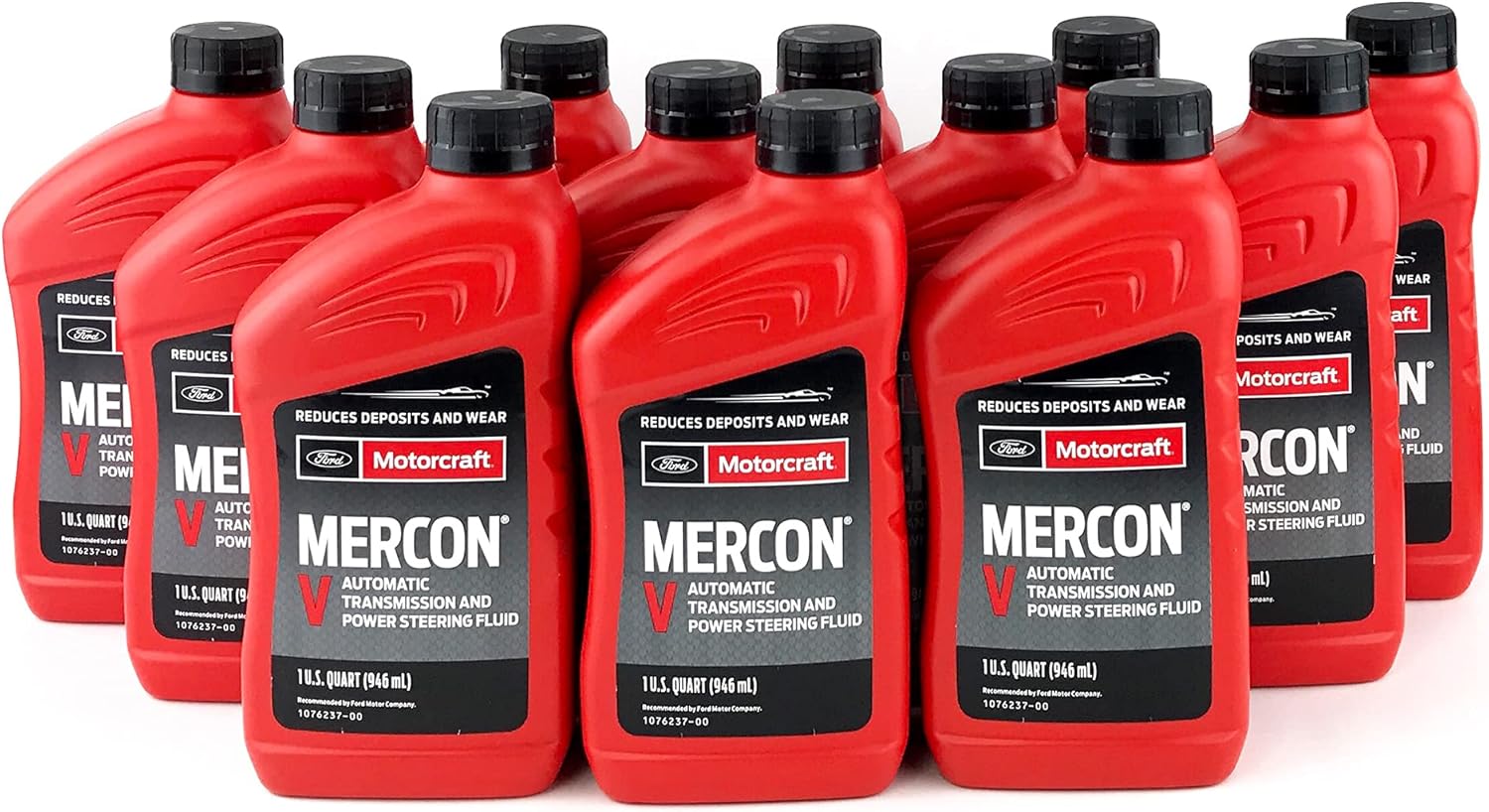
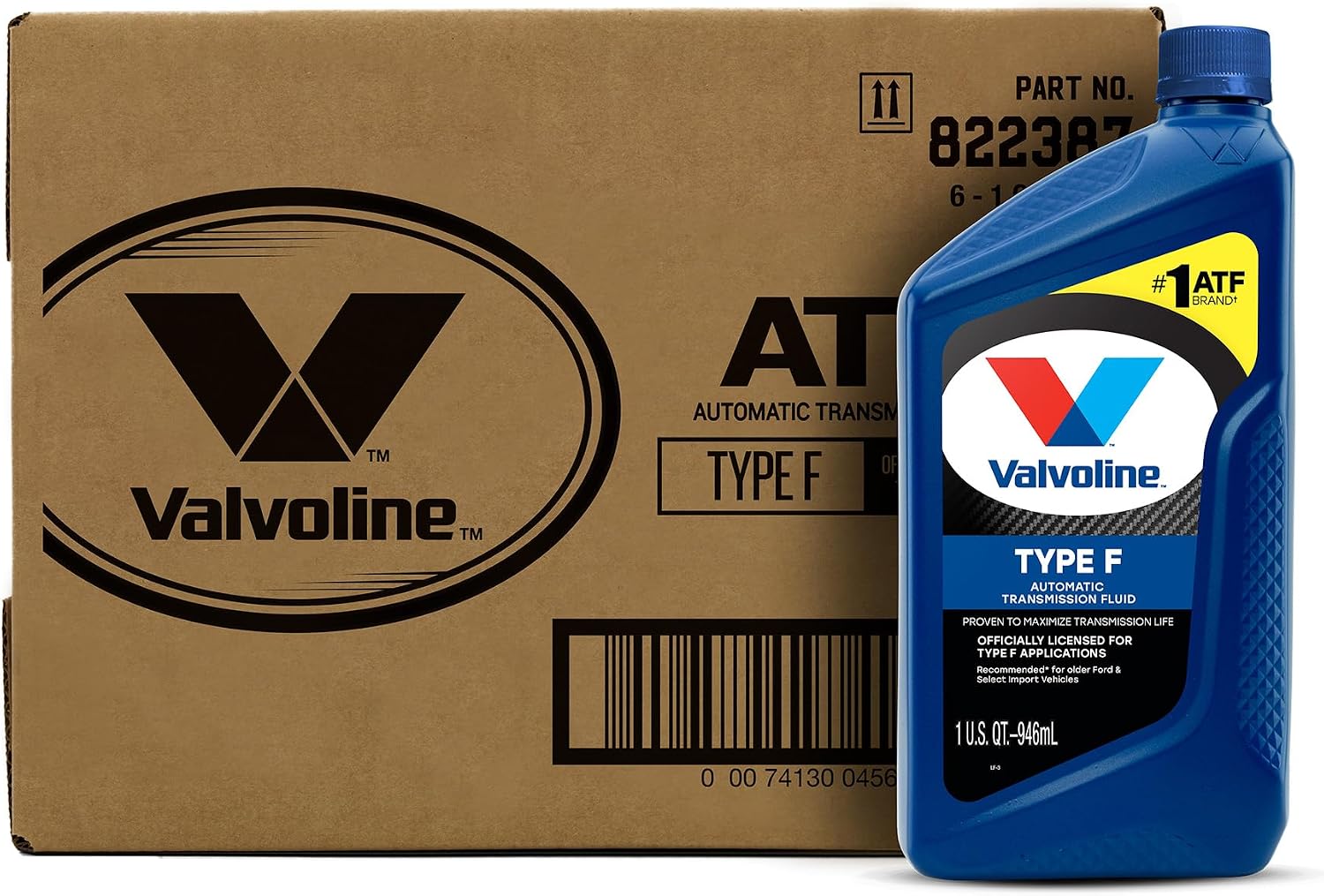
Our parts shop carries C6 valve bodies, plus Motorcraft MERCON V and Valvoline Type F for the refill, all on our own checkout. Check the stamp on your dipstick before you order fluid. For every Ford fluid spec side by side, see our transmission fluid spec chart.
FAQ
Why does my C6 shift so hard all of a sudden?
A sudden change almost always means the modulator lost its vacuum signal. A cracked or disconnected hose, a line plugged with carbon or a ruptured diaphragm sends line pressure to its maximum, so every shift feels like wide open throttle. Pull the hose at idle; the engine should stumble or speed up if the line is good.
Can the wrong fluid make a C6 shift harsh?
Yes. Type F has no friction modifier, so it gives firmer shifts than MERCON V in a unit built for friction-modified fluid. Check the dipstick stamp and use the fluid the case calls for.
Will adjusting the modulator soften C6 shifts?
If it is an adjustable modulator and the vacuum supply is good, backing it off lowers pressure and softens shifts. Go in small steps; too little pressure lets the band and clutches slip. On diesels, set the modulator with a vacuum pump to TransGo's pin spec rather than by feel.
What causes a harsh 1-2 shift but normal 2-3 on a C6?
The 1-2 is the intermediate band applying, cushioned by the 1-2 accumulator. Fatigued or missing accumulator springs are the usual cause, and Sonnax sells a replacement spring kit for exactly that complaint.
Related guides
Sources
- Ford Motor Company, The C6 Automatic Transmission, technician training book (Forel Publishing reprint, sample pages), including the Automatic Transmission Diagnosis Guide FD-1863-AT. Backs the one band / three disc clutches / one-way clutch layout, engine idle rpm as step two of the diagnosis form, the accelerator, downshift and manual linkage and engine idle lessons, the control pressure test by range at above 18 in., 10 in. and closed-throttle vacuum with a vacuum pump, and the diagnosis charts for rough initial engagement, rough 1-2, rough 2-3 and rough 3-1 at closed throttle. forelpublishing.com (PDF)
- Sonnax, Ford C6 unit page. Backs high line pressure and poor shift quality as listed C6 symptoms, the servo apply levers and R ratio servo kit, and the boost valve kits for worn boost sleeves causing erratic shift timing and poor line rise. sonnax.com
- Sonnax, C6 1-2 Accumulator Valve Spring Kit 36946-05K. Backs poor 1-2 quality and burnt intermediate band caused by fatigue and failure of the 1-2 accumulator valve springs, and the five outer / five inner spring contents. sonnax.com
- Sonnax, C6 Elevated Pressure Main Pressure Regulator Spring 36946-13. Backs high line pressure from aftermarket springs with higher spring rates, and the roughly 10 psi over OE baseline calibration to OE gas line pressure. sonnax.com
- TransGo, SK C6 Shift Kit installation instructions (2011). Backs the C6 valve body layout (1-2 accumulator, servo regulator, 2-3 backout, coasting valves), the 1-2 firmness spring selection, the gas vacuum hose and trapped-vacuum checks, the diesel vacuum regulator readings (20-25 in. supply, 14-17 in. closed throttle, under 5 in. WOT, 17 in. adjustment), the green stripe modulator and 0.675 in. pin setting, the 138 psi diesel limit at 28 mph, the kickdown and band adjustments, and the valve body bolt torques. TransGo SK C6 instructions (PDF)
- B&M (Holley), installation instructions for B&M transmissions replacing the Ford C6 (114202/114203). Backs the required modulator connection to manifold vacuum on automatic valve bodies, the kickdown linkage adjustment warning and the no-tension manual linkage check. documents.holley.com (PDF)