People ask for "C6 gear ratios" for two reasons. Either they are matching a C6 to a rear axle and tire size and want to know where the engine will sit on the highway, or they are rebuilding one and want the numbers that matter on the bench: line pressure, servo lever ratio, band adjustment. This page covers both. The C6 is simple enough that the whole spec sheet fits on one screen, and because it has no computer, the specs are the whole story. What the hydraulics are built to do is what the truck does.
The unit is a three-speed built around a compound planetary gear train controlled by one band, three disc clutches and a one-way clutch, with a hydraulic control system and a vacuum modulator doing the job a computer does today [1]. Ford put it into production in 1966 behind the FE and big-block engines, and it stayed in trucks until 1996 [2][3]. Sources are numbered and listed at the bottom.
Ford C6 gear ratios
Every C6, gas or diesel, car or truck, 2WD or 4x4, uses the same gear ratios. There was no wide-ratio or close-ratio factory version the way there was for some GM units. CarTech's C6 rebuild guide lists them as [2], and TCI's OEM ratio table gives the same 2.46, 1.46 and 1.00 forward ratios for the stock C6 [7]:
| Range | Ratio | What applies |
|---|---|---|
| First (D or 1) | 2.46:1 | Forward clutch + one-way clutch (D); forward clutch + low-reverse clutch (manual 1) |
| Second | 1.46:1 | Forward clutch + intermediate band |
| Third | 1.00:1 (direct) | Forward clutch + reverse-high clutch |
| Reverse | 2.175:1 (often rounded to 2.18) | Reverse-high clutch + low-reverse clutch |
Those are the same ratios the smaller C4 uses. CarTech describes the C6 as "virtually the same internally" as the C4, just scaled up for heavy-duty use [3]. The one big difference is that the C6 holds reverse and manual low with a multi-disc low-reverse clutch where the C4 uses a band and drum; Ford's own C6 training handbook describes the unit as one band, three clutches and a one-way clutch [1]. That low-reverse clutch is a big reason the C6 survives behind a 460 pulling a trailer and the C4 does not.
A few things about this ratio set that matter in practice:
- There is no overdrive. Third is 1:1, so the axle ratio is the final drive at cruise. Ford's own training book pointed out that with a numerically low "high-speed" axle, the C6 turned about the same cruise rpm as an overdrive unit [1]. That was true in 1970 with a 2.75 axle in a car. It is not true in a truck with 4.10s.
- The 1-2 step is big. 2.46 divided by 1.46 is 1.68, so on a full-throttle 1-2 shift engine speed drops by about 40 percent. Shift at 4,000 rpm and the engine lands near 2,370 rpm in second. The 2-3 step is 1.46, so a 4,000 rpm 2-3 shift lands around 2,740 rpm.
- Reverse is taller than first. At 2.175:1, reverse gives less reduction than first gear. Backing a loaded trailer up a grade leans hard on the converter and the reverse clutches, which is one reason towing C6s come in with burned reverse-high frictions.
Overall ratios with common axle gears
Multiply the transmission ratio by the axle ratio to get the overall reduction at the wheels. For engine speed at a given road speed, the standard formula is: rpm = mph x transmission ratio x axle ratio x 336 / tire diameter in inches. The table uses a 31 in. tire, which is close to a stock 235/85R16 or 265/75R16 on a 1980s-1990s F-Series. Converter slip adds a little at light throttle; these are locked-coupling numbers.
| Axle ratio | 1st overall | 2nd overall | Reverse overall | Engine rpm at 60 mph in 3rd (31 in. tire) |
|---|---|---|---|---|
| 3.00 | 7.38 | 4.38 | 6.53 | about 1,950 |
| 3.55 | 8.73 | 5.18 | 7.72 | about 2,310 |
| 4.10 | 10.09 | 5.99 | 8.92 | about 2,670 |
Run the same formula backwards to see how far each gear pulls. With 3.55 gears and a 31 in. tire, first gear tops out around 42 mph at 4,000 rpm and second around 71 mph. That lines up with what Ford published for the forced downshift limits: a floored kickdown to first is possible up to about 48 mph and a kickdown to second up to about 90 mph, depending on engine, axle ratio and tire size [1].
If you are putting a C6 behind a bigger tire, redo the math before you buy gears. Going from a 31 in. to a 35 in. tire on 3.55s is the same as dropping to about a 3.15 axle, which is enough that a heavy truck will start and stay in second too long on hills, heat the fluid and wear the intermediate band. The usual cure is regearing the axles, not tuning the transmission.
Shift points and how the C6 decides to shift
With no computer, shift timing comes from three hydraulic signals: governor pressure (road speed), modulator-controlled throttle pressure (engine vacuum, which stands in for load), and the kickdown rod from the throttle linkage. Ford's training handbook gives the factory behavior [1]:
- In D, the unit starts in first and upshifts to second and third as road speed rises. With the throttle closed, it downshifts from third to first at about 10 mph.
- In 2, the car is held in second. There is no upshift and no downshift.
- In 1, it starts in first with no upshift. Move the lever from D to 2 while in third and it drops to second and stays there down to about 25 mph, then downshifts to first.
- Up to full throttle, a "torque demand" downshift to second is possible up to about 40 mph. A full kickdown needs the pedal all the way to wide open throttle.
Because the modulator reads manifold vacuum, anything that changes vacuum changes the shifts. A leaking vacuum line, a hose on the wrong port, or a cam with low idle vacuum all give late, firm shifts and high line pressure. TransGo's C6 check: with the engine idling, pull the hose off the modulator. The engine must speed up or idle rough; if it does not, the hose is on the wrong outlet or the line is plugged with carbon [6]. TransGo also gives the kickdown setting target: adjust the linkage until you can just get a 3-1 kickdown at 30 mph on a gas unit, or a 3-2 kickdown at 20 mph on a diesel [6].
Line pressure specs
Line pressure on a C6 is set by the pressure regulator valve and boosted by the modulator as vacuum drops. CarTech's rebuild guide gives these typical numbers at the control pressure port [2]:
| Condition | Range | Line pressure |
|---|---|---|
| Idle, 18-22 in. Hg vacuum | D, 2, 1 | 40-61 psi |
| Idle, 18-22 in. Hg vacuum | R | 60-93 psi |
| 10 in. Hg vacuum | D, 2, 1 | 100-114 psi |
| Converter relief valve | n/a | 90 psi maximum |
Treat those as a sanity check, not the final word. Ford's diagnosis course records control pressure in every range at above 18 in. Hg, at 10 in. Hg and at closed throttle, and uses a hand vacuum pump on the modulator to simulate load in the bay [1]. The exact window changes by year, engine and gas versus diesel, so compare against the chart for your application. If the idle numbers are right but the 10 in. number does not climb, suspect the modulator or its vacuum source before the pump.
Intermediate band and servo lever ratios
Second gear is held by the intermediate band, applied by a servo through an apply lever. The lever is a mechanical multiplier: its ratio times servo force is the force on the band. Ford used several lever ratios across applications, stamped with a letter code. Sonnax lists the common OE ratios as E = 1.85:1 and F = 2.30:1, and sells a non-stock FF lever at 2.82:1 for more band apply force [4]. There is a catch: Sonnax does not recommend the FF lever with H or R code servos because the combination is too aggressive [4]. If you are chasing a slipping or flared 1-2, check which lever and servo are in the case before you order anything.
Sonnax's C6 unit page also lists an extra-wide intermediate band for 1966-later units and documents the C6's known pump-side problems, including low pump volume and excess converter hub-to-bushing clearance [5]. Those two items are often the difference between a C6 that shifts on spec and one that feels right cold and lazy hot.
Intermediate band adjustment
The band adjusting screw is on the left side of the case. TransGo's procedure [6], with the wheels off the ground, the transmission in neutral and the engine off:
- Snug the adjusting screw with a short wrench. The output shaft or driveshaft should not turn backward by hand with the screw tight.
- Loosen the screw slowly until you can just turn the output shaft or driveshaft backward by hand.
- Loosen it one quarter turn more and tighten the locknut.
Ford's own 1987 light truck shop manual uses a torque method instead [8]: raise the truck, clean the adjusting screw, install a new locknut, tighten the adjusting screw to 10 ft-lb (14 N-m), back it off exactly 1-1/2 turns, then hold the screw and torque the locknut to 35-40 ft-lb (48-61 N-m). Use one method or the other, not a mix. The factory method needs no feel and is the one I trust on a used case where the screw threads are dirty.
A band adjusted too loose gives a flare or slip on the 1-2 and a sloppy 3-2 kickdown. Too tight and it drags in third, which heats the fluid and cooks the band lining.
Fluid capacity and type
Ford's last owner guides to list the C6, for the 1996 F-Series and Econoline, give 12.0 quarts for a 2WD truck or van and 13.5 quarts for a 4x4 as a full dry fill. A pan-and-filter service takes much less, usually 5 to 7 quarts, and the final level is always set hot on the dipstick. Fluid type depends on build year and what is stamped on the dipstick: early units were built for Type F, late units for MERCON, which today means MERCON V. The full breakdown with Ford's part numbers is in our C6 fluid type and capacity guide.
Case, bellhousing and application specs
The C6 has a one-piece bellhousing and main case, which is the quickest way to tell it from a C4 under a truck [3]. To identify the exact build, read the tag Ford hangs on the intermediate servo lower front cover bolt: the first line gives the model prefix and suffix, and a number after the suffix means internal parts were changed after production started, which Ford warns can change the service parts [8]. Because the bellhousing is cast in, each engine family got its own case. CarTech identifies four basic patterns [3]:
| Bellhousing pattern | Engines |
|---|---|
| Round six-bolt FE | 332, 352, 360, 361, 390, 406, 427, 428 FE big-blocks |
| 385-series / raised deck (from 1968) | 429/460 385-series, 351M and 400M |
| Small-block six-bolt | 289, 302, 351W, 351C |
| Diesel | 1980s diesel trucks, before the E4OD arrived in 1989 |
The internals are shared, so a small-block C6 and a 460 C6 have the same ratios. What changes between cases is the bellhousing, the tailshaft (2WD long and short, and 4x4 adapter versions), the valve body calibration, the governor and the modulator. Gas and diesel valve bodies are different: TransGo's C6 instructions call for a .410 or .437 in. boost valve when a gas valve body is converted for diesel use, and different spring colors by valve size for gas and diesel [6]. Do not assume a C6 from a diesel truck will shift right behind a gas engine, or the reverse, without the matching valve body, governor and modulator. For telling cases apart by tag and casting, see our C6 identification guide.
Is the C6 the right ratio set for your build?
For a street car with a 3.00 to 3.50 axle, the C6 ratio set works well. The 2.46 first gives a strong launch without the wheel-spin trouble of a deep first, and there is no overdrive to lose. For a heavy truck that tows, the trade-off is highway rpm: a 4.10 axle that gets a loaded F-250 moving puts the engine near 2,700 rpm at 60 mph with no overdrive to fall back on. That is why so many C6 towing trucks show up with overheated fluid, and why the four-speed E4OD replaced it in Ford's heavy trucks. If your C6 is working hard, our C6 towing upgrades guide covers the cooler, servo and valve body work that keeps it alive.
When a C6 no longer matches these specs, the spec it misses tells you where to look: low line pressure points at the pump and bushing, a 1-2 flare points at the band, lever and servo, and wrong shift points point at the modulator, governor or kickdown linkage. Our C6 common problems guide walks through each.
Shop the part for this fix: C6 master rebuild kit
If the pressure test says the unit is tired, the C6 master rebuild kit at CoreTransmissionParts has the seals, sealing rings and gaskets for 1976-1996 units.
View the C6 master rebuild kit at CoreTransmissionPartsNeed the frictions too? The C6 Raybestos friction clutch pack covers 1967-2000 units.
Need parts for this job?
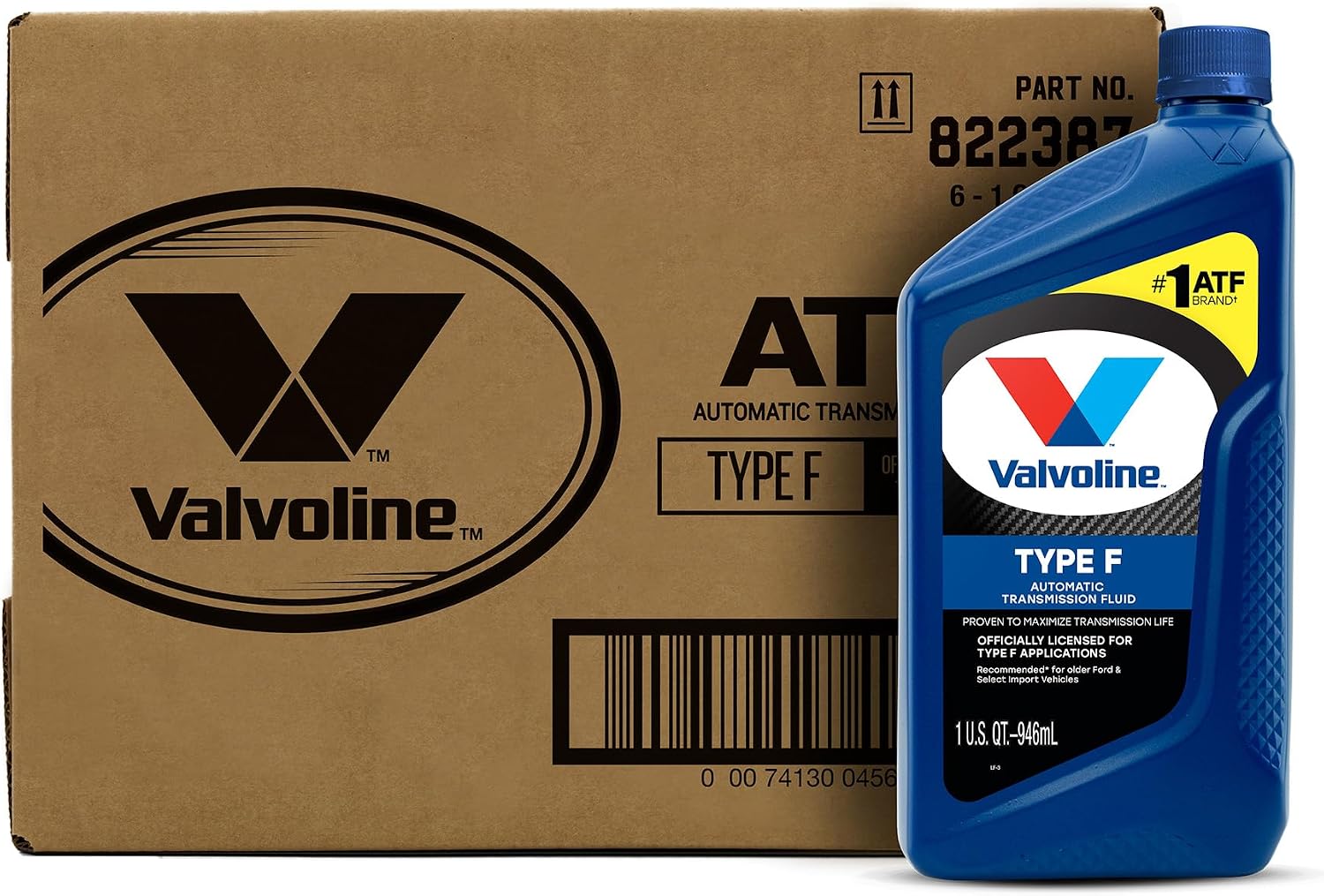
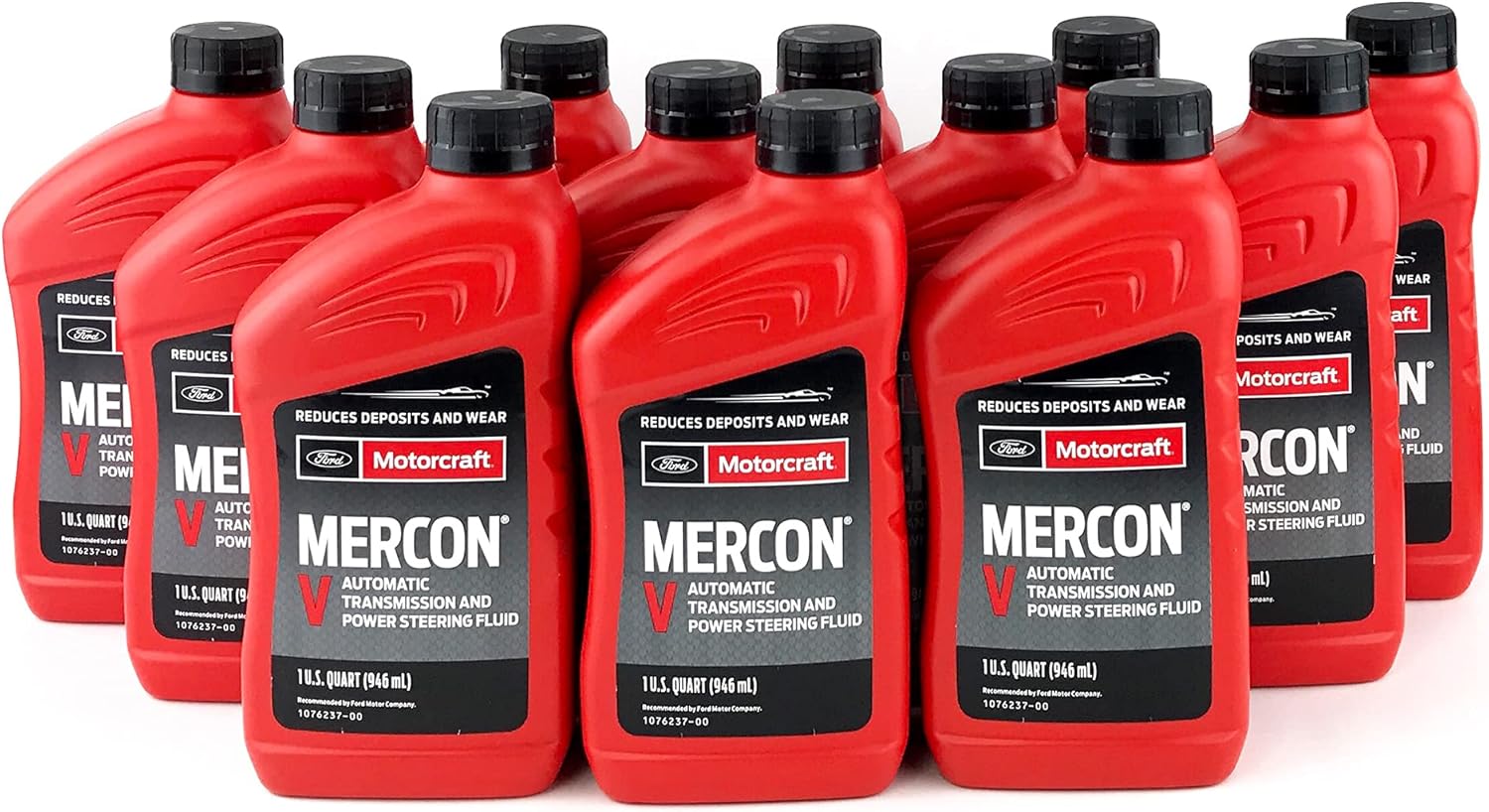
Our parts shop carries C6 valve bodies for 1966-1996 units plus the correct fluid for either build era, Valvoline Type F and Motorcraft MERCON V, all on our own checkout. For every Ford fluid spec side by side, see our transmission fluid spec chart.
FAQ
What are the gear ratios of a Ford C6 transmission?
The C6 uses 2.46:1 in first, 1.46:1 in second, 1.00:1 in third and 2.175:1 in reverse, often rounded to 2.18. Every C6 from 1966 to 1996 uses the same ratios, gas or diesel, 2WD or 4x4. There is no overdrive, so third gear is direct drive.
Does the C6 have the same gear ratios as the C4?
Yes. The C6 is internally the C4 design scaled up for heavy-duty use and shares the 2.46 and 1.46 forward ratios. The main difference is that the C6 uses a multi-disc low-reverse clutch where the C4 uses a band and drum, which is part of why the C6 is so much stronger.
What rpm does a C6 run at 60 mph?
It depends on the axle ratio and tire size because third gear is 1:1. With a 31 inch tire, a 3.00 axle turns about 1,950 rpm at 60 mph, a 3.55 axle about 2,310 rpm and a 4.10 axle about 2,670 rpm. Use rpm = mph x axle ratio x 336 / tire diameter for your own combination.
What is normal line pressure for a Ford C6?
CarTech's rebuild guide gives about 40 to 61 psi in the forward ranges and 60 to 93 psi in reverse at idle with 18 to 22 inches of vacuum, rising to about 100 to 114 psi in the forward ranges at 10 inches of vacuum. The exact window varies by year and gas or diesel application, so check the chart for your unit.
How do you adjust the C6 intermediate band?
With the wheels off the ground, the transmission in neutral and the engine off, snug the adjusting screw until the output shaft will not turn backward by hand. Loosen it until the shaft just turns backward, then loosen one quarter turn more and tighten the locknut. That is TransGo's procedure from its C6 shift kit instructions.
Related guides
Sources
- Ford Motor Company, The C6 Automatic Transmission technician training handbook and Automatic Transmission Diagnosis course 7530 (1970; Forel Publishing reprint, sample pages). Backs the compound planetary / one band / three clutches / one-way clutch layout, the D, 2 and 1 range behavior, the 10 mph closed-throttle downshift, the 25 mph manual 2 hold, the 40 mph torque-demand and 48/90 mph kickdown limits, the overdrive-like cruise rpm with a high-speed axle, and control pressure checks at three vacuum levels. forelpublishing.com (PDF)
- George Reid, How to Rebuild & Modify Ford C4 & C6 Automatic Transmissions (CarTech, 144 pp., ISBN 9781934709825), Chapter 6, "C6 Select-Shift." Backs the 2.46 / 1.46 / 1.00 / 2.175 ratios, the clutch apply combinations, the idle and 10 in. Hg line pressure ranges, the 90 psi converter relief limit and the 1966-1996 production span. Print reference.
- CarTech Tech Tips — George Reid, "Ford C4 and C6 Automatic Transmission History and Facts." Backs the 1966 introduction behind big-block V-8s, the C6 being "virtually the same internally" as the C4 on a larger scale, the one-piece bellhousing and main case, the four basic bellhousing patterns, the 1967 move to Select-Shift, and the diesel C6 before the E4OD arrived in 1989. Note: this article rounds reverse to 2.00:1; the 2.175:1 reverse figure comes from source 2. Publisher web article on cartechbooks.com (Tech Tips).
- Sonnax, Servo Apply Lever 36916FF. Backs the OE E (1.85:1) and F (2.30:1) lever ratios, the non-stock FF (2.82:1) ratio, and the warning against FF with H or R code servos. sonnax.com
- Sonnax, Ford C6 unit page. Backs the extra-wide intermediate band for 1966-later units and the documented low pump volume and converter hub-to-bushing clearance problems. sonnax.com
- TransGo, SK C6 Shift Kit installation instructions (2011). Backs the modulator vacuum check, the kickdown adjustment targets for gas and diesel, the intermediate band adjustment procedure, and the gas-to-diesel valve body boost valve sizes. TransGo SK C6 instructions (PDF)
- TCI Automotive, "Transmission Gear Ratios" reference table. Backs the OEM Ford C6 forward ratios of 2.46, 1.46 and 1.00 (and the identical C4 forward ratios), listed separately from TCI's own 2.72 / 1.54 / 1.00 wide-ratio C6 gearset. tciauto.com
- Ford Motor Company, 1987 Bronco, Econoline and F-150 to F-350 Light Truck Shop Manual A (Body, Chassis, Electrical), Section 17-10 "C6 Automatic Transmission," on the Internet Archive. Backs the single intermediate band applied with the forward clutch for second gear, the identification tag location and suffix-number meaning, and the factory intermediate band adjustment (10 ft-lb, back off 1-1/2 turns, locknut 35-40 ft-lb). archive.org