A weeping cooler fitting on an E4OD almost never stays a small problem. The truck keeps running, the fluid level keeps dropping a little at a time, and by the time anyone notices the puddle under the transmission, the unit has been running marginal on flow for weeks. The frustrating part for a lot of owners is that the symptoms of a bad line and the symptoms of a worn internal valve overlap almost completely: overheating, soft torque converter clutch (TCC) apply, and codes that point at the converter circuit without telling you which side of the case the problem is actually on. This guide separates the two, gives you a real flow spec to diagnose against instead of guessing, and walks the physical line swap.

Line, valve, or both: figure out which one actually failed
There are two unrelated things that get blamed for "a cooler line problem" on an E4OD, and they need completely different fixes.
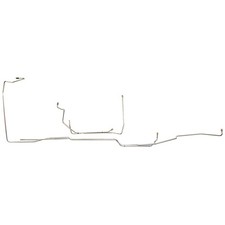
The first is the physical line: the steel tube running from the transmission case out to the radiator's internal cooler or an auxiliary cooler, plus whatever fitting connects it at each end. On these trucks that is usually a banjo fitting with a crush washer, or on later production a quick-connect collar with an internal O-ring. Either one hardens and starts weeping after enough heat cycles. This is a leak you can see and a problem that ends when you replace the line or the fitting.
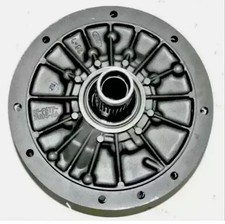
The second is the line-to-lube pressure regulator valve, which lives inside the pump, not out on the line. Sonnax sells a direct-fit replacement for it, part 36424-04K, for both the E4OD and 4R100 on F1, F5, F8 and E9 pump castings. Per Sonnax's own part listing, the stock valve can close off the converter and cooler circuit under high demand as it wears, which causes TCC drag and clutch lining glaze at idle, or restricted flow under load. That shows up as codes 62, 628 and 1744, engine stall or stumble on engagement in Reverse, high line pressure, and an overheated converter — none of which involve a drop of fluid on the ground. A new line will not touch this problem, because nothing is leaking.
There is a third part some shops reach for on these trucks: the external cooler bypass valve. Sonnax also sells a rebuild kit for it, part 36605-02K, with symptoms listed as TCC slip, soft TCC apply, codes 1783 and 1741/1744, overheating and low cooler flow. Here is the detail that trips people up: Sonnax's own technical bulletin on 4R100 flow issues states directly that the E4OD does not have this external pressure bypass. That bypass is a 4R100-specific ball, seat and spring tuned to open around 60 psi of cooler head pressure, added because the 4R100's modulated TCC control makes it far more sensitive to a restricted cooler than the E4OD's simple on/off TCC control. If you are working on a straight E4OD and not a 4R100, the bypass valve kit is the wrong fix even though some parts listings group it with both units; the line-to-lube valve inside the pump is what actually wears on the E4OD.
Diagnose with a flow number, not a guess
Before you pull anything apart, check cooler flow and head pressure together if you have the gauges for it. Bob Warnke, Sonnax's Technical Director, published the baseline numbers rebuilders use for this unit: average E4OD cooler flow in 3rd gear with the TCC not applied runs 1.2 to 1.4 GPM, and climbs to 1.8 to 2.0 GPM once the TCC solenoid commands apply. That rise is useful on its own — if you see flow or pressure climb when you command lockup with a scan tool, the apply valve is stroking and the TCC solenoid and apply circuit are not your problem.
| Condition | E4OD cooler flow (3rd gear) | What it tells you |
|---|---|---|
| TCC not applied | 1.2 - 1.4 GPM | Baseline. Significantly below this with a clean line points at the line-to-lube valve or a restricted cooler. |
| TCC applied | 1.8 - 2.0 GPM | Flow should rise here. No rise with a confirmed TCC command means the apply circuit, not the cooler side, is suspect. |
Note this is close to the opposite of how a 4R100 behaves: on a 4R100 with modulated TCC control, flow is higher before lockup and drops during TCC apply, because that unit prioritizes pressure to the apply piston over the cooler circuit. Pulling 4R100 numbers to judge an E4OD, or the reverse, is a common bench mistake and will send you chasing a part that is not actually bad.
If you cannot rig a flow meter, head pressure alone still tells you most of what you need. A line that is restricted, kinked, or partly collapsed inside will show elevated head pressure with low flow. A worn line-to-lube valve tends to show the opposite: pressure that will not build at all because the valve is passing fluid somewhere it should not.
Replacing the physical line
Once you have confirmed the leak or restriction is actually in the line and not the valve, the swap itself is straightforward, but a few details are where these jobs go wrong.
1. Identify the fitting before you order parts
E4OD production ran from 1989 to 1998 across F-150 through F-350, Bronco and Econoline, and the cooler line fittings were not identical the whole run. Confirm whether you have a banjo-style fitting with a crush washer or a quick-connect collar at each end before buying a replacement line or adapter fittings. A line that is the right length but the wrong fitting style will not seal no matter how carefully you install it.
2. Disconnect without rounding the fitting
A banjo bolt backs out with a normal wrench, but it is almost always seized with 20-plus years of heat and road grime on it. Soak it, use a six-point socket, and go slow. A quick-connect fitting needs the correct size disconnect tool pressed into the collar to release the internal clip before the line will pull free — forcing it without the tool just cracks the plastic collar and turns a line job into a fitting replacement too.
3. Flush before you reconnect anything
If the old line failed from internal corrosion or you are chasing a flow complaint, blow compressed air through the replacement line and the cooler itself before final hookup. Debris sitting in a cooler passage will restrict the new line exactly like it restricted the old one, and you will be back under the truck in a week.
4. Torque the fitting, do not just snug it
Sonnax's own installation instructions for the related line-to-lube and bypass valve kits both carry the same warning: torque fittings to OE specification, because overtightening damages the rubber-coated sealing washers or the case fitting itself and causes the exact leak you were trying to fix. A banjo bolt only needs to compress the crush washer, not crush the fitting around it.
5. Consider braided replacement lines for a corroded factory line
If the factory steel line is corroded through rather than just leaking at one fitting, a braided PTFE line kit with AN fittings on both ends is a durable fix and avoids re-flaring OE steel tube. Match the AN size to your transmission-side and cooler-side fitting threads; do not assume both ends use the same adapter.
Refill with the right fluid
The E4OD's original fluid spec was Motorcraft MERCON. Ford stopped manufacturing MERCON on July 1, 2007, after its Customer Service Division announced that MERCON V would be the service replacement for every application that previously called for MERCON. Motorcraft's current fluid reference lists MERCON V under part number XT-5-QMC for a quart, XT-5-DMC for a 55-gallon drum. Do not substitute MERCON LV, ULV or a Dexron-only fluid; the additive packages are different and Ford's own guidance is specific to MERCON V for E4OD-era applications that originally called for MERCON.
After a line replacement you typically only lose what drained from the disconnected line and whatever the cooler itself held, not a full pan's worth. Add fluid gradually, run the transmission through the gears with the engine idling, and finish the level on the dipstick rather than by a fixed quart count.
Common mistakes that cause a repeat comeback
- Replacing the line when the line-to-lube valve is actually worn. If there is no visible leak and the symptoms are TCC drag, codes 62/628/1744, or an overheated converter, look at the pump-side valve first.
- Buying a 4R100 bypass valve kit for an E4OD. The E4OD does not have the external pressure bypass that kit services.
- Overtightening the banjo bolt or quick-connect. Crushes the sealing washer or case fitting and creates a new leak.
- Skipping the flush. Debris left in the cooler restricts the brand-new line the same way it restricted the old one.
- Judging E4OD flow against 4R100 numbers. The two units respond to TCC apply in opposite directions.
- Wrong fluid on refill. MERCON V, not MERCON LV, ULV or a generic Dexron substitute.
Shop the part for this fix: 4R100/E4OD cooler bypass tube kit
A direct-fit aluminum cooler bypass tube kit for the 4R100/E4OD cooler circuit, built to replace a corroded or leaking section without re-flaring OE steel tube.
See the cooler bypass tube kit at CoreTransmissionPartsNeed parts for this job?
Our E4OD parts page has the replacement cooler, Motorcraft MERCON V, and pumps for when the line-to-lube valve bore is worn past a drop-in repair, plus valve bodies and rebuild kits for units where the cooler circuit problem turns out to be the least of it. Checkout is on site.
FAQ
What causes an E4OD transmission cooler line to leak?
Most leaks are at the banjo fitting or quick-connect collar, not a hole in the steel tube itself. The crush washer or O-ring at the fitting hardens with age and heat cycling, and the line starts weeping right at the connection. A smaller number of failures are the rubber hose section between the steel line and the radiator or auxiliary cooler, which cracks from age and underhood heat.
Does the E4OD have an external cooler bypass valve like the 4R100?
No. Sonnax's own technical bulletin on 4R100 flow issues states plainly that the E4OD does not have the external pressure bypass that the 4R100 uses, which is a ball, seat and spring tuned to crack open around 60 psi of cooler head pressure. On the E4OD, the flow-limiting part that fails is the line-to-lube pressure regulator valve inside the pump, not an external bypass.
What is a normal cooler flow reading on an E4OD?
Per Sonnax Technical Director Bob Warnke, average E4OD cooler flow in 3rd gear with the torque converter clutch not applied is 1.2 to 1.4 GPM, and it rises to 1.8 to 2.0 GPM once TCC applies. That is close to the opposite of the 4R100, where flow is higher before lockup and drops during TCC apply, so do not diagnose an E4OD against 4R100 numbers.
Can I use braided stainless lines instead of the factory steel cooler lines on an E4OD?
Yes, and it is a common fix for a line that keeps weeping at a corroded factory fitting. Braided PTFE cooler line kits with AN fittings on both ends replace the OE steel tube and its banjo connection entirely. Confirm the fitting thread and flare type at both the transmission case and the cooler before ordering, since there were different outboard fitting styles across E4OD production.
What fluid do I refill an E4OD with after a cooler line job?
The E4OD originally called for Motorcraft MERCON. Ford stopped manufacturing MERCON on July 1, 2007 and designated MERCON V, part number XT-5-QMC, as the service replacement for every application that previously called for MERCON. Use MERCON V, not MERCON LV, ULV or Type F.
Related guides
- E4OD Overheating: Causes and Prevention
- E4OD Fluid Leak: Common Spots and Fixes
- E4OD Torque Converter Lockup Shudder Fix
- E4OD Pressure Control (EPC) Solenoid Symptoms
- 4R100 vs E4OD: Differences, Interchange & Which Is Stronger
Sources
- Sonnax Transmission Company, "Line-To-Lube Pressure Regulator Valve," part 36424-04K, product listing. Backs E4OD and 4R100 fitment on F1, F5, F8 and E9 pump castings, the OE valve closing off the converter/cooler circuit under high demand, resulting TCC drag and lining glaze, codes 62, 628 and 1744, and the patented internal line-to-lube passage with anti-drainback check valve. sonnax.com
- Sonnax Transmission Company, "Cooler Bypass Valve Kit," part 36605-02K, product listing. Backs the 4R100 | E4OD fitment note, symptoms of TCC slip, soft TCC apply, codes 1783 and 1741/1744, overheating and low cooler flow, and the kit restoring cracking pressure while salvaging OE fittings and tube. sonnax.com
- Bob Warnke, Sonnax Technical Director, "4R100 Repeated Converter Failure," Sonnax Tech Resources (June 22, 2006). Backs the 60 psi external pressure bypass on the 4R100, the statement that the E4OD does not have that external bypass, and the E4OD baseline cooler flow of 1.2-1.4 GPM with TCC not applied rising to 1.8-2.0 GPM at TCC command, in 3rd gear. sonnax.com
- Sonnax Transmission Company, "4R100 Flow Issues," Sonnax Tech Resources. Backs the E4OD and 4R100 converter-to-lube oil flow path differences and the turbine hub/bearing design contrast between the two units. sonnax.com
- Ford Motor Company / Motorcraft, "Automatic Transmission Fluid Chart" (Version 21, published 9/2026). Backs the current MERCON V part numbers XT-5-QMC (1 quart) and XT-5-DMC (55-gallon drum). fcsdchemicalsandlubricants.com (PDF)
- UnderhoodService (Babcox Media), "Ford Announces More Stringent Specification Replacement for MERCON Automatic Transmission Fluid" (June 2007), reporting Ford Customer Service Division's announcement. Backs the July 1, 2007 end of MERCON production and MERCON V as the designated service replacement for applications that previously called for MERCON. underhoodservice.com