An E4OD converter shudder feels like the truck is running over rumble strips for a second or two, usually right after the 2-3 or 3-4 upshift at a light cruise, and it's worst hot or with a trailer on. The torque converter clutch is being told to apply, and instead of coming on smooth it grabs, slips, grabs again. On 1989-97 F-Series, Bronco and E-Series trucks this is one of the most common drivability complaints the E4OD brings in.
Most of these trucks don't need a converter on the first visit. Old fluid, a restricted cooler, low converter charge flow from a worn pump valve, or a tired cooler bypass valve can all feel the same. The solenoid logic and pinout below are from ATRA's E4OD/4R100 quick reference, the flow diagnosis is from Sonnax staff writing in Transmission Digest, and the wear parts are from Sonnax. Full list under Sources.
How the E4OD applies its converter clutch
Most E4ODs use a simple on/off TCC solenoid, not the pulse width modulated (PWM) control that came later on the 4R100. The PCM grounds the TCC solenoid, the solenoid sends signal oil to the converter clutch control valve in the pump, and that valve reverses converter oil to apply the clutch. ATRA's quick reference shows the solenoid feed: one solenoid regulator valve supplies the TCC solenoid and both shift solenoids, so a problem in that feed can affect lockup and shifting together.
Per ATRA's solenoid sequence chart, the TCC solenoid is off in Park, Reverse, Neutral and manual 1, and is "PCM controlled" in Drive 1st through 4th and in manual 2. In practice the PCM applies it at cruise in 3rd and 4th, which is why the shudder shows up right after those upshifts.
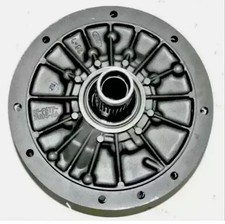
There are two things to know before you order parts. First, Transmission Digest's Mike Riley notes that PWM pumps were used on all diesel applications and some gas applications, and that an E4OD PWM pump carried Ford number F81Z-7A103CA (later 8C3Z-7A103C). You can tell the pumps apart on the bench: on the E4OD and non-PWM 4R100, the TCC valve end plug sits more than an inch in from the pump cover O.D. On a PWM pump it's recessed only about 1/4 inch. Second, Riley's warning is to always match the solenoid block to the pump design. A mismatched pump and solenoid body will give you a lockup complaint on a unit that is otherwise fine. Check this on any truck that has had a used or reman unit installed.
Step 1: Prove it is the converter clutch
A misfire, a bad U-joint or a driveshaft angle problem can feel a lot like TCC shudder. Rule them out before you blame the transmission:
- Brake tap. Hold the speed where it shudders and barely touch the brake pedal without slowing down. The brake switch drops the TCC command. If the shudder stops at once and the tach comes up a little, it was the converter clutch. If the vibration stays, look at the driveline.
- Vacuum gauge. Sonnax's Ed Lee gives a good test for the engine side: watch a vacuum gauge while it shudders. His point is that TCC shudder doesn't move vacuum, but an engine performance problem does. On a high-mileage 460 or 5.8L with a weak plug wire, this saves a lot of time.
Step 2: Codes and the electrical side
Pull the codes first. A 1989-95 truck is EEC-IV, so run the key on engine off and continuous memory tests with a code reader. A 1996-97 truck is OBD-II. Sonnax lists codes 62, 628 and 1744 as symptoms of a worn line-to-lube pressure regulator valve, so a converter clutch code does not automatically mean a bad converter.
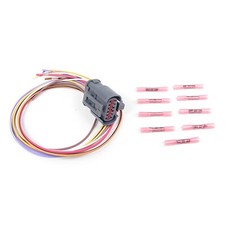
On the harness side, ATRA's connector chart for the E4OD lists terminal F as solenoid power (B+) and terminal C as the TCC solenoid ground (-). The solenoids get power any time the key is on, and the PCM supplies the ground. Two useful checks:
- Signal check. Back-probe the connector with a signal monitor or LED tester and road test. ATRA's shift pattern chart shows the TCC signal as the far right LED, lit only in 4th with lockup. If the TCC signal is steady while the truck shudders, the command is good and the problem is hydraulic or in the converter.
- Forced apply. ATRA's forced-shift drawings show how to run the E4OD from a battery through a 10 amp fused lead, with solenoid power on F. For 4th gear neither shift solenoid is grounded, and the drawing marks the connection to terminal C as the one needed to apply the converter clutch. Grounding C yourself takes the PCM out of the test. If it still shudders on a steady forced apply, the PCM is not the cause.
Check solenoid resistance with the key off. ATRA's solenoid feed drawing shows the TCC solenoid on pins 1 and 4 of the solenoid body. ATSG's 4R100 manual lists the on/off TCC solenoid at 20-30 ohms and the PWM version at 10-20 ohms, so know which one you have before you read it. An open TCC solenoid means no lockup at all, and a shorted one can stall the engine when the truck comes to a stop in gear.
Step 3: Fluid
The E4OD was filled with Mercon. Ford TSB 06-14-4 replaced Mercon with Mercon V (Motorcraft XT-5-QM) as the service fluid, and the bulletin's application list covers every E4OD platform: 1980-1996 Bronco, 1981-2003 F-150, and 1981-2004 E-Series and F-Super Duty. The same bulletin carries a caution that matters here: do not use automatic transmission fluid supplements, additives, treatments or cleaning agents. A bottle of shudder fixer isn't a repair.
Worn fluid loses the friction modifiers that let the converter clutch slip smoothly while it applies. If the lining is still healthy, a complete exchange with fresh Mercon V can cure a mild shudder. A pan drop alone leaves most of the old fluid in the converter and cooler. Look at what drains out. Dark fluid and fine black lining material in the pan mean the converter clutch is already wearing, and new fluid will only mask it for a while.
Step 4: Measure cooler flow
This is the most useful test for E4OD lockup problems, and the E4OD makes it easier than most units. Sonnax's Bob Warnke, writing in Transmission Digest, gives the numbers: average E4OD cooler flow in 3rd with the TCC off is 1.2 to 1.4 gpm, and it rises to 1.8 to 2.0 gpm when the TCC is commanded. That's the opposite of the 4R100, which drops flow during apply. Warnke also notes the E4OD doesn't have the 4R100's external pressure bypass, and that makes the E4OD simpler to diagnose.
That gives you a way to confirm the apply valve stroked. Put a flow meter in the cooler line and a line pressure gauge on the case at the same time. When the TCC command comes on, flow or pressure should rise. No rise with a good electrical command points at the TCC control valve in the pump or its signal circuit.
Ed Lee's lockup troubleshooting article explains what to look for next. When TCC release oil flow drops below 0.45 gpm, the converter clutch piston starts to drag on the cover. That shows up as shudder, overheating and a converter that fails again. His decision tree:
| Line pressure | Cooler flow | Where to look |
|---|---|---|
| Normal | Low | Restriction in the cooler or lines |
| Low | Low | Pump wear or pump valve problem |
| Normal | Normal | The converter itself |
To tell a cooler restriction from a converter problem, Lee suggests looping the cooler lines, which bypasses the cooler and cooler lines. If the condition goes away with the lines looped, the restriction is after the TCC piston, in the cooler, the lines or the bypass. On a truck with an aftermarket cooler added in series, look there first.
Step 5: The hydraulic causes
Line-to-lube pressure regulator valve
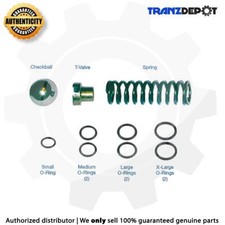
Sonnax lists codes 62, 628 and 1744, high line pressure, engine stumble or stall on engagement into reverse, and an overheated converter as symptoms of a worn OE line-to-lube pressure regulator valve. Its 36424-04K replacement fits the F1, F5, F8 and E9 pump castings used on 1989-1998 E4ODs. Because this valve sets converter charge and cooler flow, a worn one is a common cause of low flow with low pressure on Lee's chart. It lives in the pump, so it gets fixed when the pump is out.
Cooler bypass valve (1997-later)
On 1997-later E4OD and 4R100 units, Sonnax lists TCC slip, soft TCC apply, codes 1741, 1744 and 1783, overheating, low cooler flow and an overheated converter as symptoms of a failed cooler bypass valve. When the valve opens too early, oil that should go through the converter and cooler bypasses both. The 36605-02K kit rebuilds it with the original fittings and tubing. This one can be done without pulling the unit, so check it before you commit to a teardown on a 1997.
Pump-wide leakage
Sonnax's E4OD/4R100 Zip Kit lists lockup shudder, TCC cycling and an overheated converter among its symptoms. It's a set of drop-in pump and valve body parts meant to seal circuit leaks. If pressure and flow are low everywhere on a high-mileage unit, plan on pump and valve body work, not one valve.
Step 6: When it is the converter
If pressure and flow are both normal and the shudder is still there, Lee's chart points at the converter. Contaminated fluid, lining in the pan, or a shudder that comes back soon after a fluid exchange all confirm it. When you replace it:
- Get a converter for the correct pump: on/off or PWM, and the correct engine.
- If you're having the converter rebuilt, the lining matters. Ed Lee reports Raybestos testing on an E4OD clutch showing that a smooth tan lining has a more erratic coefficient of friction at low slip speeds (below 40 rpm) than the grooved original. His conclusion is that a smooth tan lining should never replace one that was grooved originally. The wrong lining will shudder on a brand-new converter.
- Flush or replace the cooler and lines. Lining debris left in the cooler goes straight back into the new converter.
- Pull the pan and check the filter. Heavy friction material means the clutch packs need to be looked at too, and the job usually becomes an overhaul.
- With the pump out, check the line-to-lube valve and the TCC control valve bore. A new converter behind low charge flow will drag and fail again.
Diagnostic order at a glance
| Step | Check | Unit out? |
|---|---|---|
| 1 | Brake tap and vacuum gauge to confirm it's the TCC | No |
| 2 | Codes, TCC signal on terminal C, solenoid ohms, pump and solenoid match | No |
| 3 | Complete Mercon V exchange, check for lining debris | No |
| 4 | Cooler flow and line pressure together, loop the cooler lines | No |
| 5 | Cooler bypass valve (1997-later) | No |
| 6 | Pump: line-to-lube valve, TCC control valve | Yes |
| 7 | Converter with correct lining, cooler flush | Yes |
Shop the part for this fix: Sonnax line-to-lube pressure regulator valve 36424-04K
If a flow test shows low cooler flow and the converter runs hot, a worn pump regulator valve is a common cause on 1989-1998 E4ODs. This drop-in valve fits the F1, F5, F8 and E9 pump castings.
See the line-to-lube valve at CoreTransmissionPartsNeed parts for this job?
Our E4OD parts page has pumps, solenoid kits, coolers and rebuild kits by year, with checkout on site. Confirm the model year and whether the truck has an on/off or PWM pump before you order.
FAQ
What causes torque converter shudder on an E4OD?
The usual causes are worn fluid that has lost its friction modifiers, low converter charge and cooler flow from a worn line-to-lube regulator valve or a restricted cooler, and on 1997-later units a cooler bypass valve that opens too early. Once the clutch lining is glazed or worn, the converter has to be replaced. Start with the checks that don't need the unit out.
How do I know it's the converter clutch and not the engine?
Hold the speed where it shudders and lightly touch the brake pedal. If the shudder stops at once, it was the converter clutch. Sonnax's Ed Lee also suggests watching a vacuum gauge, since TCC shudder doesn't change vacuum but an engine misfire does.
What should E4OD cooler flow be when the converter locks up?
Per Sonnax's Bob Warnke in Transmission Digest, average E4OD cooler flow in 3rd is 1.2-1.4 gpm with the TCC off and rises to 1.8-2.0 gpm on the TCC command. A rise in flow or pressure on the command confirms the apply valve stroked. That's the opposite of the 4R100, which drops flow during apply.
What fluid fixes E4OD converter shudder?
Ford TSB 06-14-4 replaced Mercon with Mercon V (Motorcraft XT-5-QM) as the service fluid for the Bronco, F-150, F-Super Duty and E-Series. The same bulletin says not to use ATF supplements or additives. Do a complete exchange, because a pan drop leaves most of the old fluid in the converter and cooler.
Is the E4OD torque converter clutch PWM?
Most E4ODs use an on/off TCC solenoid. Transmission Digest notes PWM pumps went on all diesel and some gas applications, and lists an E4OD PWM pump as Ford F81Z-7A103CA. The PWM TCC valve end plug sits about 1/4 inch in from the pump cover edge, versus more than an inch on the on/off pump. Always match the solenoid block to the pump.
Related guides
- E4OD Slipping: Causes and Fix
- E4OD Shift Solenoid Symptoms
- E4OD Harsh Shift Causes
- E4OD Fluid Type and Capacity
- 4R100 Torque Converter Lockup Shudder Fix
Sources
- ATRA (Automatic Transmission Rebuilders Association), "Quick Reference E4OD/4R100" (2009). Backs the solenoid sequence chart (TCC off in P, R, N and manual 1, PCM controlled in D and manual 2), the solenoid regulator valve feed to the TCC and shift solenoids, TCC solenoid pins 1 and 4, the connector chart (C = TCC solenoid -, F = solenoid power B+), the TCC signal LED in 4th with lockup, and the fused forced-apply drawing. ATRA quick reference (PDF)
- Ford Motor Company, TSB 06-14-4, "Mercon ATF Is Being Replaced by Mercon V ATF as a Service Fluid" (2006). Backs Mercon V (XT-5-QM) for 1980-1996 Bronco, 1981-2003 F-150 and 1981-2004 E-Series and F-Super Duty, and the caution against ATF supplements, additives and cleaners. TSB 06-14-4 (PDF)
- Transmission Digest, Bob Warnke (Sonnax), "4R100: Repeated Converter Failure." Backs E4OD cooler flow of 1.2-1.4 gpm in 3rd without TCC rising to 1.8-2.0 gpm on TCC command, the flow or pressure rise that shows the apply valve stroked, the lack of an external pressure bypass on the E4OD, and checking flow and pressure together. transmissiondigest.com
- Transmission Digest, Ed Lee (Sonnax), "Troubleshooting Lockup Issues." Backs the 0.45 gpm release flow threshold for piston drag, the vacuum gauge test for engine versus TCC shudder, reading line pressure and flow together, and looping the cooler lines. transmissiondigest.com
- Transmission Digest, Mike Riley, "E4OD/4R100 Component Upgrade: Mix and match is not an option." Backs PWM on all diesel and some gas applications, the E4OD PWM pump numbers F81Z-7A103CA and 8C3Z-7A103C, the TCC valve end plug depth difference, and matching the solenoid block to the pump. transmissiondigest.com
- Transmission Digest, Ed Lee (Sonnax), "TCC Apply." Backs the Raybestos E4OD lining test (smooth tan lining more erratic below 40 rpm slip) and the rule never to replace a grooved lining with a smooth one. transmissiondigest.com
- Sonnax, Ford E4OD unit listing: "Line-To-Lube Pressure Regulator Valve 36424-04K," "Cooler Bypass Valve Kit 36605-02K" and "Zip Kit E4OD-4R100-ZIP." Back codes 62/628/1744 and the overheated converter for the worn regulator valve and its F1/F5/F8/E9 fitment, the 1997-later bypass valve symptoms (TCC slip, soft apply, codes 1741/1744/1783, low cooler flow), and lockup shudder and TCC cycling for the Zip Kit. sonnax.com (36424-04K), sonnax.com (36605-02K) and sonnax.com (Zip Kit)
- ATSG (Automatic Transmission Service Group), Ford 4R100 technical service manual. Backs the TCC solenoid resistance (20-30 ohms on/off, 10-20 ohms PWM) and the shorted solenoid stall and open solenoid no-lockup failure modes. ATSG manual (PDF)