A harsh E4OD usually shows up in one of two ways. It either bangs into Drive and Reverse and slams every upshift from the moment it's started, or it's fine most days and then hits hard on a shift or two with no pattern. Those are two different problems. The first is almost always line pressure running at maximum because the computer lost control of it. The second is usually a valve that's hanging in a worn bore. Replacing a solenoid pack for the second one wastes a few hundred dollars.
This guide works through the E4OD's pressure control system the way you'd test it on a real truck: how the EPC solenoid sets line pressure, how to check the EPC signal at the case connector, what the gauge should read, and the valve body and clutch problems that make the unit shift hard even when the electrical side is fine. The pressure chart, connector pinout and forced-shift information come from ATRA's E4OD/4R100 quick reference. The EPC failure modes, resistance spec and valve body details come from the ATSG 4R100 manual (the 4R100 is the updated E4OD and shares the pressure control layout). Valve wear and field cases come from Sonnax and Transmission Digest. Full list under Sources.
How the E4OD controls shift feel
ATRA's overview sums up the design in a few lines. The E4OD was one of Ford's first transmissions designed from the start for computer control. Two shift solenoids pick the gear, and an EPC (electronic pressure control) solenoid controls mainline pressure electronically. There is no throttle valve cable and no vacuum modulator. Every bit of shift firmness is set by the computer through that one solenoid.
ATSG describes the solenoid system as controlling shift feel "through line pressure control," and its apply chart marks EPC as "Mod," meaning the computer modulates it at all times based on throttle position, engine load and vehicle speed. The EPC solenoid sends a signal pressure to the line pressure modulator valve in the valve body, which works on the main regulator to raise or lower line pressure.
The key detail for a harsh-shift diagnosis is which way it fails. ATSG's code chart says an open EPC circuit causes maximum EPC pressure, harsh engagements and shifts, and may flash the transmission control light. A shorted circuit does the opposite: minimum EPC pressure, and the computer limits engine torque with partial fuel shut-off. So a truck that's harsh on every shift and every engagement, all the time, points hard at the EPC circuit being open, or at the computer not driving it.
Step 1: Sort the complaint
| What the driver feels | Most likely area | First test |
|---|---|---|
| Hard into Drive and Reverse, every shift firm, all the time | EPC circuit open, EPC solenoid, computer driver, or a bad load/throttle/speed input | Codes, EPC signal at terminals L and M, line pressure at idle |
| Harsh some days or on some shifts, soft on others | Line pressure modulator plunger hanging in a worn sleeve | Line pressure gauge on a road test, watch for jumps |
| Harsh ever since a rebuild or shift kit | Oversized modulator plunger, stiff springs, forward clutch clearance | Pull the accumulator body and see what's in it |
| Only a bang on the garage shift into Drive, shifts are fine | Forward clutch clearance or apply, engine or transmission mounts | Idle pressure in D, then forward clutch on teardown |
Step 2: Pull codes and check the inputs
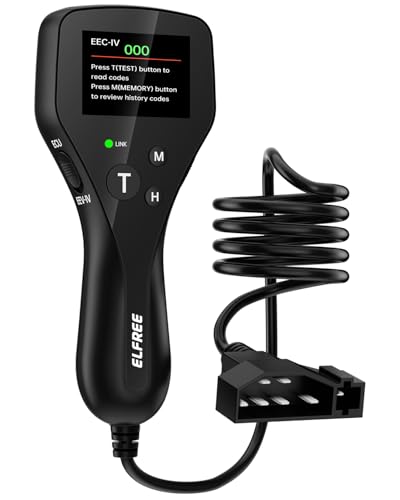
1989-95 E4OD trucks run EEC-IV. Pull both the key-on engine-off codes and continuous memory codes with a code reader, and run the engine-running test. 1996-97 trucks are OBD-II and a scan tool reads them directly. Any EPC circuit code comes first, but don't stop there.
The computer raises line pressure when it can't trust its inputs, and ATSG's code chart lists a long set of sensor faults with "harsh engagements, firm shift feel" as the symptom. That includes throttle position faults, mass airflow faults, a missing or erratic vehicle speed signal and transmission range sensor faults. A range sensor fault is listed as causing harsh engagements with a slight increase in EPC pressure. BARO faults cause firm shifts and late shifts at altitude. The point for the E4OD is simple: a bad TPS or a speed sensor dropout makes the transmission shift hard without anything being wrong inside the case.
ATSG also lists a code for failure of the EPC pressure driver inside the computer itself. That lines up with a Transmission Digest case on a 4R100 in an F-550 that set an EPC short code and ran gutless with a flashing O/D light. The harness from the computer to the solenoid block tested fine. The computer had a bad EPC driver, and replacing it fixed the truck. If the solenoid and wiring check out and the EPC signal is still wrong, the computer is on the list.
Step 3: Check the EPC circuit at the case
ATRA's connector chart for the E4OD case connector, viewed from the terminal side:
| Terminal | Function | Terminal | Function |
|---|---|---|---|
| A | Not used | G | TFT sensor (+) |
| B | Coast clutch solenoid | H | TFT sensor (-) |
| C | TCC solenoid (-) | J | Not used |
| D | Shift solenoid 1 | K | Not used |
| E | Shift solenoid 2 | L | EPC solenoid (-) |
| F | Solenoid power (B+) | M | EPC solenoid (B+) |
Signal check. ATRA's method is to backprobe terminals M (+) and L (-) with a high-impedance voltmeter or signal monitor, harness connected. The signal should change as you move the throttle and change ranges. A signal that never changes, or no signal at all, means the computer isn't controlling pressure, and the transmission will run at maximum line pressure.
Resistance check. Unplug the harness and measure across the EPC terminals on the transmission side. ATSG's spec for the EPC solenoid is 3.0-5.0 ohms, compared with 20-30 ohms for the shift and coast clutch solenoids. An open reading means the solenoid or the internal harness to it is open, and the unit will be harsh. On the E4OD the EPC solenoid is part of the solenoid body in the pan, so the repair is usually the solenoid pack. Check the case connector pins and the harness side for corrosion and spread terminals before you buy one. A pack can read in spec and still have a sticking EPC valve, so a good ohm reading doesn't clear it if the gauge says pressure is high.
Step 4: Put a gauge on it
ATRA's diagram shows the line pressure tap on the side of the case, near the identification tag. Use a gauge that reads at least 300 psi. These are ATRA's E4OD/4R100 specs:
| Range | Idle (psi) | Stall (psi) |
|---|---|---|
| P, N | 50-65 | - |
| R | 70-100 | 245-290 |
| OD, 2 | 50-65 | 165-185 |
| 1 | 70-100 | 175-210 |
ATSG's later 4R100 chart lists slightly different stall numbers (220-240 psi in Reverse, 136-156 psi in OD and Manual 2), so use the chart that matches the unit. ATSG also warns not to run a stall test if idle pressure is low, and not to hold wide-open throttle for more than 5 seconds in any range.
How to read it for a harsh complaint. ATRA's pressure flowchart for "high at idle in all positions" says to check the main regulator valve, the solenoid body and the wiring harness, and to run the electrical quick test. If idle pressure in P, N and OD is well above 65 psi with the EPC signal present and changing, the problem is hydraulic. If it's high and the EPC signal is missing, go back to Step 3.
For an intermittent complaint, tee the gauge where you can see it from the driver's seat and road test it. Pressure that's normal most of the time and then jumps, or stays high after a hard stop, points at a valve hanging in its bore rather than an electrical fault.
Step 5: Hydraulic causes in the valve body
Line pressure modulator plunger and sleeve
This is the classic intermittent harsh E4OD. Sonnax lists "intermittent harsh shifts" at the top of the complaint list for its E4OD/4R100 line pressure modulator plunger valve kit, 36948-05K, along with soft 1-2 and 2-3 shifts, low line rise and low EPC pressure. The cause Sonnax gives is severe wear of the modulator sleeve, which lets EPC oil leak and lets the plunger hang up. A plunger that sticks and frees up gives you a harsh shift one time and a soft one the next. The kit replaces the plunger valve and sleeve.
A shift kit that went too far
Sonnax sells the modulator plunger in four diameters: 0.331 in. for 6-cylinder and small V8 trucks, 0.372 in. for large V8s, 0.427 in. for heavy-duty and performance use, and 0.500 in. for extreme heavy-duty. Their selection guide says each step up gives a firmer shift, warns that the accumulator control body is very sensitive to changes, and says the 0.500 in. valve often gives much firmer shifts than people expect. A 5.0L F-150 with a heavy-duty plunger in it will bang every shift, and nothing is broken. If the truck has been harsh since its last rebuild or kit, pull the accumulator body and check the plunger size and springs before you condemn anything.
Boost valve wear, and the wrong fix for it
Sonnax's boost valve kit, 36424-01K, covers the opposite complaint: soft shifts, delayed reverse and low line rise from boost sleeve wear that leaks EPC and reverse boost oil. It belongs in a harsh-shift guide because trucks with that leak often get a stiffer regulator spring or an aggressive kit to cover the soft shift, and then they're harsh at light throttle. Fix the leak, not the symptom.
The EPC blow-off ball
ATSG shows a 0.250 in. steel EPC blow-off ball and spring in a case pocket under the spacer plate, separate from the eight 5/16 in. checkballs. It's easy to lose when the spacer plate comes off. A missing ball or wrong spring takes away the EPC circuit's pressure limit. Check it every time the valve body is out.
Step 6: Hard parts behind a harsh engagement
If the complaint is only the bang into Drive and pressure is in spec, look at the forward clutch. In Transmission Digest, rebuilder Russ Sylvis recommends discarding the E4OD/4R100 forward clutch wave plate and putting back the friction Ford left out, using waved steels instead, with about 0.005-0.008 in. of wave. His reason is that waving the clutches stops the bang on the neutral-to-drive engagement. Clearance matters too. A pack stacked tight engages harder, and a pack worn loose delays and then bangs.
Don't skip the basics: fluid level and condition (see our E4OD fluid guide), motor and transmission mounts, U-joints and driveline slack. A worn mount turns a normal engagement into a clunk that sounds like a transmission problem.
Reassembly specs that prevent the next complaint
Per ATSG, the valve body bolts and nuts (accumulator body, main control body, solenoid body and reinforcing plate) torque to 9-11 N·m (80-100 in-lb). The accumulator body uses 11 bolts and 2 nuts, the main control body 14 bolts and 2 nuts, and the solenoid body 9 bolts and 1 nut. Follow the bolt location chart, since the lengths vary. Over-torqued bodies warp and cross-leak, which brings back the pressure complaint you just fixed.
How to work a harsh E4OD, in order
- Check fluid level and condition hot.
- Pull all codes and fix EPC, throttle, airflow, speed and range sensor faults first.
- Check the EPC signal at terminals M and L with the harness connected. It should change with throttle.
- Ohm the EPC solenoid at the case: 3.0-5.0 ohms. Open means solenoid pack or internal harness.
- Put a gauge on it. Compare idle and stall readings to ATRA's chart.
- High pressure with a good EPC signal means the valve body: modulator plunger and sleeve, main regulator, plunger size, blow-off ball.
- Pressure in spec but a bang into Drive means forward clutch clearance and mounts.
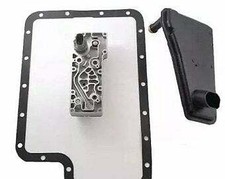
Shop the part for this fix: 4R100/E4OD shift solenoid block pack, 1995-97
On a 1995-97 E4OD the EPC solenoid lives in this block. If the EPC reads open at terminals L and M, or out of the 3.0-5.0 ohm range, this is the replacement. Match the year first: 1989-94 packs are different.
See the solenoid block pack at CoreTransmissionPartsNeed parts for this job?
Our E4OD parts page has solenoid kits and valve bodies by year, master rebuild kits and an EEC-IV code reader for 1989-95 trucks, with checkout on site. Confirm the model year before you order, because the 1989-94 and 1995-later solenoid packs don't interchange.
FAQ
Why does my E4OD shift so hard?
Most harsh E4ODs are running high line pressure. The computer sets line pressure through the EPC solenoid, and ATSG says an open EPC circuit causes maximum EPC pressure with harsh engagements and shifts. Bad throttle, airflow, speed or range sensor inputs also make the computer raise pressure, so pull codes before replacing parts.
How do I test the E4OD EPC solenoid?
Per ATRA, backprobe case connector terminals M (B+) and L (-) with a high-impedance voltmeter or signal monitor and confirm the signal changes with throttle. Then unplug it and measure the solenoid. ATSG's spec is 3.0-5.0 ohms. An open reading means the solenoid pack or internal harness.
What is normal E4OD line pressure?
ATRA's E4OD/4R100 chart lists 50-65 psi at idle in P, N, OD and 2, and 70-100 psi at idle in Reverse and 1. At stall it lists 245-290 psi in Reverse, 165-185 psi in OD and 2, and 175-210 psi in 1.
Why is my E4OD harsh only some of the time?
An intermittent harsh shift usually points at the line pressure modulator plunger hanging in a worn sleeve. Sonnax lists intermittent harsh shifts, soft 1-2 and 2-3 shifts and low EPC pressure for that wear, and sells a plunger and sleeve kit (36948-05K) to fix it.
Related guides
- E4OD Pressure Control (EPC) Solenoid Symptoms
- E4OD Shift Solenoid Symptoms and Replacement
- E4OD Slipping: Causes and Fix
- E4OD Won't Shift Into Overdrive: Causes and Fix
- E4OD Common Problems and Fixes
- 4R100 Harsh Shift Causes and Fix
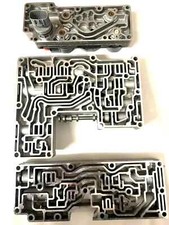
- E4OD Valve Body Symptoms and Testing
Sources
- ATRA (Automatic Transmission Rebuilders Association), "Quick Reference E4OD/4R100" (2009). Backs the E4OD overview (two shift solenoids, EPC controlling mainline pressure electronically), the case connector terminal chart with EPC on L (-) and M (B+), the EPC signal monitor check, the idle and stall line pressure chart, the "high at idle in all positions" flowchart, and the line pressure tap location. ATRA quick reference (PDF)
- ATSG (Automatic Transmission Service Group), Ford 4R100 technical service manual (2003). Backs the 4R100 as the updated E4OD, shift feel through line pressure control, the "Mod" EPC strategy, open EPC circuit causing maximum EPC pressure and harsh engagements and shifts, the short circuit failure mode, the sensor codes listed with harsh engagement symptoms, the EPC driver fault, the 3.0-5.0 ohm EPC spec, the 4R100 line pressure chart and test cautions, the EPC blow-off ball and spring, and valve body torque and bolt counts. ATSG manual (PDF)
- Sonnax, "Line Pressure Modulator Plunger Valve Kit 36948-05K." Backs the intermittent harsh shift, soft 1-2 and 2-3, low line rise and low EPC complaints, and the worn sleeve causing EPC leakage and plunger hang-up. sonnax.com
- Sonnax, "How to Choose the Right E4OD/4R100 Line Pressure Modulator Plunger Valve Kit." Backs the four plunger diameters and their applications, firmer shifts with larger diameters, and the accumulator control body sensitivity warning. sonnax.com
- Sonnax, "Boost Valve Kit 36424-01K." Backs soft shifts, delayed reverse and low line rise from boost sleeve wear leaking EPC and reverse boost oil. sonnax.com
- Russ Sylvis, Transmission Digest, "The Wave of the Future." Backs replacing the E4OD/4R100 forward clutch wave plate with waved steels to stop the neutral-to-drive bang, and the 0.005-0.008 in. wave figure. transmissiondigest.com
- Transmission Digest, "EPC Code Causing Loss of Power." Backs the 4R100 case where an EPC short code and gutless running traced to a failed EPC driver in the computer, fixed by computer replacement. transmissiondigest.com