An E4OD that stays in 3rd on the highway gets a solenoid pack thrown at it more often than anything else. Sometimes that's the fix. Just as often the pack was fine and the truck is still stuck in 3rd, because the problem was a pinched O/D cancel wire, a worn accumulator valve, or an overdrive clutch that burned up when its piston ring let go. On a truck that's 30 years old, all of those are common.
The first question is simple. Is the computer asking for 4th and the transmission not delivering it, or is the computer never asking for 4th at all? This guide covers both sides: the E4OD solenoid logic, the gear patterns that point at a stuck solenoid, the O/D cancel circuit, and the hydraulic and mechanical failures that stop the overdrive clutch from applying. The solenoid charts and forced-shift test come from ATRA's E4OD/4R100 quick reference, the switch and clutch specs from the ATSG 4R100 manual (the 4R100 is the updated E4OD), and the field failures from Sonnax and Transmission Digest. Full list under Sources.
How the E4OD gets into 4th
The E4OD has an overdrive planetary up front that runs locked 1:1 in 1st through 3rd. For 4th, the overdrive clutch applies, holds the overdrive sun gear, and the front gearset overdrives. The computer controls that with two shift solenoids. Per ATRA, both solenoids get power whenever the key is on, and the computer supplies the ground to turn them on. This is ATRA's solenoid sequence chart for D with overdrive on:
| Commanded gear | Shift solenoid 1 (A) | Shift solenoid 2 (B) | Coast clutch solenoid |
|---|---|---|---|
| 1st | ON | OFF | OFF |
| 2nd | ON | ON | OFF |
| 3rd | OFF | ON | OFF |
| 4th | OFF | OFF | OFF |
With overdrive cancelled, ATRA shows 1st through 3rd only, with the same shift solenoid and converter clutch states, and the coast clutch solenoid on all the time. That's where the engine braking in 3rd comes from.
Three things in that chart matter for a no-overdrive truck:
- The only change from 3rd to 4th is solenoid 2 turning off. Anything that keeps solenoid 2 on, electrically or mechanically, holds the truck in 3rd.
- The coast clutch solenoid has to be off in 4th. The coast clutch locks the overdrive gearset 1:1. If it's applied while the overdrive clutch tries to hold the sun gear, the two fight each other.
- 4th is both solenoids off. Unplug the pack and a healthy E4OD goes to 4th in D. ATRA's failsafe table confirms it: with the solenoids dead you get 4th in D and 2nd in manual 2 and 1. A truck that gets 4th in failsafe but not under computer control has a command problem, not a clutch problem.
Step 1: Read the shift pattern
ATRA's failure charts show which gears you actually get when the computer commands 1-2-3-4 with a solenoid stuck. Two of them take away overdrive, and they don't feel the same:
| Failure | Gears in D (commanded 1-2-3-4) | What the driver notices |
|---|---|---|
| Solenoid 2 (B) stuck ON | 2-2-3-3 | Takes off in 2nd, only one upshift, no overdrive, high rpm on the highway |
| Solenoid 1 (A) stuck ON | 1-2-2-1 | Normal launch, tops out in 2nd, then drops to 1st when it should go to 4th. Big rpm flare at cruise. |
| Solenoid 1 or 2 stuck OFF | 4-3-3-4 or 1-1-4-4 | Still gets 4th, but launches wrong or skips gears |
| Solenoids working, no 4th | 1-2-3-3 | Normal 1-2 and 2-3, never goes to 4th. This is the command, O/D cancel or overdrive clutch side. |
That first row is the one to remember. If the truck starts in 1st and only misses 4th, it's usually not a stuck solenoid 2, because a stuck solenoid 2 also takes 1st away. Our E4OD shift solenoid guide has all four failure charts and the ohm specs for the pack.
Step 2: Is the computer asking for 4th?
Force the shift
ATRA's quick reference shows a way to take the computer out of the picture. Unplug the case connector, feed terminal F (solenoid power) from the battery through a 10-amp fuse, and ground terminal D (solenoid 1) and terminal E (solenoid 2) by hand. D alone is 1st, D and E together is 2nd, E alone is 3rd, and neither grounded is 4th.
If the truck goes into 4th when you release E, the transmission can make the gear and the fault is on the command side: the computer, its inputs or the harness. If it stays in 3rd with neither solenoid grounded, the problem is inside. Look at a stuck solenoid valve, the 3-4 shift valve, the 3-4 accumulator control valve or the overdrive clutch.
The O/D cancel switch and its wiring
The button on the end of the shift lever is a momentary switch. ATSG's description, written for the 4R100 but carried over from the E4OD, says each press tells the computer to switch between 1-2-3-4 and 1-2-3, and the computer lights the "O/D OFF" lamp when overdrive is cancelled. With it cancelled, you get engine braking in 3rd. So the first check is easy: if the O/D OFF lamp is on solid, press the button and see if it goes out.
The wiring for that switch has a known E4OD problem. Transmission Digest ran a safety alert on 1992 Bronco and F-Series trucks, and it applies to any E4OD or 4R100 with the O/D cancel button on a column shifter. The switch wire can short against a steering column mounting screw, usually near the shift lever pivot, and blow the 10-amp #17 fuse. The symptoms they list include early shifts, loss of power, 3-4 shift cycling, the transmission control lamp cycling on and off, the rear anti-lock system going dead, lost tach and fuel gauge, and not being able to read self-test codes. On 1995 and later trucks, TD warns that the same fuse can also feed the drive-by-wire throttle control, so a short can drop the engine to idle on the highway. Their fix is to reroute the wire with extra heat-shrink tubing, and they list replacement lever F2TZ-7210-F with a longer pigtail. If the gauges and the O/D lamp act up at the same time, check that fuse and the wire at the column before anything else.
Codes and inputs
1989-95 trucks are EEC-IV. Pull both key-on engine-off and continuous memory codes with a code reader. 1996-97 trucks are OBD-II. ATSG lists P1780 on the 4R100 for a transmission control switch that wasn't cycled during self-test or whose circuit is open or shorted, with the symptom "no overdrive cancel when switch is cycled." ATSG also notes that a lot of speed sensor, converter clutch and temperature codes flash the O/D OFF lamp. A flashing lamp means a stored code, not a pressed button.
Temperature matters more than people think. ATSG's note on the fluid temperature sensor says the computer uses it to decide when to turn on converter lockup and the normal (stabilized) shift schedule after a cold start. A sensor or circuit that reads cold when the fluid is hot can keep the truck on its cold-start strategy. ATRA's table puts the sensor at 37K-16K ohms at 59-104°F and 5K-2.7K ohms at 159-194°F, measured at connector terminals G and H. If it reads in the cold range with a hot pan, that's your fault, not the overdrive clutch.
Step 3: Commanded but not achieved
3-4 accumulator control valve
This is the valve body item people skip. Sonnax lists "No 4th," soft shifts and early clutch failure as the complaints for its 3-4 accumulator control valve kit, 36948-09K, which fits both the E4OD and the 4R100. Per Sonnax, OE accumulator control valves restrict oil flow to the clutches. As the valve cycles it wears ridges into its bore, and on high-pressure shifts it can hang on those ridges and block oil to the clutch it feeds. The Sonnax valve has a step machined into the spool so full oil still reaches the clutch, a clip that stops it over-stroking, and four spring shims. Sonnax recommends its 36948-12 bore sizing tool with the kit. If you find a burnt overdrive pack in an otherwise clean E4OD, check this bore before you close it up.
The overdrive piston retaining ring
Sonnax lists "overdrive loss (E4OD)" as a complaint for its Sure Lock spiral snap ring, 36744-01. The factory ring is open-ended with no lock, and Sonnax says piston spring force can pull it out of its groove. When it comes out, the overdrive clutch can't apply properly and the frictions burn.
Transmission Digest's Joe Cangelosi wrote up exactly that on a 4R100 with no 4th, burnt fluid and a 3-4 shift code. The snap ring that holds the overdrive piston return spring had come out and destroyed the overdrive clutches. After an overhaul, new steels, a rebuilt converter and a new solenoid block, it still wouldn't shift into 4th. The last cause was a worn manual valve bore, found by air testing the circuits with the unit assembled and hearing air escape around the manual valve. The leak was bigger than what the overdrive clutch needed to apply. The 4R100 shares its layout with the E4OD, so the same checks apply.
The overdrive clutch itself
If 4th is commanded and the rpm flares on the 3-4 or creeps up at cruise, the overdrive clutch is applying and slipping. Things to check on teardown, from ATSG:
- Clearance. 0.68-1.33 mm (0.027-0.052 in.) on a 2-plate stack, 0.81-1.47 mm (0.032-0.058 in.) on a 3-plate stack. Measure between the selective snap ring and the backing plate and change the ring to set it.
- Capacity on tow rigs. Early E4OD units ran a 2-plate overdrive stack. On a truck that tows, see our E4OD slipping guide for the 3-plate conversion Transmission Digest published.
- The return spring snap ring. Make sure it's fully seated, and use a locking ring on the rebuild.
How to work an E4OD that won't go into overdrive, in order
- Check the fluid hot for level, smell and friction material. Our E4OD fluid guide covers capacities and the check procedure.
- Check the O/D OFF lamp. Solid means cancelled, so press the button. Flashing means a stored code.
- Pull the codes and fix sensor and switch circuit faults first.
- Check the #17 fuse and the column wiring if the gauges or anti-lock light act up too.
- Road test the pattern. A 2nd-gear launch with no 4th is solenoid 2. A normal 1-2-3 with no 4th is the command side or the overdrive clutch.
- Force 4th with ATRA's jumper method to split electrical from internal.
- If it won't make 4th with both solenoids off, go into the valve body (3-4 accumulator control valve, manual valve bore) and then the overdrive clutch.
Shop the part for this fix: Sonnax 3-4 accumulator control valve kit 36948-09K
The drop-in valve Sonnax built for the E4OD and 4R100 "No 4th" and soft 3-4 complaint. It keeps oil flowing to the overdrive clutch where the OE valve would hang on a worn bore.
See the 3-4 accumulator valve kit at CoreTransmissionPartsNeed parts for this job?
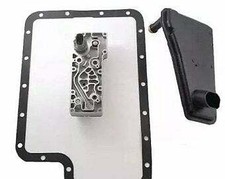
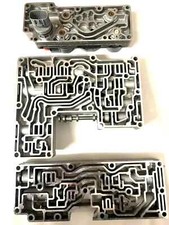
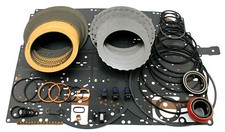
Our E4OD parts page has solenoid kits and valve bodies by year, master rebuild kits and an EEC-IV code reader for 1989-95 trucks, with checkout on site. Match the year before you order. The 1989-94 and 1995-later solenoid packs aren't interchangeable.
FAQ
Why won't my E4OD shift into overdrive?
Either the computer isn't commanding 4th or the transmission can't apply the overdrive clutch. On the command side, check the O/D cancel switch and its wiring, stored codes and the fluid temperature sensor. On the transmission side, check for shift solenoid 2 stuck on, a worn 3-4 accumulator control valve, a popped overdrive piston retaining ring or a burnt overdrive clutch.
What does it mean if my E4OD starts in 2nd and has no overdrive?
That matches ATRA's chart for shift solenoid 2 stuck on, which gives 2-2-3-3 when the computer commands 1-2-3-4. If the truck launches in 1st and only misses 4th, solenoid 2 is less likely, and you should look at the O/D cancel circuit and the overdrive clutch.
How do I test whether the E4OD can make 4th?
Use ATRA's forced-shift method. Unplug the case connector, feed terminal F through a 10-amp fuse, and ground terminal E alone for 3rd. Release it so neither solenoid is grounded, and a healthy unit shifts to 4th. If it does, the fault is on the computer or harness side. If it doesn't, the problem is inside the transmission.
Can a bad O/D cancel switch wire blow a fuse?
Yes. Transmission Digest reported the E4OD overdrive switch wire shorting against a steering column screw near the shift lever pivot and blowing the 10-amp #17 fuse. Symptoms included 3-4 shift cycling, a flashing transmission control lamp, a dead rear anti-lock system and lost gauges.
Related guides
- E4OD Shift Solenoid Symptoms and Replacement
- E4OD Slipping: Causes and Fix
- E4OD Common Problems and Fixes
- E4OD Rebuild Guide: Known Wear Points and Upgrades
- 4R100 Won't Shift Into Overdrive: Causes and Fix
- E4OD Harsh Shift Causes and Fix
Sources
- ATRA (Automatic Transmission Rebuilders Association), "Quick Reference E4OD/4R100" (2009). Backs the solenoid sequence chart for D and D with overdrive cancelled, the solenoid 1 and 2 always-on and always-off failure charts, the failsafe gear ranges, the solenoids powered with the key on and grounded by the computer, the A-M connector terminal ID, the signal monitor check, the forced-shift procedure with a 10-amp fused feed, and the TFT resistance table. ATRA quick reference (PDF)
- ATSG (Automatic Transmission Service Group), Ford 4R100 technical service manual (2003). Backs the 4R100 as the updated E4OD, the transmission control switch and O/D OFF lamp operation, coast braking in 3rd with overdrive cancelled, P1780, the TCIL flashing on stored codes, the TFT note on cold-start TCC and shift schedule, and the 2-plate and 3-plate overdrive clutch clearance specs. ATSG manual (PDF)
- Sonnax, "3-4 Accumulator Control Valve Kit 36948-09K." Backs the No 4th, soft shift and premature clutch failure complaints, E4OD and 4R100 fitment, the OE valve restricting oil flow after it hangs on bore wear ridges, the stepped spool, clip and shims, and the 36948-12 bore sizing tool. sonnax.com
- Sonnax, "Sure Lock Spiral Snap Ring 36744-01." Backs the overdrive loss (E4OD) and piston retaining ring popout complaints, and the open-end OE ring being pulled from its groove by piston spring force. sonnax.com
- Transmission Digest, "E4OD/4R100 Safety Alert." Backs the O/D cancel switch wire shorting against a steering column screw near the shift lever pivot, the 10-amp #17 fuse, the symptom list including 3-4 shift cycling and TCIL cycling, the 1995-up drive-by-wire throttle warning, and the F2TZ-7210-F replacement lever. transmissiondigest.com
- Joe Cangelosi, Transmission Digest, "The 4R100 with a Mysterious No 3-4 Shift." Backs the no-4th case with the dislodged overdrive return spring snap ring, the repairs that didn't fix it, the assembled air test, and the worn manual valve bore starving the overdrive clutch. transmissiondigest.com