An E4OD that slips has usually told you which clutch is failing before you pick up a wrench. The trouble is that most people only say "it slips." They don't write down which gear, whether it slips hot or cold, and whether manual 2 and 1 do the same thing as Drive. On this unit, those three answers usually narrow it to one clutch pack or one leak path.
This guide covers what holds in each gear, how to match the slip to the part, the E4OD line pressure numbers, and the leak points and assembly mistakes that burn clutches in these units. The apply chart and pressure specs come from ATRA's E4OD/4R100 quick reference, the leak and wear data come from Sonnax, and the checkball and overdrive clutch bulletins come from Transmission Digest. Full list under Sources.
What holds in each gear
ATRA's clutch and band application chart for the E4OD lists these apply elements for each range. The one-way clutches are left out here to keep it readable.
| Range / gear | Applied |
|---|---|
| D 1st | Forward clutch (coast clutch also on when O/D is cancelled) |
| D 2nd | Forward, intermediate clutch |
| D 3rd | Forward, direct, intermediate (applied but not doing work) |
| D 4th | Forward, direct, overdrive clutch, intermediate (applied but not doing work) |
| 3rd, O/D cancelled | Forward, direct, coast clutch, intermediate (not doing work) |
| Manual 2 | Forward, intermediate clutch, intermediate band, coast clutch |
| Manual 1 | Forward, low/reverse clutch, coast clutch |
| Reverse | Direct, low/reverse clutch, coast clutch |
Two things on that chart do most of the diagnostic work. First, the forward clutch is on in every forward gear, so a forward clutch failure slips in all of them while reverse feels fine. Second, several elements work in two unrelated ranges. The direct clutch is used in 3rd, 4th and reverse. The low/reverse clutch is used in manual 1 and reverse. The coast clutch is used in reverse and in every manual range. That overlap is what lets you pin it down on a road test.
Match the slip to the part
| Where it slips | Common element | What to suspect first |
|---|---|---|
| Every forward gear, reverse OK | Forward clutch | Forward clutch pack or piston, forward feed and sealing rings |
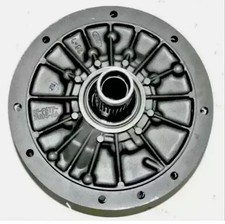
| Every range, forward and reverse | Pressure supply | Low fluid, restricted filter or damaged filter seal, pump, main regulator, loose valve body bolts |
| 2nd, 3rd and 4th, 1st OK | Intermediate clutch | Intermediate clutch, or its feed where it crosses from the case into the support |
| 3rd, 4th and reverse | Direct clutch | Direct clutch pack, direct feed at the center support |
| 4th only | Overdrive clutch | Overdrive clutch pack, piston retaining ring, overdrive clutch capacity |
| Reverse and manual 1 | Low/reverse clutch | Low/reverse clutch, manual valve bore, missing checkball |
| No engine braking in manual 2 or 1 | Coast clutch / band | Coast clutch, intermediate band or servo, missing checkball |
| Rpm creeps up at steady cruise, no gear change | Converter clutch | TCC apply, converter, converter charge and cooler flow |
Road test it cold and again at full operating temperature. Slip that only shows up after the fluid is hot and thin is almost always a leak, such as a worn bore, a worn sealing ring or a loose support joint, rather than a worn-out clutch pack. A pack that is burnt slips hot and cold.
E4OD line pressure test
Put a gauge that reads to at least 300 psi (reverse stall runs up to 290) on the line pressure tap on the side of the case. ATRA's drawing shows it near the identification tag. These are ATRA's numbers for the E4OD/4R100:
| Range | Idle | Stall |
|---|---|---|
| P, N | 50-65 psi (345-448 kPa) | n/a |
| R | 70-100 psi (483-690 kPa) | 245-290 psi (1689-1998 kPa) |
| OD, 2 | 50-65 psi (345-448 kPa) | 165-185 psi (1138-1276 kPa) |
| 1 | 70-100 psi (483-690 kPa) | 175-210 psi (1207-1448 kPa) |
Check idle pressure in every range first. If idle pressure is low, don't do the stall part of the test. You'll just burn what's left of the clutches. Keep any stall check short.
ATRA's pressure flowchart tells you where to look based on the result:
- Low at idle in all ranges: low fluid level, restricted inlet filter, damaged inlet tube seal on the filter, loose main body, solenoid body or accumulator body bolts, excessive leakage in the pump, case or control bodies, sticking main regulator valve, or damaged gaskets or separator plate.
- High at idle in all ranges: main regulator valve, solenoid body and harness. On an E4OD, high line pressure usually shows up as harsh shifts, not slip, but a failed EPC circuit can drive pressure either way, so read the codes.
- Low only in D: forward clutch or valve body.
- Low only in 2: forward clutch, intermediate clutch, coast clutch or intermediate band servo, valve bodies.
- Low only in 1: forward clutch, low/reverse clutch or coast clutch, valve body.
- Low only in R: separator reinforcing plate, coast clutch, low/reverse clutch or direct clutch, valve bodies.
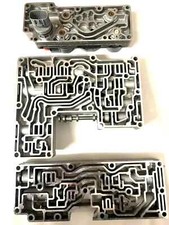
Normal idle pressure that won't come up under load is a boost problem. Sonnax lists "soft shifts, delayed Reverse, low line rise" for its E4OD boost valve kits, "low base line pressure" for its higher-pressure main regulator spring (36424-10), and "1-2 soft, 2-3 soft, low line rise, low EPC pressure" for its line pressure modulator plunger valve kits. Those are valve body wear parts, and they're why a slipping E4OD with good clutches can still need valve body work.
The leak points that burn E4OD clutches
Case-to-support feeds
This is the big one on high-mileage and tow-rig units. The intermediate and direct clutch apply oil crosses from the case into the intermediate clutch support and the center support, and there's no positive seal at that joint. Per Sonnax, "clearance and movement between the case and center support allows apply fluid to leak, lowering clutch apply pressure." It gets worse as the supports flex under load, which is why a loaded truck on a grade finds it first.
The symptoms Sonnax lists for this leak are burnt intermediate clutches, direct clutch failure, 2-3 slip, 3-2 slip, no 2nd, a soft 1-2 and delayed reverse. Those match the intermediate and direct columns in the table above. Sonnax's fix is the 36424-24K intermediate and direct clutch feed seal kit, which seals both feeds and is made for the E4OD and the 4R100. If you replace the burnt intermediate or direct frictions without sealing those feeds, expect the same failure again.
Manual valve bore
Sonnax describes the steel manual valve wearing and scoring its aluminum bore, "reducing line pressure in reverse and manual low positions." The symptoms are delayed reverse, reverse slip and low/reverse clutch failure. That also fits ATRA's "low only in R" and "low only in 1" results. The repair is to ream the bore for an oversized valve (Sonnax 36947-13K) or replace the valve body.
Missing or misplaced checkballs after an overhaul
If the slip started right after a rebuild or valve body job, check the checkballs before anything else. Transmission Digest published two bulletins on this:
- 1996-98 E4OD and 4R100: slipping or no reverse, and/or no engine braking in manual 2 or 1, can come from a missing or misplaced BS1 checkball. Without it, oil pressure in reverse, manual 2 and manual 1 exhausts at the manual valve.
- 1990-95 E4OD: the same complaint can come from a missing or misplaced BS1 or BS6 checkball.
It takes a few minutes with the valve body on the bench and a checkball chart for the right year. That's a lot cheaper than pulling the unit back out.
Overdrive clutch capacity and the retaining ring
Fourth-gear-only slip on an E4OD is usually the overdrive clutch. Transmission Digest's February 2000 bulletin says E4OD units, "especially heavier loaded vehicles," can burn the overdrive clutch early because it doesn't have enough capacity. Their fix is to run three clutches instead of two by swapping the 0.490-inch backing plate (E9TZ-7B066-B, two-clutch) for the thinner 0.320-inch plate (F3TZ-7B066-A, three-clutch). On a rebuild for a truck that tows, check which stack-up is in there.
Sonnax also lists "OD loss (E4OD)" and "OD piston retaining ring popout" for its Sure Lock spiral snap ring (36744-01). The open-end factory ring has no lock and can be pulled out of its groove by piston spring force. If you find a burnt overdrive pack, check that ring before you blame the frictions alone.
Converter slip that feels like transmission slip
If rpm rises at steady cruise with no gear change, the converter clutch is letting go. Sonnax ties E4OD/4R100 codes 62, 628 and 1744 to converter and lube circuit problems, and notes that a worn line-to-lube regulator valve can restrict converter charge and cooler flow under load, which leads to converter slip codes, overheating and cooked fluid. Pull the codes before you condemn the converter.
How to work a slipping E4OD, in order
- Check the fluid hot. Check the level and smell it. Low fluid lets the pump suck air on grades and in turns, and that feels exactly like slip. Our E4OD fluid type and capacity guide has the capacities and check procedure. Burnt fluid with friction material in the pan means a pack is already gone. A fluid change won't bring it back.
- Pull the codes. 1989-95 trucks are EEC-IV with two- or three-digit service codes. Pull both key-on engine-off and continuous memory. 1996-97 trucks are OBD-II. Fix EPC and range sensor faults first. A PCM commanding the wrong pressure or reading the wrong gear can make a healthy unit slip.
- Road test by range. Write down which gears slip in D, in manual 2, in manual 1 and in reverse, cold and hot, then use the table above.
- Run the line pressure test against ATRA's numbers, idle first.
- Drop the pan. Look for friction material, the filter inlet seal, and loose valve body and solenoid body bolts, which are all on ATRA's "low in all ranges" list.
The fix
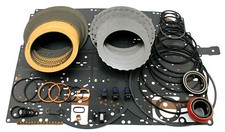
If the pressure test and road test point to a leak and the fluid is still clean, a valve body repair or the feed seal kit can save the unit. If a pack is burnt, it's a rebuild. On a rebuild, fix the cause as well as the frictions. Seal the case-to-support feeds, check the manual valve bore and the boost valve, verify the checkballs for the model year, use the three-clutch overdrive stack on a towing truck, and fit a locking overdrive piston ring. Our E4OD rebuild wear points guide goes through the rest of the teardown.
Shop the part for this fix: Sonnax intermediate and direct clutch feed seal kit 36424-24K
Seals the case-to-support feed leak that Sonnax ties to burnt intermediate clutches, direct clutch failure and 2-3 slip. It fits the E4OD and the 4R100.
See the feed seal kit at CoreTransmissionPartsNeed parts for this job?
Our E4OD parts page has master rebuild kits, pumps, valve bodies by year and filter kits, with checkout on site.
FAQ
Why is my E4OD slipping?
Start with which gears slip. Per ATRA's apply chart, the forward clutch is on in every forward gear, the intermediate clutch in 2nd through 4th, the direct clutch in 3rd, 4th and reverse, and the overdrive clutch only in 4th. Slip in every range, forward and reverse, points to the pressure supply: low fluid, a restricted filter, the pump or the main regulator.
What should E4OD line pressure be?
ATRA lists 50-65 psi at idle in P, N, OD and 2, and 70-100 psi at idle in R and 1. At stall, it lists 245-290 psi in R, 165-185 psi in OD and 2, and 175-210 psi in 1. If idle pressure is low, skip the stall test and find the leak first.
Why does my E4OD slip in 2nd and 3rd?
A common cause is apply oil leaking where it crosses from the case into the intermediate clutch support and center support. Sonnax says there is no positive seal at that joint and lists burnt intermediate clutches, direct clutch failure and 2-3 slip as the result. Its 36424-24K feed seal kit seals both feeds.
My E4OD slips in reverse and has no engine braking after a rebuild. What did we miss?
Check the checkballs. Transmission Digest bulletins trace slipping or no reverse and no engine braking in manual 2 or 1 to a missing or misplaced BS1 checkball on 1996-98 units, and BS1 or BS6 on 1990-95 units. Without them, reverse and manual-range oil exhausts at the manual valve.
Related guides
- E4OD Common Problems and Fixes
- E4OD Shift Solenoid Symptoms and Replacement
- E4OD Rebuild Guide: Known Wear Points and Upgrades
- E4OD Fluid Type and Capacity
- 4R100 Slipping: Causes, Codes and the Fix
- E4OD No Reverse: Diagnosis and Fix
- E4OD Delayed Engagement: Causes and Fix
Sources
- ATRA (Automatic Transmission Rebuilders Association), "Quick Reference E4OD/4R100" (2009). Backs the clutch and band application chart for every range, the line pressure idle and stall specs in psi and kPa, the line pressure tap location, and the pressure test flowchart (low at idle in all ranges, high at idle in all ranges, and low only in P, R, N, D, 2 or 1). ATRA quick reference (PDF)
- Sonnax, "Intermediate & Direct Clutch Feed Seal Kit 36424-24K." Backs the case-to-support feed leak, the "clearance and movement" quote, the symptom list (burnt intermediate clutches, direct clutch failure, 2-3 and 3-2 slip, no 2nd, soft 1-2, delayed reverse), and E4OD/4R100 fitment. sonnax.com
- Sonnax, "Oversized Manual Valve Kit 36947-13K." Backs the manual valve bore wear that reduces line pressure in reverse and manual low, and the delayed reverse, reverse slip and low/reverse clutch failure symptoms. sonnax.com
- Sonnax, Ford E4OD unit parts listing. Backs the boost valve, main regulator spring and line pressure modulator plunger valve symptoms (soft shifts, low line rise, low base line pressure, low EPC pressure), the Sure Lock spiral snap ring 36744-01 for E4OD OD loss and piston retaining ring popout, and the line-to-lube regulator valve tied to codes 62/628/1744 and converter overheating. sonnax.com
- Transmission Digest, Transmission Tech/Talk, November 2001 issue. Backs the 1996-98 E4OD/4R100 BS1 checkball and 1990-95 E4OD BS1/BS6 checkball bulletins for slipping or no reverse and no engine braking in manual 2 or 1, and the oil exhausting at the manual valve. transmissiondigest.com
- Transmission Digest, Transmission Tech/Talk, February 2000 issue. Backs the premature E4OD overdrive clutch failure in heavier loaded vehicles from low clutch capacity, and the three-clutch fix with the 0.320-in. backing plate F3TZ-7B066-A replacing the 0.490-in. two-clutch plate E9TZ-7B066-B. transmissiondigest.com