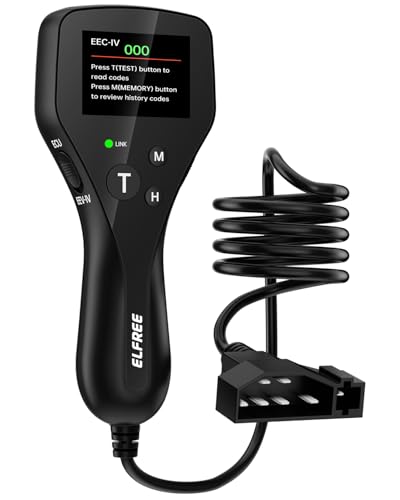
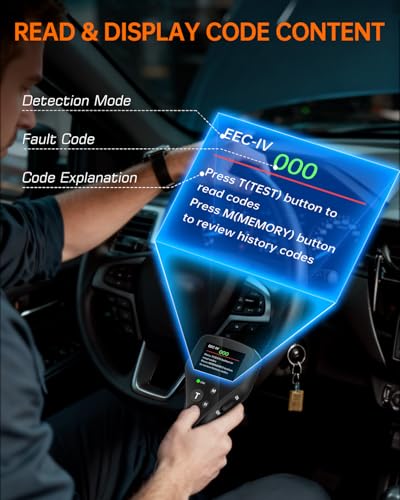
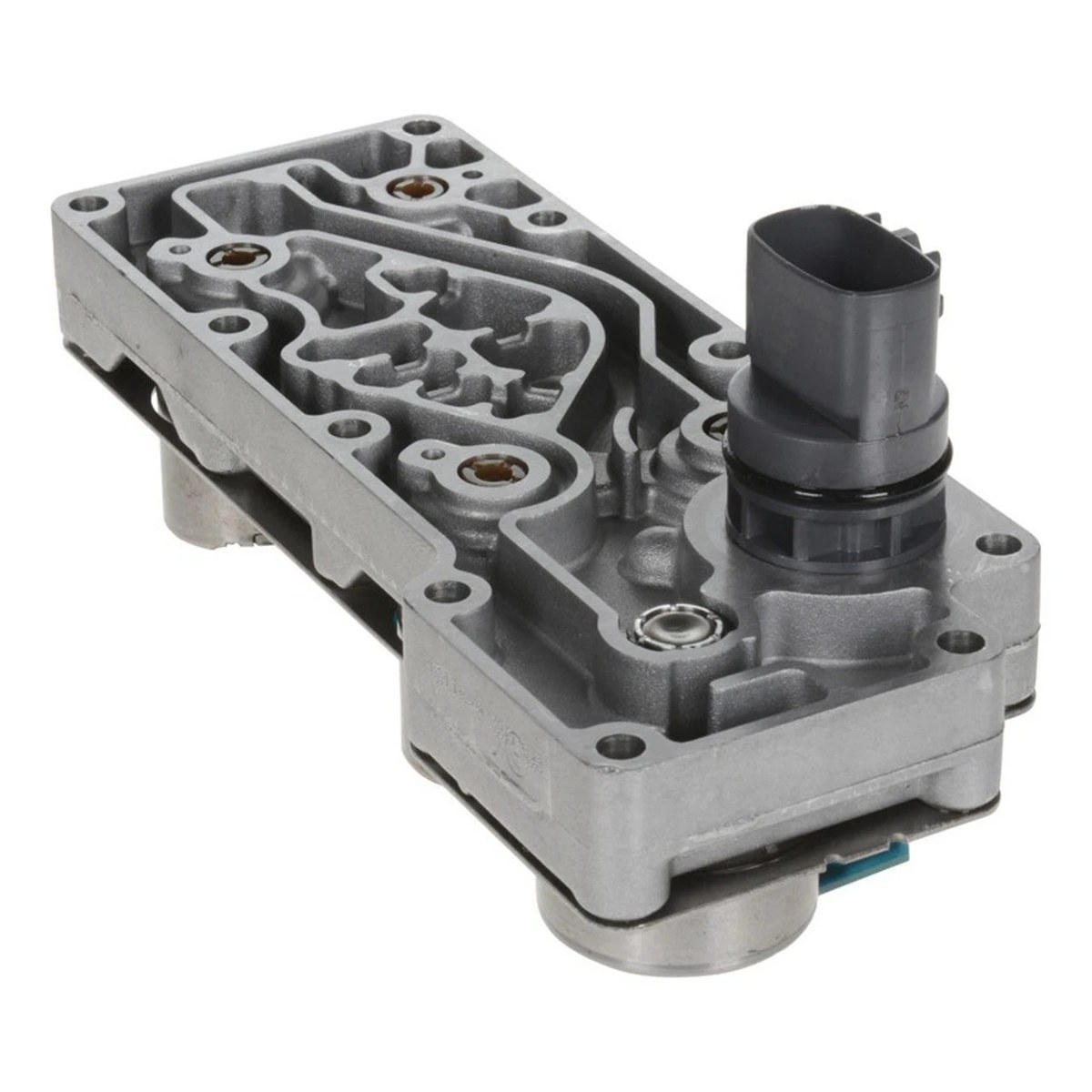
If you own a 1989-1995 Ford F-250, F-350 or E-Series van with the E4OD automatic, the transmission has no governor and no kickdown cable - the EEC-IV engine computer runs every shift. That means a truck that starts in 2nd, will not take overdrive, shifts early, or slams into gear has almost certainly stored a code, and the code is the cheapest diagnosis you will ever get. This Ford OBD1 code reader plugs into the factory self-test connector under the hood and shows the code and its meaning on a 2.4 inch screen, so you are not counting check engine light flashes or a test light in the dark.
What an EEC-IV code reader does on an E4OD truck
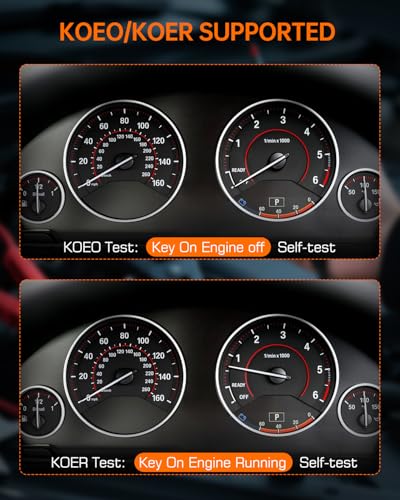
EEC-IV Fords predate OBD2. Early EEC-IV computers cannot stream sensor data to a scan tool; what they do have is a built-in self-test that reports stored and live faults as numeric codes. This reader runs the three tests that matter. Key On Engine Off (KOEO) checks circuits with the engine stopped, which is where an open shift solenoid, a shorted EPC solenoid or a bad manual lever position sensor shows up. Key On Engine Running (KOER) runs the test with the engine live, for faults that only appear under operation. Continuous Memory (CM) pulls the intermittent faults the computer logged while you were driving - the shift problem that comes and goes, or only shows up hot.
Because the same computer controls the engine and the E4OD, transmission faults land in the same code list as engine faults. A transmission temperature sensor fault, a converter clutch fault or a shift solenoid circuit fault reads out right next to an EGR or idle air code. Ford used two-digit codes on earlier EEC-IV systems and three-digit codes on later ones, which is why repair literature writes the 4x4 low range switch fault as 47/633. The reader displays the number and the written definition, so you do not need a code chart in your lap.
Shift problems this tool helps you sort out
- Starting in 2nd or going straight to 4th - the pattern the E4OD falls into when it loses solenoid control
- No overdrive, or overdrive that drops in and out - a solenoid circuit, an overdrive cancel switch fault or a sensor input
- Early shifts in 2WD or 4x4 high - a 4x4 low range input stuck on, logged as code 47 or 633
- Harsh engagement and firm shifts - the EPC solenoid circuit or a sensor that makes the computer raise line pressure
- Soft shifts or delayed reverse with codes 62, 628 or 1744 - Sonnax ties these to main regulator valve wear, a hydraulic cause the code alone will not separate from an electrical one
- A check engine light on an older Ford with no OBD2 port to plug into
How to use it before buying parts
Run KOEO first with the engine off and write down every code. Then pull Continuous Memory to see what was logged while driving, and run KOER with the cable routed into the cab so you can respond to the test prompts from the driver's seat. Separate transmission codes from engine codes and fix circuit faults before you condemn hard parts. A code for a solenoid circuit points you to the case connector and harness first - Transmission Digest has documented E4OD connector corrosion and broken lock tabs causing repeat codes even after a new solenoid pack. Our E4OD shift solenoid guide walks through the resistance checks once you know which circuit is flagged, and the EPC solenoid guide covers the pressure side.
Fitment and coverage
Coverage is Ford, Lincoln and Mercury vehicles from 1981 through 1995 that use EEC-IV or the older MCU engine control - including E4OD trucks and vans, AOD and AOD-E cars, and the gas and diesel F-Series of those years. It connects to the factory underhood self-test plug through a 9 foot cable with reinforced nickel-plated pins and draws power from the vehicle, with no batteries. It does not read ABS codes and it is not an OBD2 tool. Ford changed over to OBD2 around the 1996 model year, and some late-production vehicles switched early, so check the truck: if it has a 16-pin OBD2 port under the dash and no underhood self-test plug, you need an OBD2 scanner instead. Browse all E4OD parts on our E4OD collection page.
After the codes - what to do next
Once the reader confirms a failed electrical part, you can buy the right piece instead of a whole transmission. A converter clutch circuit fault on a 1995-97 truck points to the E4OD TCC solenoid; any time the pan comes down for a solenoid or valve body job, install a new E4OD deep pan filter and gasket kit and refill with Mercon V. After a repair, clear the stored codes by disconnecting the battery, drive the truck through a full warm-up and every gear, then rerun KOEO and Continuous Memory to confirm the fault does not return. For a broader list of what fails on these units, see E4OD common problems and fixes.