"It shifts weird" is the most common complaint on an E90, E91, E92 or E93 3 Series with the ZF six-speed, and it covers a lot of ground: a bang into Drive, a hard 2-1 as the car rolls to a stop, a flare on the 4-5, a clunk on a coast downshift, or a car that shifts fine cold and turns harsh after twenty minutes on the highway. Each one comes from a different place. Some of them are a valve body bore, some are a seal or a sleeve, and some are not the transmission at all.
This guide works through 3 Series shift-quality problems in the order I check them on the bench: identify the unit, confirm the fluid and the electrical basics, read the shift pattern, then go into the mechatronic. If your complaint is a gear that slips and holds high rpm, start with our 3 Series slipping guide instead. This one is about how the shifts feel.
Step 1: Know Which 6HP You Have
Depending on build date and engine, the E9x 3 Series carries either a Gen 1 6HP19 or a Gen 2 6HP21. That matters more on a shift complaint than on almost any other job. Sonnax product line manager Maura Stafford explains in Transmission Digest that ZF changed the mechatronic in 2006 to increase oil flow, which reduced shift duration. Gen 1 covers the 6HP19, 26 and 32. Gen 2 covers the 6HP21, 28 and 34. The two mechatronic units "may look nearly identical externally, but they are programmed differently and do not act the same," and their valve body parts are not interchangeable (Transmission Digest, "Talkin' 'Bout My Gen-eration").
Read the ZF tag on the case before you order a solenoid kit, a valve kit or a used mechatronic. A Gen 2 mechatronic in a Gen 1 case, or the other way around, is a shift complaint you built yourself. Also check whether the valve body is M-shift (mechanical manual valve) or E-shift (solenoid-controlled manual valve), because several of the Sonnax kits below fit only one of them.
Step 2: Fluid Level Comes Before Anything Else
Sonnax's ZF6 symptom chart lists erratic shifting first and blames low fluid level, calling it "one of the most common and overlooked issues on the 6HP" (Sonnax ZF6 webinar). There is no dipstick on a 3 Series, so the level is set at the filler plug against a scan tool temperature reading. ZF Service Information 50145 gives the procedure (ZF SI 50145):
- Car level, engine idling at 650-950 rpm. If the idle is outside that range, the level cannot be set correctly.
- Fill until fluid runs out of the filler hole, run through the selector positions, then fill again.
- Set the final level at 30-35 C transmission temperature, and do not let it go over 50 C during the check.
- Filler plug torque on the BMW 6HP19 and 6HP21 is 35 Nm. Drain plug is 8 Nm.
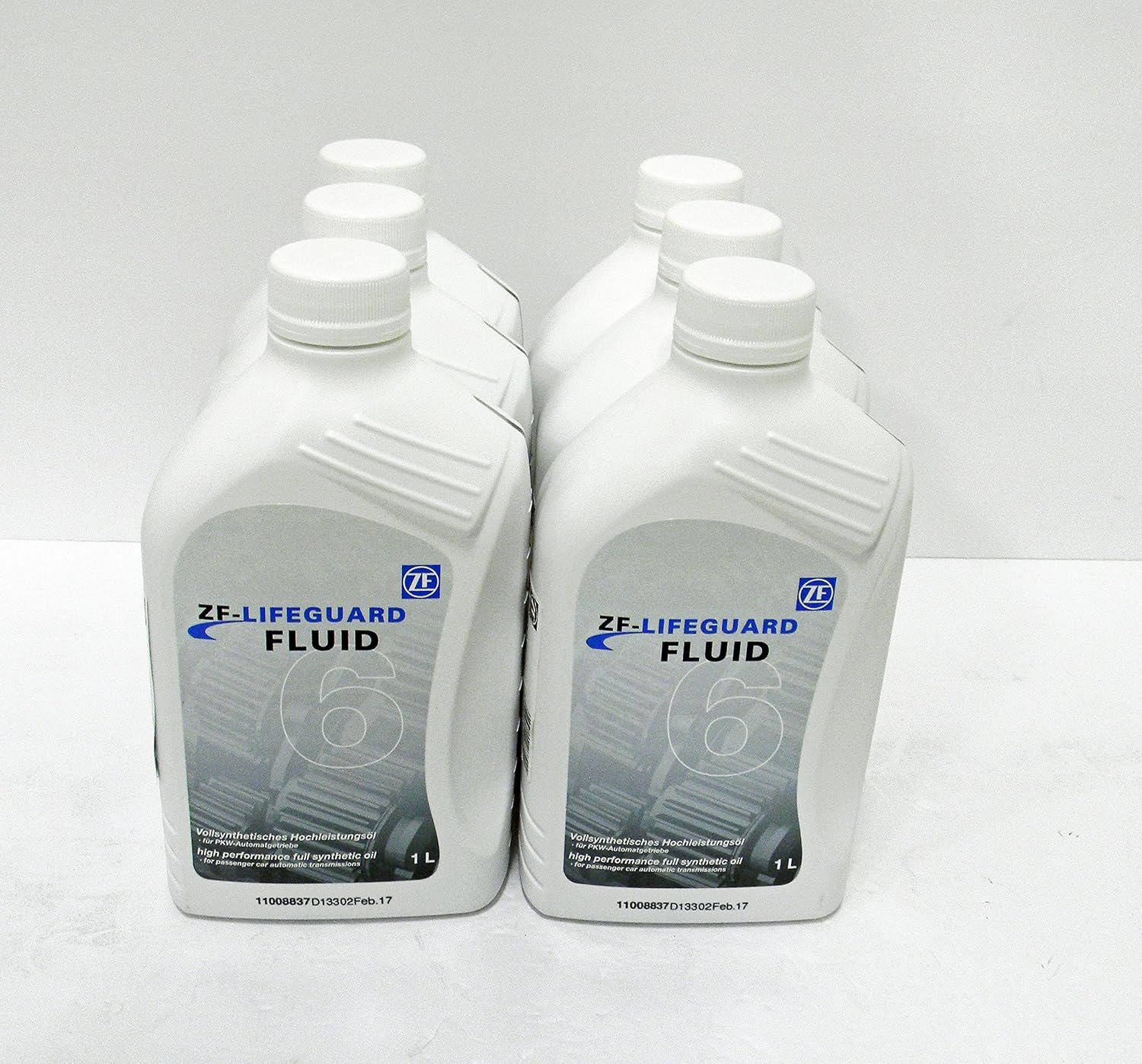
Fluid type matters as much as level. Sonnax's chart traces a 3-4 or 4-3 clutch squawk to incorrect fluid or a lack of friction modifier, and lists ZF modifier S671 090 288. BMW fluid 83 22 0 142 516 is the same product as ZF LifeguardFluid 6, and ZF's data sheet warns that the wrong oil can cause anything from poor shift quality to transmission failure. ZF recommends a fluid change after 150,000 km (about 93,000 miles) even on "lifetime" fill units (ZF LifeguardFluid 6 data sheet). Most 3 Series I see with a shift complaint past 100,000 miles have never had it done.
Step 3: Check the Sleeve, the Connector and the Voltage
The mechatronic connects to the car through a sealing sleeve in the case. When it leaks or is not seated, you get fluid loss at the pan and intermittent connection faults. A BMW bulletin reprinted by Vehicle Service Pros ("Leaky Bimmer") ties a leaking sleeve to fault codes 5079 and 507A, the gearbox emergency program light and failsafe operation. The check is the distance from the connector to the housing: 3 mm or less is correct, while about 7-8 mm means the sleeve was installed wrong. BMW replaces sleeve 24 34 7 588 725 and the pan gasket per repair instruction RA 24 34 020, lubricates both sleeve O-rings with ATF, and pushes the sleeve fully home before closing the white locking tab. The bulletin also warns that a bad installation can damage the pins in mechatronic connector X8500, which cannot be repaired and means a new mechatronic (Vehicle Service Pros, BMW bulletin).
Two more electrical checks from the Sonnax chart cost nothing and save a lot of parts:
- Immediate failsafe after a mechatronic or valve body service: the chassis harness to case connector is not fully engaged.
- Erratic control or no engagement: battery or charging voltage below 9.0 volts or above 16 volts causes erratic transmission control. Load-test the battery and check the alternator before you go inside.
Step 4: Rule Out the Engine and the Heat
The 6HP sets clutch pressure from engine torque data on the CAN bus, so a bad engine signal produces a bad shift. Sonnax lists these engine-side causes:
- Poor 3-2 and 2-1 shifts, slip, flare or ratio codes: inspect the MAF sensor and the intake air duct for cracks, and make sure the duct is properly attached at the throttle body.
- Intermittent neutral during a shift: a spark plug misfire can cause EMI that corrupts throttle position values. Replace the plugs.
- Early downshifts: check engine performance first.
Then look at temperature. Sonnax says the TCM carries two temperature sensors, one for transmission fluid and one for the TCM itself, and if either goes over 170 C (338 F) the transmission and TCM shut down. A sensor or solenoid reading out of range can cause harsh shifts, and a TCM temperature out of range can drop the car into a 3rd or 5th gear failsafe. Sonnax's fix for the failsafe is to check the cooler and airflow. On a 3 Series, a restricted cooler, a dead auxiliary fan or a radiator packed with debris will show up here before it shows up as an engine temperature problem.
Last, ask about software. Sonnax lists an OE reflash among the fixes for various shift concerns, and a BMW dealer can tell you whether the car has had the latest transmission programming.
Step 5: Read the Shift Pattern
With fluid, voltage, engine data and temperature confirmed, the shift pattern tells you where to look inside. The 6HP uses two of its five shift elements in every gear: A (1-2-3-4), B (3-5-R), C (2-6), D (low-reverse) and E (4-5-6). That lets you tie a complaint to a valve.
| Complaint | Likely valve or part | Sonnax repair |
|---|---|---|
| Harsh up and downshifts, delayed engagement, flares, wrong gear starts | Solenoid pressure regulator valve | 95740-17K (Gen 1), 95740-64K (Gen 2) |
| Firm shifts, harsh engagement, downshift clunk, EDS codes | Accumulator pistons | 95740-15K (Gen 1 and Gen 2) |
| Delayed or harsh forward, 5-4 flare or neutral, no 4-5 | Clutch A control boost valve | 95740-21K (Gen 1), 95740-28K (Gen 2) |
| Harsh downshifts, downshift bind-ups, coastdown neutral | Clutch A and E control valves (Gen 2) | 95740-66K (M-shift), 95740-72K (E-shift) |
| Harsh shifts or soft shifts, high line pressure | Pressure regulator, 053 plate (Gen 1) | 95740-78K |
| Harsh downshifts, harsh TCC apply and release | Converter release regulator (Gen 2 E-shift) | 95740-05K |
| Harsh reverse, reverse slip | Shift valve 3 (Gen 2 M-shift) | 95740-74K |
| Inconsistent shift quality | Leaking end plugs | 95740-27K |
| Harsh shifting once hot, 4-5 slip or flare | General valve body wear | Valve body repair likely |
All of these come from the Sonnax ZF6 webinar and the Gen 2 vacuum test guide. The pattern I see most on 3 Series cars is the hot-only harsh shift. Cold fluid is thick enough to hide a worn bore. Once it thins out, the regulator can no longer hold a steady pressure, and the TCM's adaptations chase it.
Step 6: Test the Mechatronic on the Bench
Accumulators
The accumulators are the cheapest part on the list and the easiest to miss. Sonnax's Gen 2 vacuum test guide says the OE accumulator pistons should sit flush with, or about .030 inch below, the casting surface, and that it is common for the rubber insert to lose tension. Each piston can be vacuum tested from the exhaust hole on the opposite side of the casting. Worn pistons cause firm shifts, a downshift clunk and erratic EDS solenoid control (Sonnax ZF6 Gen 2 vacuum test guide).
Valve bores
Vacuum test the bores at the locations in the Sonnax guide with the valves in their rest position. A low vacuum reading means wear. Sonnax notes that the circuit layouts vary by make, model, generation and E- or M-shift, so use their illustrations as a guide to the valves, not a drill template. Several of the oversized kits need a reamer and the VB-FIX fixture. If three or four bores fail, a complete valve body is usually cheaper than the tooling and labor.
Solenoids
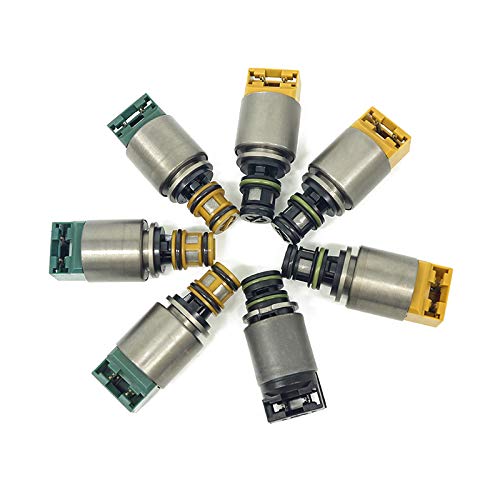
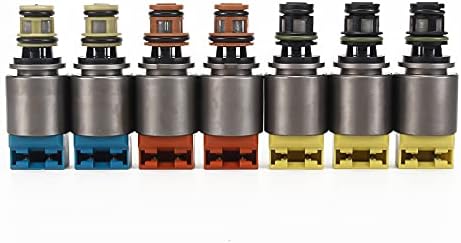
Sonnax gives typical PWM (EDS) solenoid resistance as 5-6 ohms at 20 C. The on/off MV1 and MV2 solenoids read 10-10.5 ohms and MV3 reads 24-26 ohms. A solenoid that measures right can still stick, so on a harsh-shift complaint with clean bores, a solenoid kit is a reasonable next step. Remember that the solenoid-to-clutch map changes between generations. On Gen 1, EDS3 controls C and EDS5 controls line pressure. On Gen 2, EDS5 controls C and EDS7 controls line pressure. Getting this backward is how the wrong solenoid gets replaced.
Bridge seal and tube seals
Sonnax says the bridge seal adapter on the 6HP19 and 6HP21 is 15.4 mm plus or minus 0.1 mm tall, versus 14.4 mm on the 6HP26/28/32, and the two are not interchangeable. The valve body tube seals also have to be the latest design for the application. A wrong or leaking seal here costs pressure in an apply circuit and turns a clean rebuild into a harsh or soft shift.
Step 7: Reset Adaptations and Program
After any fluid, valve body or solenoid work, clear the transmission adaptations with a BMW-capable scan tool and drive the car warm through every upshift and downshift, light throttle first, so the TCM can relearn fill times. A shift that felt harsh before a repair can feel worse for the first few miles after an adaptation reset. Give it a full drive cycle before you judge it.
If you replaced the mechatronic, it has to be programmed to the car. Sonnax notes that an unprogrammed unit limits vehicle speed to about 13 km/h (8 mph). A used mechatronic from another car is not a bolt-in fix for a shift complaint.
Shop the part for this fix
If the bench tests point to solenoids or a worn mechatronic, Core Transmission Parts carries ZF 6HP solenoid kits, valve bodies and rebuild kits. Confirm Gen 1 (6HP19) or Gen 2 (6HP21) from the case tag first.
See ZF 6HP parts at Core Transmission Parts →Frequently Asked Questions
Why does my BMW 3 Series transmission shift hard?
The most common causes on the E90-E93 ZF six-speed are low or old fluid, worn valve body bores such as the solenoid pressure regulator, and tired accumulator pistons. Engine data problems like a cracked intake duct or a bad MAF sensor, and battery voltage outside 9-16 volts, can also cause harsh or erratic shifts. Check the fluid level at 30-35 C and the electrical basics before you buy parts.
Why does my 3 Series shift harder when the transmission is hot?
Sonnax lists harsh shifting once hot as a sign that valve body repair is likely necessary. Cold fluid is thick enough to hide a worn bore, but once it thins the regulator valves leak pressure and the shifts get inconsistent. A restricted cooler or a fluid temperature sensor reading out of range can also cause it.
Can a mechatronic sleeve leak cause shift problems?
Yes. A BMW bulletin ties a leaking or poorly seated sealing sleeve to fault codes 5079 and 507A, the gearbox emergency program and failsafe operation, along with fluid loss that lowers the level. The connector-to-housing distance should be 3 mm or less after the sleeve is installed.
Do I need to reset adaptations after a 6HP repair?
Yes. After fluid, solenoid or valve body work, clear the transmission adaptations with a BMW-capable scan tool and drive the car warm through every shift so the TCM can relearn. A replacement mechatronic must also be programmed to the car, or Sonnax says it limits speed to about 13 km/h (8 mph).
Sources
- Sonnax, ZF6 technical webinar handout (PDF). Backs the symptom and correction chart (low fluid, reflash, friction modifier S671 090 288, connector engagement, 9-16 V, MAF and intake, misfire EMI, early downshifts, 170 C sensor shutdown, 3rd/5th failsafe and cooler), the valve kit symptom lists, the apply chart, the solenoid resistances, the 15.4 mm bridge seal adapter and the 13 km/h unprogrammed limit. sonnax.com tech resources (PDF)
- Sonnax, ZF6HP21/28/34 (Gen 2) Critical Wear Areas and Vacuum Test Locations. Backs the accumulator piston height and test, the Gen 2 valve symptom mapping and the rest-position vacuum test method. sonnax.com (PDF)
- Transmission Digest, Maura Stafford (Sonnax TASC Force), "Talkin' 'Bout My Gen-eration," December 2012. Backs the 2006 Gen 1 to Gen 2 mechatronic change, the unit groupings and the non-interchangeability of the two generations. transmissiondigest.com
- ZF Friedrichshafen AG, Service Information 50145, "Oil change kit for ZF 5HP/6HP automatic transmission." Backs the 650-950 rpm idle check, the fill procedure, the 30-35 C level and 50 C limit, and the BMW 6HP19/6HP21 plug torques. aftermarket.zf.com (PDF)
- ZF Friedrichshafen AG, Product Data Sheet, ZF LifeguardFluid 6. Backs the wrong-oil warning and the 150,000 km change recommendation. aftermarket.zf.com (PDF)
- Vehicle Service Pros, BMW technical bulletin "Leaky Bimmer," July 2012. Backs the sealing sleeve leak, fault codes 5079 and 507A, the 3 mm connector-to-housing check, sleeve 24 34 7 588 725, RA 24 34 020 and the X8500 pin damage warning. vehicleservicepros.com
Shop solenoid kits, ZF fluid, valve bodies and service kits for the ZF 6HP in the BMW 3 Series, on our own secure checkout.
Shop ZF6HP parts →