When an E90, E91, E92 or E93 3 Series comes in with "it slips," the complaint can mean four different things: the engine flares between gears, the tach rises in one gear and stays up, the car pulls away soft in reverse, or the converter feels loose on the highway. On the ZF six-speed those point to different clutches, different valves and sometimes nothing inside the transmission at all. The job is to work out which one you have before you buy anything.
This is the order I go through a slipping 6HP19 or 6HP21 in a 3 Series: fluid level, then the engine-side causes that fool the TCM, then the clutch that is actually letting go, then the valve body bore that feeds it.


Step 1: Know Which Clutch Is Slipping
The 6HP has five shift elements and no one-way clutches. Sonnax's ZF6 training material lays them out as three driving clutches (A, B, E) and two brakes (C, D) on a Lepelletier gear train, with the mechatronic (valve body plus TCM) mounted inside the case. Every gear uses two of them, so a slip in one gear and not another tells you a lot (Sonnax ZF6 webinar).
| Element | Sonnax name | Gears it holds |
|---|---|---|
| A clutch | 1-2-3-4 | 1st, 2nd, 3rd, 4th |
| B clutch | 3-5-R | 3rd, 5th, Reverse |
| C brake | 2-6 | 2nd, 6th |
| D brake | Low-Reverse | 1st, Reverse (and Park/Neutral) |
| E clutch | 4-5-6 | 4th, 5th, 6th |
Read it like this. Slip in 2nd and 6th but not 3rd, 4th or 5th points at C. Slip in 4th, 5th and 6th with a good 1st through 3rd points at E. Soft reverse and a soft 3rd and 5th points at B. A slip in every forward gear and reverse is not one clutch. That is line pressure, fluid level or a worn pressure regulator.
Sonnax also notes that the A and E clutches are fed through the case and pump, while B, C and D are fed through the case and center support. That matters when you get to air testing, because a slip on A or E sends you to the pump and input area, and a slip on B, C or D sends you to the center support.
Step 2: Check the Fluid Level the ZF Way
Sonnax's symptom chart calls low fluid level "one of the most common and overlooked issues on the 6HP." On a 3 Series that is usually from the mechatronic sleeve or plastic pan weep that nobody topped off, or a previous "lifetime" fluid change that was filled with the engine off and cold.
There is no dipstick, so the level has to be set at the filler plug with the temperature on a scan tool. ZF Service Information 50145 gives the procedure (ZF Service Information 50145):
- Car level, engine idling, scan tool reading transmission temperature. ZF says to confirm idle is 650-950 rpm first. If it is not, the level cannot be set correctly.
- Fill until fluid runs out of the filler hole. Run through the selector positions with the engine running, then fill again until it runs out.
- Set the final level at 30-35 C transmission temperature. If nothing comes out, it is low. If it is overfull, let it drain until only single drops come out. ZF says the temperature must not go over 50 C during the check.
- Filler plug (M18 x 1.5) is 35 Nm plus or minus 3.5 Nm on the BMW 6HP19 and 6HP21. Drain plug (M24 x 1) is 8 Nm.
While the pan is off, look at what came out. ZF says that if the old fluid smells burned or the pan holds large chips or fragments, stop the oil change because the transmission is already damaged. On a slipping car that is your rebuild answer, and no amount of new fluid will fix it.
Use the right fluid
Sonnax lists BMW fluid 83 22 0 142 516 as the same product as ZF LifeguardFluid 6 (S671 090 255) for the 6HP19 and 6HP21. ZF's LifeguardFluid 6 data sheet warns that using another oil can cause anything from poor shift quality to transmission failure, and it recommends an oil change after 150,000 km (about 93,000 miles) even on "lifetime" fill units, sooner under high heat or load. The same sheet lists 6HP19X among the units that take LifeguardFluid 8 instead, so check the ZF tag on an xDrive car (ZF LifeguardFluid 6 data sheet).
Step 3: Rule Out the Engine Before You Blame the Clutches
The 6HP talks to the engine over CAN and leans on engine data to set shift pressure. If that data is wrong, a healthy transmission can flare or log a ratio code. Sonnax's ZF6 symptom chart has three checks I do on every slip complaint before the pan comes off:
- Poor 3-2 and 2-1 shifts, slip, flare, slip or ratio codes: inspect the MAF sensor and the intake duct for cracks and make sure it is properly attached at the throttle body. An unmetered air leak skews the torque estimate the TCM uses for clutch pressure.
- Intermittent neutral during a shift: a spark plug misfire can cause EMI that interferes with throttle position values. Sonnax says to replace the plugs.
- Erratic control in any range: battery or charging voltage under 9 volts or over 16 volts causes erratic transmission control. Test the battery and alternator before you condemn the mechatronic.
Also check for a software update. Sonnax lists an OE reflash among the fixes for various shift concerns, and BMW dealers can confirm whether the car has had one.
Step 4: Converter Slip Is Not Clutch Slip
A complaint of "slips at highway speed" with good shifts is often the converter clutch, not a gear clutch. Sonnax's ZF6 converter article lists converter slip when it should be locked, partial release, TCC or ratio codes, harsh coast downshifts, flare shifts and a rough idle in reverse as the related symptoms, and it names the wear points: the main pressure regulator, the converter release regulator, the bypass clutch control valve, the lube valve and the solenoid pressure regulator (Sonnax, "Six Ways From Sunday").
Sonnax gives converter release (WK) pressure of 70-75 psi cool and steady, 65-68 psi warm, and 0-2 psi with the converter applied. If WK is normal and the slip is still there, the converter lining is the suspect. The webinar adds that TCC shudder or rpm swing is often the wrong fluid, and the fix is a complete flush, sometimes more than one. Our ZF6HP TCC shudder guide goes deeper on that path.
Step 5: Match the Slip to the Valve Body Bore
Most 3 Series slip complaints I see past 100,000 miles are valve body wear, not burned clutches. Sonnax's chart is blunt: slip in reverse, harsh shifting once hot, and a 4-5 slip or flare mean "valve body repair likely necessary." The trick is knowing which bore, and that depends on the generation. Gen 1 is the 6HP19, Gen 2 is the 6HP21, and their valves and solenoids do not interchange.
Gen 1 (6HP19)
- Clutch C regulator valve: the bore wears as the valve oscillates, which lets C pressure leak off. This is your 2nd and 6th gear slip. Sonnax's oversized valve 95740-40K requires reaming tool F-95740-TL40 with the VB-FIX fixture, and the bore should hold the minimum 14 and 18 in-Hg at the test ports afterward. Sonnax warns it cannot be used in units with an 053 separator plate (Sonnax 95740-40K instructions).
- Pressure regulator (95740-01K): symptoms include slips in forward and reverse, delayed or no reverse, erratic line pressure and poor shift quality. It also cannot be used with an 053 plate. Units with the 053 plate take 95740-78K.
- Solenoid pressure regulator (95740-17K): this valve feeds every solenoid, so wear shows up everywhere at once: flare shifts, gear ratio codes, neutral shifts, wrong gear starts and solenoid codes.
- Clutch A control boost valve (95740-21K): 5-4 flare, 5-4 neutral, no 4-5 and a VFS 1/A solenoid control code.
Gen 2 (6HP21)
- Shift valve 3 (95740-74K): reverse slip, harsh reverse and a burned D1 brake.
- Position valve (95740-75K, E-shift only): burned A, B or E clutches. Sonnax says this kit fits E-shift Gen 2 bodies only, so confirm E-shift or M-shift on the valve body before ordering.
- Clutch A and E control valves (95740-72K for E-shift): flare shifts, coastdown neutral, downshift bind-ups and pressure control out-of-range codes.
- Pressure regulator (95740-69K): burnt converter, delayed or no reverse, high or low line pressure.
Find the worn bore with a vacuum test before you rebuild the whole body. If several bores fail, a complete valve body is usually cheaper than the reamers and labor.
Step 6: Check the Solenoids Electrically
A weak or sticking solenoid can mimic a worn bore. Sonnax gives typical PWM solenoid resistance of about 5 ohms at 20 C, and the on/off MV solenoids at 10-10.5 ohms (MV3 is 24-26 ohms). Commanded current runs about 700-850 mA at high duty cycle and 50-100 mA at low. The clutch each solenoid controls is different by generation:
| Solenoid | Gen 1 (6HP19) | Gen 2 (6HP21) |
|---|---|---|
| EDS1 | A clutch | A clutch |
| EDS2 | B clutch | TCC |
| EDS3 | C brake | B clutch |
| EDS4 | D/E (via MV1) | E clutch |
| EDS5 | Pressure control | C brake |
| EDS6 | TCC | D brake |
| EDS7 | none | Pressure control |
So a 6th gear slip on a 6HP19 points at EDS3 or the C regulator. On a 6HP21 the same slip points at EDS5. Getting this backward is how people replace the wrong solenoid.
Step 7: The 6HP21 5th Gear Slip
On second-generation units a slip or flare into 5th with an E clutch code is a known failure, and GEARS Magazine's two-part series shows that the clutch pack is usually the victim (GEARS, part 1). Before you put new frictions in, check:
- The E drum feed hole and the tube base for leaks. The tube is not sold separately, so a leak means a new drum. Check the base of the shaft for cracks too.
- Air test at full shop pressure with some fluid present, not the usual 35 psi. Some of these leaks only show at higher pressure and get worse hot.
- The stator support bushing and sealing ring surface, and the pump. The author says to flat sand the pump body halves so E clutch oil cannot be pulled into the suction side.
Part 2 covers the valve body: the EDS4 solenoid, select valve 3, holding valve E and clutch valve E. Block the EDS4 feed, put about 30 psi of air to the valve side and confirm flow, then energize the solenoid and confirm it seals the exhaust (GEARS, part 2). Sonnax adds that a blown E clutch snap ring calls for the updated E drum.
After the Repair
Whatever you fix, reset the adaptations with a BMW-capable scan tool and drive the car through every gear warm so the TCM can relearn fill times. Sonnax notes the TCM has to be programmed to the car or it limits speed to about 13 km/h (8 mph), so a used mechatronic is not a bolt-in part.
BMW 3 Series 6HP Slip Quick Map
| Slip pattern | Likely cause | First check |
|---|---|---|
| Every gear and reverse | Low fluid, pressure regulator | Level at 30-35 C, line pressure |
| 2nd and 6th only | C brake, C regulator bore, C solenoid | Vacuum test C regulator |
| 4th, 5th, 6th | E clutch, E drum (6HP21) | Air test at full shop pressure |
| Reverse soft or slipping | B or D, shift valve 3 (Gen 2) | Valve body vacuum test |
| Flare plus ratio codes, intermittent | MAF or intake leak, misfire, voltage | Engine data, 9-16 V |
| Highway rpm drift, good shifts | Converter clutch, WK/WD valves | WK pressure 65-75 psi released |
| Burned fluid, chips in pan | Clutch damage | ZF says stop. Rebuild. |
Shop the part for this fix
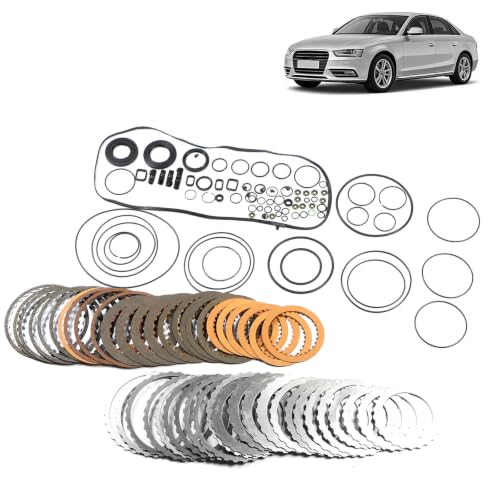
If the pan shows burned fluid or friction debris, the 6HP19 needs a rebuild. Core Transmission Parts carries overhaul and master rebuild kits for ZF six-speeds. Confirm Gen 1 or Gen 2 from the case tag before you order.
See ZF rebuild kits at Core Transmission Parts →Frequently Asked Questions
Why is my BMW 3 Series transmission slipping?
The most common causes on the E90-E93 ZF six-speed are low fluid from a sleeve or pan leak, old fluid, and wear in the valve body bores that regulate clutch pressure. Engine problems such as a cracked intake duct, a bad MAF sensor or misfires can also cause flares and ratio codes. Check the fluid level at 30-35 C and the engine data before you condemn the transmission.
How do I check the transmission fluid level on a BMW 3 Series?
There is no dipstick. With the car level and the engine idling at 650-950 rpm, fill at the filler plug until fluid runs out, then set the final level at 30-35 C transmission temperature on a scan tool. ZF says the temperature must not go over 50 C during the check. The filler plug torque is 35 Nm.
What does it mean if a ZF 6HP slips only in 2nd and 6th gear?
The C brake is the only shift element used in both 2nd and 6th, so a slip in just those gears points at it. On a 6HP19 the usual cause is a worn clutch C regulator valve bore, which Sonnax repairs with oversized valve 95740-40K. Also check the solenoid that controls C, which is EDS3 on Gen 1 and EDS5 on Gen 2.
Can new fluid fix a slipping 6HP transmission?
Only if the slip was caused by low or wrong fluid. ZF says that if the old fluid smells burned or the pan holds chips or fragments, the transmission is already damaged and the oil change should be stopped. In that case the clutches or valve body need repair, and fresh fluid will not bring them back.
Sources
- Sonnax, ZF6 technical webinar handout (PDF). Backs the A, B, C, D and E apply chart, the case/pump and center support feed paths, the BMW 83 22 0 142 516 = LifeguardFluid 6 equivalence, the Gen 1 and Gen 2 solenoid functions, resistances and currents, the 95740-01K, -17K, -21K, -69K, -72K, -74K and -75K symptom lists, the 13 km/h unprogrammed TCM limit, and the symptom chart (low fluid, MAF and intake leaks, misfire EMI, 9-16 V, reflash, E drum, wrong fluid shudder). sonnax.com tech resources (PDF)
- Sonnax, 95740-40K Oversized Clutch C Regulator Valve instructions. Backs the ZF6HP19 fitment, the F-95740-TL40 and VB-FIX tooling, the 14 and 18 in-Hg vacuum test minimums, and the 053 separator plate warning. sonnax.com (PDF)
- Sonnax, "Six Ways From Sunday: Diagnosing ZF6 & Ford 6R60/80 TC-Related Drivability Concerns." Backs the converter-related symptom list, the valve wear points and the WK pressure values. sonnax.com
- ZF Friedrichshafen AG, Service Information 50145, "Oil change kit for ZF 5HP/6HP automatic transmission." Backs the 650-950 rpm idle check, the fill procedure, the 30-35 C level check and 50 C limit, the BMW 6HP19/6HP21 filler and drain plug sizes and torques, and the burned-oil and debris abort rule. aftermarket.zf.com (PDF)
- ZF Friedrichshafen AG, Product Data Sheet, ZF LifeguardFluid 6. Backs the warning against other oils, the 150,000 km change recommendation, and the 6HP19X LifeguardFluid 8 exception. aftermarket.zf.com (PDF)
- GEARS Magazine (ATRA), Rob Faucett, "Tracking Down the ZF6HP21 E Clutch Failure," parts 1 and 2. Backs the E drum tube and crack checks, the full shop pressure air test, the stator support and pump flat-sanding checks, and the EDS4, select valve 3, holding valve E and clutch valve E tests. gearsmagazine.com (part 1) / part 2
Shop pan and filter kits, ZF fluid, valve bodies, solenoids and rebuild kits for the ZF 6HP in the BMW 3 Series, on our own secure checkout.
Shop ZF6HP parts →