Ask ten shops whether to flush a ZF 6-speed and you get ten opinions, most of them built on one bad experience. The good news is that ZF has put more in writing about this than people realize. Its 5HP/6HP oil change kit bulletin, its List of Lubricants TE-ML 11 and its own aftermarket FAQ answer the main questions directly: what can go into the transmission, when a full exchange makes sense, and how the level has to be set afterward.
The short version: on a 6HP with any mileage, do the pan service first, then an exchange if the fluid calls for it. What ZF actually forbids is the chemical part of what most people call a "flush."
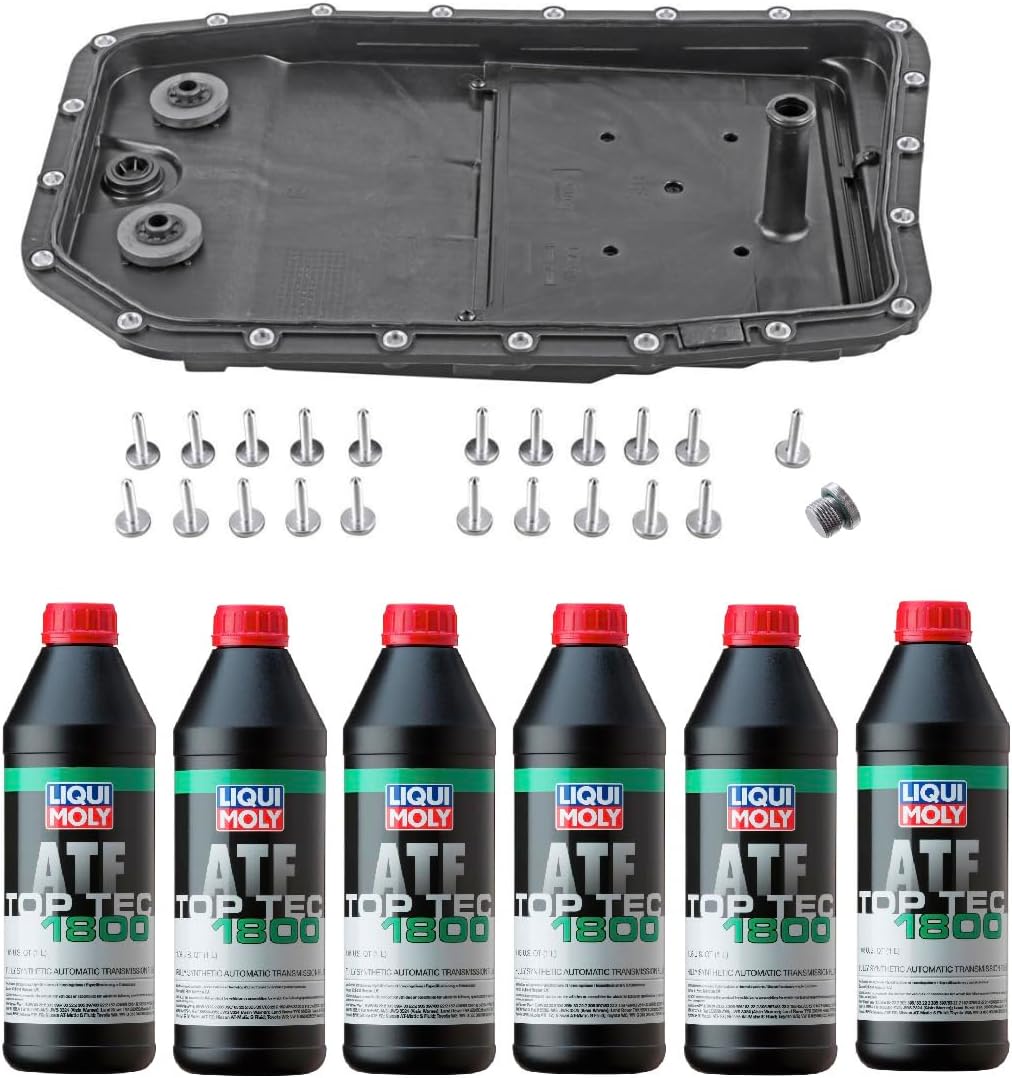
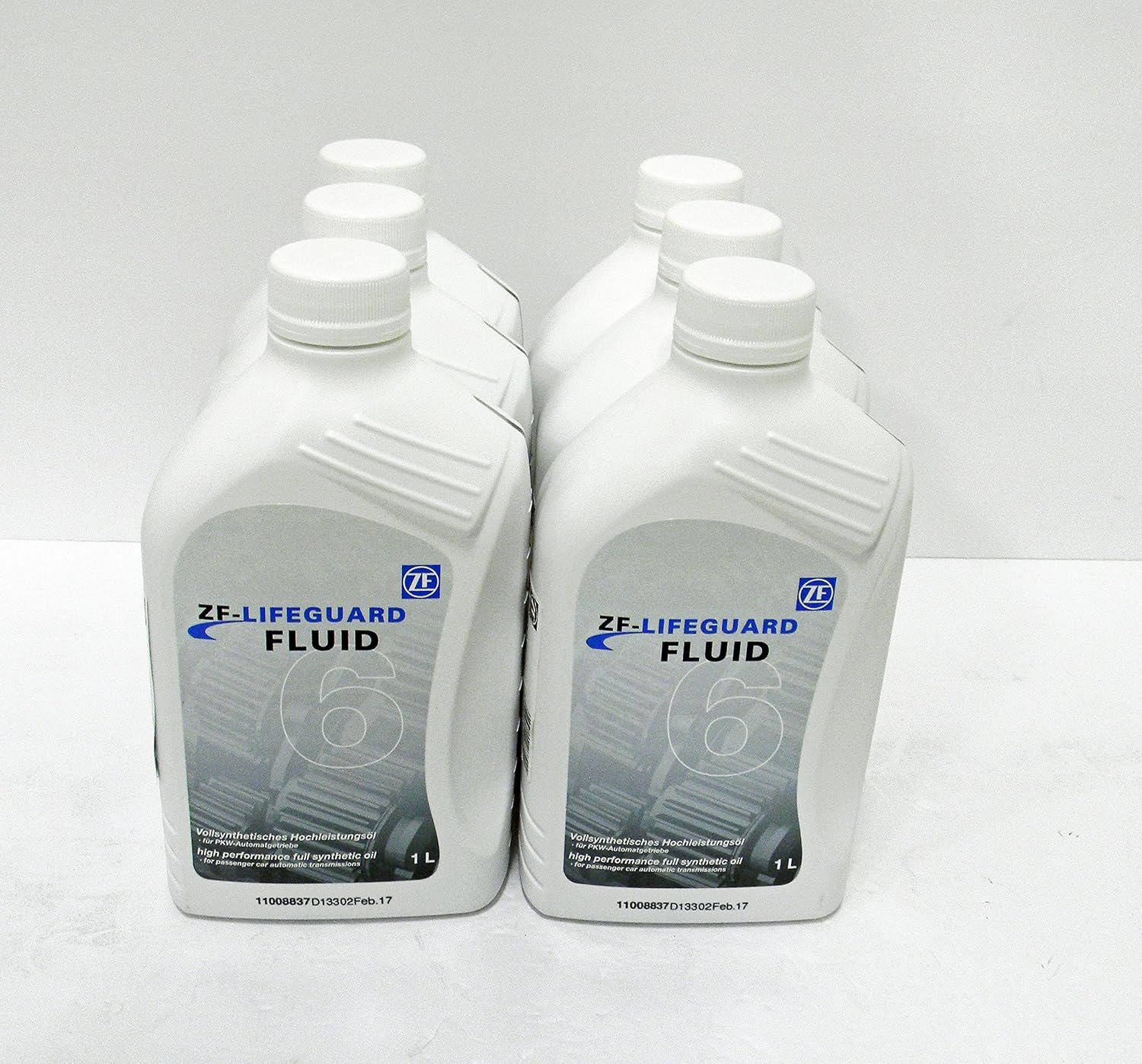

Three different services hiding behind the word "flush"
The word gets used for three different jobs:
- Pan and filter service (drain-and-fill). Pull the drain plug, drop the pan, replace the filter (or the pan with its integrated filter), refill through the side filler plug and set the level by temperature. This is the procedure ZF documents in Service Information 50145.
- Fluid exchange. Open the cooler circuit, let the transmission's own pump push old fluid out while the same volume of new fluid goes in, until what comes out looks like what goes in. This reaches the fluid sitting in the converter and cooler that a pan drain leaves behind.
- Chemical or pressure flush. An exchange machine that also runs a cleaning solvent or "conditioner" through the unit, sometimes in reverse through the cooler lines.
The third one is easy to rule out. ZF's TE-ML 11 lubricant list says flatly that additives of any kind added later change the oil in an unpredictable way, that they are not permitted, and that ZF accepts no liability for damage resulting from them. The oil change kit bulletin repeats it in its warnings: do not use any further additives, because they alter the chemical composition of the oil. A cleaner that goes into the transmission is an additive.
That leaves a real choice between options 1 and 2, and on most 6HPs it is not really a choice.
Why a pan drain only replaces part of the fluid
ZF's 6HP26A61 spare parts catalog lists the oil capacity at 9.4 liters (10 quarts) plus 0.5 liter for the cooling system. Most of the 6HP family lands in that same neighborhood. A pan drain only gets what is in the pan and what drains back to it with the engine off. The fluid inside the torque converter, the cooler and lines, the clutch drums and the valve body passages stays put.
In practice, plan on getting back roughly half the total fill from a pan service. ZF's own oil change kits come with an optional seven one-liter bottles of LifeguardFluid, which tells you the service fill they expect is well under the 9.9-liter total. That partial replacement is fine as long as you understand the math:
| Pan services in a row (about 50% replaced each) | Approximate fresh fluid in the unit |
|---|---|
| 1 | About 50% |
| 2 | About 75% |
| 3 | About 87% |
| Pan service + full cooler-line exchange | Most of the fill, converter included |
Those percentages are dilution arithmetic, not a ZF figure; the real split varies by application. The point stands: one pan service leaves a lot of old fluid in a high-mileage 6HP.
Why an exchange by itself is the wrong first move
If a full exchange gets more of the fluid, why not just do that? Because on a 6HP the pan is where the information is, and the filter is behind it.
ZF's oil change bulletin builds the inspection into the procedure. Before the pan comes off, smell the fluid. After it is off, look for large chips or fragments. If the oil smells burned or there are big chips or fragments in it, the flowchart does not say to change the fluid and see what happens. It says to abort the oil change: the automatic transmission is defective, and you contact a ZF service partner. A machine exchange skips that check completely.
The filter is the other half. Per the same bulletin, the filter design follows the pan material:
| Pan material | Pan bolt torque | Filter |
|---|---|---|
| Aluminum | 4 Nm + 45° | Separate part |
| Plastic | 10 Nm | Integrated in the pan, replaced with it |
| Steel plate | 12 Nm | Separate part |
An exchange through the cooler lines never touches the filter or the pan magnet. If you push nine or ten liters of new fluid through a unit with a loaded filter and a fuzzy magnet, you have cleaned the fluid and left the debris trap in place. With the pan down you can also deal with the mechatronic guide sleeve, the common weep at the connector that we covered in the ZF6HP filter and pan service guide.
When ZF says a full rinse makes sense
This is the part the "never flush a ZF" crowd usually misses. ZF's aftermarket FAQ recommends regular transmission oil changes "or even a transmission rinse," and defines the difference: unlike an oil service, a rinse changes the entire oil, including the torque converter, and removes residue. The same FAQ says the final step is a correctly set oil level.
ZF lists the signs that point toward a rinse: shift shocks, delays or noises, jerking when starting off, and higher fuel use. It names the usual causes as contamination and particles in the shift unit, deposits the oil service cannot reach, and wear particles from rotating parts such as friction linings. A 6HP with shift complaints, dark fluid and a clean pan is the right candidate. One with burned fluid and chunks on the magnet is not; the fluid is not its problem.
On intervals, TE-ML 11 says ZF 5-, 6-, 8- and 9-speed units are filled maintenance-free with semi-synthetic ATF, but ZF still recommends an oil change after 150,000 km (about 93,000 miles). It adds that shorter intervals make sense under high temperatures and loads, or when the vehicle's past use is unknown. GEARS magazine's history of ZF fluids notes that LifeguardFluid 6 originally carried a 100,000 km interval before ZF stretched it. A used BMW, Jaguar or Land Rover with no records is the "unknown use" case: service it now.
What actually goes wrong after a flush
Most "the flush killed it" stories on a 6HP fall into one of three buckets, and none of them is fresh fluid doing damage by itself.
1. Wrong fluid in the machine
General-repair exchange machines often run one multi-vehicle ATF. TE-ML 11 assigns ZF LifeguardFluid 6 (ZF No. S671 090 255) to most of the family: 6HP19, 6HP21, 6HP26, 6HP28 and 6HP32, plus their X and A61 versions. It carves out exceptions that take LifeguardFluid 8 instead, including the 6HP19X in the Audi Q7, the 6HP26A61 behind the Audi W12 and the 6HP28AF. GEARS also points out that a dealer can deny a warranty claim for improper fluid, so keep the receipt that shows the approved fluid, the amount and the mileage. Our ZF6HP fluid type and capacity guide covers the grades by code.
2. Level set by volume instead of temperature
Machines exchange liter for liter. The 6HP level is only right when it is set at temperature. If it is too low, the transmission is damaged; if it is too high, ZF warns the excess pushes out the overflow once hot and can ignite on the exhaust. A machine service that skips the fill procedure below is not finished.
3. A worn unit that was already on the edge
When an exchange "causes" slipping, the unit almost always had worn clutches or valve body bores already. New fluid will not fix a worn pressure regulator bore. If the complaint survives a correct service, move on to our ZF6HP limp mode guide.
The order I work a 6HP fluid service
- Scan first. Pull codes and adaptations, and connect a tool that reads transmission oil temperature and engine speed. ZF's procedure starts with confirming idle at 650-950 rpm. If idle is outside that window, the bulletin says correct oil level adjustment is not possible, so fix the engine first.
- Pan service. Car level on the lift, drain, drop the pan crosswise from the center out, smell and inspect. Burned smell or large chips: stop and quote the repair. Clean: replace the filter (or the plastic pan assembly) and torque per the table above.
- Refill and set the level using the temperature procedure below.
- Decide on the exchange. If the drained fluid was dark, the history is unknown, or the customer has a shift-quality complaint, exchange through the cooler circuit with the approved fluid on the engine's own pump. Budget about 8 to 10 liters on top of the pan service. No cleaner, no additive.
- Set the level again at temperature and road test.
For the drain and filler plugs, ZF's bulletin lists these values for the BMW 6HP19/21/26/28, Jaguar 6HP26 and Land Rover 6HP26X: drain plug M24 x 1, 10 mm hex, 8 Nm; filler plug M18 x 1.5, 8 mm hex, 35 Nm ± 3.5 Nm. The VW 6HP19A is different: drain M10 x 1 at 12 Nm and filler M30 x 1.5 at 80 Nm. Use new seals on both.
Setting the level: the step that makes or breaks either service
There is no dipstick. The level is set at the side filler hole against a temperature window, per ZF Service Information 50145 and the same flowchart in the 6HP26A61 catalog:
- With the engine off, fill until fluid runs out of the filler hole.
- Start the engine and, at idle, select R and D and shift through the gears using the manual program. SI 50145 Table 1 assigns your application a version: hold each gear about 3 seconds through 3rd or 4th, or about 10 seconds through all gears, and some versions also hold 2,000 rpm for 30 seconds to fill the converter. End in P.
- Check transmission oil temperature. Below 30°C, let it warm up. Above 35°C, let it cool. At 30-35°C, open the filler plug and add fluid until it runs out.
- Wait until the oil reaches 40°C and only single drops come from the hole, then close the plug. The oil must never exceed 50°C during the check.
One more trap: for versions with a thermostat valve in the cooler circuit, ZF requires the oil to reach at least 75°C on the test drive so the thermostat opens, then the unit cools and the level is checked again at 35°C. That tells you the cooler loop is not fully in play when the unit is cold, which matters if you are trying to exchange fluid through it.
Shop the part for this fix: 6HP26 guide sleeve and connector seal kit
If the pan is coming down for this service, the 7-piece sleeve and connector seal kit is the cheap insurance part: it stops the connector weep that otherwise shows up a month after a fluid service.
View the seal kit at Core Transmission Parts → All rebuild kitsZF6HP pan and filter kits, genuine LifeguardFluid 6, guide sleeve seals, and the solenoid and valve body parts for when the pan tells you the problem is bigger than the fluid.
Shop ZF6HP parts →Related guides
- ZF6HP Filter and Pan Service Guide
- ZF6HP Fluid Type and Capacity
- ZF6HP Fluid Change Cost
- ZF6HP Harsh Shift Causes
- ZF6HP Limp Mode: Causes and How to Diagnose It
FAQ
Is it safe to flush a ZF6HP transmission?
A fluid exchange with the correct approved fluid is not the danger; ZF's own FAQ says a transmission rinse that changes the entire oil, including the torque converter, can be useful. What ZF prohibits is additives of any kind, which rules out solvent-style flush chemicals. The safe order is a pan service first so you can inspect the pan, then an exchange with LifeguardFluid 6 or the grade TE-ML 11 lists for your code, finished with the temperature-gated level check.
How much fluid does a ZF6HP drain and fill replace?
Only part of it. ZF lists the 6HP26A61 at 9.4 liters dry fill plus 0.5 liter for the cooling system, and a large share of that sits in the torque converter, cooler circuit and clutch drums where the pan drain cannot reach. Plan on roughly half coming out, which means two pan services leave you around three-quarters fresh fluid and three get you near 90 percent.
How often should ZF6HP fluid be changed?
ZF's List of Lubricants TE-ML 11 says its 6-speed transmissions are filled maintenance-free but recommends an oil change after 150,000 km, about 93,000 miles. It also says shorter intervals make sense under high temperatures and loads, or when the vehicle's past use is unknown, which covers towing, hard driving and nearly every used vehicle with no service records.
Can I add a transmission flush cleaner or conditioner to a ZF6HP?
No. ZF's lubricant list states that additives of any kind added later change the oil in an unpredictable way, are not permitted, and that ZF accepts no liability for damage from them. The oil change kit bulletin repeats it: do not use any further additives because they alter the chemical composition of the oil.
Does a machine fluid exchange replace the ZF6HP filter?
No. An exchange through the cooler lines never touches the filter, the pan magnet or the pan gasket. On a plastic-pan 6HP the filter is molded into the pan and is replaced with it; on aluminum and steel-plate pans the filter is a separate part. Either way, the filter only gets changed when the pan comes off.
Sources
- ZF Friedrichshafen AG — Service Information 50145 EN, "Oil change kit for ZF 5HP/6HP automatic transmission" (03.2023). Backs the no-additives warning, the overfill/underfill warning, the burned-smell and large-chips "abort oil change" step, the 650-950 rpm idle check, the version A/B/C gear-cycling fill and 30-35°C / 40°C / 50°C level procedure, the 75°C thermostat-valve note, pan bolt torque and filter type by pan material, and the drain/filler plug sizes and torques. aftermarket.zf.com (PDF)
- ZF Friedrichshafen AG — List of Lubricants TE-ML 11, edition 01.10.2026, section 5 "Maintenance recommendations" and Comments. Backs the ban on additives of any kind, the 150,000 km oil change recommendation with shorter intervals for high temperature/load or unknown history, and the LifeguardFluid 6 (S671 090 255) vs LifeguardFluid 8 assignment by 6HP code. aftermarket.zf.com (PDF)
- ZF Aftermarket — FAQ Oils, "When is a transmission rinse useful?" Backs the definition of a rinse (entire oil including the torque converter, residue removed), the symptoms that point to one (shift shocks, delays, noises, jerking on start-off, fuel use), the listed causes, and the correctly-set-level final step. aftermarket.zf.com
- ZF Aftermarket — Oil and oil change kits (passenger cars). Backs the 6HP kit contents (separate seal and filter, or complete plastic pan with integrated filter) and the optional seven one-liter bottles of LifeguardFluid. aftermarket.zf.com
- ZF Services — 6HP26A61 Automatic Transmission Spare Parts Catalog (2008), Oil Capacity and General Transmission Oil Filling Procedure. Backs the 9.4-liter (10 qt) capacity plus 0.5 liter for the cooling system and the matching temperature-gated filling flowchart. audiclub.fi (ZF Services PDF)
- GEARS Magazine (ATRA) — Pat Burrow, "ZF ATF – What Color Is Your ATF?" (August/September 2025). Backs the original 100,000 km LifeguardFluid 6 interval, the later move to 150,000 km, and the warranty-denial risk of servicing with a non-approved fluid. gearsmagazine.com