The ZF6HP family covers six variants spread across two generations, and most of what gets asked about it, "what ratios does mine have," "is my 6HP26 the same as a 6HP32 underneath," "what fluid does it take," has one clean answer buried under a lot of forum guessing. The ratio set, the torque classes, and the generational split are all documented, just not usually in one place.
Here is the full reference: the gear ratios themselves, what separates the three Gen 1 torque classes, what actually changed in Gen 2, and the fluid spec you need before you touch the pan.
The gear ratio set (6HP19, 6HP26, 6HP32)
Per Transmission Digest, writing through ATSG Technical Field Adviser Niel Speetjens, all three Gen 1 variants share one ratio set, built on the Lepelletier gear train: a simple planetary with its sun gear fixed to the stator support, feeding a Ravigneaux gearset behind it. Five clutches, three input clutches and two brakes, do the shifting, and there is no mechanical direct-drive gear or freewheel anywhere in the unit; that job is handled entirely by the electronic control system.
| Gear | Ratio |
|---|---|
| 1st | 4.171 |
| 2nd | 2.340 |
| 3rd | 1.521 |
| 4th | 1.143 |
| 5th | 0.867 |
| 6th | 0.691 |
| Reverse | 3.403 |
Total ratio span works out to 6.035, which made the 6HP26 the first six-speed automatic in a production passenger car when it launched in the BMW E65 7 Series for the 2001 model year. The wide span is also why the 6HP's 6th gear overdrive (0.691) runs noticeably taller than its older ZF siblings, which is where the fuel economy gain over a 4 or 5-speed unit actually comes from.
Three torque classes, one ratio set
The number after "6HP" tells you torque rating, not gearing. Per Transmission Digest, there were three Gen 1 versions "at this moment" the article was written, split entirely by maximum input torque:
| Variant | Max. input torque | Typical applications |
|---|---|---|
| 6HP19 | 400 Nm (295 lb-ft) | BMW 3, 5, 6, 7 Series; X3, Z4 |
| 6HP26 | 600 Nm (444 lb-ft) | BMW 7 Series; Jaguar XK/XKR; Aston Martin; Bentley; Lincoln Navigator; Land Rover LR3/LR4 and Range Rover Sport (badged 6HP26X) |
| 6HP32 | 750 Nm (555 lb-ft) | BMW 745d; Audi Q7 6.0 TDI (badged 6HP32A) |
The case, clutch pack capacity and calibration scale up with torque rating; the planetary gearset and ratio spread do not change between them. That matters for anyone shopping parts: a hard part rated for a 6HP32 will usually physically fit a 6HP19 (same basic architecture, bigger clutch stack), but running a 6HP19-spec clutch pack behind 750 Nm of diesel torque is how you turn a mild rebuild into a comeback.
What Gen 2 (6HP21, 6HP28, 6HP34) actually changed
ZF's second generation, introduced in 2007, kept the same Lepelletier architecture but is not a drop-in parts match with Gen 1. Per Sonnax's identification guide for the family, Gen 1 covers the 6HP19, 6HP26 and 6HP32, along with the Ford-designed 6R60, 6R75 and the '09-'14 6R80, while Gen 2 covers the 6HP21, 6HP28 and 6HP34 (the 6HP34 was announced but never reached volume production). The practical difference lives in the valve body:
- Valve components differ between the two generations and are not interchangeable
- Pressure regulator valve and sleeve sizes differ between generations and cannot be swapped
- Gen 1 itself splits further into non-053 and 053 separator plate versions, with 053 plates mostly found in BMW 6 and 7 Series applications and some valve sizes and locations that differ from non-053 units
- Gen 2 units carry their own separator plate codes, 095740-063 and 095740-065, distinct from either Gen 1 configuration
We could not find an authoritative source that publishes a standalone numeric gear-ratio table specifically for the 6HP21/28/34 Gen 2 units, separate from the Gen 1 table above. If you are trying to confirm Gen 2 ratios for a specific build, treat that as an open question rather than assuming the Gen 1 numbers carry over, and go by separator plate code, not gear ratio, when you are sourcing valve body parts. The generations are not interchangeable at the valve body regardless of what the ratio spread turns out to be.
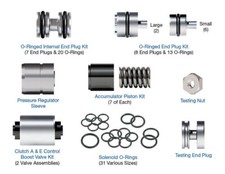
6HP26 Sonnax Valve Body Separator Plate, 95740-035
The separator plate is how you actually confirm Gen 1 vs Gen 2 and 053 vs non-053, rather than guessing from the badge. Check your code before ordering any valve body kit.
See the 6HP26 separator plate →Fluid type and capacity
Per Gears magazine (ATRA), ZF developed LifeguardFluid 6, an amber semisynthetic ATF, specifically for the 6-speed family, and it is the correct fluid for the large majority of 6HP19, 6HP26 and 6HP32 applications. A short list of specific application codes, including the 6HP19A (Audi A8), 6HP19X (Audi Q7), 6HP26A61 and 6HP28AF, instead call for LifeguardFluid 8, so confirm your exact application code rather than assuming by variant number alone.
Per ZF's own Aftermarket oil and oil-change-kit documentation, the service fill runs 7 one-liter bottles of the correct LifeguardFluid, and the family's total dry-fill specification, including the cooling circuit, comes in around 9.4 liters (10 quarts). These are service-fill and dry-fill figures, not a pan-and-filter drain capacity, which runs considerably lower; always check the specific drain-and-fill procedure for the application you are working on rather than assuming a flat number.
ZF's own product data sheet for LifeguardFluid 6 (ZF No. S671.090.255 for the 1-liter bottle) says its friction behavior is matched to the 6HP for correct shift feel and vibration-free operation, warns that other oils can cause anything from noticeably worse shifting to transmission failure, and points to ZF's TE-ML 11 lubricant list for the per-application approvals. ZF calls the fill lifetime oil but still recommends a change at 150,000 km, sooner under heat, heavy load or unknown history.
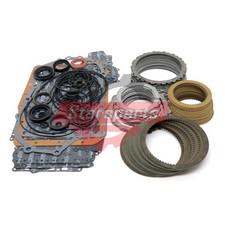
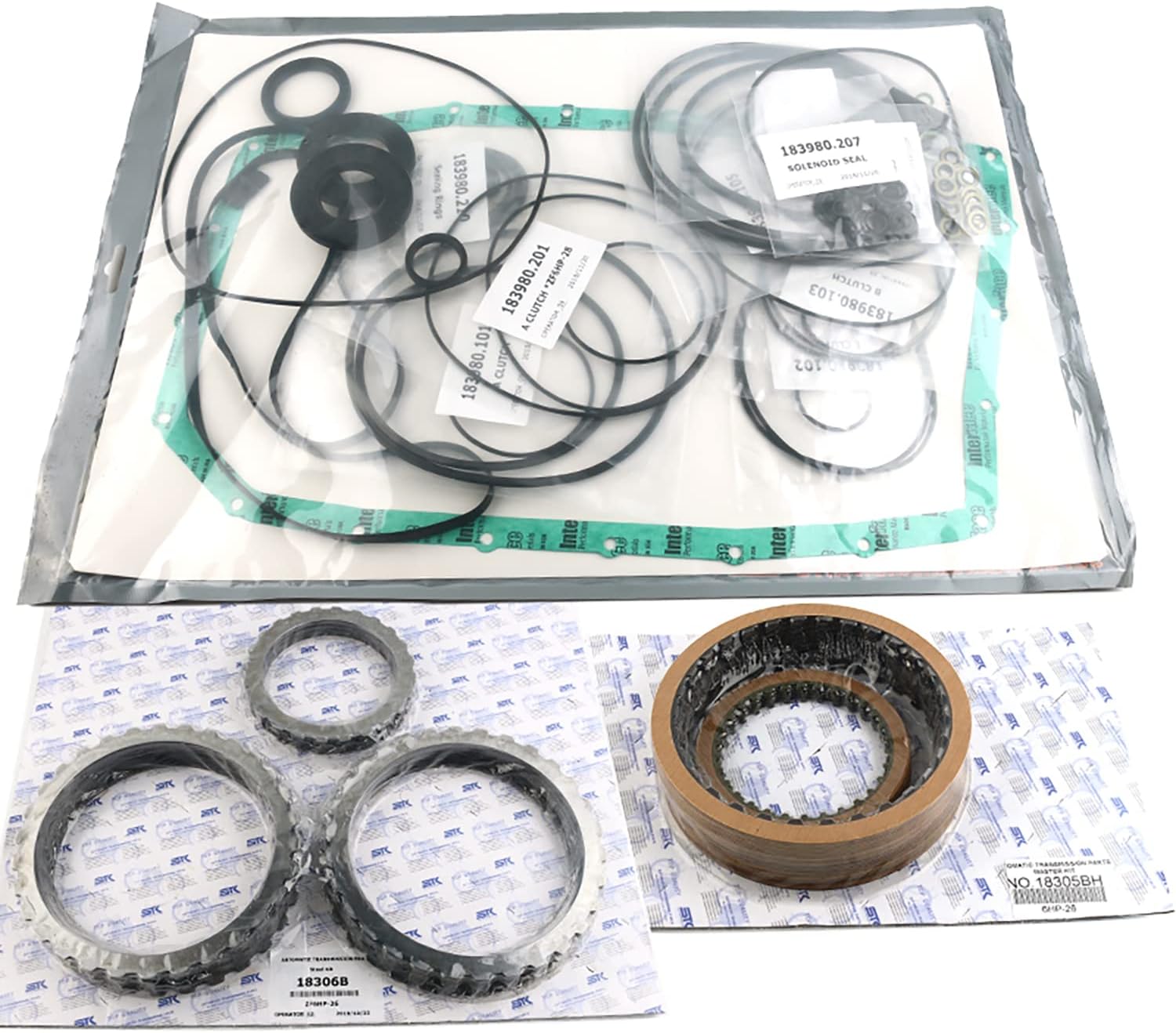
Valve bodies, separator plates, master rebuild kits and overhaul kits for the ZF6HP19, 6HP26 and 6HP32 family, shipped fast from the USA.
Shop ZF6HP parts →Why the ratio spread matters for a rebuild
A 6.035 total span with a tall 0.691 overdrive puts more work on the lower gears relative to a narrower-span 4 or 5-speed unit covering the same road-speed range, because first gear has to be steep enough (4.171) to make up for how tall sixth runs. That is part of why the clutch packs and the planetary pinions see real wear over 100,000-plus miles even on a torque-appropriate application, and it is also why a rebuild done with the wrong clutch count or the wrong friction material for the torque class shows up as slipping or flare shifts long before it shows up as a hard failure. Matching the rebuild kit to the actual torque class, not just the "6HP" family name, is the detail that separates a kit that lasts from one that does not.
Clutch clearances are the other rebuild spec that gets people. Per ATSG's Wayne Colonna, writing on the Audi S6 6HP26, the published clearances run A 0.062-0.080 in., B 0.055-0.073 in., C 0.054-0.072 in., D 0.082-0.106 in. and E 0.072-0.093 in. Those look loose next to most domestic units, and Colonna's warning is not to tighten them: ZF clearances are loose by design, and a tight pack causes shift-quality problems the adaptive strategy cannot correct. On that same car, Audi traced a downshift "grunt" to A and B clutch clearance tolerances and fixed it with a J217 software update under TSB 2011732.
- Confirm your variant by torque rating and application, not by assuming from the transmission's physical size
- Pull the separator plate code to confirm Gen 1 vs Gen 2, and 053 vs non-053 if it is a Gen 1 unit, before ordering any valve body part
- Use the correct LifeguardFluid (6 or 8) for your specific application code, not just your variant number
- Match rebuild kit clutch count and friction material to your torque class; a 6HP19-spec kit behind 6HP32 torque is undersized
- Keep the separator plate code written down somewhere before the valve body goes back together; it is the one piece of information every parts counter will ask for
6HP26 overhaul kit → Browse all parts →
FAQ
What are the ZF6HP gear ratios?
Per Transmission Digest (ATSG), the 6HP19, 6HP26 and 6HP32 share one ratio set: 1st at 4.171, 2nd at 2.340, 3rd at 1.521, 4th at 1.143, 5th at 0.867, 6th at 0.691, and reverse at 3.403. That gives a total ratio span of 6.035, which was class-leading when the 6HP26 launched in 2001 as the first six-speed automatic in a production passenger car. The ratio set itself does not tell you which variant you have; that comes down to torque rating and separator plate code, not gearing.
What is the difference between the 6HP19, 6HP26, and 6HP32?
Torque capacity and case size, not gear ratios. Per Transmission Digest, the 6HP19 is rated to 400 Nm (295 lb-ft) and is found in BMW 3, 5, 6 and 7 Series, X3 and Z4 applications. The 6HP26 steps up to 600 Nm (444 lb-ft) and covers BMW 7 Series, Jaguar, Aston Martin, Bentley, Lincoln Navigator and Land Rover LR3/LR4 and Range Rover Sport (badged 6HP26X). The 6HP32 tops out at 750 Nm (555 lb-ft) for high-torque applications like the BMW 745d and the Audi Q7 6.0 TDI (badged 6HP32A). All three share the Lepelletier-based planetary gearset and ratio set; the differences are in clutch pack capacity, case strength and calibration for the torque they are built to handle.
Do the 6HP21, 6HP28, and 6HP34 use the same gear ratios?
They share the same Lepelletier gear train architecture, but we could not find an authoritative source that republishes a separate numeric ratio table specifically for the Gen 2 units (6HP21, 6HP28, 6HP34). What is documented, per Sonnax, is that Gen 2 uses different valve body hardware than Gen 1: the valve components and pressure regulator valve/sleeve sizes are not interchangeable between generations, and Gen 2 uses its own separator plate codes (095740-063 and 095740-065). Treat generation as a parts-interchange question, confirmed by separator plate code, not an assumption based on gear ratios.
What transmission fluid and capacity does a ZF6HP need?
ZF LifeguardFluid 6 is the semisynthetic ATF developed specifically for the 6HP family, per Gears magazine (ATRA). A short list of applications, including the Audi A8's 6HP19A, the Audi Q7's 6HP19X, the 6HP26A61 and the 6HP28AF, call for LifeguardFluid 8 instead, so confirm your exact application code before buying fluid. ZF's own oil and oil-change-kit documentation lists the service fill at 7 one-liter bottles, and the family's total dry-fill specification runs about 9.4 liters (10 quarts) including the cooling circuit.
How do I tell which ZF6HP variant I actually have?
Don't guess from the badge on the trunk or the engine it is bolted to; read the separator plate on the valve body. Per Sonnax, Gen 1 units (6HP19, 6HP26, 6HP32) split further into non-053 and 053-plate versions, with the 053 plate mostly in BMW 6 and 7 Series applications and some different valve sizes and locations versus non-053 units. Gen 2 units (6HP21, 6HP28, 6HP34) carry their own separator plate codes. If you are ordering a valve body kit or oversized valve, matching the separator plate code is the only reliable way to get the correct part the first time.
Related guides
- ZF6HP Identification Guide
- ZF6HP vs ZF8HP Differences
- 6R80 vs ZF6HP Differences
- ZF6HP Fluid Type and Capacity
- ZF6HP Rebuild Cost
Sources
- Transmission Digest — Niel Speetjens (ATSG Technical Field Adviser), "To 6HP or not to 6HP – Is That a Question?", March 1, 2007. Backs the full 1st-6th and reverse gear ratios shared by the 6HP19/26/32, the Lepelletier gear train description (five clutches, no mechanical direct drive or freewheel), and the torque ratings and applications for each of the three Gen 1 variants. transmissiondigest.com
- Sonnax — "ZF6HP19/26/32 Gen 1, Ford 6R60/6R75(09-14)/6R80, ZF6HP21/28/34 Gen 2 Identification Guide," technical reference. Backs the Gen 1 vs Gen 2 split and member transmissions, the non-053 vs 053 separator plate distinction within Gen 1, the Gen 2-specific separator plate codes (095740-063, 095740-065), and the non-interchangeability of valve components and pressure regulator valve/sleeve sizes between generations. sonnax.com
- ZF Aftermarket — Passenger Cars, Oil & Oil Change Kits product portal. Backs ZF LifeguardFluid 6 as the fluid tied to 6HP transmission oil-change kits, the 7 x 1-liter bottle service fill quantity, and the approximately 9.4-liter (10-quart) total dry-fill specification including the cooling circuit. aftermarket.zf.com
- Gears Magazine (ATRA) — "ZF ATF: What Color Is Your ATF?", August/September 2025. Backs the development of LifeguardFluid 6 as an amber semisynthetic ATF specifically for ZF's 6-speed family, and the application-specific exceptions calling for LifeguardFluid 8 (6HP19A, 6HP19X, 6HP26A61, 6HP28AF). gearsmagazine.com
- ZF Friedrichshafen AG — Product Data Sheet, ZF LifeguardFluid 6. Backs part number S671.090.255, the friction behavior matched to the 6HP for vibration-free operation, the warning against other oils, the LifeguardFluid 8 exceptions with TE-ML 11 as the approval list, and the 150,000 km change recommendation. aftermarket.zf.com (PDF)
- Vehicle Service Pros — Wayne Colonna (ATSG), "The Grunt in an Audi" (January 2020). Backs the 6HP26 A-E clutch clearance figures, the warning not to tighten ZF clearances, and the Audi S6 downshift grunt fix (J217 reflash, TSB 2011732). vehicleservicepros.com