When a ZF6HP comes in with a delayed engagement, a rough idle in Reverse and a converter clutch that will not stay applied, somebody in the shop is going to say "pump." Sometimes they are right. More often the pump is fine and something downstream of it is eating its output. On this family the pump, the main pressure regulator, the converter, the cooler and the lube circuit are plumbed in series, so a leak or a worn bore anywhere in that chain looks exactly like a tired pump from the driver's seat.
This guide covers how the 6HP pump actually works, the symptoms that point at it, the one pressure test that separates a weak pump from a leaking valve body without pulling the unit, and what to replace when the pump really is the problem. It leans on Sonnax's ZF6 converter-circuit diagnostics, an ATSG case study on a BMW X5 6HP26, and ZF's own service information. Sources are at the bottom.
How the ZF6HP Pump Works (and Why It Struggles Hot at Idle)
The 6HP uses a crescent-type gear pump that sits in the case directly behind the torque converter and is driven by the converter hub. That design detail drives everything else in this article: a gear-and-crescent pump is fixed displacement. Its output is tied directly to engine speed, so it moves the least oil exactly when the transmission is asking for the most help.
Sonnax's Gregg Nader lays out the worst case in his write-up on pump, pressure regulator, converter and cooler circuits: hot fluid, engine at idle, Reverse selected. Fluid is thin, pump speed is low, and desired line pressure is high. He also points out that vane pumps can increase displacement to hold pressure, while gerotor and gear-and-crescent pumps cannot and have lower output at low rpm. The 6HP is in the second group.
The pressure regulator valve is what turns pump volume into usable pressure. It gives line pressure priority and only feeds the converter, cooler and lube circuits with what is left over. If the pump cannot keep the regulator in its regulating position, line pressure can look nearly normal while converter charge and cooler flow drop toward zero. That is how a 6HP cooks a converter while the clutches are still holding.
The practical consequence: a 6HP pump problem rarely shows up as a hard no-move first. It shows up as converter and lube trouble that gets worse as the fluid heats.
Symptoms That Point at the Pump Circuit
None of these prove the pump has failed on their own. Each one tells you the pump circuit is not delivering enough volume, which is a different statement. Work them in this order:
- Delayed engagement that gets worse hot. A slow Park-to-Drive or Park-to-Reverse engagement cold that turns into a two- or three-second delay after a highway drive points at volume, not at a single clutch.
- Rough idle in Reverse only. Sonnax ties this directly to low converter release pressure: if the circuit cannot hold the converter clutch off the cover, it drags at idle in gear. Reverse shows it first because that is when the regulator steals the most volume from the converter.
- TCC slip, TCC codes and ratio codes. The converter clutch is applied and released with pump oil. When converter feed is short, the TCM sees slip it did not command.
- Flare and harsh shifts. Sonnax lists both as products of abnormal converter pressure on this family, alongside the more obvious TCC slip.
- A whine that follows engine rpm in every range, including Park and Neutral. Pump gear noise tracks engine speed, not road speed. A noise that changes with vehicle speed in gear is somewhere else in the geartrain.
- A blue or heat-scorched converter on teardown. That is the converter telling you it ran without enough charge and cooler flow, which starts at the pump circuit.
- Fluid at the bellhousing. A worn pump seal or a scored converter hub lets ATF out between the converter and the case. Low fluid then starves the pump and the problem compounds.
Before You Blame the Pump: What Else Eats Pump Volume
Sonnax's point in the pump-circuit article is the one that saves you from buying a pump you did not need: a good pump with internal leaks behaves exactly like a worn pump with none. Every leak in the unit consumes volume the pump has to make up. A transmission pump is sized for fuel economy and carries very little reserve, so a handful of worn bores adds up fast.
On the ZF6 the usual suspects are well documented. In Sonnax's ZF6 converter diagnostic article, Bob Warnke names them by their German valve-body labels:
| Valve / part | ZF label | What wear does to the pump circuit |
|---|---|---|
| Main pressure regulator valve | SYS.DR-V | Bore wear robs converter feed because line pressure takes priority |
| Converter release regulator valve | WK-V | Controls converter internal pressure; wear alters WK pressure |
| Bypass clutch control valve | WD-V | Acts as the TCC apply/release switch |
| Lubrication control valve | SCHM-V | Controls fluid exiting the converter; wear dumps converter and lube oil |
| Solenoid pressure regulator valve | DR.REO-V | Feeds every solenoid, including TCC; wear skews all solenoid output |
| Pump stator and "E" clutch bushings | — | Sonnax says these "fail notoriously" and cause TCC, shift and ratio concerns |
The lube control valve deserves special attention. Sonnax's oversized lube control valve kit page for the Gen 1 6HP19/26/32 says severe bore wear there can cost converter pressure, cooler flow and critical lube feed, and lists overheating, low converter pressure, rough idle in Reverse and bushing, bearing and planetary failures as the result. Every one of those can be mistaken for a pump problem. Vacuum test those bores before you condemn the pump.
The Test: Read WK Pressure Before You Pull Anything
The 6HP gives you exactly one case pressure tap, and it is the right one for this job. Per Sonnax, the WK (converter release) port sits on the driver side of the bellhousing, just above the cooler lines, and ZF cases are marked "AUF WK" at the fitting. It is a special 10 x 1.00 mm thread, so you need an adapter or a modified ZF5/ZF6 pressure plug to take a 90-degree fitting.
Use a 100 psi gauge or transducer. WK never goes above about 80 psi and you need to read it all the way to zero, so a 300 or 500 psi line gauge is useless here. Run the scan tool at the same time so you can watch transmission temperature, TCC solenoid command, engine rpm and turbine (input) rpm alongside the gauge.
| Condition | Normal WK (per Sonnax) | What a low reading tells you |
|---|---|---|
| Engine start, cool fluid | 70-75 psi (4.8-5.1 bar), steady and instant | Slow-to-build or low WK at start points at pump volume or a large internal leak |
| Idle, at operating temperature | About 65-68 psi (4.5-4.7 bar) | A big drop from cold to hot is the classic worn-pump or worn-bore pattern |
| Shift to Reverse | Sharp dip to about 50 psi, then back to 65-75 psi | Sitting at 50-60 psi in Reverse with a rough idle means the converter clutch is not releasing fully |
| TCC commanded on, warm | 0-2 psi (0 = full apply, 1.5-2 = controlled slip) | WK above zero when it should be applied means slip; compare engine rpm to turbine rpm |
How to read the result: if WK is low at a cold start, the pump or a gross leak is the problem. If it starts normal and falls off as the fluid heats, you are watching internal leakage grow with fluid thinning, which can be a worn pump, worn bores, or both. If WK is normal and the complaint persists, the pump is very likely fine and the converter lining or a solenoid is your next stop.
Verify the fluid level before any of this, and do it ZF's way. ZF's oil change service information for the 5HP/6HP warns that a low level damages the transmission and that the engine should never be started with no oil in the unit. On versions with a thermostat valve, the fluid has to reach at least 75 degrees C on the test drive so the thermostat opens and fills the cooler, then the level is rechecked at 35 degrees C. Testing pump output on a unit that is a liter low tells you nothing.
A Real 6HP26 Case: The Pump Was Fine Until the Valve Body Melted Into It
ATSG's Pete Luban documented a BMW X5 with a 6HP26 that arrived on a hook with no movement and a major cooler line leak. The first teardown found no clutch damage, some odd pieces of rubber and a blue converter. The shop rebuilt it with a new ZF converter and new cooler lines, and on startup the new converter rattled badly. A second new converter did the same thing.
The rattle turned out to be a plastic pressure-relief valve in the valve body that had melted and welded itself to its spring. Replacing it cured the noise. A short time later the vehicle came back running poorly and surging when coming to a stop. On the third teardown the shop laid a new pump cover beside the original and found the lube passage in the original cover blocked by melted plastic from that same relief valve. A new pump fixed it.
Two lessons for anyone chasing a 6HP pump complaint. First, low fluid from a cooler leak can heat the hydraulic system enough to melt plastic parts, and those parts end up in the pump. Second, a pump that looks fine on the bench can still have a blocked passage; compare every port against a known-good cover before you reuse it. Luban also noted that the radiator removed from that X5 looked bad enough to be a contributing factor, which is why the cooler gets cleaned or replaced on any heat-damaged 6HP.
Pump Replacement and Repair: What to Do on the Bench
Once the pressure test and the teardown point at the pump, the job is more than swapping a pump body.
- Inspect the pump gears, crescent and pocket. Look for scoring on the gear faces, the crescent tips and the pump body pocket. Score marks here are leak paths that cost volume at idle.
- Check every pump cover passage. After the ATSG X5 case, a blocked lube hole is on the list. Blow every passage and compare against a new cover if you have one.
- Measure before you order bushings. The rear stator support bushing comes in two sizes. Sonnax's 95030-26K kit for the 6HP26/28 includes rear stator support bushings for both a 1.022 in (25.97 mm) and a 1.180 in (29.96 mm) input shaft journal. Mic the input shaft and match it.
- Press bushings correctly. Sonnax says OE bushings in the 6HP26 and 6HP28 wear early because of their material composition, and its kit requires an arbor press for installation. A hydraulic press or a driver and hammer will distort the bushing.
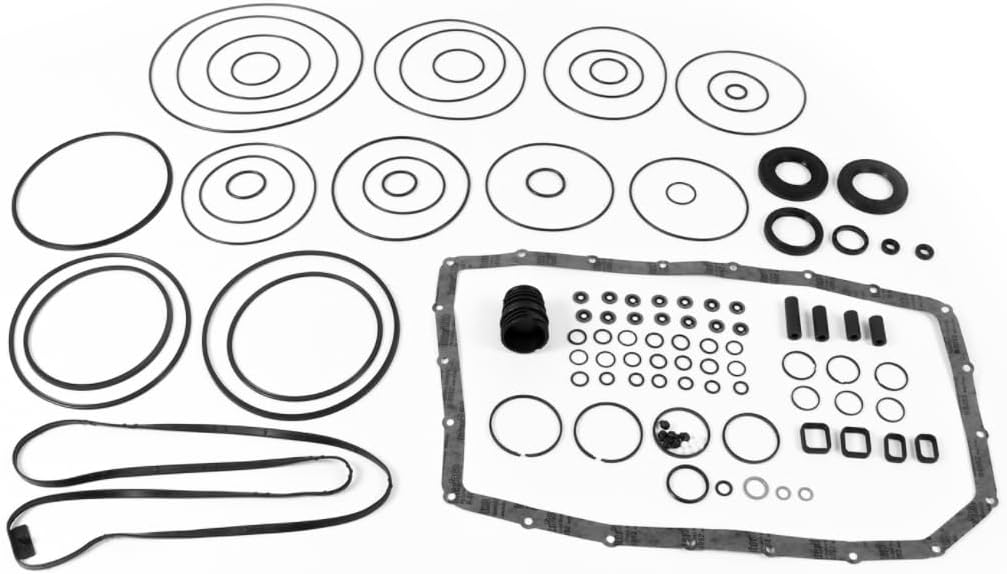
- Replace the pump seal and pump O-ring every time. Inspect the converter hub where the seal rides. A grooved hub will chew through a new seal.
- Deal with the converter. If the old converter is blue or the fluid smelled burned, it ran without enough charge oil. Replace or rebuild it, and flush or replace the cooler and lines so debris does not go straight back into the new pump.
- Vacuum test the valve body bores. Pump volume is wasted if SYS.DR-V, WK-V or SCHM-V are leaking. Gen 1 (6HP19/26/32) and Gen 2 (6HP21/28/34) parts are not interchangeable, so identify the valve body before ordering repair kits.
One thing not to try: swapping in a used mechatronic unit to "test" the theory. Sonnax is blunt that these are programmed to a specific VIN and that hydraulics, solenoids and TCM mapping change with the capacity rating, so mixing parts across 6HP19, 21 and 26 units only makes the diagnosis harder.
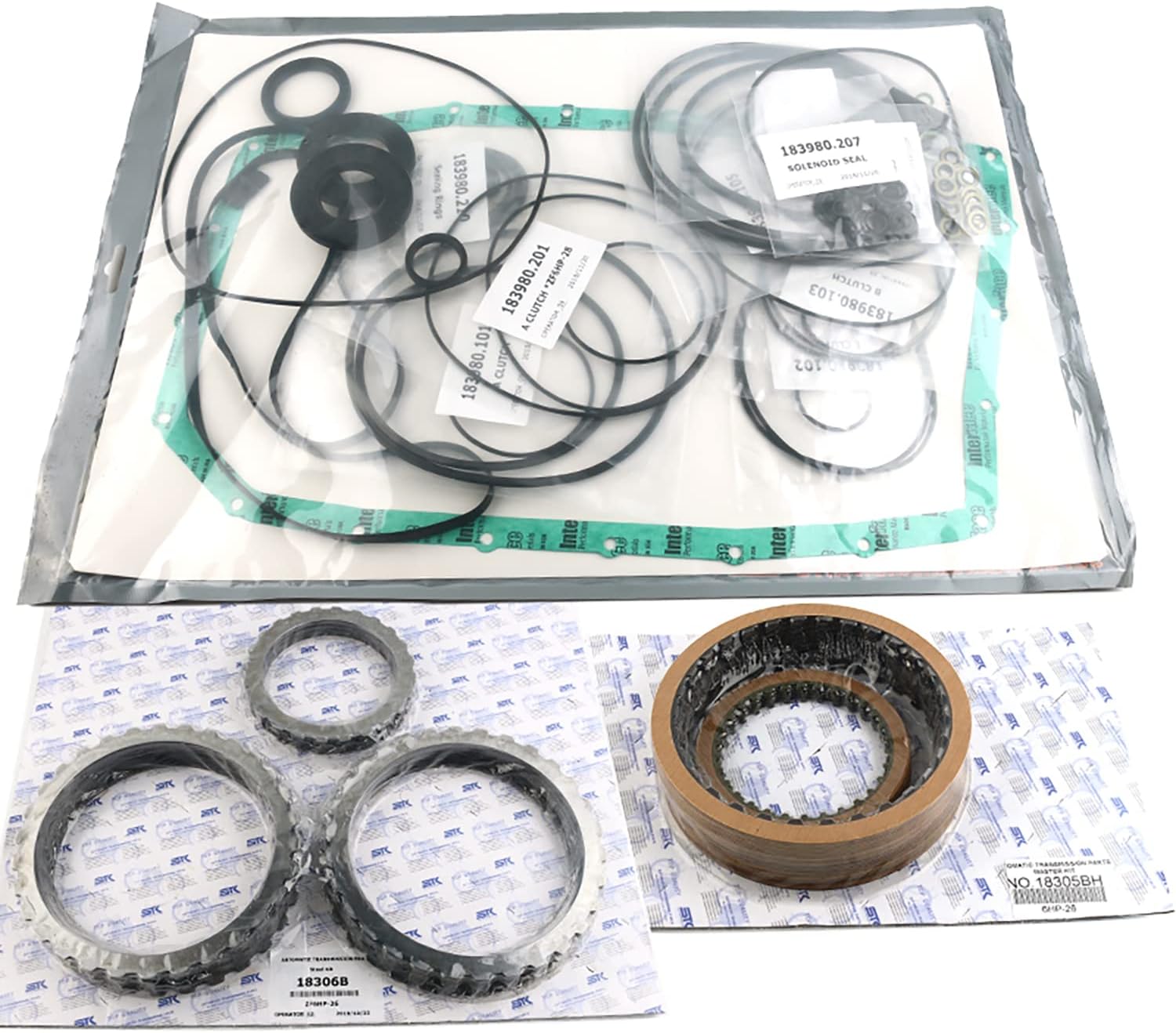
Shop the part for this fix: 6HP26 Overhaul Gasket & Seal Kit
The pump seal, pump O-rings and the rest of the sealing set you need any time the 6HP pump comes out. Confirm your 6HP code before ordering. Need clutches or the full kit? Browse the rebuild kit collection.
View the 6HP26 seal kit at CoreTransmissionParts →Preventing a Repeat Pump Failure
- Fix leaks early. The X5 in the ATSG case started with a cooler line leak. On this family a slow leak becomes a low-fluid condition, then a heat problem, then a pump and converter problem.
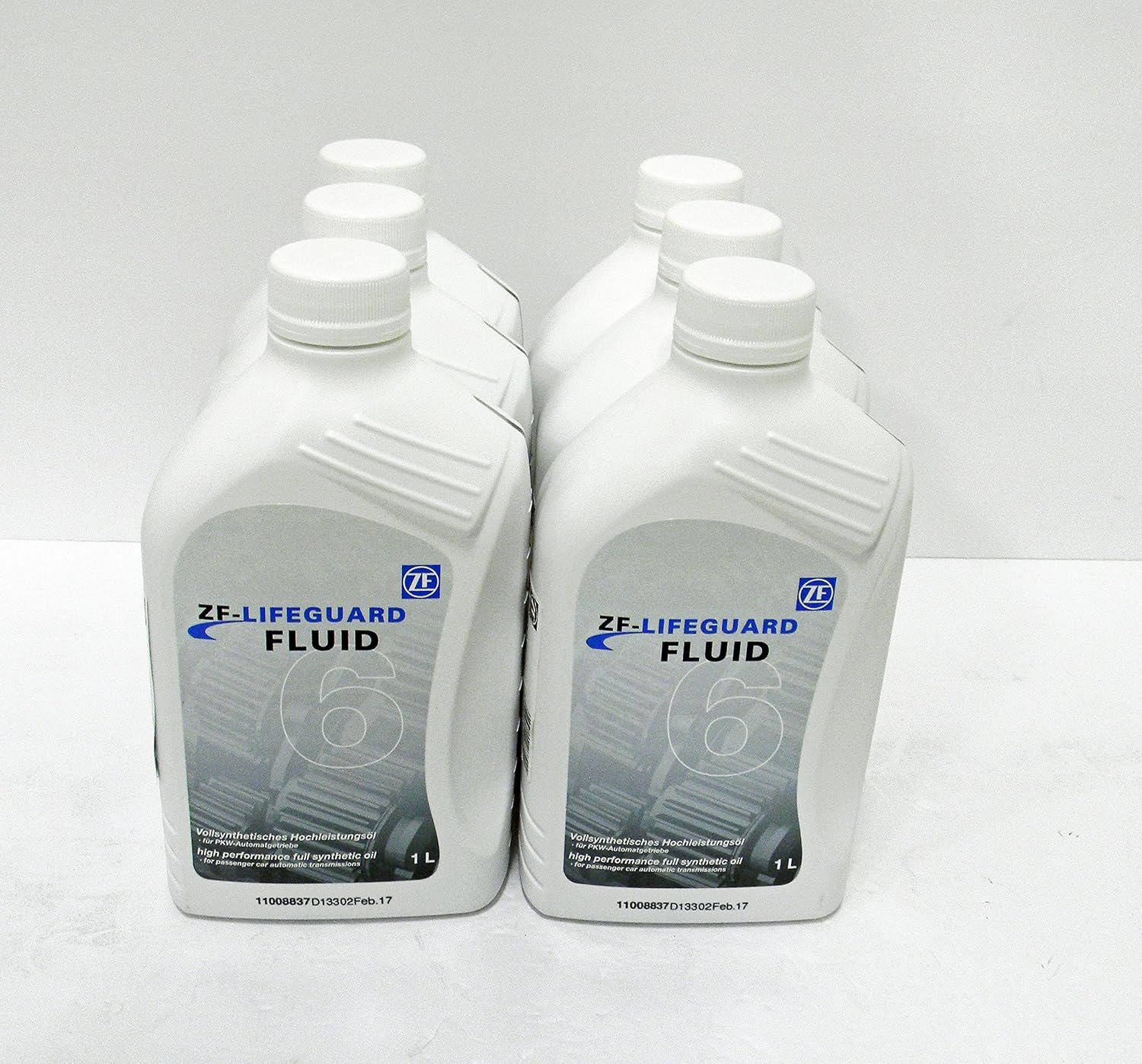
- Use the specified fluid and nothing else. ZF's service information says to use only the specified ZF LifeguardFluid and not to add additives, because they change the fluid's chemical composition.
- Set the level hot-then-cool per ZF. On thermostat-equipped units, a level set before the thermostat opens will read full and then run low once the cooler fills.
- Restore the bores and bushings when the unit is apart. Since internal leakage is what makes a healthy pump look weak, a rebuild that replaces the pump but leaves worn regulator and lube bores in place sets the next failure up.
ZF6HP rebuild kits, seal and gasket kits, and LifeguardFluid 6 for the pump job and the rebuild around it.
Shop ZF6HP parts →Related guides
- ZF6HP No Movement in Any Gear: Diagnosis
- ZF6HP Delayed Engagement: Causes and Fix
- ZF6HP Overheating: Causes and Prevention
- ZF6HP Torque Converter Shudder: Diagnosis and Fix
- ZF6HP Fluid Type and Capacity
FAQ
What are the symptoms of a failing pump on a ZF 6HP26?
The common signs are a delayed engagement that gets worse once the fluid is hot, a rough idle in Reverse only, torque converter clutch slip or TCC and ratio codes, flare or harsh shifts, and a whine that follows engine rpm even in Park and Neutral. Because the 6HP pump is fixed displacement, the symptoms are usually worst hot at idle. Worn valve-body bores and bushings cause the same symptoms, so test before replacing the pump.
How do you test a ZF6HP pump without removing the transmission?
Read WK (converter release) pressure at the case port marked AUF WK, on the driver side of the bellhousing above the cooler lines, using a 100 psi gauge and a 10 x 1.00 mm adapter. Per Sonnax, normal WK is about 70-75 psi cool and 65-68 psi hot at idle, dips to about 50 psi when Reverse is selected and recovers, and falls to 0-2 psi when the converter clutch is applied. Low WK cold points at the pump or a large leak; WK that falls off as the fluid heats points at growing internal leakage.
What causes ZF6HP pump failure?
Low fluid is the most common starting point, often from a cooler line or seal leak, followed by heat damage and debris. In a documented ATSG case on a BMW X5 6HP26, a cooler line leak led to a melted plastic relief valve in the valve body, and that melted plastic later blocked the lube passage in the pump cover. Worn stator support bushings, which Sonnax says wear early on the 6HP26 and 6HP28, also open leak paths that cost pump volume.
Should I replace the torque converter when I replace the 6HP pump?
If the old converter is blue, the fluid smells burned, or there was metal or melted debris in the pan, yes. A converter that ran short of charge oil has been overheated, and debris trapped inside it will go straight back into a new pump. Flush or replace the cooler and lines at the same time, and inspect the converter hub where the pump seal rides.
Sources
- Sonnax — Bob Warnke, "Six Ways from Sunday: Diagnosing ZF6 & Ford 6R60/80 TC-Related Drivability Concerns" (March 2016). Backs the WK port location and 10 x 1.00 mm thread, the normal WK values (70-75 psi cool, 65-68 psi hot, Reverse dip to about 50 psi, 0-2 psi with TCC applied), the six abnormal-WK symptoms, the valve-body valves (SYS.DR-V, WK-V, WD-V, SCHM-V, DR.REO-V), the pump stator bushing failures, and the no-mechatronic-swap warning. sonnax.com
- Sonnax — Gregg Nader, "Anatomy of a Transmission: Oil Flow in the Pump-PR-Converter-Cooler Lube Circuits." Backs the series pump/regulator/converter/cooler/lube relationship, the regulator giving priority to line pressure, the hot-idle-Reverse worst case, fixed-displacement gear-and-crescent pump behavior, and internal leaks consuming pump volume. sonnax.com
- Transmission Digest — Pete Luban (ATSG), "Bad Bimmer, Bad," Shift Pointers (August 2008). Backs the BMW X5 6HP26 case: cooler line leak, blue converter, melted plastic relief valve, rattle with two new converters, and the lube passage in the pump cover blocked by melted plastic. transmissiondigest.com
- Sonnax — ZF Internal Bushing Kit 95030-26K (ZF6HP26/28). Backs premature OE bushing wear from material composition, the two rear stator support bushing sizes (1.022 in / 25.97 mm and 1.180 in / 29.96 mm journals), and the arbor-press-only installation warning. sonnax.com
- Sonnax — Oversized Lubrication Control Valve Kit 95740-11K (ZF6HP19/26/32 Gen 1). Backs lube control valve bore wear causing loss of converter pressure, cooler flow and lube feed, with overheating, rough idle in Reverse and bushing/planetary failures. sonnax.com
- ZF Friedrichshafen AG — Service Information, "Oil change kit for ZF 5HP/6HP automatic transmission." Backs the warnings against starting the engine with no oil in the transmission, low-level damage, using only the specified ZF LifeguardFluid with no additives, and the thermostat-valve level check (75 degrees C on the test drive, recheck at 35 degrees C). aftermarket.zf.com (PDF)