The ZF 6HP19/26/28/32 family (BMW, Audi, Jaguar, Land Rover, Range Rover, early Bentley) is a solid six-speed when it is fed correctly. When it runs hot, it rarely announces it right away. There is no light that comes on the first time fluid spikes past a safe range, and by the time a dash warning or limp-into-third condition shows up, the heat has usually already been cooking the fluid, the torque converter lockup clutch, and the bushings for a while. Most of the overheating complaints that land on a bench do not trace back to one dramatic failure. They trace back to one of four specific, repeatable mechanical causes, plus the wrong fluid making all of them worse.
Heat is cumulative damage, not an event. High fluid temperature oxidizes ATF, degrades the anti-wear additive package, and varnishes clutch discs, valves and actuators, which changes the friction coefficient the transmission was tuned around. That is lab chemistry, not guesswork (SAE 801363). Once the fluid starts to break down, the parts it is supposed to protect start wearing faster, which generates more heat. It is a feedback loop, and the earlier you catch it, the cheaper the fix.

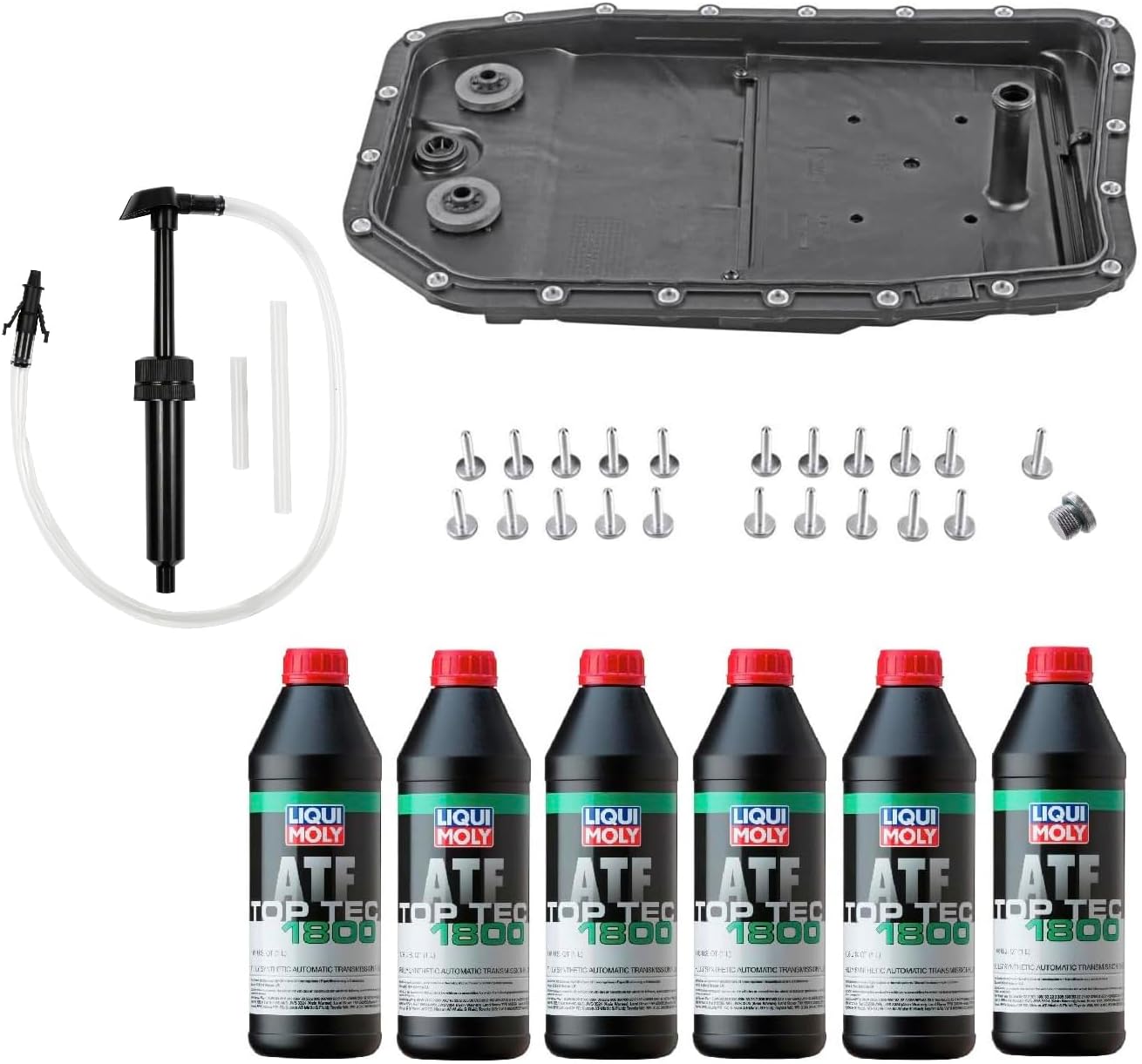

Cause 1: A Leaking Cooler Line Starves the Whole System
This is the one I see most often in the field, and there is a documented case that shows exactly how far it can snowball. A BMW X5 with a ZF 6HP26 came into a shop on the hook with a no-move condition and a major leak from a cooler line. The transmission was pulled, rebuilt, and a new converter installed, but the replacement converter immediately started rattling. After a second teardown turned up nothing, a technician compared the pump cover against a known-good spare and found the real damage: a plastic pressure-relief valve inside the original valve body had melted and welded itself to its spring, and the molten plastic had blocked a lube oil passage in the pump cover. The shop's working theory, backed by the radiator they pulled from the vehicle, was that the cooler line leak caused a low-fluid condition that let that relief valve overheat and melt, and the converter itself had turned blue from the heat (Transmission Digest / ATSG).
That is the chain to watch for: a cooler line weeps or blows → fluid level drops → lube and cooler flow drop with it → internal parts run hot enough to discolor and, in this case, melt plastic. On BMW X5 and Land Rover/Range Rover platforms, the factory transmission cooler is frequently built into the radiator, so a damaged radiator can be a hidden contributor to a "transmission" overheating complaint. Inspect cooler lines and fittings at every fluid service, not just when there is a visible puddle.
Cause 2: A Worn Bypass Clutch Control Valve Cooks the Torque Converter
The ZF6HP's torque converter uses a two-friction-surface lockup clutch that is slip-controlled in every forward gear, not just a simple on/off lockup. That design depends on the bypass clutch control valve bore holding tight tolerances. As that bore wears, the clutch's apply rate slows and its release pressure will not fully vent, which shows up as TCC codes, cycling RPM, flare and harsh shifts, rough idle in reverse, and an overheated converter from the slip itself (Sonnax). This is a known wear point specifically called out on Generation 1 ZF6HP19/26/32 units (and their Ford 6R60/6R75/6R80/6R100 siblings, which share the valve body design). The fix is Sonnax's oversized bypass clutch control valve kit, part number 95740-13K, which reams the bore and installs a hardcoat anodized valve back to factory apply and release rates. It is not compatible with Generation 2 ZF6HP21/24/34 units, which use a different valve body.
Cause 3: A Worn Lubrication Control Valve Bore Kills Cooler Flow
The lubrication control valve bore does more than meter lube oil to the bushings and bearings. Severe wear in that bore can cause loss of converter pressure, cooler flow and critical lube feed all at once, which leads to overheating and failure of bushings, bearings and planetary gear sets, along with shift-quality problems like bump and flare shifts, since the same valve supplies the balance pistons (Sonnax). This is the quiet failure mode: the transmission does not go into limp mode immediately, it just runs hotter than it should every single drive cycle until something downstream gives out. Sonnax's oversized lubrication control valve kit, part number 95740-11K, covers the same Generation 1 ZF6HP19/26/32 units and the shared Ford 6R-family valve body.
Cause 4: The Wrong Fluid, or Fluid That Has Already Broken Down
ZF specifies LifeGuard Fluid 6 for this family. According to ZF's own safety data sheet, it is a synthetic-base ATF with a flash point of 230C (ASTM D92, closed cup), an autoignition temperature above 320C, and a kinematic viscosity of 26.8 mm²/s at 40C and 5.6 mm²/s at 100C, meeting BMW's M1375.4 spec along with VW G 055 005 and Ford Mercon SP (ZF Friedrichshafen AG). Those numbers are not trivia. The viscosity curve is what keeps the fluid film thick enough to protect bushings and clutch surfaces as temperature climbs. A generic "universal" ATF with a different base stock and additive package will not behave the same way under sustained heat, and techs have documented ZF units that shift fine on the wrong fluid at first, then progressively get worse until the failure gets blamed on something else entirely.
Heat itself is also the enemy independent of which fluid you use. High operating temperature oxidizes ATF, alters the friction modifier, and varnishes clutch discs, bands, valves and actuators, which is exactly the mechanism that turns a valve-body wear problem into a sticking valve. Fluid technology exists specifically to fight that: Lubegard's ATF protectant, for example, is formulated to withstand repeated heating to 570F using liquid wax ester technology, which is a useful benchmark for how much margin a quality fluid package is designed to carry (Lubegard). The point is not to chase an additive bottle as a fix. It is that fluid choice and fluid condition are not cosmetic details on this platform.
Cause 5: Towing and Stop-and-Go Without Enough Cooling Capacity
The factory cooler on these platforms is sized for normal commuting, not sustained towing or mountain grades. Under load, the lockup clutch works harder and generates more heat, and on Jaguar and Land Rover applications specifically, cooler line connections and (on newer Velar-style units) a cooler thermostat are documented weak points that can leak or fail to open properly, leading to shutdowns from overheating. Stacked on top of a transmission that is already close to its thermal limit from towing, any one of the mechanical issues above becomes the tipping point instead of a slow background problem. If you tow regularly, add a quality supplemental cooler before you need one, not after a limp-mode event on the side of the highway.
How to Tell It Has Been Running Hot
- Fluid color and smell. ATF that has oxidized from heat turns dark and takes on a burnt, varnish-like smell well before any dash warning appears. If the dipstick or drain plug fluid looks or smells cooked, treat it as a diagnostic finding, not just a reason to change the fluid and move on.
- Scan tool trans temp PID. Watch sump temperature on a live data stream during a drive cycle that matches the complaint (towing, stop-and-go, highway). A transmission that climbs and stays elevated, rather than settling into a normal range, is telling you the cooling circuit is not keeping up.
- Converter discoloration at teardown. A torque converter that comes out visibly blue has been running hot enough to temper the metal, which is exactly what was found on the BMW X5 case above. By the time you see that, the damage is already done; it is a postmortem finding, not an early warning.
Prevention Checklist
- Fill with ZF LifeGuard Fluid 6 or a fluid genuinely formulated to the same spec (BMW M1375.4 / VW G 055 005 / Ford Mercon SP), not a generic multi-vehicle ATF.
- Inspect cooler lines and fittings at every service, especially on BMW X5, Jaguar and Land Rover/Range Rover applications where the cooler is often built into the radiator.
- If you see early TCC slip, cycling RPM, or a converter that flares under light throttle, address the bypass clutch control valve bore before it cooks the converter, not after.
- If you see shift bumps or flares alongside gradually rising temps, suspect the lubrication control valve bore, not just the solenoids.
- Add a quality supplemental transmission cooler before towing season, especially on a vehicle with unknown service history.
- Never ignore dark, burnt-smelling fluid, even if the vehicle still shifts normally. The damage starts before the symptoms do.
The short version: ZF6HP overheating almost always traces back to one of four things: a cooler line leak starving the system, a worn bypass clutch control valve slipping the converter, a worn lubrication control valve bore killing cooler and lube flow, or the wrong fluid breaking down under heat. Catch it at the fluid-and-cooler-line stage and it is a service job. Let it run hot long enough and it is a converter, valve body, or full rebuild.
Need parts for this job? ZF6HP master rebuild kits, valve bodies, solenoid kits, pan and filter service kits and full-synthetic ATF are all in one place. Shop ZF6HP parts →
FAQ
What ATF does a ZF6HP need?
ZF LifeGuard Fluid 6, a synthetic-base ATF that meets BMW M1375.4, VW G 055 005 and Ford Mercon SP. It has a flash point of 230C (ASTM D92) and a kinematic viscosity of 26.8 cSt at 40C and 5.6 cSt at 100C. A generic multi-vehicle ATF with a different base viscosity and additive package will not hold film strength the same way at sustained high temperature, which accelerates exactly the wear that leads to overheating.
Can a transmission cooler line leak really cause overheating?
Yes, and it is one of the most common real-world causes on this family. A documented BMW X5 case (ZF 6HP26) came in with a cooler line leak and a no-move condition; the low-fluid condition that followed melted a plastic pressure-relief valve in the pump cover, blocked a lube passage, and turned the torque converter blue from heat. A damaged radiator, which houses the factory transmission cooler on many of these platforms, was found to be a contributing factor.
Will overheating permanently damage the torque converter?
It can. Sustained high temperature breaks down the ATF inside the converter, varnishes the lockup clutch friction material, and in severe cases discolors the converter housing itself (a blue tint from heat is a documented field finding). Once the lockup clutch material has glazed or varnished, converter slip gets worse, which generates more heat in a feedback loop that usually ends with a converter replacement.
Does ZF6HP overheating always trigger a warning light?
No, and that is what makes it dangerous. A worn bypass clutch control valve or lubrication control valve bore can starve cooler flow and overheat the converter and bushings gradually, with symptoms like firm shifts, TCC cycling, or a slight flare showing up long before any temperature warning. By the time a dash light or limp mode appears, internal damage from heat has usually already started.
Is towing hard on a ZF6HP transmission?
Yes. The factory cooler is sized for normal driving loads, and the torque converter lockup clutch works harder under sustained towing or mountain grades, generating more heat than stop-and-go commuting. Combined with a stock cooling circuit that depends entirely on healthy cooler lines, a clean lube circuit, and a correctly functioning bypass clutch valve, towing without a supplemental cooler pushes the system closer to the point where any one of those weak points causes real damage.
Sources
- Transmission Digest / ATSG (Pete Luban) - "Bad Bimmer, Bad." Backs the documented BMW X5 ZF 6HP26 case: cooler line leak, low-fluid condition, melted plastic pressure-relief valve blocking a pump cover lube passage, torque converter discolored blue from heat, and a damaged radiator as a contributing factor. transmissiondigest.com/bad-bimmer-bad
- Sonnax - Oversized Bypass Clutch Control Valve Kit, part 95740-13K. Backs the bypass clutch control valve bore wear mechanism, the resulting TCC slip and overheated converter, and Generation 1 ZF6HP19/26/32 applicability. sonnax.com/parts/2677
- Sonnax - Oversized Lubrication Control Valve Kit, part 95740-11K. Backs the lubrication control valve bore wear mechanism, the resulting loss of converter pressure, cooler flow and lube feed, and the bushing/bearing/planetary overheating failure. sonnax.com/parts/2676
- ZF Friedrichshafen AG - ZF-LifeGuard Fluid 6 Safety Data Sheet. Backs the fluid's flash point (230C, ASTM D92), autoignition temperature (over 320C), kinematic viscosity (26.8 mm²/s at 40C, 5.6 mm²/s at 100C) and OEM approvals (BMW M1375.4, VW G 055 005, Ford Mercon SP). ZF LifeGuard Fluid 6 SDS
- SAE International - "The Prediction of ATF Service Life from Laboratory Oxidation Test Data" (801363). Backs the general mechanism of ATF oxidative breakdown under sustained heat and its effect on fluid service life. saemobilus.sae.org/papers/801363
- Lubegard - ATF Protectant Technical Datasheet. Backs the fluid-protection benchmark of withstanding repeated heating to 570F via liquid wax ester (LXE) technology, cited as a reference point for heat-tolerant fluid formulation. Lubegard ATF Protectant datasheet