"It shudders when I accelerate" is one of the least useful complaints a 6HP owner can bring you, and one of the most common. On a BMW, Jaguar, Land Rover or Audi with a ZF 6HP19, 6HP21, 6HP26, 6HP28 or 6HP32, that one sentence covers a slipping converter clutch, a worn valve bore, fluid that has lost its friction modifiers, a leaking mechatronic sleeve, a misfire under load, a tired engine mount and a bad driveshaft joint. Five of those seven are cheaper than a converter, and two of them are not in the transmission at all.
This is the sorting process I use before anybody quotes a converter or a valve body. It leans on GEARS Magazine's shudder framework, Sonnax's work on the ZF6 converter circuit, a Ford bulletin on the 6R80 (the Ford-built cousin of this unit), and ZF's own service information. Sources are at the bottom. If you have already proven it is the converter clutch and need the pressure-gauge procedure, go straight to our ZF6HP torque converter shudder diagnosis. This post is the step before that one.

Step 1: Pin Down Exactly When It Shudders
Aaron Golas's April 2023 GEARS Magazine article on shudder diagnosis opens with the right instruction: before you touch a tool, write down the vehicle speed, the gear, the engine rpm and the throttle position when the shudder happens. Customers describe it as driving over a rumble strip. Your job is to turn that into four numbers.
Those numbers already point somewhere. On the ZF6, the converter clutch behavior is distinctive. Per Sonnax, this family does not run the continuous controlled slip strategy GM uses. It applies the clutch full-on, as early as it can, often right after the 2-3 shift and sometimes right after the 1-2. It also releases on a coast 2-1 and on some hard 3-2 kickdowns. So a lockup-clutch shudder on a 6HP tends to show up at light to moderate throttle in 2nd, 3rd or 4th, at road speeds well below where a GM unit would apply.
That gives you a first sort:
- Shudder only on launch from a stop, in 1st, before any upshift. The converter clutch is normally released here. Think driveline angle, mounts, flex disc, center support bearing, or a misfire under load before you think converter.
- Shudder at light throttle after the 2-3 shift, gone the moment you go wide open. Classic converter-clutch pattern. Wide-open throttle usually drops the clutch out, so the vibration disappears with it.
- Shudder that gets worse the harder you push, at any speed. Misfire and mounts move up the list. A converter clutch problem rarely gets worse with more throttle once the clutch has been released.
- Shudder only when the fluid is hot. Fluid condition and the converter clutch move up. Ford units also have a thermal element that changes converter oil routing below about 125°F, per Sonnax, so a hot-only complaint on a 6R80 is worth noting separately.
Golas adds a useful check: late-model units can lock the converter as early as 10 to 15 mph in 2nd. If a shudder only appears in one narrow band, say 35 to 45 mph, a true converter shudder would usually show up at the lower lockup speeds too. If it does not, look harder at everything else.
Step 2: Rule Out the Engine
A misfire under load feels exactly like a converter shudder from the driver's seat. GEARS points out that secondary ignition faults are worst under heavy load at low rpm, which is precisely where a 6HP sits after an early lockup. And an intermittent misfire may never turn on the check engine light.
The test is Mode 6. Pull up the per-cylinder misfire counters on a generic OBD scan, drive the car until it shudders, and look again. If one cylinder's count climbs every time the car shudders, you have found it. On coil-on-plug engines, swap the coil and plug to a different cylinder and see whether the misfire follows the coil, the plug, or stays put. A misfire that stays on one cylinder after swapping parts calls for a compression test. On a high-mileage BMW V8 or inline six, a cracked coil boot will produce this exact complaint and get a transmission blamed for it.
Golas also flags cylinder deactivation and variable cam timing as shudder sources on engines that have them. Watch commanded against actual cam position during the shudder. If they drift apart at the moment it vibrates, you are in engine territory.
Step 3: Rule Out Mounts and Driveline
Bob Warnke's Sonnax article on ZF6 converter drivability says it plainly: if the hydraulics check out, look at the engine mounts first. A collapsed mount lets the engine roll under torque and transmits every small vibration into the body. The converter clutch applying at 1,300 rpm in 3rd puts load through the mounts at the exact moment the customer complains, which is why mounts so often get mistaken for a converter.
Ford put the driveline cause in writing for the 6R80. Ford Special Service Message 47456 covers 2015-2018 Ranger 4WD trucks with the 6R80 that shudder on take-off, and the cause it names is excessive driveshaft angles. The procedure is to measure both driveshaft angles per Workshop Manual section 205-01, then monitor TCM data for accelerator pedal position, rpm, vehicle speed, and torque converter slip desired versus torque converter slip actual. That is the right pattern for any 6HP vehicle: confirm the driveline first, then use converter slip data to prove or clear the transmission.
On the BMW and Jaguar applications, the driveline items to put hands on are the rubber flex disc (guibo) at the transmission output, the driveshaft center support bearing, and the transmission mount itself. A cracked flex disc or a center bearing with a torn rubber isolator produces a launch shudder that is easy to see on a lift with a helper rocking the car in gear. GEARS adds a Ford truck example where a dry slip-yoke spline caused the complaint and a light grease on the splines cured it.
Step 4: Read Converter Slip on the Scan Tool
Once the engine and driveline are cleared, the scan tool tells you whether the converter clutch is the source. Record a data movie at the speed where the car shudders and graph these together:
| PID | What you want to see | What a problem looks like |
|---|---|---|
| TCC slip desired vs actual (rpm) | Actual tracks desired; at full lockup both near zero | Actual oscillates or runs well above desired while the car shudders |
| Engine rpm vs turbine (input) rpm | Locked: the two traces sit on top of each other | A gap that opens and closes in time with the vibration |
| TCC solenoid current | Steady once lockup is commanded | Command is steady but slip still cycles: mechanical or hydraulic fault |
| Throttle %, engine load % | Steady through the sample | If these jump, pick a steadier section of the recording |
GEARS puts normal converter slip on most units under about 60 rpm, though the manufacturer spec always rules. On the ZF6, Sonnax's WK pressure numbers give you the hydraulic side: at full apply the WK release circuit should read 0 psi, and 1.5 to 2 psi is the TCM deliberately allowing a little slip for noise control. Unlocked and hot, WK should sit around 65 to 68 psi. Sonnax adds a key decision point: if WK pressure is normal and the solenoid command is low but the clutch still slips, suspect the converter itself.
The critical read is this: if actual slip swings back and forth while commanded slip and solenoid current hold steady, the clutch or its oil supply cannot hold the command. That is a transmission-side shudder. If slip is flat and near zero during the vibration, the converter is locked and holding, and the shudder is coming from somewhere else.
Step 5: Fix the Fluid Before You Condemn Anything
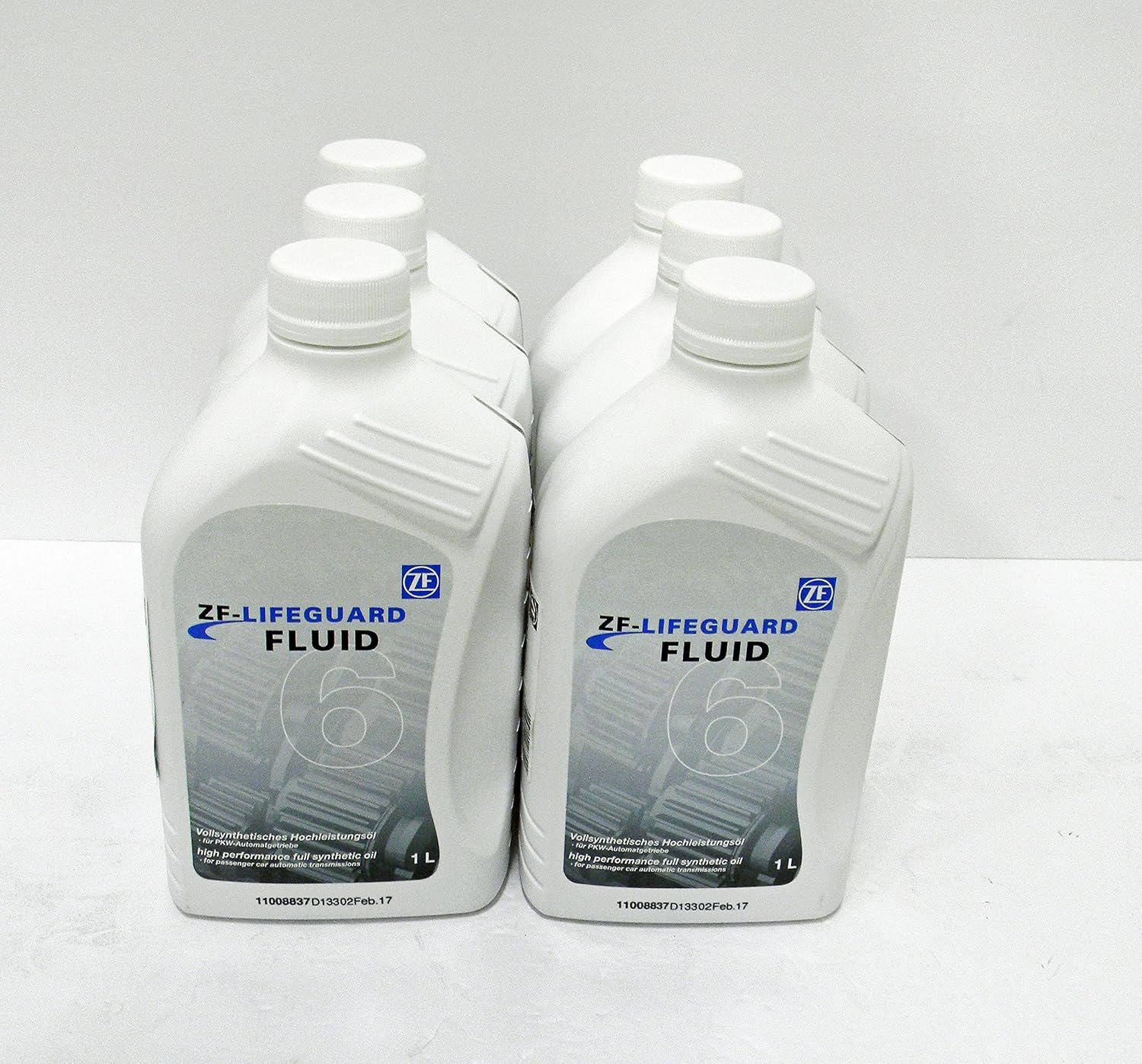
A converter clutch that shudders on old fluid is the most common transmission-side cause, and the cheapest to fix. Both GEARS and ZF agree on the principle. ZF's product data sheet for LifeguardFluid 6 says its friction behavior is matched to the 6HP specifically as a prerequisite for shift quality and vibration-free operation. Once that fluid is cooked and the friction modifiers are spent, the converter clutch goes from smooth engagement to stick-slip, and stick-slip is shudder.
ZF sells the 6HP as a lifetime fill, but the same data sheet recommends an oil change after 150,000 km (about 93,000 miles), and sooner under high temperature and load or when the vehicle's history is unknown. Most used 6HP cars have an unknown history.
Get the fluid right:
- Correct fluid by code. Most 6HP units take ZF LifeguardFluid 6. ZF lists exceptions that must take LifeguardFluid 8: the 6HP19A, 6HP19X, 6HP26A61 and 6HP28AF. Check the ID tag before you pour.
- No additives. ZF Service Information 50145 says not to use any further additives because they alter the oil's chemistry. A bottle of anti-shudder additive can mask a worn clutch for a few hundred miles. It does not repair one.
- Look at what comes out. The same ZF document says to abort the oil change and treat the transmission as defective if the old oil smells burned or carries large chips or fragments. A burnt-smelling 6HP with a shudder is a converter and possibly an overhaul, not a service.
- Level by temperature, not by guess. Per ZF 50145, idle must be 650 to 950 rpm or the level cannot be set correctly. Fill through the side plug at 30 to 35°C transmission temperature until fluid runs out, and close the plug once it reaches 40°C and only single drops come out. Do not let it exceed 50°C during the check. Units with a thermostat valve must see at least 75°C on the road test, then get rechecked after cooling to 35°C.
- Pan torque by material. ZF 50145 specifies 4 Nm plus 45 degrees for an aluminum pan, 10 Nm for plastic and 12 Nm for steel, tightened crosswise from the center out.
A low fluid level deserves its own line. A 6HP that is a liter or two low will aerate the oil, starve the converter feed and shudder under load, and the most common reason it is low is the mechatronic guide sleeve.
Step 6: Check the Mechatronic Sleeve
The guide sleeve is the plastic adapter where the external electrical connector passes through the case to the mechatronic unit. Its O-rings harden with age and heat, and it leaks onto the pan, so it gets misdiagnosed as a pan gasket leak. ZF publishes a dedicated procedure for it, Service Information 50324. The steps are: disconnect the battery, release the bayonet catch on the connector and pull the plug, remove the pan, release the sleeve's locking device and pull it out, lightly oil the new sleeve's seals with LifeguardFluid, seat it in the correct orientation and engage the lock, then refit the pan to spec, refill, set the level and road test.
Since the pan has to come off to replace the sleeve, do the sleeve and the fluid service in the same visit. On a shuddering unit with a wet connector area and a low level, that one job is often the whole fix.
Step 7: When It Is Hydraulic or the Converter Itself
If fresh fluid at the correct level does not cure it and the slip data still shows the clutch cycling, the problem is either in the valve body or in the converter. Sonnax lists the valve body wear points that change converter pressure on this family:
- Converter release regulator valve (WK-V) and bypass clutch control valve (WD-V): wear here alters WK pressure and the apply and release rate of the converter clutch. Sonnax offers oversized kits, 95740-05K and 95740-13K.
- Solenoid pressure regulator valve (DR.REO-V): a worn bore makes every solenoid's output too high or too low, the TCC solenoid included. Kits 95740-17K (Gen 1) and 95740-64K (6HP21/28/34).
- Main regulator bore (SYS.DR-V): wear here can rob converter feed oil.
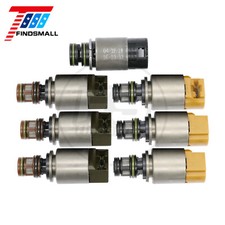
- TCC solenoid: Sonnax notes these usually fail mechanically, from wear or contamination, rather than electrically, so a solenoid that passes a resistance check can still be the problem.
- E clutch and pump stator bushings: worn bushings bleed off oil and show up in converter and shift complaints together.
If WK pressure is correct, the valve body checks out, and the clutch still slips under a steady command, the converter's lining is glazed or damaged and the converter has to come out. At that point, take the fluid sample seriously. A converter that shed lining material has put it through the valve body and coolers, and replacing the converter without cleaning the rest just moves the shudder a few thousand miles down the road.
A Quick Sorting Table
| What you find | Likely cause | First fix |
|---|---|---|
| Mode 6 misfire counts rise with the shudder | Ignition, injector or mechanical misfire | Coil and plug swap test, compression test |
| Shudder on launch only, slip data flat | Mounts, flex disc, center bearing, driveshaft angle | Inspect and replace driveline and mount parts |
| Slip actual cycles, fluid dark or overdue | Spent friction modifiers in the ATF | Correct LifeguardFluid, level set by ZF procedure |
| Level low, wet connector area | Mechatronic guide sleeve leak | Sleeve and seals per ZF 50324, plus fluid service |
| Fresh fluid, WK off spec | Valve body bore wear or TCC solenoid | Valve body repair or replacement |
| Fresh fluid, WK correct, still slips | Converter clutch lining | Converter replacement, cooler and valve body cleanup |
Shop the part for this fix
If the connector area is wet and the level is low, the 6HP26 valve body sleeve and connector seal kit is the job to do while the pan is off. Core Transmission Parts stocks it, and carries ZF6HP rebuild kits if the converter has already taken the unit with it.
View the 6HP26 sleeve seal kit →Or browse transmission rebuild kits at Core Transmission Parts.
ZF LifeguardFluid 6, mechatronic sleeve and connector seal kits, TCC solenoids, valve bodies and master rebuild kits for the ZF6HP family.
Shop ZF6HP parts →Related guides
- ZF6HP Torque Converter Shudder: Diagnosis and Fix
- ZF6HP Fluid Type and Capacity
- ZF6HP Fluid Leak Common Spots
- ZF6HP Harsh Shift Causes
- 6R80 vs ZF6HP Differences
FAQ
Why does my ZF 6HP shudder when I accelerate?
The most common transmission-side cause is the torque converter clutch slipping on worn-out fluid, because the 6HP applies the clutch fully and early, often right after the 2-3 shift. But misfires under load, collapsed engine or transmission mounts, and worn driveline parts such as the flex disc produce the same feel. Rule those out with Mode 6 misfire data and a driveline inspection before blaming the transmission.
How do I tell torque converter shudder from an engine misfire?
Watch Mode 6 per-cylinder misfire counters during the shudder. If one cylinder's count climbs each time, it is a misfire. If misfire counts stay flat and TCC actual slip swings back and forth while commanded slip and solenoid current hold steady, the converter clutch is the source.
Will a fluid change fix ZF 6HP shudder?
Often, if the converter clutch lining is not damaged. ZF says LifeguardFluid 6 has friction behavior matched to the 6HP for vibration-free operation, and spent fluid causes stick-slip. Use the correct LifeguardFluid for the unit code, set the level by ZF's temperature procedure, and add no additives. If the old fluid smells burned or carries large chips, ZF says the transmission is already defective.
Can a leaking mechatronic sleeve cause shudder?
Indirectly, yes. The guide sleeve O-rings harden and leak, the fluid level drops, and a low 6HP aerates its oil and starves the converter feed under load. ZF Service Information 50324 covers replacing the sleeve, which requires removing the pan, so do the sleeve and a full fluid service together.
When does a ZF 6HP need a new torque converter?
When the fluid is fresh and at the correct level, WK release pressure is on spec, the valve body checks out, and the converter clutch still slips under a steady command. At that point the lining is glazed or damaged. Clean the coolers and valve body when you replace it, or the debris will bring the shudder back.
Sources
- GEARS Magazine (ATRA) — Aaron Golas, "Shudder Diagnosis" (April 2023). Backs recording speed, gear, rpm and throttle first; the 35-45 mph converter-clutch pattern and early 10-15 mph lockup on late-model units; Mode 6 misfire counts and the coil and plug swap test; the TCC commanded vs actual slip data movie and the roughly 60 rpm normal slip figure; fluid before condemnation; mounts, driveshaft splines, cylinder deactivation and cam timing as non-transmission causes. gearsmagazine.com
- Sonnax — Bob Warnke, "Six Ways from Sunday: Diagnosing ZF6 & Ford 6R60/80 TC-Related Drivability Concerns." Backs the early full-on lockup strategy and release points, the WK pressure values, the mounts-first advice, suspecting the converter when WK is normal, the WK-V, WD-V, DR.REO-V and SYS.DR-V wear points and kit numbers, mechanical TCC solenoid failure, bushing wear, and the Ford thermal element below about 125°F. sonnax.com
- Ford Motor Company — Special Service Message 47456 (2015-2018 Ranger 4WD, 6R80), hosted by NHTSA. Backs take-off shudder caused by excessive driveshaft angles, measuring both driveshaft angles per WSM 205-01, and monitoring APP, rpm, vehicle speed and torque converter slip desired vs actual. static.nhtsa.gov (PDF)
- ZF Friedrichshafen AG — Service Information 50145 EN, "Oil change kit for ZF 5HP/6HP automatic transmission" (03.2023). Backs the no-additives rule, the 650-950 rpm idle prerequisite, aborting on burned oil or large chips, the 30-35°C / 40°C / 50°C level procedure, the 75°C thermostat-valve note, and pan torque by material. aftermarket.zf.com (PDF)
- ZF Friedrichshafen AG — Service Information 50324 EN, "Guide Sleeve Mechatronics for ZF Automatic Transmission 6HP" (09.2018). Backs the guide sleeve replacement sequence: battery, bayonet connector, pan removal, locking device, oiling the new seals with LifeguardFluid, refill, level check and road test. aftermarket.zf.com (PDF)
- ZF Friedrichshafen AG — Product Data Sheet, ZF LifeguardFluid 6. Backs the friction behavior matched to the 6HP for vibration-free operation, the LifeguardFluid 8 exceptions (6HP19A, 6HP19X, 6HP26A61, 6HP28AF), and the recommended oil change after 150,000 km. aftermarket.zf.com (PDF)