
P0730 is the generic OBD-II code for Incorrect Gear Ratio: the TCM calculates a ratio from input/turbine speed versus output speed, compares it against the ratio it expects for whatever gear it just commanded, and sets the code when the two don't match closely enough for long enough. On most platforms that's the whole story. On a ZF8HP-based transmission -- sold by ZF as the 8HP45, 8HP50, 8HP70, 8HP75, 8HP90 or 8HP95 across BMW, Audi, Land Rover, Maserati and others, and badged 845RE or 850RE in Chrysler, Jeep, Dodge and Ram applications -- a bare, standalone P0730 is the exception, not the rule. These TCMs are built to flag the specific clutch or brake behind the ratio mismatch, and they usually do, which means a scan tool pulling real codes off a ZF8HP complaint is more likely to show a gear-specific code (P0731 through P0736) or, on Stellantis applications, a proprietary hex code that names the element directly.
That distinction is the entire diagnosis. This guide covers what the code is actually checking, a real factory bulletin that documents a specific clutch failure setting this exact fault family, the clutch and brake layout that lets you map a ratio code to a suspect component, the other mechanical causes that produce the same symptom, and the order to work the job before you order a valve body or a clutch pack you don't need.
What's Actually Setting the Code
The ZF8HP family runs four simple planetary gear sets controlled by five shift elements: two brakes, labeled A and B, and three clutches, labeled C, D and E. Sonnax's own technical breakdown of the platform lays out which elements apply in which gear -- three of the five are always engaged at once. First gear runs A, B and C. Second runs A, B and E. Third runs B, C and E. Fourth runs B, D and E. Fifth runs B and C. Sixth runs C, D and E. Seventh runs A, C and D. Eighth runs A, D and E. Reverse runs A, B and D.
That table is the reason a ratio fault is diagnosable at all. If the TCM reports an incorrect ratio in a specific gear, or in a cluster of gears, you can cross-reference which element is common to all of them and narrow the search before you ever pull the pan. A fault that shows up in 4th, 6th, 7th and 8th, or in Reverse, points straight at clutch D -- every one of those gears shares it. A fault clustered in 2nd, 3rd, 4th, 6th and 8th points at clutch E instead. That's not guesswork; it's the same logic Sonnax uses when it ties its heavy-duty "E" clutch hub to missing second, third, fourth, sixth and eighth gears on this platform.
The Real-World Case: D Clutch Failure
There's a documented, current Stellantis bulletin that shows exactly how this plays out on real vehicles. Technical Service Bulletin 21-009-25 Rev. A, "D Clutch Repair," dated February 1, 2025 and hosted by NHTSA, covers the Eight-Speed Auto 850RE transmission (Sales Code DFT) across a long list of vehicles: 2022 Wagoneer/Grand Wagoneer, 2020-2025 Dodge Durango, 2020-2023 Dodge Charger and Challenger, 2020-2025 Ram 1500 and Ram 1500 Classic, 2020-2022 Jeep Grand Cherokee, 2021-2024 Jeep Grand Cherokee/Grand Cherokee L, 2020-2025 Jeep Gladiator and Wrangler, and 2020-2023 Chrysler 300.
The bulletin's customer symptom section lists the exact companion codes a confirmed D clutch failure sets: P0733-00 (Gear 3 Shift Incorrect Ratio), P1DA8-00 (Incorrect Gear Ratio Clutch A, B or D Defective) and P1D92-00 (Incorrect Gear Ratio - Clutch 4 Defective). Customers report the transmission slipping when shifting, the vehicle not moving in reverse, and the vehicle refusing to shift higher than third gear -- which lines up exactly with the gear table above, since clutch D is the common element in Reverse, 4th, 6th, 7th and 8th. Lose it, and everything built on it either slips or won't engage at all, while the lower gears that don't need it keep working. The stated cause and the entire repair summary is one line: replace the D clutch.
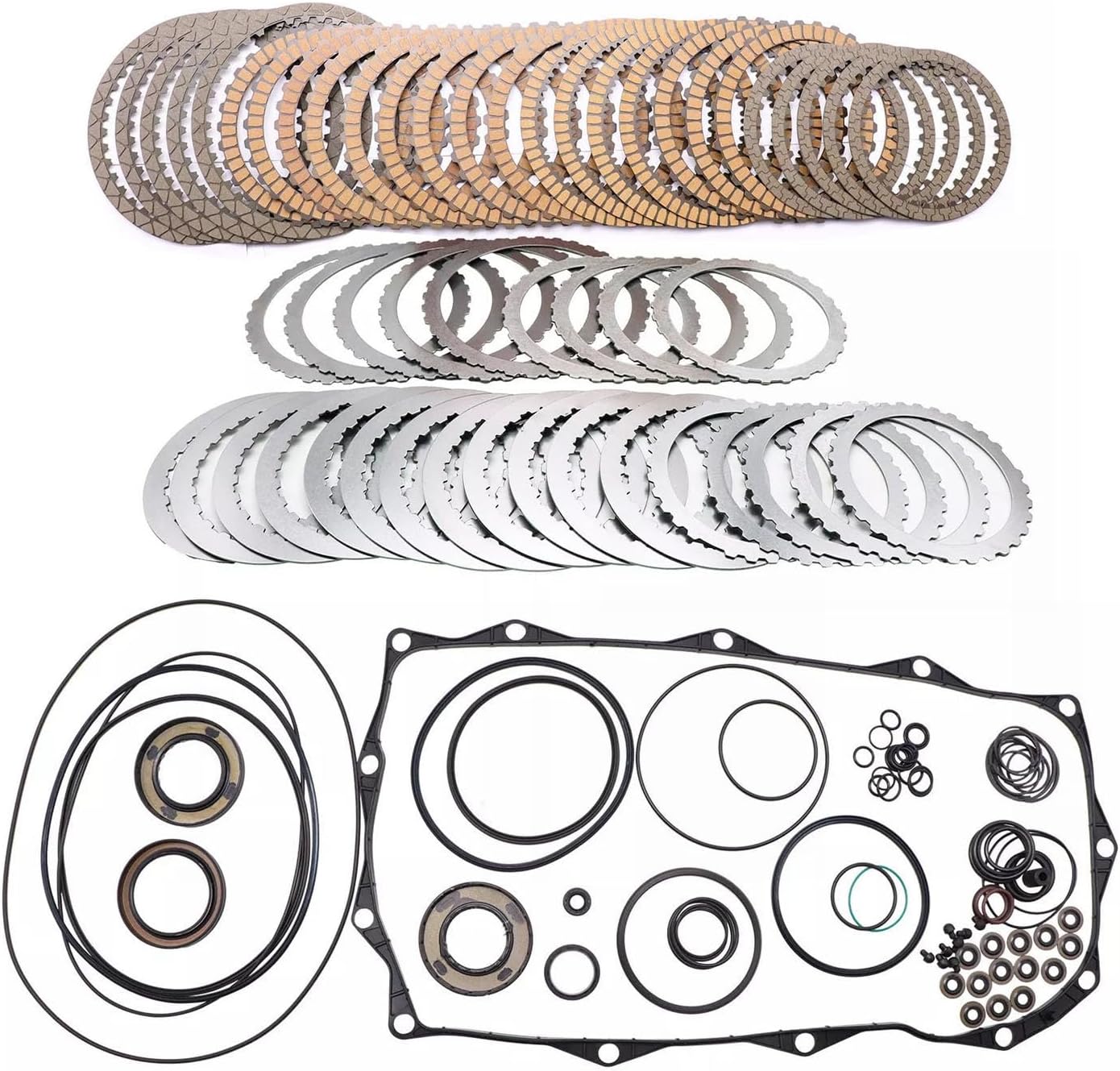
The repair itself is a full teardown: pull the torque converter, the valve body, the oil pump housing, and split the input/output shaft and P4 annulus drum assembly down on a press fixture to get to the D clutch drum and its backing plate. Stellantis's own torque specs for reassembly are specific -- the valve body bolts go to 8 N·m (71 in-lb), the 13 oil pan bolts go to 10 N·m (89 in-lb), the 14 new oil pump housing bolts are pre-tightened to 6 N·m then torqued to 10 N·m (89 in-lb) and finished with an additional 90° turn, the extension housing bolts on 4x4 units go to 27 N·m (20 ft-lb), and the manual park release lever nut goes to 12 N·m (9 ft-lb). The bulletin also includes a note worth knowing before you condemn a core: it's normal for fine debris to be present in the pan and stuck to the magnets, and burnt oil and debris on their own don't warrant a transmission replacement for D piston seal failure. After the clutch is replaced, the procedure is explicit that the job isn't done until wiTECH runs the Quick Learn procedure and clears the DTCs -- there's no shortcut around the scan-tool relearn.
Why the D Clutch Specifically
The D clutch isn't a random weak point. Sonnax's own technical writeup on the ZF8HP platform identifies the D clutch's backing plate, on the 8HP45 and 8HP50 in particular, as a known problem part: the factory piece is a thin stamped plate that can flex and cone under load, which wears the friction pack unevenly and leads to burnup over time -- exactly the kind of progressive clutch failure that eventually produces the slip, no-reverse and gear-ceiling symptoms the Stellantis bulletin describes. Sonnax sells a thicker, heavy-duty replacement specifically to address that flex. It's a sensible upgrade to discuss with a customer if you're already inside the unit replacing the D clutch for a confirmed ratio fault.
Other Causes Behind the Same Symptom
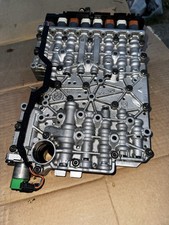
A worn clutch pack isn't the only way to get an incorrect-ratio code on this platform, and it's worth ruling out the cheaper causes first. Sonnax's technical breakdown of the ZF8HP identifies the four converter-circuit valves -- pressure regulator, TC pressure, TC switch and TC clutch valve -- as the busiest, most wear-prone bores in the valve body, all driven by variable force solenoids under constant EPC activity, with the TC pressure valve showing the most severe wear of the group. The rubber-tipped solenoid accumulators for the TCC, EPC and individual clutch/brake solenoids wear the same way. Pressure loss through any of those bores can produce the same slipping and ratio-mismatch symptoms as a worn clutch pack, which is why Sonnax builds its Zip Kit repair kits around restoring pressure in those circuits rather than replacing the whole valve body.
Fluid condition and fluid type matter just as much, and they're free to check before anything gets torn down. ZF's own product data sheet for LifeguardFluid 8 states plainly that only LifeguardFluid 8 or LifeguardFluid 9 may be used in 8HP transmissions, that substituting another fluid can range from degraded shift characteristics to outright transmission failure, and that despite the factory "lifetime" fill, ZF recommends a change after 150,000 km given how much real-world service life varies with use and temperature. Stellantis's D clutch TSB backs this up from the repair side with an explicit caution: the fluid developed for this transmission is not compatible with ATF+4 or any other current Stellantis transmission fluid. Contaminated or wrong-spec fluid changes the friction coefficient at the clutch packs directly, which is precisely the kind of fault that shows up as a ratio mismatch rather than a dramatic failure.
Confirm the Generation Before You Order Anything
Sonnax's own identification breakdown of this platform draws a hard line between two hardware generations, and it matters the moment you're ordering a valve body, a solenoid, or internal hard parts. Generation 1 covers the 8HP45, 8HP70 and 8HP90 (badged 845RE); Generation 2, which started appearing in some applications around 2019, covers the 8HP50, 8HP75 and 8HP95 (badged 850RE). The differences aren't cosmetic: Gen 1's "B" brake piston has separate apply and release circuits (B1 and B2), while Gen 2 removed the B2 circuit entirely in favor of a return spring and added wave springs to the A and B clutch packs for faster release. Gen 1's upper valve body casting carries five control valves; Gen 2's upper casting has none. None of that hardware interchanges between generations. Read the casting and tag before you place an order.
Diagnostic Order
- Pull every stored and pending code, not just P0730. A gear-specific code (P0731-P0736) or a Stellantis proprietary code like P1DA8 or P1D92 tells you which clutch or brake is actually involved -- P0730 alone doesn't.
- Cross-reference the affected gears against the clutch application table. A fault pattern across Reverse, 4th, 6th, 7th and 8th points at clutch D; a pattern across 2nd, 3rd, 4th, 6th and 8th points at clutch E.
- Check fluid level, condition and type before anything else. Confirm it's genuine ZF LifeguardFluid 8/9 or the correct Stellantis-specified fluid, not ATF+4 or a substitute -- wrong fluid alone can produce a ratio-mismatch symptom.
- If the pattern points at the converter circuit or multiple unrelated gears, inspect valve body bores for wear rather than assuming a clutch pack failure -- the TC pressure valve and solenoid accumulators are the platform's known wear points.
- Confirm Gen 1 (845RE/8HP45/70/90) vs. Gen 2 (850RE/8HP50/75/95) from the casting and tag before ordering a valve body, solenoid or hard parts kit.
- Replace the confirmed element following the factory torque sequence -- valve body bolts, pan bolts, oil pump housing bolts and extension housing bolts all have distinct specs, and the pump bolts in particular use a torque-plus-angle pattern.
- Run the scan tool's Quick Learn/adaptation relearn only after the repair is physically complete, then clear codes and road test. Resetting adaptation values over an unrepaired mechanical fault doesn't fix a ratio mismatch -- it just rebuilds the shift tables around a transmission that's still slipping.
P0730 by itself is a weak signal on this platform -- it tells you the ratio is wrong, not why. The companion code, the gear pattern, and a documented factory bulletin naming a real clutch failure give you the actual diagnosis. Work it in that order and a transmission replacement stops looking like the only option.
Suspect the D clutch? Here's the upgrade part.
If a gear pattern across Reverse, 4th, 6th, 7th or 8th points at clutch D, Sonnax's heavy-duty D clutch backing plate replaces the thin factory plate that's known to flex and cone under load -- listed for both 845RE and 850RE builds.
Shop the D clutch backing plate →FAQ
What does P0730 mean on a ZF8HP, 845RE or 850RE?
P0730 is the generic OBD-II code for Incorrect Gear Ratio: the TCM compares the ratio it calculates from input and output shaft speed against the ratio it expects for the gear it commanded, and sets the code when they don't match within tolerance for long enough. It doesn't name a gear or a clutch by itself -- that's what the gear-specific codes (P0731 through P0736) and, on Stellantis applications, proprietary hex codes like P1DA8 and P1D92 are for. On this platform the generic code is far less common on its own than its specific companions.
Why does my scan tool show P0733 or P1DA8 instead of plain P0730?
Because Stellantis's own TCM software is built to flag the specific element, not just the generic ratio mismatch. Stellantis Technical Service Bulletin 21-009-25 Rev. A documents exactly this: vehicles with a confirmed D clutch fault set P0733-00 (Gear 3 Shift Incorrect Ratio), P1DA8-00 (Incorrect Gear Ratio Clutch A, B or D Defective) and P1D92-00 (Incorrect Gear Ratio - Clutch 4 Defective) together. Those are the real-world companions a ZF8HP-based TCM sets in place of, or alongside, a plain P0730 -- and they're far more useful, because they point at an actual clutch pack instead of a generic ratio mismatch.
Can I just clear the code and run an adaptation reset?
Not as a fix. Stellantis's own D clutch TSB only clears DTCs and runs the wiTECH Quick Learn procedure as the last step, after the clutch pack has already been physically replaced. Resetting adaptation values over a mechanical fault doesn't repair worn or burnt clutch material -- it just rebuilds the TCM's shift-timing tables around a transmission that's still slipping, which usually makes the symptom reappear within a short interval and can mask how far the damage has progressed.
What fluid does a ZF8HP-based transmission actually need?
ZF's own product data sheet for LifeguardFluid 8 states plainly that only LifeguardFluid 8 or LifeguardFluid 9 may be used in 8HP automatic transmissions, and that substituting another fluid can range from degraded shift quality to outright transmission failure. Stellantis's D clutch TSB reinforces this from the repair side, with an explicit caution that the fluid developed for this transmission is not compatible with ATF+4 or any other current Stellantis transmission fluid. Running the wrong fluid is cheap to fix before it causes damage and expensive to fix after.
Is replacing the D clutch or valve body a DIY job?
Not realistically. Stellantis's own repair procedure for the D clutch requires pulling the torque converter, the valve body, the oil pump housing, and splitting the entire clutch pack stack off the input/output shaft on a press fixture, with several specialty tools (a guide sleeve, a press fixture, a bearing/gear splitter, support rings and a seal installer) and a mandatory wiTECH Quick Learn relearn afterward. Stellantis rates the labor itself at 5.4 to 9.7 hours depending on the vehicle, before diagnosis. This is a bench job for a shop with the right tooling and scan tool access, not a driveway repair.
Sources
- Stellantis / NHTSA — Technical Service Bulletin 21-009-25 Rev. A, "D Clutch Repair," February 1, 2025. Backs the vehicle list for the 850RE (Sales Code DFT), the exact companion DTCs (P0733-00, P1DA8-00, P1D92-00) a confirmed D clutch failure sets, the customer symptoms, the full teardown and torque specs (valve body 8 N·m, pan bolts 10 N·m, oil pump bolts 10 N·m plus 90°, extension housing 27 N·m, MPR lever nut 12 N·m), the normal-debris note, the ATF+4 incompatibility caution, and the mandatory wiTECH Quick Learn step. static.nhtsa.gov (PDF)
- ZF Friedrichshafen AG — ZF LifeguardFluid 8 Product Data Sheet. Backs the OEM fluid specification for 8HP transmissions: the requirement to use only LifeguardFluid 8 or 9, the risk of using a substitute fluid, and ZF's recommended 150,000 km change interval despite the factory "lifetime oil" fill. aftermarket.zf.com (PDF)
- Sonnax — "A New Path for ZF" technical article. Backs the five-element (A/B brakes, C/D/E clutches) shift element layout, the gear-by-gear application chart, and the converter-circuit valve and solenoid accumulator wear points on the ZF8HP platform. sonnax.com
- Sonnax — Zip Kit product documentation (ZF8HP45/55/70, 845RE). Backs the valve body pressure-loss failure mode addressed by the kit and its target symptoms (broken parts, delayed engagement, excess heat, firm or harsh engagement). sonnax.com
- Sonnax — ZF8 Gen 1 vs. Gen 2 identification technical resource. Backs the Gen 1 (8HP45/70/90, 845RE) vs. Gen 2 (8HP50/75/95, 850RE) hardware split, including the B2 circuit removal and valve body casting differences between generations. sonnax.com
- Gears Magazine (ATRA) — "The ZF 8HP: Its Shift Strategy. No Problems Here?" December 2020. Backs the ZF8HP's shift-scheduling and driver-type-assessment strategy and the recommended diagnostic sequence (verify complaint, check commanded operation, isolate the function) before concluding a ratio or shift complaint is mechanical. gearsmagazine.com