The pump on a ZF 8HP is easy to forget about because it is not where you expect it. On a 4L60E or a 68RFE the pump sits on the input axis, bolted to the front of the case, and its gears ride directly on the converter hub. ZF moved it. On the 8HP the pump is offset from the input shaft and driven by a chain, which changes how it fails, how it sounds when it is going bad, and what you have to get right when you replace it. Here is how it is driven, what a failing one looks like, what gets misdiagnosed as a pump, and how to replace it so the new one lives.
One note before we start: pump failures on this unit are not common. Transmission Digest's ZF replacement write-up points out the 8HP has a low failure rate across a very large population. That is exactly why a "bad pump" call needs proof. Most of the time the complaint traces back to fluid level, a worn valve body bore, or something done wrong during a previous repair.
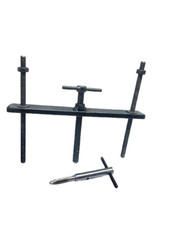
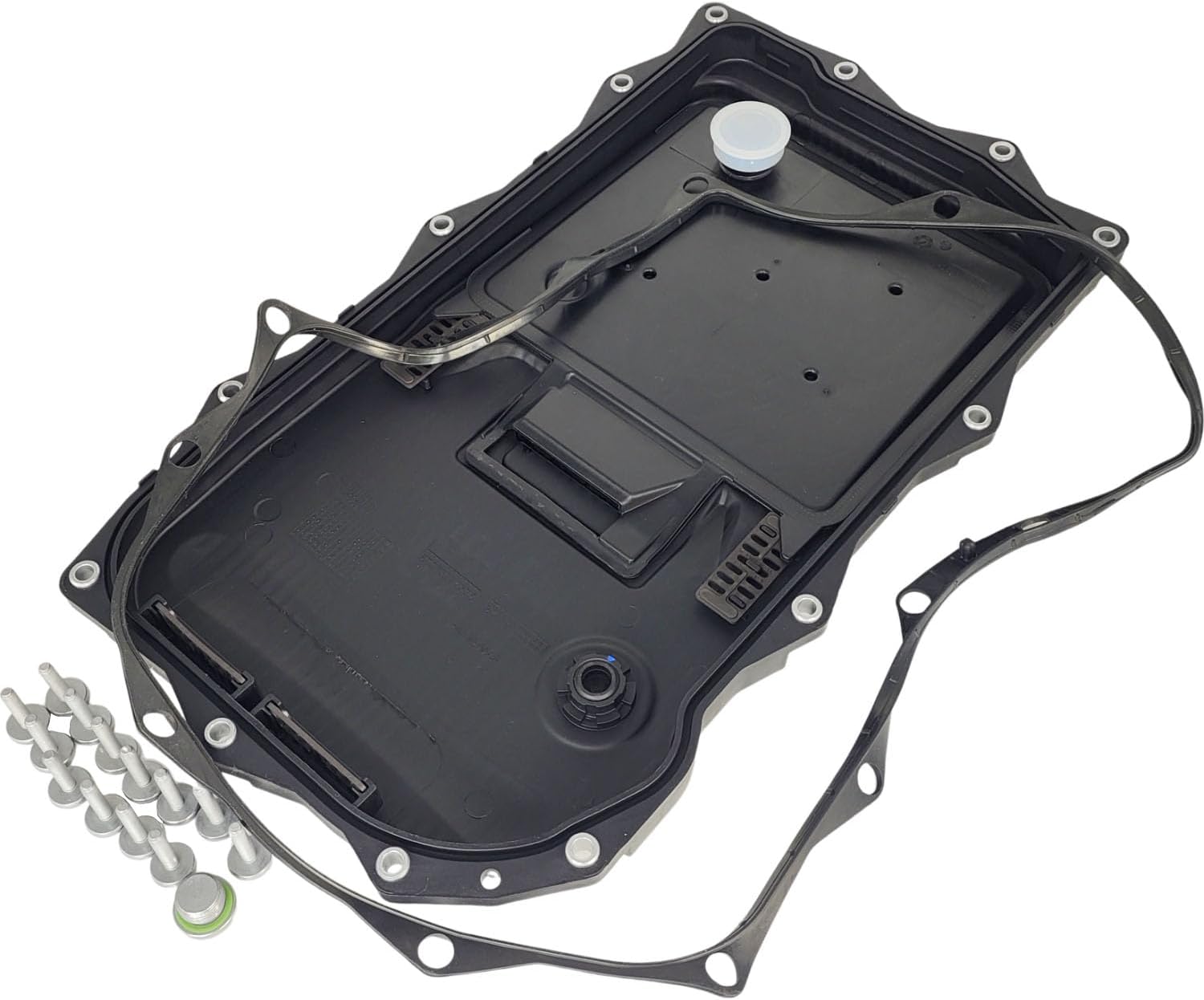
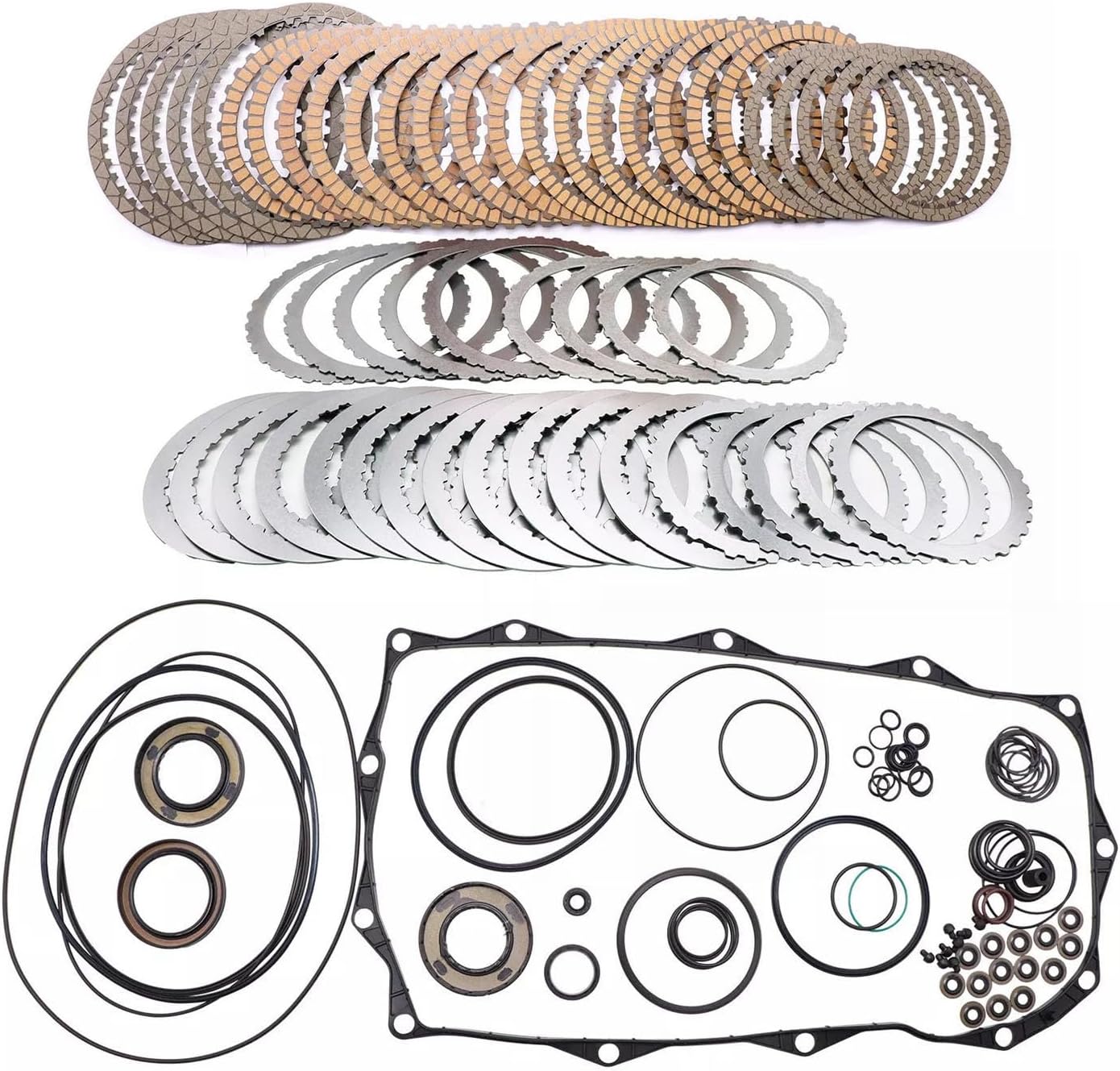
How the 8HP Pump Is Driven
ZF's own patent for this layout, US 8,096,115 B2 ("Pump drive of an automatic transmission," ZF Friedrichshafen AG), describes the arrangement. The torque converter's impeller drives a pump drive shaft that runs through the converter hub. The driven chain sprocket is made integral with that shaft. A chain carries rotation to a second sprocket on the input shaft of the oil pump, which sits off the main axis. Pump speed is set by engine speed and the tooth-count ratio between the two sprockets.
The sealing details matter for anyone who has the unit apart:
- An O-ring seals the pump drive shaft to the converter hub.
- A rectangular sealing ring seals the shaft to the stator (guide-wheel) support.
- A radial lip seal seals the converter hub against the housing cover.
The pump itself is a rotary vane design. When Alto released its aftermarket replacement (part 216350ND), Transmission Digest listed it as a chain-driven rotary vane pump covering the 8HP45, 8HP50, 8HP55, 8HP65, 8HP70, 8HP75, 8HP90 and 8HP95 from model year 2010 on (Transmission Digest).
The practical takeaway: the 8HP pump does not live or die on a converter hub bushing the way a front-mounted gear pump does. Its wear points are the chain and sprockets, the vanes, rotor and cam ring, and the seals that keep the drive shaft and suction side airtight. An air leak on the suction side or a torn O-ring at the hub can starve the pump without any part of it being worn.
What the Pump Feeds
Everything. Sonnax's technical breakdown of the 8HP hydraulics ("A New Path for ZF") traces how pump output becomes line pressure at the pressure regulator valve (ZF calls it SYS.DR-V, Chrysler calls it LP-V). Line pressure then feeds the torque converter pressure valve, which regulates converter charge pressure, and the converter clutch valve. Both the pressure regulator and the TC pressure valve are modulated by EDS-7, the EPC solenoid. Sonnax notes a minimum of 14.5 psi is held in the converter.
The pump housing also does structural duty. In Sonnax specialist Jim Dial's Gen 1 / Gen 2 identification guide, the A and B brake assemblies are located in the back of the pump housing. On Gen 1 units (8HP45, 8HP70, 8HP90) the B brake piston has both an apply circuit (B1) and a release circuit (B2). On Gen 2 units (8HP50, 8HP75, 8HP95) the B2 circuit was eliminated and replaced with a return spring, and wave springs were added between the steels of the A and B brakes. So a leak or damage at the pump housing can show up as an A or B brake problem, not just a pressure problem.
This is why a weak pump rarely throws one clean code. Low volume shows up everywhere at once: converter, clutch apply, lube and cooling.
Symptoms of a Failing 8HP Pump
Whine that follows engine rpm in every range
A pump noise is present in Park and Neutral and changes pitch with engine speed, not road speed. Rev it in Park with a stethoscope on the case: if the whine climbs with the tach, the pump and chain drive are suspects. A noise that only appears in certain gears or only while rolling points toward a planetary, a bearing or the driveline instead. Chain-drive wear tends to sound more like a rattle or growl at idle than the clean whine of a worn vane pump.
Delayed engagement into Drive or Reverse
On a cold start after sitting, a pump that has lost prime or is pulling air takes longer to fill the apply circuits. Delays that get worse when hot point toward internal leakage (worn pump, worn bores) rather than a drain-back problem.
Slip or flare under load, worse when hot
As fluid thins with temperature, a worn pump moves less oil and internal leaks get bigger. Clutches that hold fine on a cold test drive start flaring on the highway after 20 minutes. Look for slip events on several different shift elements, not just one.
Limp mode or no movement
A pump that has failed outright, a broken chain, or a converter that is not driving the pump shaft will leave the truck with no movement in any range. See our ZF8HP no-movement diagnosis for the full tree.
What Gets Blamed on the Pump but Is Not the Pump
Low fluid after a repair
This is the number one false alarm. Transmission Digest's 8HP replacement guide explains that the cooling circuit uses a thermostatic bypass valve that begins opening around 75 °C (167 °F) and is fully open at 90 °C (194 °F). The cooler and lines hold between 0.8 and 1.0 liter. If the lines were opened and the level was set before the thermostat opened, that liter leaves the transmission the first time it gets hot. The result looks exactly like a weak pump: slipping and flare once warm.
A worn pressure regulator or reducing valve bore
The pump can be fine while line pressure is wrong. Sonnax sells an oversized pressure regulator valve kit (35740-40K) for the 8HP50, 8HP75 and 8HP95 to restore line pressure control after bore wear (Transmission Digest), and a reducing valve kit (35740-38K) for the 8HP50, 8HP75 and 850RE (Transmission Digest). A worn regulator bore dumps pressure to exhaust; a worn reducing valve starves the solenoid feed. Both can mimic low pump output. Vacuum test the valve body before condemning the pump.
The converter not engaged in the pump drive
Because the converter hub drives the pump shaft, a converter that was not fully seated or an O-ring that was cut on installation will kill pump output on a freshly replaced unit. Transmission Digest's replacement guide warns not to let the converter's full weight rest on the input shaft during installation because the O-ring that seals the input shaft to the converter can be damaged, says the O-ring must be replaced any time the converter comes out, and notes that OE manuals call for a screw-in handle to guide the converter over the splines.
Diagnosing It: The Order We Work
1. Set the fluid level correctly first
ZF Aftermarket's "Oil Filling Specification 8HP | 8P" (document 1087.754.107c) is the reference. Requirements before checking the level:
- No active limp-home mode in the transmission or vehicle.
- Vehicle level on the lift within ±0.2°.
- A scan tool connected to read transmission temperature and engine speed.
Then: start the engine, run it at 2,000 rpm in Park for 30 seconds and let it return to idle. Select P, R, D, 1 and 2 in turn, waiting at least 10 seconds in each, and return to Park. Confirm temperature, open the fill plug, and top up until it overflows or let it drain until it stops. Install a new plug.
| Item (per ZF 1087.754.107c) | Spec |
|---|---|
| Level check temp, general RWD / X-drive 8HPxxA | 30-50 °C |
| BMW 8HP70L, 8P hybrids | 40-50 °C |
| Maserati 8HP70 | 50-60 °C |
| JLR AJ20 engine (P6/D6), 8HP76X | 55-60 °C |
| Fill / level plug (RWD, X-drive) | 8 mm internal hex, 35 Nm ±3.5 |
| Pan drain plug (RWD, X-drive) | 10 mm internal hex, 8 Nm +1 |
| 4th generation 8HP | Level, fill and change only with an OEM test device |
If the level was low, correct it and road test before going further. A large share of "pump" complaints end here.
2. Look at the fluid and the pan
Burnt fluid with friction material says clutch damage, and the pump may be a victim rather than the cause. Aluminum glitter with a pump-related noise says the pump or its housing. Check that the correct fluid is in it. ZF's LifeguardFluid 8 data sheet states that only LifeguardFluid 8 or LifeguardFluid 9 may be used, as approved for the specific transmission.
3. Read the live data
Watch engine speed against turbine speed on engagement. A healthy engagement pulls turbine speed down promptly when D or R is selected; a long ramp means slow apply. Look at adaptation values across all five shift elements (A through E). If every element has been adapted toward longer fill times, the common supply (pump, regulator, level) is more likely than one bad clutch. If one element stands out, the problem is that circuit.
4. On the bench
Once it is out, inspect the chain and both sprockets for stretch and tooth wear, the vanes, rotor and cam ring for scoring, and the pump body and cover for wear tracks. Check the hub O-ring, the rectangular ring and the lip seal. Because the A and B brakes are housed in the back of the pump housing, inspect their pistons and circuits while you are there. Sonnax publishes a critical wear area and vacuum test location guide for the 8HP50, 8HP75 and 850RE valve bodies; vacuum test the regulator and reducing valve bores before you put it back together.
The Fix
- Replace the pump assembly if the chain, vanes, rotor or ring show wear. Do not try to reuse a stretched chain with a new pump.
- Address the valve body if vacuum testing found worn regulator or reducing valve bores. A new pump feeding a worn regulator just moves the leak.
- New converter O-ring every time the converter comes out. Install the converter with a handle, do not let its weight hang on the shaft, and confirm it is fully engaged before the unit goes in.
- Drain and flush the cooler and lines while they are disconnected, per the Transmission Digest replacement guide. Pump debris trapped in the cooler will go straight back into the new pump.
- Fill correctly. Per ZF: fill until it overflows, run the integrated electric oil pump (if equipped) for at least 10 seconds, start the engine, fill again until it overflows, then take the temperature above 75 °C to fill the coolers and bring it back down into the check window before the final level check.
- Update software and relearn. Transmission Digest's guide notes the TCU needs the latest available software from the vehicle manufacturer. Clear and relearn adaptations after the repair.
Preventing Pump Failure
- Keep the level right. Most 8HP pump damage starts as a low-fluid event: a leaking mechatronic sleeve, a pan seal, or a level set cold after cooler work.
- Use the right oil. LifeguardFluid 8 or 9 only, as approved for that unit.
- Change it. ZF markets the fill as lifetime, but the LifeguardFluid 8 data sheet recommends an oil change after 150,000 km (about 93,000 miles), sooner with high temperatures, heavy loads or unknown history.
- Keep the filter clean. The pan filter is the pump's only protection. A restricted filter makes the pump cavitate, which sounds like a pump failure and eventually becomes one.
For service fills and capacities by application, see our ZF8HP fluid type and capacity guide.
FAQ
What are the symptoms of a bad oil pump on a ZF 8HP?
The classic signs are a whine that rises with engine rpm in every range including Park and Neutral, delayed engagement into Drive or Reverse, slipping or flare that gets worse when the fluid is hot, and in severe cases limp mode or no movement. Aluminum debris in the integrated pan filter supports the call.
How is the ZF 8HP pump driven?
It is not on the input axis. Per ZF's patent US 8,096,115, the converter impeller turns a pump drive shaft running through the converter hub, and a chain carries that rotation to an offset rotary vane pump. An O-ring seals the drive shaft to the converter hub.
Can low fluid make an 8HP act like it has a bad pump?
Yes, and it is the most common false alarm. The cooler and lines hold 0.8 to 1.0 liter, and the thermostat does not open until about 75 C, so a level set cold after cooler work drops low once the unit gets hot. Set the level per ZF at 30-50 C (general applications) before blaming the pump.
What should be replaced along with an 8HP pump?
Replace the converter hub O-ring every time the converter comes out, flush the cooler and lines, and vacuum test the valve body's pressure regulator and reducing valve bores. Then fill per ZF's procedure, update the TCU software, and relearn adaptations.
Related ZF8HP guides
Sources
- ZF Aftermarket Service Information — “Oil Filling Specification 8HP | 8P,” document 1087.754.107c. Backs the level-check requirements (no limp mode, ±0.2° level, scan tool), the 2,000 rpm / 30 s and P-R-D-1-2 sequence, the temperature windows by application, the 35 Nm fill plug and 8 Nm drain plug torques, the integrated electric oil pump step, the 75 °C cooler fill, and the 4th-gen OEM tester requirement. aftermarket.zf.com (PDF)
- ZF Friedrichshafen AG — Product Data Sheet, ZF LifeguardFluid 8. Backs the LifeguardFluid 8/9-only requirement and the 150,000 km oil change recommendation for severe or unknown-history use. aftermarket.zf.com (PDF)
- ZF Friedrichshafen AG — US Patent 8,096,115 B2, “Pump drive of an automatic transmission.” Backs the converter-driven pump drive shaft through the converter hub, the chain drive to an off-axis pump, the sprocket-ratio pump speed, and the O-ring, rectangular ring and radial seal locations. patents.google.com
- Transmission Digest — “2009-2016 ZF 8-Speed Transmission Replacement.” Backs the low failure rate, the thermostat opening at 75 °C and fully open at 90 °C, the 0.8-1.0 L cooler and line volume, flushing the cooler lines, the converter O-ring and handle installation warning, and the TCU software update. transmissiondigest.com
- Sonnax TASC Force (Jim Dial), Transmission Digest — “Chrysler ZF8 Generations 1 & 2 Identification Guide.” Backs the A and B brakes located in the back of the pump housing, the Gen 1 (8HP45/70/90) B1/B2 circuits, and the Gen 2 (8HP50/75/95) return spring and wave spring changes. transmissiondigest.com
- Sonnax — “A New Path for ZF,” tech resource 263. Backs the pressure regulator (SYS.DR-V / LP-V) and TC pressure valve modulated by EDS-7, the 14.5 psi minimum converter pressure, and vacuum testing valve bores during rebuild. sonnax.com