The torque converter clutch on a ZF8HP does far more work than the lockup clutch on an older four- or five-speed. It is not a switch that slams shut at 45 mph. It is a modulated clutch that the TCU can apply in any forward gear, hold in controlled slip for long stretches, and release in milliseconds for a downshift. This guide covers how 8HP lockup actually works in the hydraulics, which valves and solenoids run it, what the codes mean, and how to prove where the fault is before you order a converter or a mechatronic.
If your complaint is specifically a shudder on light throttle, read our ZF8HP TCC shudder diagnosis as well. This post is the wider picture: lockup control, slip codes, and the order to work a TCC problem.
What Lockup Means on an 8-Speed
With the clutch open, the turbine trails the impeller, which gives torque multiplication at launch but makes heat and wastes fuel at cruise. The lockup clutch ties the converter cover to the turbine so the engine drives the input shaft directly.
ZF built the 8HP around keeping that clutch applied as much of the time as possible. Sonnax's breakdown of the unit notes that the converter clutch can be applied in any forward gear, 1st through 8th. With eight closely spaced ratios, the TCU can drop out of converter multiplication very early and let the gear set do the work. The cost of that strategy is that the converter clutch spends a large part of its life in a slip-controlled state, where the TCU deliberately holds a small, metered speed difference across the lining to soak up engine pulses. Slip control lives or dies on stable apply pressure and fluid with the right friction properties. Lose either one and the clutch either chatters or overheats.
The Hydraulics: Three Paths, Four Valves, Two Solenoids
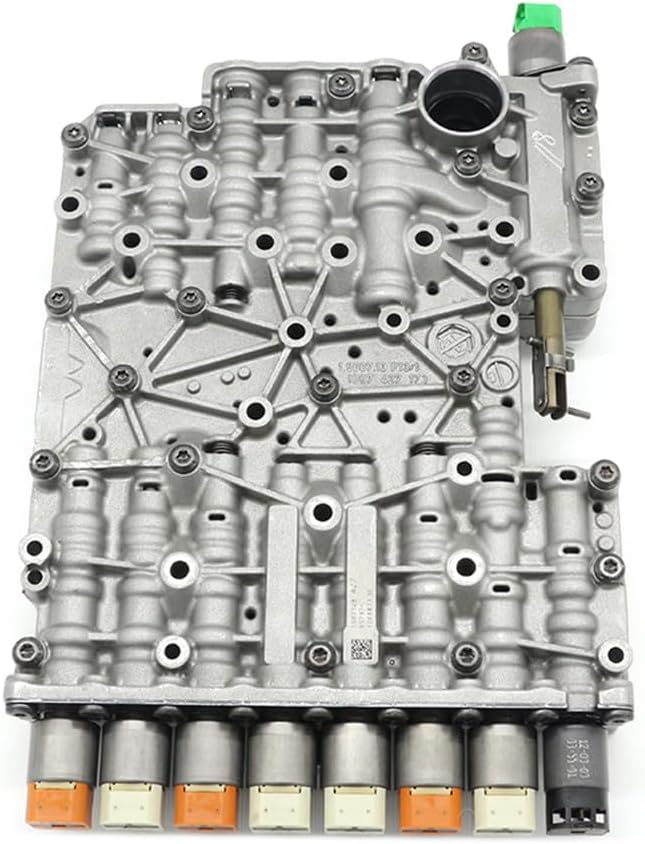
Most older converters run a two-path circuit: one passage feeds the converter, the other returns to the cooler, and which passage is "apply" depends on which way the fluid is flowing. Sonnax describes the 8HP as a three-path converter circuit, with a dedicated converter charge path added alongside the release/return and apply paths. Four valves in the mechatronic handle it. ZF and Chrysler names:
- Pressure regulator valve (ZF SYS.DR-V, Chrysler LP-V). Makes line pressure and feeds the converter circuit.
- TC pressure valve (ZF WD-V, Chrysler TC-V). Regulates line pressure down to converter charge pressure.
- TC switch valve (ZF SV-WD, Chrysler SV-TC). Routes charge pressure to the converter and routes converter return oil to the cooler and lube circuit.
- TC clutch valve (ZF WK-V, Chrysler TCC-V). Meters regulated line pressure into the clutch apply circuit.
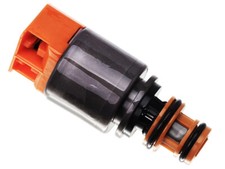
Two variable force solenoids control those four valves. Per Sonnax, EDS-7 (the EPC solenoid) modulates the pressure regulator and the TC pressure valve. EDS-2 (the TCC solenoid) modulates the TC switch valve and the TC clutch valve.
Released
With EDS-2 off, the pressure regulator sends line pressure to the TC pressure valve, which turns it into converter charge pressure. That charge oil goes through the TC switch valve into the converter, and return oil comes back through the same valve to the cooler and lube circuit. A small, orificed portion of charge pressure is bled through the TC clutch valve into the apply circuit, so the circuit stays full and ready.
Applied
When the TCU commands lockup, EDS-2 is energized and strokes both the TC switch valve and the TC clutch valve. Charge oil is redirected into the cooler and lube circuit, return oil exits through the TC return check valve, and Sonnax notes the converter is held at a minimum of 14.5 psi. The TC clutch valve then sends regulated line pressure to both the clutch apply circuit and the converter charge circuit. How hard the clutch holds, and how much it slips, is set by how far EDS-2 is commanded open.
The practical point: every one of these four valves runs on a variable force solenoid and moves constantly. That makes them wear points. Sonnax calls the TC pressure valve the 8-speed valve showing the most severe wear to date, because it is EPC-controlled and very active. The TC clutch valve bore is the other one we see worn on high-mileage units. The upper casting also carries rubber-tipped accumulators for the TCC, EPC and clutch/brake solenoid circuits, and those tips harden and leak with age.
What Goes Wrong, and What It Looks Like
Almost every 8HP lockup complaint falls into one of four groups:
- Lockup slip or shudder. Vibration like driving over rumble strips on light throttle at steady speed, or a slight rpm flare once the TCU commands lockup. Usually a pressure or friction problem: worn TC clutch or TC pressure valve bore, a leaking accumulator, or degraded fluid.
- Harsh or bumpy apply. A noticeable bump as the converter locks. Sonnax lists harsh apply among the symptoms of TC pressure valve bore wear, alongside excess slip and lining failure.
- No lockup at all. Engine rpm stays higher than it should at steady cruise, fuel economy drops, and fluid temperature climbs. Electrical faults in EDS-2 or its circuit, a TCU strategy inhibit, or a converter clutch that is burned through.
- Overheating. A converter living in excess slip makes a lot of heat. Sonnax's 35740-13K documentation lists converter shudder, TCC slip, overheating and damaged TCC linings together, because they are the same failure at different stages.
The Codes
The generic SAE-defined codes you will see on an 8HP lockup problem are:
- P0741, Torque Converter Clutch Circuit Performance or Stuck Off. The TCU commanded lockup and did not see engine and turbine speed come together the way it expected. This is a result code. It tells you the clutch did not do its job, not why.
- P2757, Torque Converter Clutch Pressure Control Solenoid Control Circuit Performance. Points at the solenoid side of the system: the solenoid, its control circuit, or the hydraulic response to its command.
- P0740 to P0744 family, TCC circuit faults. Opens, shorts and range problems in the solenoid circuit. On an 8HP the solenoid and the TCU share the mechatronic, so external wiring is short and an electrical TCC code often points inside the unit.
Chrysler also uses manufacturer-specific codes. Bulletin 21-010-24 (January 27, 2024) covers 2022-2023 Ram 1500 DT trucks with the 3.6L (ERB) and the 850RE 8-speed (DFT) setting P1DB7-00, Torque Converter Clutch Performance. The cause listed is TCM software, and the repair is a TCM reflash at 0.3 hours. That is a real case where a converter clutch performance code is fixed with a calibration, not a converter. Always check the flash level before you buy parts.
Diagnosing It: The Order We Work
1. Fluid type and level, at the right temperature
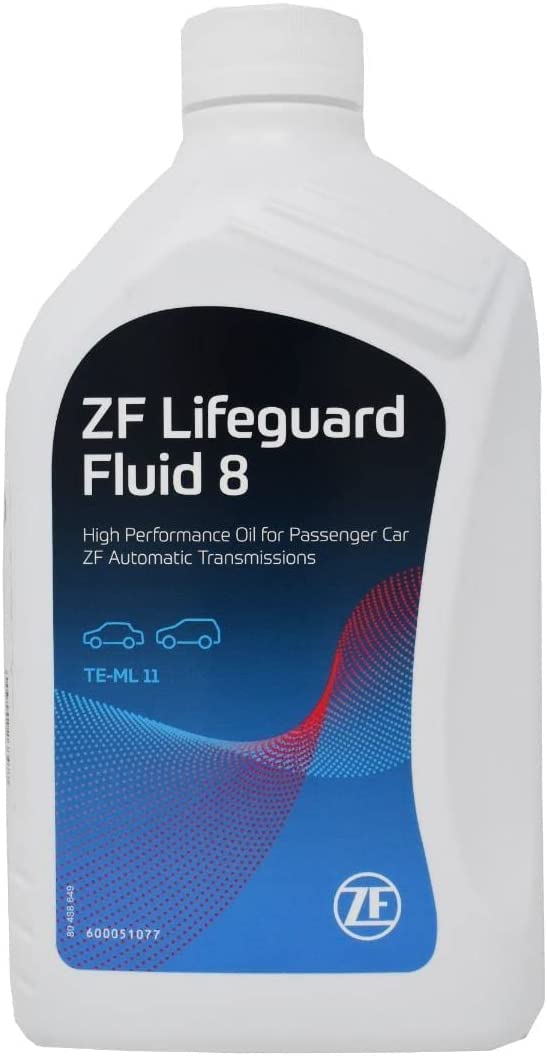
The 8HP has no dipstick, and lockup quality is very sensitive to the fluid. ZF's product data sheet for LifeguardFluid 8 says only LifeguardFluid 8 or LifeguardFluid 9 may be used in these transmissions, and warns that other oils can cause anything from a significant deterioration in shift characteristics to transmission failure. The sheet also says the fluid's friction behavior is matched to the transmission for vibration-free operation, which is the converter clutch's whole job in slip control. Typical values from that sheet: 26 mm²/s at 40 °C and 5.6 mm²/s at 100 °C.
Level matters as much as type. ZF's oil filling specification 1087.754.107c sets the level check at 30 to 50 °C on the basic 8HPxxA transmission (40 to 50 °C on BMW and on the 8P hybrids), and the procedure starts with running the engine at 2,000 rpm in Park for 30 seconds so the converter, clutches and thermostat circuits fill before you set the level. A unit checked cold or on an unlevel lift will be wrong, and a low unit can aerate the apply oil and cause slip codes. If the fluid is dark and smells burnt, you have already learned something about the lining.
2. Read slip, not just codes
Put a scan tool on it and graph engine speed, turbine (input shaft) speed, commanded TCC state or TCC solenoid command, and transmission fluid temperature together. Slip is engine speed minus turbine speed. Drive the condition, at steady light throttle in a gear where the TCU applies the clutch, and watch three things:
- When the TCU commands full apply, slip should fall to near zero and stay there. Slip that keeps hunting or climbs under small throttle changes means the clutch is not holding the torque it is being asked to hold.
- Watch the solenoid command against the slip. If command keeps rising while slip stays high, the TCU is asking for more pressure and not getting it. That points at hydraulic loss, a worn TC clutch or TC pressure valve bore or a leaking accumulator, or at a worn lining.
- If the TCU never commands apply, look for an inhibit before you condemn hardware. Fluid temperature out of range, active codes in other modules, and limp mode will all keep the TCU from locking up.
Load the converter and command a downshift with the paddle or shifter. If a vibration goes away the moment lockup drops, it is in the TCC system. If it stays with lockup released, look at the driveline or the engine.
3. Electrical checks on EDS-2
For a circuit code, check the connector at the mechatronic sleeve first. The sleeve and its O-rings are a known leak point on this unit (see our mechatronic sleeve leak guide), and fluid wicking into the connector causes intermittent solenoid faults. Beyond that, the TCC solenoid is inside the mechatronic. Resistance and current specs depend on the application, so pull them from the OEM service information for that vehicle rather than using a generic number.
4. Check the software level
Besides 21-010-24 above, bulletin 21-057-15 (October 27, 2015) reflashed 2016 Ram 1500 3.6L trucks with the 845RE built on or before September 25, 2015 for hesitation during a rolling stop and poor kickdown quality. Both require a battery charger holding 13.2 to 13.5 volts during the flash. If the vehicle is below the current calibration, flash it first and re-test.
5. Vacuum test the converter circuit on the bench
When the fluid is right, the software is current and the slip data still shows the clutch not holding, the problem is inside. Sonnax publishes a vacuum test guide for the ZF8HP45/ZF8HP70 and Chrysler 845RE valve body that shows where to test the TC pressure, TC switch and TC clutch valve bores. A bore that will not hold vacuum is leaking apply or control oil. Sonnax's oversized TCC valve kit (35740-13K) and oversized TC pressure valve kit (35740-18K) are the fixes for those two bores on 8HP45, 8HP55 and 8HP70 units. On a unit with a burnt lining, the converter has to be replaced or rebuilt as well. A fresh valve body will not save a glazed clutch.
After the Repair: Adaptation
The 8HP's shift quality depends on learned values, and a repair is not finished until they relearn. Chrysler bulletin 21-012-14 (April 8, 2014), which covers the 845RE, 8HP45 and 8HP70 in 2012-2014 Ram 1500, Charger, 300C, Durango and Grand Cherokee, explains the adaptation memory cells. For each shift element, clutches A through E, the TCM records fill time and fill pressure plus counters showing how many times each value has been updated. The bulletin says the filling counter should reach at least 12 (6 on 8HP70/90) and the fast filling counter at least 4 (2 on 8HP70/90) before shift quality is judged, with the transmission at 30 °C (86 °F) or warmer. It also says to clear the adaptation memory cells after any overhaul unless the mechatronic itself was replaced.
After any TCC repair, set the level in ZF's temperature window, run the adaptation drive, and re-graph slip on the same road where you recorded the fault. Near-zero slip under commanded apply and no vibration means you are done.
Preventing Lockup Problems
- Use only the approved fluid. ZF's data sheet is explicit that the converter clutch friction behavior depends on it.
- Change it. ZF calls the fill lifetime, but the same data sheet recommends an oil change after 150,000 km (about 93,000 miles), and sooner for high temperatures, heavy loads or unknown history.
- Fix leaks early. A slow sleeve or pan leak leaves the unit low, and low fluid aerates the apply circuit.
- Watch temperature. A converter that slips makes heat, and heat breaks down the fluid that the lining depends on. If fluid temperature climbs at steady cruise, find out why before the lining glazes.
FAQ
Can a ZF 8HP lock up the converter in every gear?
Yes. Sonnax's analysis of the unit notes the converter clutch can be applied in any forward gear, 1st through 8th. The TCU often holds it in controlled slip instead of full lockup, which is why fluid condition and apply pressure matter so much on this transmission.
Which solenoid controls torque converter lockup on the 8HP?
EDS-2, the TCC solenoid, strokes the TC switch valve and the TC clutch valve to apply the converter clutch. EDS-7, the EPC solenoid, controls the pressure regulator and TC pressure valve that feed the circuit. Both are inside the mechatronic.
What does P0741 mean on a ZF 8-speed?
P0741 means the TCU commanded lockup but did not see engine speed and turbine speed come together as expected. It is a result code, not a part number. Check fluid level and type, software level and live slip data before replacing the converter or mechatronic.
Can a software update fix a torque converter clutch code on a Ram 8-speed?
Sometimes. Chrysler bulletin 21-010-24 covers 2022-2023 Ram 1500 3.6L trucks with the 850RE setting P1DB7-00, Torque Converter Clutch Performance. The listed cause is TCM software and the repair is a TCM reflash.
What fluid does the ZF 8HP converter clutch need?
ZF's data sheet says only ZF LifeguardFluid 8 or LifeguardFluid 9 may be used, as approved for the specific transmission. Its friction behavior is matched to the unit for vibration-free operation, and other oils can cause shift problems up to transmission failure.
Related ZF8HP guides
Sources
- Sonnax — “A New Path for ZF,” tech resource 263. Backs the three-path converter circuit, the ZF/Chrysler valve names (SYS.DR-V/LP-V, WD-V/TC-V, SV-WD/SV-TC, WK-V/TCC-V), EDS-2 and EDS-7 roles, apply and release flow, the 14.5 psi minimum converter pressure, lockup in 1st through 8th, and the TC pressure valve and accumulator wear points. sonnax.com
- Sonnax — Oversized TCC Valve Kit 35740-13K (ZF8HP45/55/70, 845RE). Backs TCC valve bore wear causing shudder, TCC slip, overheating, damaged linings and TCC codes. sonnax.com
- Sonnax — Oversized TC Pressure Valve Kit 35740-18K. Backs TC pressure valve bore wear causing harsh apply, excess slip and lining failure. The ZF8HP45/ZF8HP70/845RE vacuum test guide (tech resource 530) backs the bench vacuum test procedure. sonnax.com
- ZF Friedrichshafen AG — Product Data Sheet, ZF LifeguardFluid 8 (8HP). Backs the LifeguardFluid 8/9-only requirement, the friction-behavior and vibration-free operation statement, the 150,000 km change recommendation, and the 26 mm²/s (40 °C) and 5.6 mm²/s (100 °C) viscosities. aftermarket.zf.com (PDF)
- ZF Aftermarket Service Information — “Oil Filling Specification 8HP | 8P,” document 1087.754.107c. Backs the 30-50 °C level check window (40-50 °C BMW and 8P hybrid) and the 2,000 rpm / 30 second fill of the converter, clutch and thermostat circuits. aftermarket.zf.com (PDF)
- FCA US LLC Technical Service Bulletin 21-010-24, January 27, 2024 (NHTSA file copy). Backs P1DB7-00 Torque Converter Clutch Performance on 2022-2023 Ram 1500 DT 3.6L/850RE, the TCM software cause and reflash repair, and the 13.2-13.5 V charger requirement. static.nhtsa.gov (PDF)
- Chrysler Group LLC Technical Service Bulletin 21-012-14, April 8, 2014 (NHTSA file copy). Backs the adaptation memory cells for clutches A-E, the filling counter (12, or 6 on 8HP70/90) and fast filling counter (4, or 2) targets, the 30 °C test temperature, and clearing adaptations after overhaul. static.nhtsa.gov (PDF)
- FCA US LLC Technical Service Bulletin 21-057-15, October 27, 2015 (NHTSA file copy). Backs the 2016 Ram 1500 3.6L/845RE reflash for rolling-stop hesitation and poor kickdown on units built on or before September 25, 2015. static.nhtsa.gov (PDF)