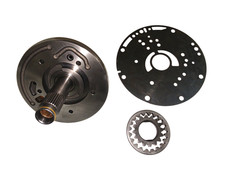
The 1995 model year was the first for the 4R44E, the electronically controlled four-speed Ford put behind the 2.3L four and 3.0L V6 in the Ranger and the Mazda B2300 and B3000. Thirty years on, a lot of these trucks show the same complaint: a long pause before Drive or Reverse engages after the truck warms up, a soft slip on hills, and a front seal that drips no matter how many times it is changed. This listing is a remanufactured 4R44E front pump specifically for 1995 transmissions, for owners and shops who have confirmed the pump is the weak link and want a ready assembly instead of rebuilding the original.
What the pump does in a 4R44E
The 4R44E is the A4LD with its hydraulic shift controls replaced by solenoids and a computer. The pump is still the only source of oil in the unit. The torque converter hub drives it at engine speed, and everything downstream depends on its output: the electronic pressure control (EPC) solenoid trims that output to the line pressure the computer wants, the converter is charged from it, and the clutches, bands and lube circuit all feed from it. Sonnax notes that until the converter clutch applies, converter charge oil comes off the pressure regulator valve. When the pump wears, it simply cannot keep up at idle and low speed, and the whole transmission goes soft at once. The hub rides in a bell housing bushing ahead of the pump, so a worn bushing lets the converter hub move, which wears the pump and chews up front seals.
Symptoms that point to the 1995 pump
- Delayed engagement into Drive and Reverse, worst when the fluid is hot
- Slip in every gear under load, rather than one bad shift
- Whine that rises and falls with engine RPM in Park, Neutral and in gear
- Front seal leaks that come back soon after the seal is replaced; Sonnax links this to a worn bell housing bushing and converter hub in this family
- Converter clutch slip at cruise from low charge pressure, which a 1995 truck may report as code 628 on Ford's older self-test
How to confirm the pump before you buy
Plenty of 1995 4R44E faults mimic a weak pump. Sonnax lists EPC circuit leaks and a sticking EPC or engagement valve in the valve body as causes of slow Reverse and flared shifts, and those are cheaper to fix. Start with the fluid level and condition, then put a gauge on the line pressure tap and compare readings in Drive and Reverse at idle and with EPC commanded high. Our line pressure testing guide covers the gauge setup and how to read the numbers. Low pressure in every range with a correct fluid level points to the pump or its seals; good pressure that drops in one range points to a leak in that circuit. Because many 1995 Ford trucks predate OBD-II, a basic generic code reader may not connect, so use a tool that reads the Ford self-test. If the converter hub shows a groove, read our article on converter hub and pump bushing wear before you reuse it.
Fitment
This pump is listed for the 1995 4R44E only: the 1995 Ford Ranger and the 1995 Mazda B2300 and B3000 with the four-speed automatic, in two-wheel or four-wheel drive. Ford revised this family repeatedly, and a 4.0L truck uses the 4R55E instead, so check the transmission code on the door tag and compare the old pump with this one before installation. If you are unsure, send your year and VIN and we will check it before it ships. We also stock a 4R44E pump listed for 1995-1996 and the general 4R44E pump; match the one that lines up with your transmission.
Install notes
- Inspect the bell housing bushing and the converter hub first. Sonnax states this bushing is finish-in-place, machined after installation to the correct size and location, so a worn one is a machine-shop job, not a press-in swap.
- Install a new front seal and pump gasket, and torque the pump bolts evenly in a cross pattern.
- Pre-fill the converter so the new pump does not start dry.
- Use the fluid printed on your dipstick. Ford's Ranger owner guides from this period warn that MERCON and MERCON V must not be mixed unless the fluid is labeled for both; Motorcraft MERCON V is the right choice where the dipstick calls for it.
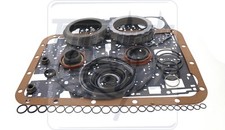
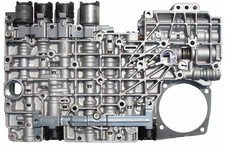
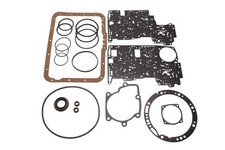
- If the old pump failed from long-term slipping, the clutches are usually burned too. The 4R44E master rebuild kit for 1995-1996 covers the overhaul, and the 1995 4R44E valve body addresses EPC circuit wear while the unit is apart.
- Flush the cooler and lines so debris from the failed pump cannot circulate into the new one.