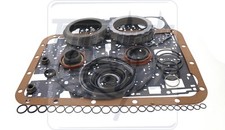
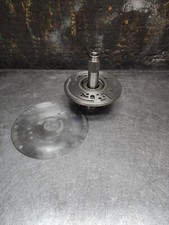
A 1995 or 1996 Explorer, 4.0L Ranger or Mazda B4000 automatic that slips out of overdrive on the highway, hangs between second and third, or sits for a second before it finds reverse is usually a 4R55E with worn clutch packs and hardened seals. This is the clutch-and-seal master kit for those two model years: friction plates and matching steel plates, sealing rings, lip seals, gaskets and O-rings. The source listing names Alto as the friction maker and Precision as the gasket set. It is the leaner option in our 1995-96 range, built for the rebuilder whose bands, filter and bushings are already sorted or will be bought to suit what the teardown shows.
What the master rebuild kit does in a 1995-96 4R55E
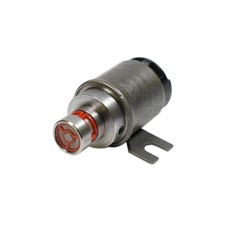
The 4R55E arrived for 1995 as the computer-controlled replacement for the A4LD and was the heavier-rated of the two versions, used behind the 4.0L V6. It still shifts with a combination of clutch packs and three bands, but the engine computer now sets line pressure through the electronic pressure control (EPC) solenoid. Every apply in the unit depends on two things: friction material that grips, and seals that hold the pressure the EPC asks for. This kit replaces both halves. New steels go in with the new frictions, which matters on a 4.0L truck that has towed, because glazed or blued steels will cook fresh linings quickly.
What this kit does not carry: bands, a filter and bushings. That is the trade against our 1995-96 4R55E master kit with band, filter and bushings. If your teardown shows a glazed intermediate band, a worn pump bushing or a filter you cannot source locally, that kit is the better buy.
Symptoms of a worn 4R55E
- Engine flares between second and third, worst once the fluid is hot
- Drops out of fourth under load, climbing a grade or towing
- Reverse engages late or feels soft
- Third gear slips when you press the throttle
- Dark fluid with a burnt smell and friction dust on the pan magnet
Sonnax notes that on this family the direct clutch will not apply in reverse until EPC reaches about 20 psi, and reverse needs roughly 120 psi of line pressure to hold. A slow reverse can therefore be a leak in the pressure circuit rather than burnt clutches.
How to confirm it before you buy
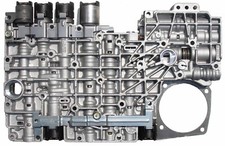
Start with the fluid. Our slipping diagnosis guide explains how to read a hot sample and what debris in the pan means. Then put a gauge on the line pressure port; Sonnax's target is about 125-130 psi of maximum EPC in overdrive and up to 144 psi in reverse. Low pressure with clean fluid sends you to the valve body and EPC circuit, and our harsh and delayed shift walkthrough covers that same valve body family. Good pressure with slipping and burnt fluid means the packs are done and a rebuild is the repair.
Fitment
This kit is listed for the 4R55E in the 1995 and 1996 model years: the 4.0L Explorer, the 4.0L Ranger and the Mazda B4000. The same box is also sold for the 1995-96 4R44E used behind the smaller engines. The 4R55E only existed for those two years before Ford moved to the five-speed 5R55E for 1997, which takes a different kit. A 1994 truck normally has an A4LD. The listing does not separate two-wheel drive from 4x4, and the tailshaft end differs, so check the case tag and the transmission code on the door label, or send your year and VIN and we will confirm it. A dedicated 4x4 kit with bands is our 4R55E 4x4 master kit, and the rest of the family is on the 5R55 and 4R55E parts page.
Install notes
- Soak each friction in fresh ATF for about thirty minutes before you stack the packs.
- Since no bands come in this box, measure the overdrive, intermediate and reverse band linings and look for heat spots on the drums before reusing anything.
- Look hard at the center support sleeve, sealing rings and direct drum sleeve; Sonnax ties many no-reverse rebuilds to cracks there.
- Check the pump gears and body for scoring. A scored pump undoes the rebuild, and a 1995-1996 4R55E pump is the replacement.
- Seat the separator plate on its locating pins before torquing the valve body, then air check each circuit.
- Flush the cooler and lines, fill with a MERCON V fluid such as Motorcraft MERCON V unless your owner guide says otherwise, and check the level hot.