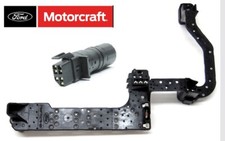
The 4R75W is the heavy-duty end of Ford's 4R70W family, and it tends to live in the vehicles that work it hardest: Expeditions and Navigators pulling trailers, and Crown Victoria, Grand Marquis and Town Car fleets that idle for hours. Heat is what eventually gets to the electrical side. When one of these starts throwing solenoid codes, refuses to lock the converter, or shifts erratically even though the individual solenoids check out, this new internal harness for 1998-2008 transmissions is the part to look at. It is the molded lead frame style used in those years, pictured with its round case connector.
Why 1998-2008 units use a lead frame
Writing for Motor Age, ATSG's Wayne Colonna describes how Ford, starting in 1998, swapped the traditional internal wire harness for a molded circuit board on every AODE and 4R70W-based unit. That decision reshaped the pass-through case connector and every internal solenoid. Colonna adds that this hard frame produced a steady list of electrical concerns, and in 2009 the 4R75E went back to a soft harness with redesigned solenoids. None of the 2009 pieces retrofit to the earlier transmissions, so a 1998-2008 4R75W needs a frame like this one.
Its job inside the 4R75W
The PCM never touches the valve body directly. Every command travels through this frame: switching shift solenoids 1/A and 2/B to pick the gear, pulsing the TCC solenoid for lockup, and varying current to the EPC solenoid to set line pressure. Going the other way, the frame carries the transmission oil temperature signal, which Sonnax notes is built into the harness or lead frame. On a heavy vehicle that temperature reading drives lockup and shift timing decisions, so a bad signal can make an otherwise healthy unit feel sick.
Warning signs
- Stored P0750 or P0755 for shift solenoid A or B, often intermittent
- Converter clutch that will not engage at cruise, with or without P0743
- Harsh, firm shifts and engagements when the EPC circuit opens and pressure defaults high
- P0712 or P0713 temperature sensor codes, or a fluid temperature reading stuck at one value
- Faults that appear after a long tow or a long idle and clear once the transmission cools
- ATF wicking through the case connector into the outside plug
Testing before you order
Work from the outside in. With the vehicle connector unplugged, measure each solenoid circuit at the case connector using the 1998-2008 pin layout from the Sonnax testing booklet, which is different from the 1997-earlier and 2009-later layouts. Sonnax gives typical readings of 20-30 ohms for shift solenoids 1/A and 2/B, 10-16 ohms for the TCC and 2-5 ohms for the EPC. Run the test hot as well as cold if the fault only shows after a tow. Any circuit that fails at the connector but passes at the solenoid itself, once the pan is down, condemns the frame. The Expedition shift problems guide covers how these faults show up on the full-size SUVs, and the Crown Victoria shift problems guide covers the Panther cars.
Fitment
The listing covers 4R75W transmissions from the 1998 through 2008 model years, the span in which this family used the molded lead frame. It is not for 1997-and-earlier units with the old soft harness or for 2009-up units, which use Ford's newer soft harness and solenoids. Ford made running changes within the lead-frame years, and the 4R75W label covers several applications, so hold your old frame next to the photo and compare the solenoid plug positions and the case connector before installing. If you are unsure, send us the year, vehicle and VIN. Browse the 4R70W and 4R75W collection for matching parts.
Install notes
- Disconnect the battery and unplug the outside connector before the pan comes down
- Note how the old frame is routed and clipped, then transfer each solenoid to the new frame and seat every plug fully
- Keep the frame clear of the pan rail; a frame pinched by the pan causes the same codes you are trying to fix
- Recheck all circuits at the case connector before refitting the pan, then fill with MERCON V, which Ford specifies for the 2008 4R75E in the Crown Victoria owner guide
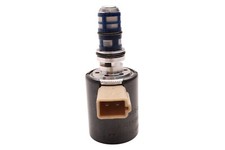
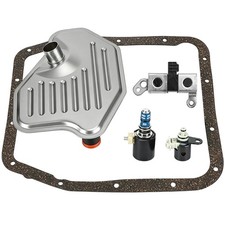
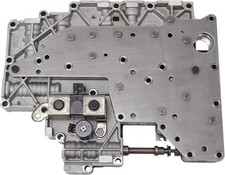
Weak or sticking solenoids found during the job can be replaced with the 2005-2008 4R70W solenoid kit. If the fault turns out to be hydraulic rather than electrical, the 2004-2011 4R75W valve body is the next step.