A shift complaint on a 1997-2004 Expedition comes in a few flavors: it starts in second, it will not take fourth, it bangs into third, it shifts late in the morning, or it does something different every trip. Most of these are not slipping clutches. They are electrical faults, a valve that has worn its bore, or a truck doing exactly what Ford programmed it to do. This guide is the shift-specific routine. If the truck flares and slips under load, our 4R70W Expedition slipping guide covers the pressure side, and the Expedition common problems guide covers the rest of the list.
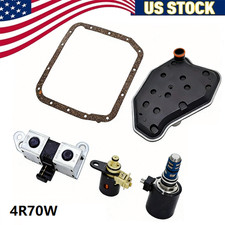
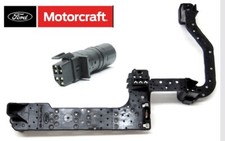
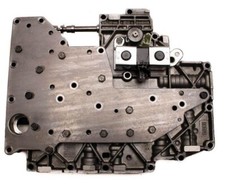
Know which Expedition you are working on
Three year breaks matter on these trucks before you touch a meter.
- 4R70W or 4R100. Ford's 2002 Expedition owner guide lists both. The 4R70W takes Motorcraft MERCON V, 13.1 L (13.9 qt), and the 4R100 takes plain MERCON. The guide's adaptive shift-learning note is written for the 4R100, so check the door-tag transmission code before you diagnose a 4R100 with 4R70W logic.
- 1997 versus 1998-up wiring. ATRA's 2009 seminar manual notes that from 1993 to 1997 the transmission connector is white with the wiring built into the connector, and from 1998 on it is black and uses a separate hard plastic lead frame. Solenoids do not interchange between the two, and ATRA warns that the wrong harness "can create multiple codes and erratic shifts." A first-year 1997 Expedition with a used valve body or solenoid set from a later truck is a common way to end up there.
- 2000 versus 2001-up sensors and hydraulics. Transmission Digest's November 2004 tech summary lists separate output speed sensors: F4AZ-7H103-AA with a rectangular connector for 1994-2000 and 1L3Z-7H103-AB with a square connector for 2001-2003. 2001 is also the year Ford changed the valve body in ways that cause the 2-3 problems covered below.
Rule out the shifts Ford intended
Two complaints on these trucks are normal operation, and they get trucks towed in every winter.
Late upshifts on cold mornings. The owner guide describes a cold-weather shift strategy for heater performance. When the outside temperature is 23 F (-5 C) or below and engine coolant is below 100 F (38 C), light-throttle upshifts may be slightly delayed. Normal shifting resumes once coolant reaches 160 F (71 C). Ford also says that if normal shifting does not come back at operating temperature, it needs to be looked at. So a truck that holds gears for the first two miles in January is fine. A truck that still does it at 190 F coolant has a real fault, and a stuck-open thermostat that never lets coolant reach 160 F can keep it in cold strategy all day.
No fourth gear. The transmission control switch on the end of the shifter cancels overdrive and lights the word OFF. Ford's guide says the transmission returns to overdrive every time the truck is restarted, so a stuck switch or a driver who presses it out of habit is worth one look before you go further. If the OFF lamp is not lit and it still will not go into fourth, keep reading.
Then check the fluid the Ford way: on level ground at 150-170 F, which Ford says takes about 20 miles of driving, with MERCON V in a 4R70W. Ford warns that overfilling "may cause shift and/or engagement concerns," and foam does not shift well.
Read the shift complaint against the solenoid chart
The 4R70W makes four forward gears out of two on/off shift solenoids. Sonnax's 4R70W Zip Kit booklet publishes the application chart:
| Range / gear | SS1 (A) | SS2 (B) | TCC |
|---|---|---|---|
| Park, Reverse | ON | OFF | — |
| OD 1st | ON | OFF | PCM command |
| OD 2nd | OFF | OFF | PCM command |
| OD 3rd | OFF | ON | PCM command |
| OD 4th | ON | ON | PCM command |
Read it as a fault chart. With both solenoids off the valve body sits in second. That means a truck that has lost the solenoid power supply launches in second gear and stays there. If SS1 is dead, the first-gear command looks like second and the fourth-gear command looks like third, so you get second-gear starts and no overdrive. If SS2 is dead, the truck shifts 1-2 and then stops; it will not make third. A truck that starts in first and runs all four gears but shifts harshly or at the wrong time is not a shift solenoid circuit fault. Look at line pressure and the valve body instead.
On the scan tool, watch commanded gear against actual ratio (output speed against engine or turbine speed) and look for shift solenoid circuit codes. On a code-free truck, a commanded gear the transmission does not deliver points at a stuck valve, not the PCM.
Test at the case connector, then look at the connector itself
The 1998-up Expedition uses the 8-pin case connector. Sonnax's booklet gives the pinout and resistance for it. Pin 4 is the 12-volt supply shared by all the solenoids. Each solenoid is checked from pin 4 to its ground pin:
| Component | 8-pin terminals | Resistance |
|---|---|---|
| Shift solenoid 1/A | 4 and 7 | 20-30 ohms |
| Shift solenoid 2/B | 4 and 8 | 20-30 ohms |
| TCC solenoid | 4 and 3 | 10-16 ohms |
| EPC solenoid | 4 and 6 | 2-5 ohms |
| Fluid temperature sensor | 2 and 5 | Varies with temperature |
The booklet also lists the older 10-pin layout, so count the pins before you trust a pinout from memory. If every solenoid reads open from pin 4, suspect the lead frame or the connector, not four solenoids at once.
That is exactly the case Transmission Digest's Wayne Colonna wrote up in "Ford 4R70W solenoid codes set." After an overhaul where the hard wire frame and case connector were replaced, the unit took off in a higher gear and set solenoid codes it never had before. The cause was an aftermarket connector with two terminals pushed back so they did not touch the lead frame, and one of them was the 12-volt solenoid supply. Ford's original-equipment hard wire frame (F8AZ-7G276-BA) and connector (F8AZ-7G276-A) fixed it. A second-gear start right after someone else's rebuild should send you to that connector first.
Check the fluid temperature reading too. The PCM uses it for shift scheduling and converter lockup. Transmission Digest's 2004 summary points out that most scan tools show TFT as a DC voltage while most manuals only give a resistance chart, so use Ford's voltage-to-temperature chart rather than guessing. A sensor that reads cold on a hot truck changes how it shifts.
Shift-quality complaints that live in the valve body
When the electrical side checks good and the truck still shifts wrong, the valve body is the usual answer. Sonnax's booklet maps the 4R70W valve body by symptom, and it lines up well with what comes across the bench from these trucks:
| Shift complaint | Worn valve or bore (per Sonnax) |
|---|---|
| Erratic shifts, 2-3 neutral, neutral after 4th, no 2nd, only 3rd and reverse, loss of forward under hard acceleration from a stop | Solenoid regulator valve. Every shift solenoid is fed from this valve, so a worn bore makes good solenoids look bad. |
| 4-3-neutral, no 4th, burned overdrive band (2001-up) | Overdrive servo regulator valve and sleeve (Sonnax 76948-29K) |
| Erratic shift timing | 2-3 shift valve |
| No 2nd, wrong-gear starts, gear ratio codes | 1-2 shift valve |
| Poor 2-3 quality, no 2-3 | 2-3 backout valve |
| 3-4 flare, slips in manual low | 3-4 capacity modulator valve |
Sonnax's fix for a worn solenoid regulator bore is an oversize valve kit that has to be reamed in (76948-14K and 76948-47K, with the F-76948-TL tool). The overdrive servo regulator kit is a drop-in. The booklet notes its kit fits 1996-and-later valve bodies, with the rough forging marked RF-F6 or 1L3P under the stiffener plate, and torques the valve body to case bolts at 106 in-lb.
The 2001-2004 Expedition 2-3 flare
If a 2001-up truck flares or bangs on the 2-3, check for the forward-to-direct cross leak before buying a shift kit. Sonnax's Gregg Nader documented that Ford deleted the stiffener plate under the 2-3 accumulator for 2001, letting forward oil bow the separator plate and leak into the direct circuit. A 2-3 that has gotten worse over months is usually the direct clutch burning from that leak. The fix is a new direct clutch plus the Sonnax 76507F-01K retainer plate kit to clamp the plate again.
A rattle that sounds like a shift problem
Some owners describe a clicking or rattling from the transmission that stops as soon as it shifts. Transmission Digest's 2004 summary covers it for 2000-and-later 4R70W units: the intermediate clutch pack rattles in the case while it is released in first gear, and the noise goes away after the 1-2 shift. The fix is the intermediate clutch anti-rattle clip, YL3Z-7A609-AA, and that odd clip left on the bench after an overhaul is often the reason. It is a noise, not a shift fault, so do not chase it with solenoids.
My Expedition shift checklist
- Confirm 4R70W, not 4R100, and note the year (1997 connector, 2001-up valve body).
- Rule out cold-weather strategy (coolant below 160 F) and a lit O/D OFF lamp.
- Check fluid hot at 150-170 F with MERCON V, and not overfilled.
- Scan for codes and compare commanded gear to actual ratio and to the solenoid chart.
- Meter the case connector: 20-30 ohms on the shift solenoids, 10-16 on TCC, 2-5 on EPC, all from the 12-volt pin.
- Inspect the connector and lead frame, especially after a previous repair. Use Ford OE parts.
- If the electrical side is good, take the complaint to the valve body table above and vacuum test the bores before buying a valve body.
4R70W internal hard wire harness, OEM F8AZ-7G276-BA
The original-equipment lead frame that Transmission Digest used to cure a second-gear start and false solenoid codes on a 1998-up 4R70W. The right first part when the connector side tests bad. Sold by our sister store, CoreTransmissionParts.
Shop the part for this fix →Need the overdrive servo regulator kit, a solenoid set or a valve body instead? The 4R70W parts collection has the full range.
Need parts for this job?
4R70W solenoid kits, 1998-2008 internal wiring harnesses, valve bodies and the Sonnax retainer plate kit are on our 4R70W parts page, with checkout on site.
FAQ
Why does my Expedition shift late when it is cold?
Ford built a cold-weather shift strategy into these trucks for heater performance. Per the 2002 Expedition owner guide, when it is 23 F or colder and coolant is below 100 F, light-throttle upshifts may be slightly delayed, and normal shifting returns once coolant reaches 160 F. If it still shifts late at full operating temperature, that is a fault worth diagnosing.
Why does my 4R70W Expedition start out in second gear?
With both shift solenoids off, the 4R70W valve body sits in second gear. A truck that launches in second has usually lost the 12-volt solenoid supply or shift solenoid 1/A. Check the case connector and lead frame first, especially after a previous repair; Transmission Digest documented an aftermarket connector with a pushed-back 12-volt terminal causing exactly this.
What resistance should 4R70W solenoids read?
Through the 8-pin case connector on 1998-up trucks, Sonnax lists 20-30 ohms for each shift solenoid, 10-16 ohms for the TCC solenoid and 2-5 ohms for the EPC solenoid, all measured from pin 4, the shared 12-volt supply. Every solenoid reading open at once points to the lead frame or connector, not the solenoids.
My Expedition falls into neutral on the 4-3 downshift. What is it?
On 2001 and later units, Sonnax ties a 4-3-neutral shift, loss of fourth gear and a burned overdrive band to wear inside the overdrive servo regulator boost valve sleeve. The repair is the 76948-29K drop-in kit, plus a new overdrive band if it is already burned.
Related guides
- 4R70W Expedition Common Problems and Fixes
- 4R70W Expedition Slipping: Causes and Fix
- 4R70W Shift Solenoid Symptoms, Testing and Replacement
- 4R70W Harsh Shift Causes
- 4R70W Won't Shift Into Overdrive
Sources
- Ford Motor Company — 2002 Ford Expedition Owner Guide (archived from fordservicecontent.com), Driving and Capacities chapters. Backs the 4R70W and 4R100 applications and fluids, the 13.1 L (13.9 qt) MERCON V fill, the cold-weather shift strategy (23 F ambient, 100 F and 160 F coolant), the overdrive cancel switch resetting at restart, the 150-170 F fluid check, the overfill warning and the 4R100 adaptive learning note. Owner guide PDF (archive)
- Sonnax — Ford 4R70E, 4R70W, 4R75E, 4R75W, AODE Zip Kit Installation and Testing Booklet. Backs the solenoid application chart, the 8-pin and 10-pin pinouts and resistance values, the valve-by-symptom map (solenoid regulator, overdrive servo regulator, 1-2, 2-3 and 3-4 valves), the 76948-29K, 76948-14K and 76948-47K kits, the RF-F6/1L3P valve body identification and the 106 in-lb valve body bolt torque. sonnax.com booklet PDF
- Transmission Digest — Wayne Colonna, "Ford 4R70W solenoid codes set," January 2023. Backs the higher-gear start and solenoid codes caused by an aftermarket case connector with pushed-back terminals, including the 12-volt supply, and the OE hard wire frame F8AZ-7G276-BA and connector F8AZ-7G276-A. transmissiondigest.com
- Transmission Digest — November 2004 Tech/Talk issue summary. Backs the 2000-and-later 4R70W rattle until the 1-2 shift and the YL3Z-7A609-AA anti-rattle clip, the output speed sensor part numbers by year and connector shape, and TFT scan data shown as voltage. transmissiondigest.com
- ATRA — 2009 Technical Seminar manual, Ford 4R70W/4R75E interchange section. Backs the 1993-1997 white soft-wired connector versus the 1998-on black connector with a hard plastic harness, solenoids not interchanging, and the wrong harness causing multiple codes and erratic shifts. ATRA seminar PDF
- Sonnax — Gregg Nader, "4R70W, 4R75W 2001-Later Forward & Direct Clutch Problems: The Easy Valve Body Fix." Backs the deleted 2-3 accumulator stiffener plate, the separator plate bowing, the forward-to-direct cross leak and the 76507F-01K retainer plate kit. sonnax.com