An Expedition that slips is almost never a mystery once you know three things: which gear it slips in, whether it only happens hot or loaded, and what the line pressure gauge does when you step on it. Ford built the 1997-2004 Expedition on the F-150 platform, then added weight, a third row and a tow rating. The 4R70W behind the 4.6L in those trucks is the same AOD-family four-speed that went into Crown Victorias and Mustangs, and it lives a much harder life in an Expedition. This guide is the slipping-specific bench routine. For the full list of what goes wrong in these trucks, see our 4R70W Expedition common problems guide.
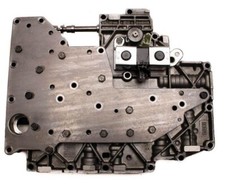
Confirm it is a 4R70W before you diagnose anything
Ford's own 2002 Expedition owner guide lists two automatics for that truck: the 4R70W, filled with Motorcraft MERCON V (XT-5-QM), 13.1 L (13.9 qt), and the 4R100, filled with plain MERCON, 15.0 L (15.9 qt) on 4x2 and 15.5 L (16.4 qt) on 4x4. Those are approximate dry-fill numbers, and Ford says the final level is set on the dipstick, not by the bottle count. In the 1997-2002 trucks the 4R70W is generally the 4.6L unit and the 4R100 sits behind most 5.4L engines, but read the transmission code on the door tag. Diagnosing a 4R100 with 4R70W logic wastes a day, and the parts do not interchange.
For 2003, Ford's Expedition press kit names the 4R70W for the redesigned truck and says it was "rated to handle up to 506 foot-pounds" of torque. That headroom is real, but it assumes the hydraulics are healthy. Every slip below is a pressure or apply problem, not a torque-capacity problem.
Check the fluid the way Ford says to
The owner guide is specific: check at normal operating temperature, 66-77 C (150-170 F), on level ground, which Ford says takes about 20 miles of driving. It also says plainly to check the fluid "if the transmission slips or shifts slowly." Two things matter on a slipping Expedition:
- Level. Low fluid lets the pump suck air on turns and hard stops, and the slip comes and goes with fluid slosh. Overfill is just as bad. Ford warns that an overfill "may cause shift and/or engagement concerns." Foamed fluid cannot hold pressure.
- Type. The 4R70W wants MERCON V. Ford's guide states that MERCON and MERCON V "are not interchangeable" and not to mix them. On a used truck, find out what has been going in it. A shop that topped it off with the 4R100's MERCON or a generic multi-vehicle fluid is a lead worth chasing, not the whole answer.
Then smell it and pull the pan if the fluid is dark and burnt. Friction material on the magnet tells you a clutch or band is already damaged. Clean fluid on a truck that slips points you at the hydraulics, which is the cheaper outcome.
Map the slip to the apply element
The 4R70W is a Ravigneaux-gearset four-speed with ratios of 2.84, 1.55, 1.00 and 0.70. Each range uses a known combination of clutches and bands, so the gear that slips narrows the suspect list fast:
| Slips in | What is applied | First suspects on an Expedition |
|---|---|---|
| 1st, 2nd and 3rd (every forward gear) | Forward clutch is common to all three | Low line pressure (PR valve/bore wear, EPC circuit), cracked forward drum, burnt forward clutch |
| 1-2 shift only (flare, long sloppy 2nd) | Intermediate clutch | Weak or broken 1-2 accumulator springs, worn accumulator, low line pressure |
| 2-3 flare, slips in 3rd | Direct clutch | 2001-up forward/direct cross leak, burned direct clutch |
| 4th only, or neutral on the 3-4 | Overdrive band with the direct clutch | Overdrive band, servo, servo regulator valve |
| Everything, worse hot and at medium-heavy throttle | All of the above, starved of pressure | Pressure regulator bore wear (classic), EPC command fault |
On the scan tool, log TSS (turbine speed), OSS (output speed), commanded gear, TFT (fluid temperature) and EPC desired pressure while you drive. Divide TSS by OSS. In 2nd it should sit at about 1.55. If the ratio drifts above that while the PCM is commanding 2nd, the intermediate clutch is not holding. In 3rd the ratio should be 1.00 with the converter locked. Engine rpm flaring above turbine-plus-slip on a locked converter is a converter clutch problem, not a gear slip, and is covered in our converter shudder guide.
Cause 1: pressure regulator bore wear (slips hot, under load)
This is the Expedition slip. The truck drives fine cold and around town, then on a long pull with a trailer or a full load of people it starts slipping in gear at medium to full throttle, and the shifts slide. Transmission Digest technical editor Wayne Colonna described the mechanism in "I Lost My EPC!": wear in the pressure regulator valve bore can cause "a reduction or complete loss of EPC pressure when the unit is hot," which means little or no line rise. The giveaway on a gauge is EPC pressure sitting near zero at any throttle opening, even with the transmission unplugged. The usual mistake is replacing the EPC solenoid, which changes nothing.
The reason is in the circuit routing. EPC oil is fed to the pressure regulator valve right next to a passage Ford calls the boost circuit, which actually returns to the inlet side of the pump. Once the bore wears through the land between those two passages, the pump pulls EPC oil away and line pressure cannot rise with throttle. Colonna's in-car test: drop the pan and filter and blow compressed air into the TV pressure port. Air and fluid coming out around the EPC solenoid is normal. Air and fluid coming out of the filter opening means you have found the worn bore. He also notes that mild bore wear may only show up as premature forward clutch wear, which is exactly what a tired Expedition looks like at teardown.
Sonnax's Brian Wing adds the bench view. The PR valve in the AODE, 4R70W and 4R75W commonly scores on the EPC end, and "a worn casting will not allow for proper sealing even with a new valve installed." Sonnax vacuum tests the bore with a tool made from an old reverse boost sleeve with a hole drilled in the end. A bore that will not hold vacuum is reamed and fitted with an oversize valve. For 1996-and-later units, which covers every Expedition, that is the 76948-17K oversize pressure regulator and boost valve kit. The 76948-16K is for 1995-and-earlier units only, so do not order the wrong one. If you do not want to ream, a replacement valve body is the other answer.
Cause 2: the 2001-and-later forward/direct cross leak (2-3 flare, slipping 3rd)
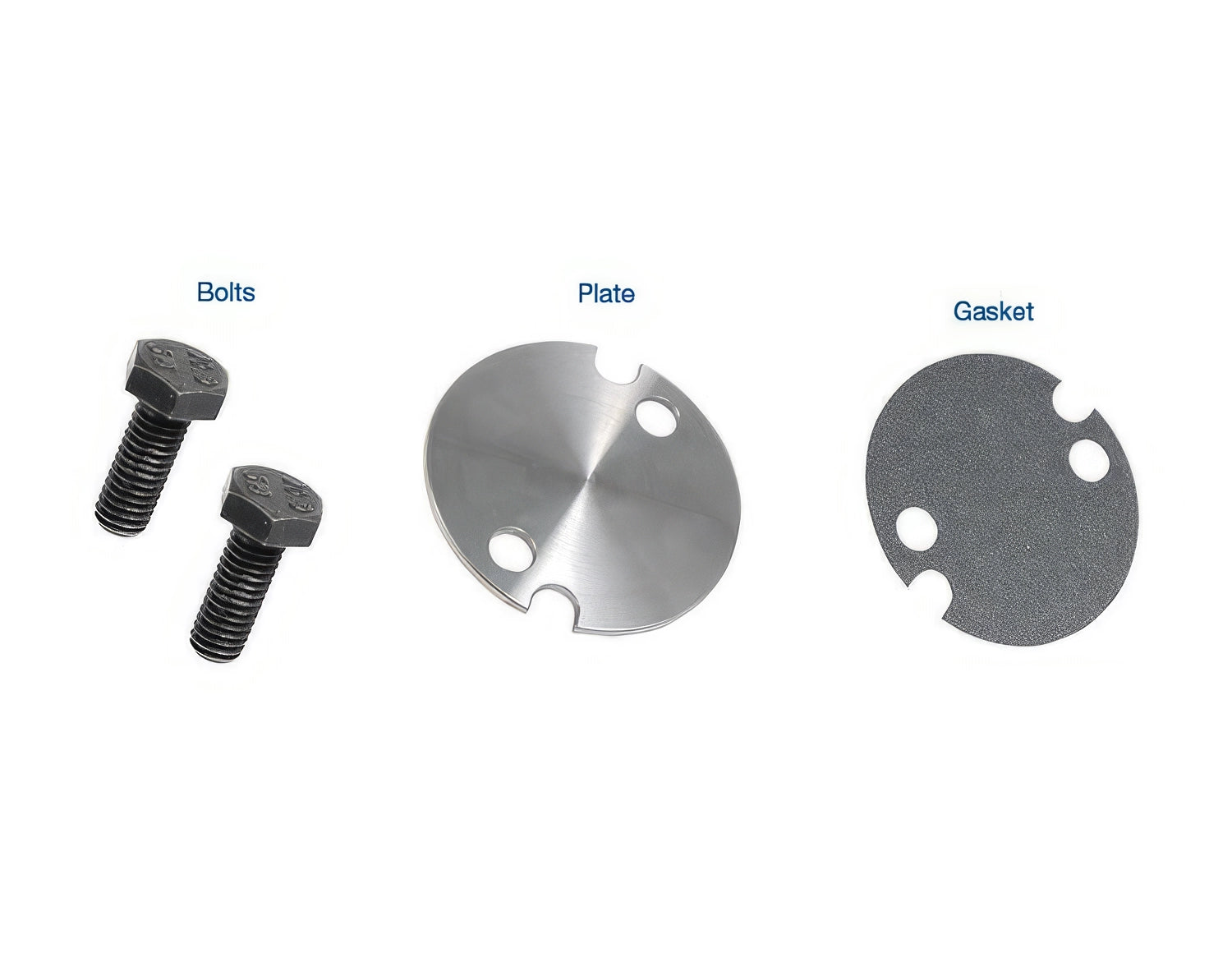
If the truck is a 2001-2004 and the complaint is a 2-3 flare that turned into slipping in 3rd, start here. Sonnax's Gregg Nader documented that for 2001 Ford deleted the two-bolt stiffener plate under the 2-3 accumulator that clamped the separator plate and lower gasket to the valve body. Without it, forward clutch oil pushes up on the separator plate, which he measured bowing as much as .011 in. at normal forward pressure, and forward oil cross-leaks into the direct circuit.
That leak drags the direct clutch while it is supposed to be off, so by the time the owner notices a slip in 3rd, the direct clutch is cooked. Nader's point is that the cracked separator plate you find is a symptom, not the cause. The fix is to clamp the plate again with Sonnax's 76507F-01K valve body retainer plate kit, which requires drilling and tapping the valve body. Put it in any 2001-up unit that is open for clutch work. A fresh direct clutch on an unclamped valve body burns up the same way the original did.
Cause 3: 1-2 slip on a loaded or towing truck
A sloppy, flaring 1-2 shift that gets worse with weight in the truck is often the 1-2 accumulator. Sonnax lists 1-2 slip, soft shifts and broken springs as the symptoms of weak or broken OE accumulator springs on 2001-and-later 4R70E, 4R70W, 4R75E and 4R75W units. Their heavy-duty 76948-10K spring kit (green inner spring, yellow outer) is aimed at towing and heavy use, and it replaces OE part numbers 1L3Z-7F284-AA and 1W7Z-7F284-AA. One detail catches people: some OE units use a blue inner spring that is not reused with the kit. Only run the two springs in the box.
Before you blame springs, confirm line pressure rises properly. A 1-2 flare on top of a weak PR circuit is really Cause 1, and new springs will only mask it until the intermediate clutch burns.
Cause 4: slipping or neutral in overdrive
A slip that only shows up in 4th, or a truck that drops into neutral on the 3-4 shift and catches again when you press the overdrive cancel button, is the overdrive band and its apply circuit, not the forward clutch. The quick test is to cancel overdrive. If it drives normally in 3rd, the problem is isolated to the band side. We cover the band, servo and servo regulator diagnosis in detail in 4R70W won't shift into overdrive.
Prevent the next one: how Ford wanted these trucks driven loaded
Most Expedition slips start as heat. Ford's owner guide says Drive with overdrive cancelled (the transmission control switch on the shifter) is useful when driving with a heavy load or towing a trailer up or down steep hills, and it tells towing drivers to use a lower gear on grades to eliminate excessive downshifting and upshifting "for optimum fuel economy and transmission cooling." It also warns that exceeding the GCWR "may cause internal transmission damage." The overdrive cancel resets to overdrive every time the truck is restarted, so a driver who towed once with it off and forgot afterward is common.
Add a large auxiliary cooler on any Expedition that tows, keep the fluid fresh MERCON V at the correct hot level, and watch TFT on a long grade. Our 4R70W towing upgrades guide goes further on cooler sizing.
Rebuild or repair?
If the fluid is clean and the problem is pressure, a valve body repair (PR bore, retainer plate, accumulator springs) can fix the slip with the transmission in the truck. If the pan has friction material in it, or the slip has been there for months, the clutch that slipped is already glazed and the job is a rebuild, with the valve body fixes done at the same time. Skipping the hydraulic fix on a rebuild is how a fresh unit comes back in a year.
4R70W pressure regulator valve kit, 1996-2008
The pressure regulator repair for the hot, under-load slip described above, sized for 1996-and-later valve bodies, which covers every Expedition 4R70W. Sold by our sister store, CoreTransmissionParts.
Shop the part for this fix →Need the retainer plate kit, 1-2 accumulator springs or a full rebuild kit instead? The 4R70W parts collection has the full range.
Need parts for this job?
4R70W valve bodies, the Sonnax retainer plate kit, master rebuild kits, servos and filter kits are on our 4R70W parts page, with checkout on site.
FAQ
Why does my Expedition 4R70W slip only when it is hot or towing?
The classic cause is wear in the pressure regulator valve bore. Transmission Digest documented that the wear lets EPC oil leak to the pump inlet when the unit is hot, so line pressure cannot rise and the transmission slips at medium to full throttle. Replacing the EPC solenoid does not fix it; the bore has to be repaired with an oversize valve kit or the valve body replaced.
How much transmission fluid does a 4R70W Expedition take?
Ford's 2002 Expedition owner guide lists 13.1 L (13.9 qt) of Motorcraft MERCON V for the 4R70W. That is an approximate dry-fill figure, so set the final level on the dipstick with the fluid at 150-170 F on level ground. The 4R100 used in other Expeditions takes MERCON, not MERCON V, and the two are not interchangeable.
My 2001-2004 Expedition flares on the 2-3 shift and slips in 3rd. What is it?
On 2001 and later units, start with the forward-to-direct clutch cross leak. Ford deleted the stiffener plate under the 2-3 accumulator, the separator plate bows, and forward oil leaks into the direct circuit and burns the direct clutch. The repair is a new direct clutch plus the Sonnax 76507F-01K retainer plate kit to clamp the plate again.
Can I tow with an Expedition 4R70W in overdrive?
Ford's owner guide says to cancel overdrive when driving with a heavy load or towing up or down steep hills, and to use a lower gear on grades for transmission cooling. The overdrive cancel resets every time the truck is restarted, so press the switch again after each start when towing.
Related guides
- 4R70W Expedition Common Problems and Fixes
- 4R70W Slipping: Causes and Fix
- 4R70W F150 Slipping: Causes and Fix
- 4R70W Pressure Control Solenoid Symptoms
- 4R70W vs 4R75W Differences
Sources
- Ford Motor Company — 2002 Ford Expedition Owner Guide (archived from fordservicecontent.com), Driving and Capacities and specifications chapters. Backs the 4R70W and 4R100 applications, MERCON V for the 4R70W at 13.1 L (13.9 qt) and MERCON for the 4R100, the 150-170 F fluid check temperature, the overfill warning, the instruction not to mix MERCON and MERCON V, and the advice to cancel overdrive and use a lower gear when loaded or towing. Owner guide PDF (archive)
- Ford Motor Company — 2003 Ford Expedition press kit, powertrain section (archived from media.ford.com). Backs the 4R70W in the 2003 Expedition and its 506 lb-ft torque rating. media.ford.com (archive)
- Transmission Digest — Wayne Colonna, "I Lost My EPC!", April 2004. Backs the hot loss of EPC pressure from PR bore wear, medium-to-full throttle slipping, the EPC-to-boost-circuit leak path to the pump inlet, the compressed-air test at the TV port, and the link to premature forward clutch wear. transmissiondigest.com
- Sonnax — Brian Wing, "Watch Out for 4R70W Pressure Regulator Valve & Casting Wear." Backs EPC-end valve scoring, the casting that will not seal with a new valve, the vacuum test tool, and the 76948-17K (1996-later) and 76948-16K (1995-earlier) oversize kits. sonnax.com
- Sonnax — Gregg Nader, "4R70W, 4R75W 2001-Later Forward & Direct Clutch Problems: The Easy Valve Body Fix." Backs the deleted stiffener plate, the .011 in. separator plate bow, the forward-to-direct cross leak, and the 76507F-01K retainer plate kit. sonnax.com
- Sonnax — Heavy Duty 1-2 Accumulator Spring Kit 76948-10K product page. Backs the 1-2 slip, soft shift and broken spring symptoms, the 2001-later 4R70W/4R75W fitment, the green and yellow springs, the blue inner spring note, and OE part numbers 1L3Z-7F284-AA and 1W7Z-7F284-AA. sonnax.com