An F-150 with a 4R70W that "slips" is one of the most common calls a Ford-heavy shop gets, and it is also one of the easiest to misdiagnose. The 1997-2004 F-150 used the 4R70W behind the 4.2L, 4.6L and 5.4L engines, and by now nearly every one of those trucks has towed something, hauled something, or sat with old fluid for a decade. That history matters, because the 4R70W has three well-documented ways to slip that a fluid change will never touch, and one way to "slip" that isn't in the transmission at all.
This guide is the F-150 version of the job: how to map the slip to a clutch or band, what the pressure gauge should say, the hard-parts and valve body failures that cause it, and when a rebuild makes more sense than chasing one part. The facts below are tied to Transmission Digest, Sonnax, ATSG and Ford service literature, listed at the bottom.
First: make sure it's actually the transmission
Before you quote a rebuild, scan the truck. Transmission Digest ran a case on exactly this (Carman Klaber, "It's Not Just the Transmission," 2010): a 1998 F-150 4x4 with the 4.6L and a 4R70W that "barely moved." The original shop replaced the transmission, and the replacement did the same thing. Once the truck reached a diagnostician, the scan tool showed several solenoid codes at once, which usually means no power to the transmission, not five bad solenoids. There was no voltage on pin 4 (red wire) at the case connector. A plastic retaining clip had broken, the harness had dropped onto the exhaust, and a silver-dollar-sized section of wires had melted together.
The old unit had black, burnt fluid with glitter in the pan, so it really was worn out. But the fluid only told half the story. Two failures can look like one. On a slipping F-150, I check these before I condemn anything:
- Codes, all of them. Several solenoid circuit codes together point to a power feed or harness. A ratio code (P0731-P0734) points inside the unit.
- Fluid level, hot. Ford's 2003 F-150 owner guide specifies Motorcraft MERCON V for the 4R70W, with an approximate dry fill of 13.2 L (13.9 qt). A truck that's a few quarts low will slip and flare on turns and hills, and pump cavitation shows up as slip in every range.
- Fluid condition. Burnt smell and friction material in the pan mean the clutches are already damaged. A fluid change at that point won't restore them.
- Engine side. A misfire under load or a converter clutch that is slipping on the highway both get described as "slipping." Watch engine rpm against road speed with the TCC commanded on before you blame the clutch packs.
Map the slip to the part
The 4R70W is easy to diagnose by elimination, because every gear uses a specific combination of apply components. Per the ATSG application chart for this family:
| Range | Applied | Ratio |
|---|---|---|
| 1st (D) | Forward clutch, low one-way clutch holding | 2.84 |
| 2nd | Forward clutch, intermediate clutch, intermediate one-way clutch holding | 1.55 |
| 3rd | Forward clutch, direct clutch | 1.00 |
| 4th (OD) | Direct clutch, overdrive band | 0.70 |
| Reverse | Reverse clutch, low/reverse band | 2.32 |
| Manual 1 | Forward clutch, low/reverse band | 2.84 |
Drive it and write down exactly where it slips. Then read the table:
- Slips in 1st, 2nd and 3rd, but 4th and Reverse are fine: the forward clutch is the only thing those three gears share that 4th and Reverse don't. Think forward clutch pack, forward drum, or forward circuit leak.
- Slips in 3rd and 4th: the direct clutch is common to both.
- Slips or neutrals in 4th only: the overdrive band and its servo.
- Flares on the 1-2 shift or slips in 2nd only: intermediate clutch or the intermediate one-way clutch.
- Slips everywhere, Reverse included, and worse when hot or at heavy throttle: line pressure. That's a pump, filter, fluid, or pressure regulator problem, not a single clutch.
On a scan tool, confirm it with speeds instead of feel. Compare input (turbine) speed to output shaft speed, or on units without an input speed sensor, engine rpm to output with the converter locked. In 3rd the two should match 1:1. In 2nd, input should run about 1.55 times output. A slipping element shows up as input speed climbing above the calculated ratio while output stays flat.
Put a gauge on it
A pressure test separates "the clutches are worn" from "the clutches aren't getting oil." The ATSG line pressure chart for the 4R70W gives:
| Test point | Spec at idle |
|---|---|
| Line pressure, Park / Neutral / forward ranges | 50-75 psi |
| Line pressure, Reverse | 80-120 psi |
| EPC tap | 0-9 psi |
Idle numbers are only half the test. What matters on a truck that slips under load is line rise: as throttle opens, the PCM commands more EPC pressure and line pressure should climb with it. Unplugging the EPC solenoid should send pressure to maximum. If line is normal at idle but never rises, you're looking at the valve body side of the unit, which brings us to the most misdiagnosed 4R70W slip.
Cause 1: pressure regulator bore wear (slips hot, at medium to heavy throttle)
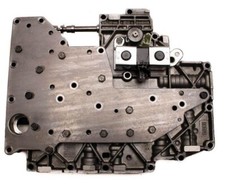
Transmission Digest's Wayne Colonna documented this one in 2004 ("I Lost My EPC"). Wear in the pressure regulator valve bore can cut EPC pressure or kill it completely when the unit is hot. The result is little or no line rise, so the transmission slips at medium to full throttle and the shifts slide. On the gauge, EPC stays near 0 at any throttle opening, even with the solenoid unplugged. The usual mistake is to replace the EPC solenoid, and the problem stays.
The mechanism: EPC oil is routed to the PR valve next to a passage Ford calls the boost circuit. In reality that circuit goes back to the inlet side of the pump. Once the bore wears enough between the two, the pump simply sucks the EPC signal away. That is why it's worse hot. Thinner oil gets through the worn clearance more easily.
Colonna's quick test: drop the pan and filter and blow compressed air into the TV pressure port. Air and fluid blowing out around the EPC solenoid area is normal. Air and fluid blowing out of the filter opening means the bore is worn. The article also notes that minor bore wear can go unnoticed for a while and show up as premature forward clutch wear. That matters when a "fresh rebuild" F-150 comes back slipping. If the valve body went back in untested, the root cause is still there. The fix is a valve body with a good bore, or a bore reamed for an oversized valve.
Cause 2: cracked forward clutch drum (slips in 1st through 3rd)
If the slip map points at the forward clutch, don't stop at the frictions. Sonnax documents the OE forward clutch drum cracking at the snap ring groove. The way the groove is made leaves high-stress points around the circumference. The drum works in 1st, 2nd and 3rd, and per Sonnax it takes the worst load on a forced 4-3 kickdown, when the clutch reapplies at higher pressure. Add piston apply force, and the top of the drum eventually splits off at the groove.
Symptoms depend on how far the crack has gone: slipping in 1st, 2nd and 3rd, then ratio codes, then no forward engagement at all. That's an F-150 pattern if there ever was one. A truck that tows, kicks down to pass on grades, and gets "fixed" with new frictions will crack the same drum again. Sonnax's replacement is the forged one-piece Smart-Tech forward clutch drum, 76654-01K, with a deeper snap ring groove. It fits ISS and non-ISS units across the 4R70W, 4R75W, AODE, 4R70E and 4R75E.
Cause 3: the 2001-and-later cross leak (2001-2003 F-150)
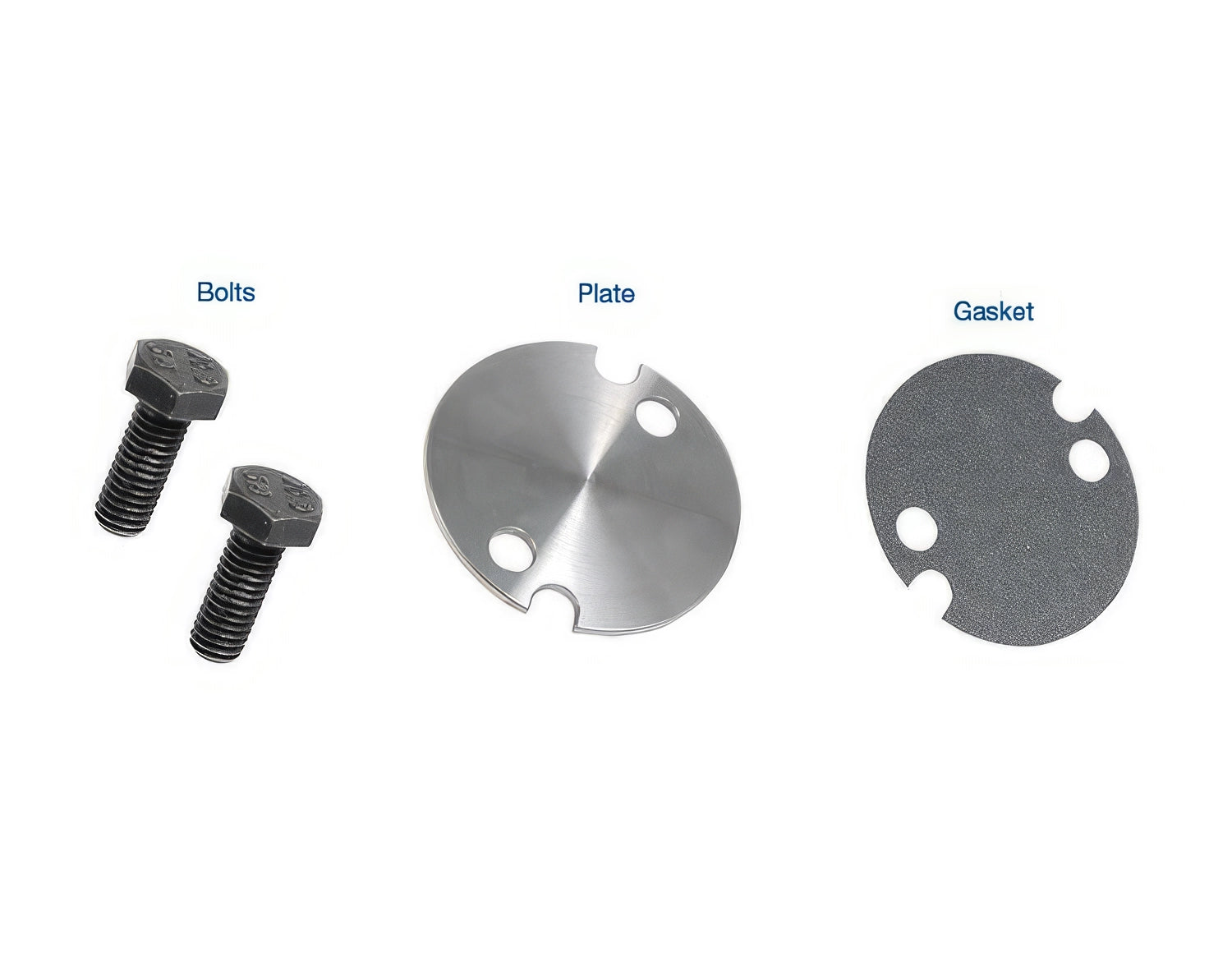
If the truck is a 2001-2003 F-150, there's a design change you have to know about. Per Sonnax, through 2000 a two-bolt stiffener plate under the 2-3 accumulator clamped the separator plate and lower valve body gasket to the valve body. For 2001 and later Ford deleted that plate, along with the capacity modulator valve, whose bore was cast closed.
Without that clamping force, forward clutch oil gets into unused valve body passages and pushes the separator plate up like a servo piston. Sonnax measured the plate bowing up to .011 in. at normal forward clutch pressure. Once it bows, forward clutch oil crosses into the direct clutch circuit. The two circuits meet in the casting under the plate, below the 2-3 accumulator. The result is dragging and burned forward and direct clutches, cracked separator plates, and slips and flares that return after a rebuild.
Sonnax is direct about it: dragging clutches do far more damage than the plate cracks, and the cracks are a symptom, not the cause. Their fix is the Valve Body Retainer Plate Kit, 76507F-01K, which puts a two-bolt plate back on. You drill and tap the valve body using the lower gasket to locate the holes, then drill the separator plate to match. Sonnax calls that the only complete fix for the cross leak. On any 2001-up F-150 4R70W that's apart for burned forward or direct clutches, I treat this kit as mandatory, not optional.
Cause 4: neutral or slip in overdrive
If it only slips or neutrals in 4th, the overdrive band isn't holding, or its servo isn't applying it. Check the servo and its snap ring when the pan is down, and look in the valve body under the servo for debris. A broken servo part or a jammed servo regulator valve gives you a 3-4 shift into neutral even with good fluid and a good shift command.
Rebuild or repair?
Here's how I make the call on an F-150:
- Clean fluid, slip only when hot, low or no line rise: a valve body repair or replacement may be the whole job. Test the PR bore first.
- Slips only in 4th, fluid OK: servo and band work, often without pulling the unit.
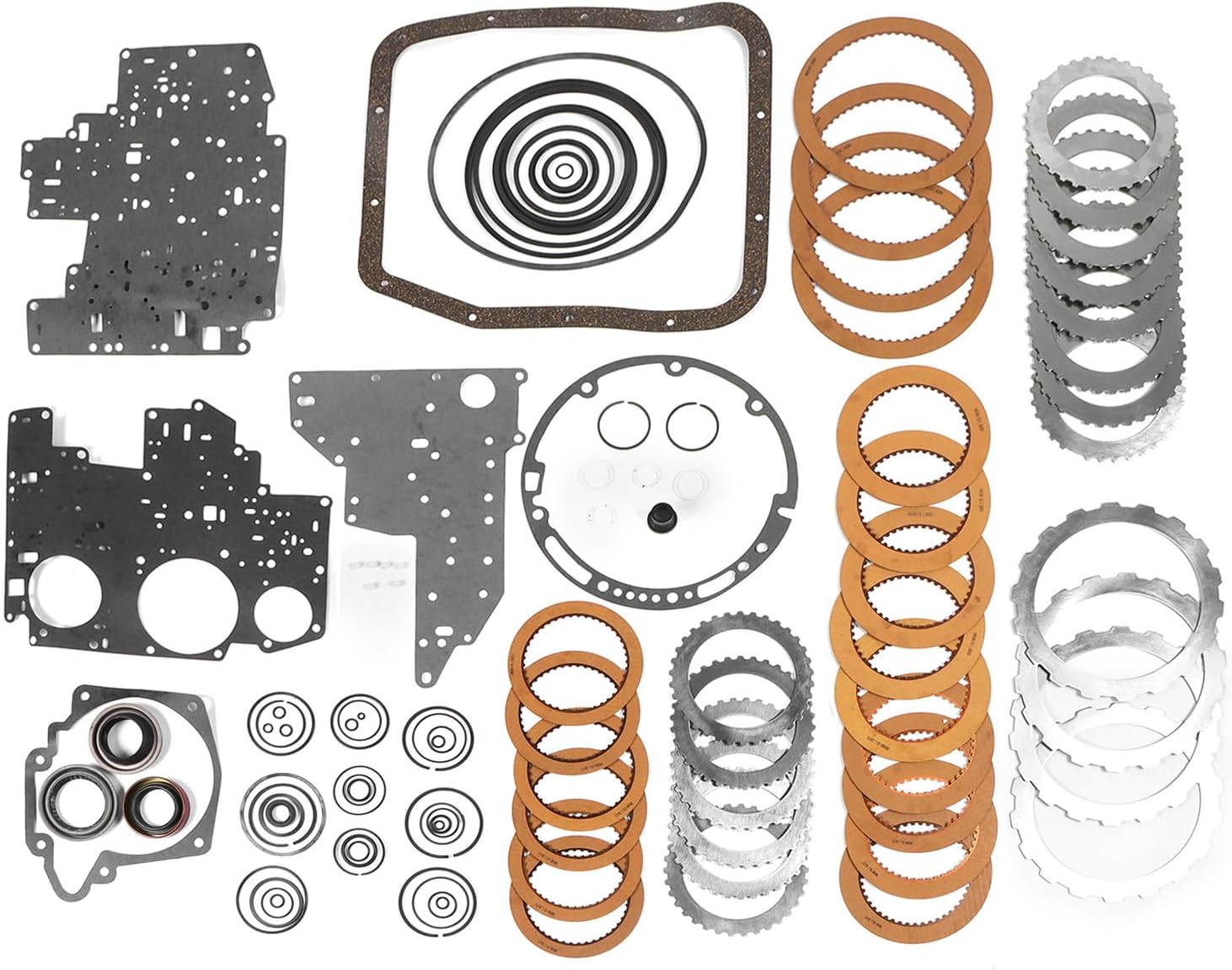
- Burnt fluid, friction material in the pan, slip in multiple gears: the clutches are gone. Pull it and rebuild. On 2001-2003 trucks, install the retainer plate kit. On any F-150 that tows, look hard at the forward drum and use the forged replacement.
- Multiple solenoid codes, no movement: check power and the harness at the exhaust before anything else.
Sonnax Smart-Tech forward clutch drum (76654-01K)
If the slip map points at the forward clutch on an F-150 that tows, replace the drum that cracks at the snap ring groove with the forged one-piece Sonnax design. Sold by our sister store, CoreTransmissionParts.
Shop the part for this fix →Need something else? The 4R70W parts collection has rebuild kits, servos, bands and valve body parts.
Need parts for this job?
Our 4R70W parts page carries F-150 master rebuild kits, valve bodies, the Sonnax retainer plate kit, solenoids, bands and Motorcraft MERCON V. Checkout is on site.
FAQ
Why does my F-150 4R70W only slip when it is hot or under heavy throttle?
The most common cause is wear in the pressure regulator valve bore. Transmission Digest documented that this wear lets the pump pull away the EPC signal when the fluid is hot, so line pressure does not rise with throttle and the unit slips at medium to full throttle. A new EPC solenoid will not fix it; the valve body bore has to be repaired or the valve body replaced.
Why does my F-150 slip in 1st, 2nd and 3rd but 4th gear is fine?
The forward clutch is applied in 1st, 2nd and 3rd but not in 4th or Reverse, so the forward clutch circuit is the suspect. Besides worn frictions, Sonnax documents the OE forward drum cracking at the snap ring groove, especially on trucks that see forced 4-3 kickdowns. Replace the drum with a forged unit if it shows any crack.
Will a fluid change fix a slipping 4R70W in an F-150?
Only if the problem was low or wrong fluid. Ford specifies MERCON V with an approximate dry fill of 13.9 quarts, and the level must be set hot. If the fluid is burnt and full of friction material, the clutches are already damaged and new fluid will not bring them back.
Are 2001-2003 F-150 4R70W transmissions more likely to slip?
They have a known weakness. For 2001 Ford removed the stiffener plate under the 2-3 accumulator, and Sonnax found the separator plate can bow up to .011 inch, letting forward clutch oil leak into the direct clutch circuit. That burns forward and direct clutches. The Sonnax 76507F-01K retainer plate kit is the fix and belongs in every 2001-up rebuild.
Related guides
- 4R70W Slipping: Causes and Fix
- 4R70W F-150 Common Problems
- 4R70W 3-4 Clutch Failure
- 4R70W Valve Body Wear and Fix
- 4R70W vs 4R75W Differences
Sources
- Transmission Digest, Wayne Colonna, "I Lost My EPC" (Technically Speaking), April 1, 2004. Backs AODE/4R70W pressure regulator bore wear causing loss of EPC pressure when hot, medium- to full-throttle slip and sliding shifts, EPC near 0 even unplugged, the boost circuit routing back to the pump inlet, the compressed-air test at the TV port, and premature forward clutch wear. transmissiondigest.com
- Transmission Digest, Carman Klaber, "It's Not Just the Transmission" (R&R Tech), February 1, 2010. Backs the 1998 F-150 4x4 4.6L 4R70W barely-moves case, multiple solenoid codes meaning no power, no voltage at pin 4 (red wire), and the harness melted on the exhaust after a broken clip. transmissiondigest.com
- Sonnax, "4R70W/4R75W 2001-Later Forward/Direct Clutch Problems: The Easy Valve Body Fix." Backs the 2001-up deletion of the 2-3 accumulator stiffener plate and capacity modulator valve, separator plate bowing up to .011 in., the forward-to-direct cross leak, and the 76507F-01K retainer plate kit and installation. sonnax.com
- Sonnax, Smart-Tech Forward Clutch Drum 76654-01K. Backs the OE drum cracking at the snap ring groove, highest load on a forced 4-3 kickdown, slip in 1st-3rd, ratio codes and no-forward symptoms, and the forged one-piece replacement for 4R70W/4R75W/AODE/4R70E/4R75E. sonnax.com
- ATSG, "AODE, 4R70W, 4R70E, 4R75E Update Handbook," Automatic Transmission Service Group (PDF). Backs the component application chart, the 2.84/1.55/1.00/0.70/2.32 ratios, and the line pressure chart (50-75 psi idle, 80-120 psi Reverse, EPC 0-9 psi at idle). ATSG handbook (PDF)
- Ford Motor Company, 2003 F-150 Owner Guide, Maintenance and Specifications. Backs Motorcraft MERCON V for the 4R70W and the 13.2 L (13.9 qt) approximate dry-fill capacity. Ford's fordservicecontent.com host blocks direct PDF access, so this links the Internet Archive copy of the same document. web.archive.org (PDF)