There is no part stamped "3-4 clutch" in a 4R70W parts book. Ford and ATSG service literature call it the direct clutch; Gears Magazine's own writeup on this unit calls it the 3rd clutch assembly. Shops settled on "3-4 clutch" because it describes what the part actually does: it comes on for the 2-3 shift into 3rd gear, stays clamped through the shift into 4th (overdrive), and does not let go until the transmission drops back down. If a 4R70W is flaring, slipping, or burning specifically on the shift into 3rd or 4th while 1st and 2nd feel normal, this clutch is almost always the first place to look.
The complication is that "direct clutch failure" is not one diagnosis on this transmission — it is at least four different root causes that all end with the same burnt friction material in the pan. Replacing the clutch pack without finding which one you have is how a shop eats the labor twice.
What the Direct Clutch Actually Does
The forward clutch is applied in every forward gear on a 4R70W. What changes gear to gear is which other elements are added behind it. In 1st and 2nd, the direct clutch is released. At the 2-3 shift it applies and locks the input shaft directly to the front planetary member, and it stays applied all the way through 4th while the overdrive band and overdrive clutch take over the job of adding the overdrive ratio behind it. That is the whole reason the "3-4 clutch" nickname sticks: it is the one element that is on for both of the top two gears and off for both of the bottom two, which makes it the natural suspect whenever the symptom pattern lines up the same way.
Symptoms That Point at the Direct Clutch
- Slips or flares specifically on the 2-3 or 3-4 shift while 1st and 2nd engage firmly and pull clean under load.
- Burning smell and dark, burnt-looking fluid, sometimes with metal or friction debris visible in the pan.
- Delayed or soft engagement into 3rd that gets worse as the fluid warms up and thins out.
- Momentary neutral feel during the 3-4 shift, distinct from a slip — this points more toward a valve body or hydraulic circuit fault than straight friction wear.
- No 3-4 shift at all, or the transmission falls back out of 4th under load.
- Harsh or banging engagement into 3rd can also show up where the apply is uneven rather than simply weak.
Gears Magazine's own case study on this transmission family describes a 2014 Econoline E-250 that came in with the pan "full of metal": the intermediate shaft and the output shaft's snub shaft were both worn and damaged, the direct drum was burnt, and the direct clutch assembly itself was incinerated. That is the end state of a direct clutch problem left to run — the goal of diagnosing it properly is to catch it well before the drum and shaft go with it.
Cause 1: Direct Clutch Drum and Stub Shaft Spline Wear
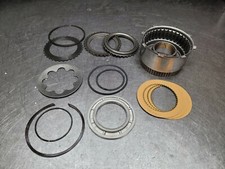
This is a documented mechanical weak point on the OE part, not a rare fluke. Sonnax's technical write-up on the AODE/4R70W direct clutch drum describes a design where the drum splines strip and the intermediate stub shaft breaks, and its replacement kit is built as a one-piece drum-and-shaft unit specifically to remove that failure point. The stub shaft in the Sonnax kit is built 50% thicker than the original and rated at double the strength of the best 300M aftermarket shafts, which gives you a sense of how marginal the factory shaft is under sustained load.
The practical implication: if you pull a direct clutch pack and the frictions are worn evenly but not obviously overheated, check the drum splines and the stub shaft before you simply reinstall a fresh friction pack on the old hardware. A clutch that cannot fully clamp because the drum is walking on worn splines will slip and burn the new frictions just as fast as it burned the old ones.
Cause 2: Low Line Pressure
Sonnax documents this directly for the 4R70E, 4R70W, 4R75E, 4R75W and AODE family: soft shifts, poor shift quality, delayed forward engagement, and forward or direct clutch failure can all trace back to low base line pressure, worse in heavy-duty or performance use. The root cause is wear in the pressure regulator valve, and the fix is a kit that swaps in a modified valve and a stronger spring to restore base line pressure.
The mechanism matters here: a clutch that applies on low pressure does not clamp cleanly, it clamps slowly. Every extra moment the plates spend slipping before they fully lock generates heat, and heat is what glazes and eventually burns friction material that was otherwise in good condition. This also lines up with the softer causes Gears Magazine lists for 3rd clutch failure on this transmission — an EPC solenoid or MAF sensor fault, or a fluid leak reaching the clutch — all of which reduce the pressure or volume actually delivered to the apply circuit rather than wearing the friction material directly.
Cause 3: The Post-2001 Valve Body Reinforcement Plate
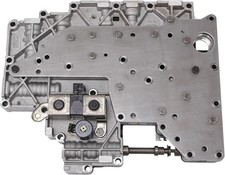
This is a specific, documented design change worth knowing before you condemn a clutch pack. Jasper Engines & Transmissions found that 4R70W valve bodies built after 2001 dropped a reinforcement plate at the point where the forward clutch and direct clutch circuits meet. According to Jasper's Mark Balsmeyer, that omission reduced the clamping force between the separator plate and the gasket at that junction. The weakened seal lets the gasket blow out, and fluid then leaks into a chamber it should not reach and applies the direct clutch when it is not supposed to be engaged — which shows up as slipping in 3rd and 4th gear and ends in direct clutch burnout. Jasper's fix drills and taps the valve body to add the missing reinforcement plate.
This fits the same family of valve body wear Gears Magazine flagged independently in its own 4R70W/4R75W teardown: a worn pressure regulator valve bore, solenoids that flood with fluid, weakening shift valve springs, and leaking plugs. None of those are the clutch pack itself, and all of them can misroute or misregulate the fluid that reaches it.
Cause 4: A Blown Accumulator Piston
A related case documented in Transmission Digest, on the electronically controlled 4R75E that shares this clutch architecture, is a useful reminder that a burnt direct clutch is not always a friction problem at all. The vehicle came in slipping in 3rd gear. Teardown found a badly burnt direct clutch, and further investigation traced it to the bottom of the 2-3 accumulator piston having blown out. That failure let forward-clutch circuit fluid reach the direct clutch circuit and partially apply it while the transmission was still supposed to be holding 2nd gear, and the resulting partial apply burned the clutch. The fix was simply replacing the accumulator piston — no amount of friction-pack replacement would have solved it.
Diagnosing It on the Bench and Scan Tool
- Check fluid level and condition hot, on level ground. Burnt-smelling or metallic fluid confirms clutch material is already in the pan.
- Map exactly which gears slip. If 1st and 2nd pull clean and only the 2-3 and 3-4 shifts slip or flare, that isolates the fault to the direct clutch circuit rather than the forward clutch, the overdrive band, or a general pump/pressure problem.
- Gauge line pressure at idle and at a stall test, comparing against factory spec for the build year. Low pressure across the board points at Cause 2 before you open the unit.
- Watch the shift itself. A clean slip or flare suggests worn friction material or low pressure. A momentary neutral feel during the 3-4 shift suggests a hydraulic misapply or a stuck valve, closer to Cause 3 or 4.
- Pull the pan and valve body. On units built after 2001, inspect the separator plate and gasket at the forward/direct clutch junction for the missing reinforcement plate and any sign the gasket has blown through.
- Inspect the accumulator pistons for cracks or a blown-out base, especially if the slip pattern includes 3rd gear specifically rather than the shift into it.
- Pull the direct clutch drum and stub shaft and check the splines for wear or stripping before assuming the friction pack alone is the fix.
The Fix
Match the repair to what you actually found, not to the part that happens to be in the box on the shelf:
- Worn drum splines or a damaged stub shaft: replace the drum and shaft as a unit. A fresh friction pack on worn splines will slip again almost immediately.
- Low base line pressure: correct the pressure regulator valve and spring before reassembling the clutch pack, or the new frictions inherit the same slow-apply problem that burned the old ones.
- Missing reinforcement plate / blown separator gasket (post-2001 units): address the valve body directly — add or restore the reinforcement plate at the forward/direct clutch junction and replace the gasket. This is a hydraulic circuit fix, not a friction fix.
- Blown accumulator piston: replace the piston. Check both the 2-3 and 3-4 accumulators while the valve body is apart, since finding one piston already failed is a reason to inspect its neighbor.
- Simple high-mileage friction wear with none of the above present: a fresh clutch pack and steels, properly torqued and clearance-checked, is the correct and sufficient fix.
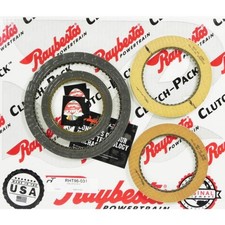
4R70W Friction Clutch Kit, 1993-Up
Direct replacement friction clutch kit for the 4R70W clutch packs. Pair it with a drum and stub shaft inspection before reassembly — new frictions on a worn drum will not hold.
Get the 4R70W friction clutch kit →Need a valve body or a full rebuild kit instead? Browse the full 4R70W parts collection.
Fluid, and Why It Matters Here
The 4R70W runs on MERCON V. Ford's own Motorcraft MERCON V page (part XT-5-QMC) lists it for vehicles that require MERCON V or MERCON-type fluid, and says not to use it where MERCON SP, LV or ULV is recommended. Using the wrong fluid spec changes clutch apply feel and friction material compatibility, and on a transmission where apply timing is already a known weak point for the direct clutch, that is one more variable worth removing before you start chasing the causes above.
The Short Version: A 3-4 Clutch Failure Checklist
- Confirm the slip pattern is isolated to the 2-3 and 3-4 shifts, not the whole transmission.
- Gauge line pressure before opening the unit — low pressure across the board means fix the regulator first.
- Note whether the symptom is a clean slip/flare or a momentary neutral feel; the second points at the valve body or an accumulator.
- On post-2001 units, inspect the separator plate and gasket at the forward/direct clutch junction for the missing reinforcement plate.
- Check both accumulator pistons for cracks or blowout.
- Inspect the direct clutch drum splines and stub shaft before reusing the hardware.
- Refill with MERCON V only, and confirm fluid condition before road testing.
Worked in that order, most of these jobs end up being a drum-and-shaft kit, a pressure regulator fix, or a valve body repair rather than a straight clutch-and-steels replacement that quietly fails again in a few thousand miles.
FAQ
What does the "3-4 clutch" mean on a 4R70W?
There is no component on a 4R70W officially named the 3-4 clutch. Shops use that name for the direct clutch, because it is the clutch that comes on for 3rd gear and stays clamped through the shift into 4th (overdrive). Ford and ATSG service literature call it the direct clutch, and Gears Magazine refers to the same part as the 3rd clutch assembly. All three names point at the same component.
Can low line pressure really burn a direct clutch that isn't worn?
Yes. Sonnax documents that Ford 4R70E, 4R70W, 4R75E, 4R75W and AODE units can see delayed engagement and burnt forward or direct clutches purely from low base line pressure, with no wear in the clutch pack itself. A clutch that applies slowly slips while it is clamping down, and slipping under load generates the heat that glazes and burns the friction material, even on a nearly new pack.
Why would a 4R70W slip in 3rd and 4th but shift fine in 1st and 2nd?
Because the direct clutch is the common thread in 3rd and 4th but plays no role in 1st or 2nd, where the forward clutch and the intermediate band or roller clutch do the work instead. When slipping shows up only on the 2-3 and 3-4 shifts and the lower gears pull clean, that pattern isolates the fault to the direct clutch circuit rather than the forward clutch, the overdrive band, or the pump.
Is the valve body reinforcement plate problem only on certain years?
Jasper Engines and Transmissions traced it to 4R70W valve bodies built after 2001, where a reinforcement plate at the junction of the forward and direct clutch circuits was dropped from the design. Without it, clamping between the separator plate and the gasket is reduced, the gasket can blow out, and fluid misroutes into the direct clutch circuit and applies it when it should be released. Confirm your build year before assuming this is the cause.
Will new frictions alone fix a direct clutch failure?
Only if simple friction wear is the actual root cause, and on this transmission it often is not. If the drum splines or the intermediate stub shaft are worn or stripped, a fresh friction pack will slip and burn again almost immediately. If the cause is low line pressure, a leaking valve body gasket, or a cracked accumulator piston, new frictions will fail the same way the old ones did unless that upstream problem is fixed first.
Working a 4R70W this week?
Clutch packs, drums, valve bodies, pressure regulator kits and full rebuild kits — shipped fast from the USA.
Shop 4R70W parts →Sources
- Sonnax — "Stop Chasing AODE/4R70W Direct Clutch Drum Problems," December 6, 2018. Backs the direct clutch drum spline stripping and intermediate stub shaft breakage as a documented OE weak point, the Smart-Tech one-piece drum-and-shaft replacement kit (76656-01K/76656-02K), the stub shaft built 50% thicker than OE, and the 17% clutch capacity increase from the added friction plate. sonnax.com
- Sonnax — Elevated Pressure Regulator Valve Kit, Part No. 76948-12K, product page. Backs low base line pressure causing soft shifts, poor shift quality, delayed Forward engagement, and Forward/direct clutch failure on 4R70E, 4R70W, 4R75E, 4R75W and AODE units, and the modified valve and stronger spring used to raise base line pressure. sonnax.com
- Work Truck Online — "Jasper Makes Valve Body Update to Ford 4R70W Transmission." Backs the post-2001 4R70W valve body design change that dropped a reinforcement plate at the forward/direct clutch circuit junction, Mark Balsmeyer's description of reduced clamping between the separator plate and gasket, the resulting gasket blowout and direct clutch misapply, the slip-in-3rd-and-4th symptom and direct clutch burnout, and Jasper's drill-and-tap fix. worktruckonline.com
- Transmission Digest — "Ford 4R75E: Slipping in Third Gear." Backs the case of a 4R75E arriving with 3rd-gear slip, teardown finding a badly burnt direct clutch, the root cause traced to the bottom of the 2-3 accumulator piston blowing out and allowing forward-clutch fluid to partially apply the direct clutch, and piston replacement as the fix. transmissiondigest.com
- Gears Magazine (ATRA) — "The 4R70W: Getting the Shaft," Rolly Alvarez, May 2021. Backs common 4R70W/4R75W concerns including no 3-4 shift and 3rd clutch assembly failure, the EPC/MAF sensor and leak/misfire causes feeding into 3rd clutch failure, the 2014 Econoline E-250 case with a burnt direct drum and incinerated direct clutch assembly plus worn intermediate and snub shafts, and the valve body wear items found alongside it (worn pressure regulator valve bore, flooding solenoids, weakening shift valve springs, leaking plugs). gearsmagazine.com
- Ford Motorcraft — MERCON V Automatic Transmission and Power Steering Fluid (XT-5-QMC) product data page. Backs MERCON V as the fluid for Ford vehicles that require MERCON V or MERCON-type fluid, and Ford's warning not to use it where MERCON SP, MERCON LV or MERCON ULV is recommended. fcsdchemicalsandlubricants.com