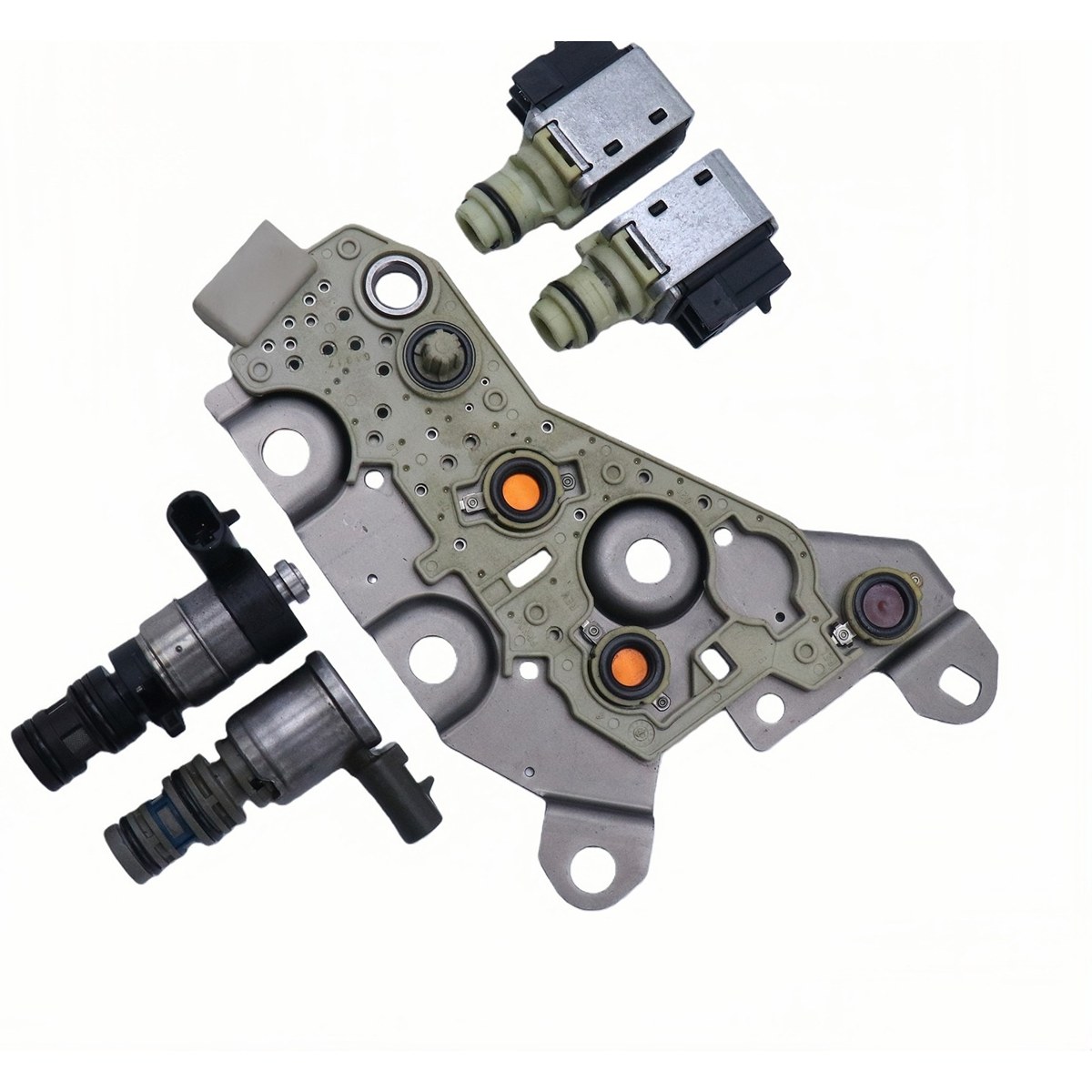
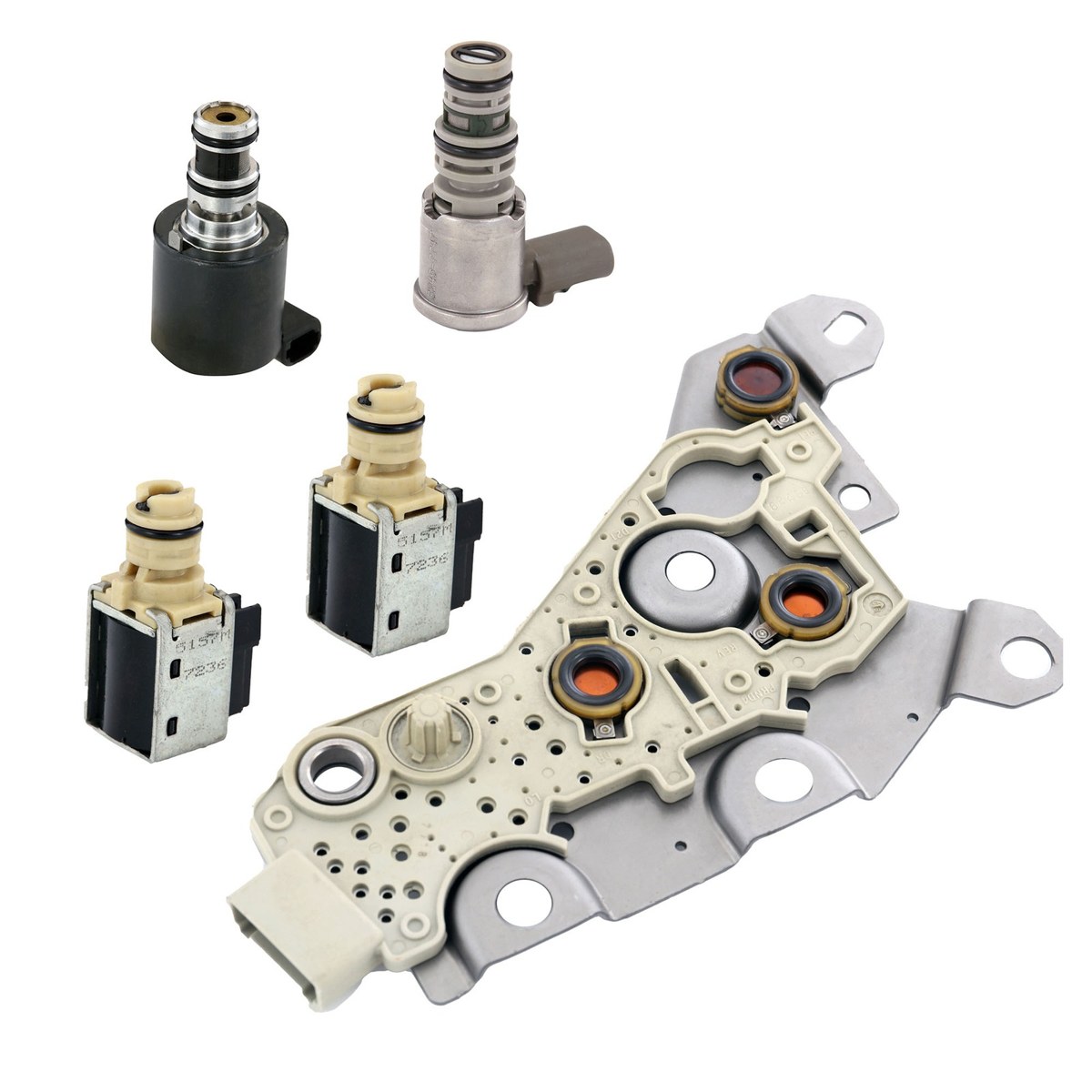
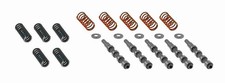
A Chevy Cobalt or Malibu that suddenly refuses to leave second gear, a Saturn Vue or Ion that bangs into gear after a cold start, or a Pontiac G6 that throws a shift solenoid code every few days usually has one thing in common: the electrical parts on the 4T40E or 4T45E valve body have worn out. This kit replaces all five of them together, so you are not guessing which one to buy. In the box are the transmission control board (the pressure switch manifold) and four solenoids: shift solenoids A and B, the torque converter clutch (TCC) solenoid and the electronic pressure control (EPC) solenoid. It is built to the 2004-and-later pattern, and the fitment section below explains why that detail matters more than anything else on this page.
What the solenoid kit does in a 4T40E
The 4T40E is a four-speed front-drive transaxle with no throttle cable and no governor; the engine computer makes every decision. It picks a gear by turning the two shift solenoids on or off, and the pattern of those two valves routes fluid to the correct shift valves. The EPC solenoid is a variable force motor rather than an on/off valve. The computer sends it a varying current to raise or lower line pressure, so a gentle cruise gets soft shifts and a full-throttle pass gets firm ones. The TCC solenoid applies the converter clutch at steady speed to stop slip and heat. The pressure switch manifold is the computer's feedback: a set of pressure switches that report which range the manual valve has selected. When the manifold reads wrong, the computer can command the wrong pressure or set range codes even though the gear selector is fine.
Symptoms of a worn 4T40E solenoid kit
- Limp mode: the car launches in second or stays in second, often with the check engine light on
- Shift solenoid A or B codes (P0751, P0752, P0753 or P0758)
- Harsh shifts and hard engagement, or soft, slipping shifts that get worse as the fluid heats up
- A shudder at light-throttle cruise, or a stall at stops when the TCC will not release
- Range or pressure switch codes and odd gear display behavior from a failing manifold
The 4T40E's known weak spots are the 2nd and 4th clutches and valve body wear. A slip that started gradually and smells burnt points to clutches, not solenoids.
How to confirm the solenoids before you buy
Start with fluid level and condition. Then pull all stored codes, including history codes. An electrical code tells you the circuit is open or shorted, not necessarily that the solenoid is dead, so check resistance at the case connector and then directly at each solenoid with the pan off; our guide to testing a transmission solenoid with a multimeter shows how. If the solenoid reads good at its own pins but bad at the connector, the problem is the internal harness, not this kit. Shudder and TCC codes deserve one more check, because a worn regulator bore in the valve body causes the same complaints. Our TCC shudder diagnosis guide separates fluid, converter and hydraulic causes.
Fitment
The listing names these applications: 2005 Buick Century 3.1L, 2004-2005 Buick LeSabre 3.8L, 2004-2005 Chevrolet Cavalier 2.2L, 2005-2010 Cobalt, 2007-2010 HHR, 2004-2010 Malibu, 2004 Oldsmobile Alero, 2007-2009 Pontiac G5, 2005-2010 G6, 2004-2005 Grand Am and Sunfire, 2007-2008 Saturn Aura, 2005-2007 Ion, 2005 L300 and 2005-2009 Vue. Two cautions. First, the Century 3.1L, the LeSabre 3.8L and several other six-cylinder cars on that list were also built with the larger 4T65E, which this kit does not fit, so read the RPO code on the service parts label: MN4 is the 4T40E and MN5 is the 4T45E. Second, the EPC solenoid changed. Sonnax documents that GM moved from a large Delphi EPC to a small Bosch EPC in 2004 (Saturn L-Series changed in 2003). Both fit the same bore and plug into the same connector, so the wrong one installs without a fight, yet a Bosch EPC in a 2000-2002 car causes harsh shifts that may not adapt out. If your car is a 1995-2003 model, this kit is not the one to buy; compare your old EPC first. Matching parts for every year are on the 4T40E and 4T45E collection page, and if you are unsure, send us your year and VIN before ordering.
Install notes
The solenoids and manifold are reached by draining the fluid and removing the side cover or pan, depending on the vehicle. Photograph the harness routing before you unplug anything. Swap one part at a time so every solenoid goes back to its own bore, coat each new O-ring with clean ATF and seat the solenoid by hand before snugging its retainer. Tighten the manifold bolts evenly so the gasket seals across all the pressure ports. Refill with Dexron VI, check the level at operating temperature, clear the codes and reset the transmission adapts so the computer relearns shift timing on the new EPC. If the bores turn out to be scored, a 4T40E shift kit or a complete valve body is the right next step, and a car that has been slipping for a while may need the 4T40E clutch module as well.