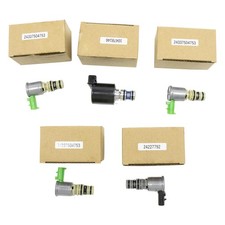
If you drive a 1999 BMW with the five-speed automatic, the transmission behind the engine is the GM-built 5L40-E, which BMW catalogs as the A5S 360R. When it starts flaring between gears, slamming into second, hanging in one gear or setting solenoid circuit codes, the electrical side of the valve body is the first thing to rule in or out. This listing is a new set of five individually boxed 5L40-E solenoids, so you can replace the whole electrical control group at once instead of guessing which one failed first.
What the solenoids do in a 5L40-E
The 5L40-E is a Ravigneaux-gearset five-speed built in Strasbourg, France, and every gear change is decided electronically. The transmission computer energizes on/off shift solenoids to stroke the shift valves in the rear control body, a variable pressure control solenoid on the front control body sets line pressure and shift feel, and a separate solenoid applies the torque converter clutch. Feeding all of those solenoids is the actuator feed limit (AFL) valve, which regulates the oil supply the solenoids switch. If a coil goes open, a plunger sticks, or a screen clogs with friction material, the computer commands a gear the hydraulics never deliver.
Symptoms of worn 5L40-E solenoids
- Delayed, harsh or flared upshifts, especially once the fluid is fully hot
- Starts in second or stays in a single gear (failsafe)
- Converter clutch that will not apply, or shudders on light throttle at cruise
- Line pressure that does not rise under load, felt as slip on the 1-2 or 2-3
- Circuit codes such as P0748 (pressure control solenoid electrical) or P0750, P0755 and P0760 (shift solenoid A, B and C circuits)
- Gear ratio codes P0731 through P0735, which can be a solenoid problem but are often a worn valve bore, as explained below
How to confirm before you buy
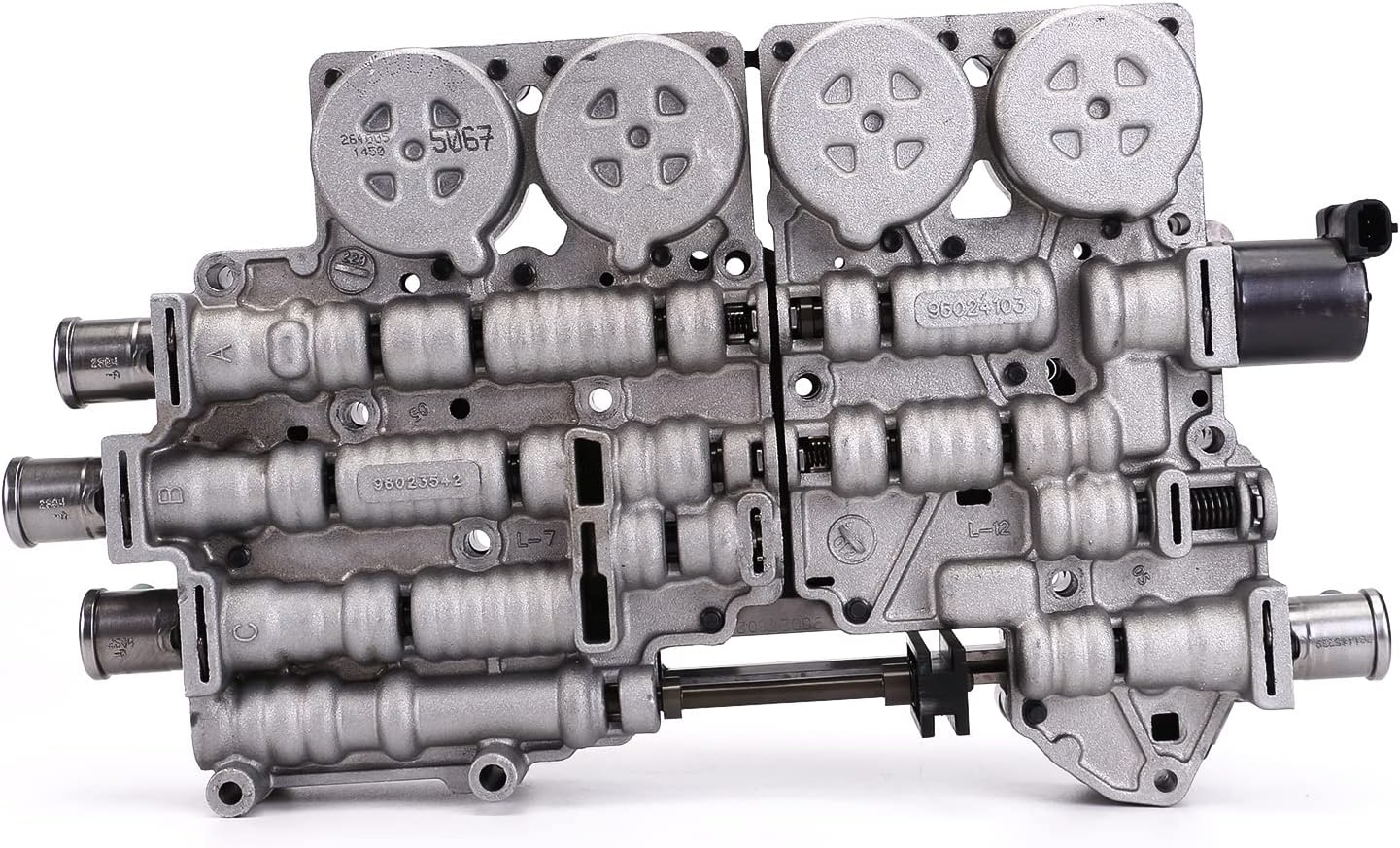
Start with the electrical checks, because they are free. Pull the codes, then measure each solenoid's resistance through the case connector and compare it to the specification in your repair information; our guide on testing a transmission solenoid with a multimeter walks through it. A circuit code with a bad reading points straight at this kit. Ratio codes with good resistance readings deserve a closer look: TransGo documents that wear in the 5L40-E actuator feed limit valve bore drops solenoid feed oil and sets P0731-P0735, with a 5th gear ratio error when hot being the common early sign. In that case new solenoids alone will not cure it, and a 5L40E valve body for 1999-2003 or a bore repair is the fix. Our gear ratio code diagnosis guide explains how to separate slipping clutches from control problems, and checking line pressure tells you whether the pressure control circuit is doing its job.
Fitment
This set is listed for the 1999 model year, when the 5L40-E first went into production for BMW. That year it was used behind six-cylinder engines in the E46 3 Series, the E39 5 Series and the Z3. Cadillac did not use the 5L40-E until later model years, so this listing is aimed at BMW owners. Early units are not identical to later ones; TransGo notes that 1999-2002 BMW transmissions used different-diameter low/reverse and second pistons, which is a reminder that internal parts changed during the run. Before you order, read the identification tag on the left rear of the case above the pan rail and compare the connector style and numbers on your old solenoids to the photos. If you are unsure, send us your year, model and VIN and we will confirm the match.
Install notes
- The solenoids live on the valve body, so the pan, filter and valve body have to come down. Plan on a new 5L40E/5L50E filter and pan gasket kit at the same time.
- Inspect the internal harness and connector pins while the body is out; heat-hardened insulation causes the same codes as a dead coil.
- Lube each new O-ring with clean ATF and seat every solenoid fully before the retaining bracket goes on.
- Refill with the fluid specified for your vehicle and check the level at the fill plug at the correct temperature, not with a dipstick guess.
- Clear codes and let the transmission adapt, or run a reset with a capable scan tool; see our notes on adaptive relearn after valve body work.
If the transmission already has burnt fluid and heavy friction debris in the pan, solenoids will not save it; a 5L40E overhaul kit for 1999 is the honest next step.