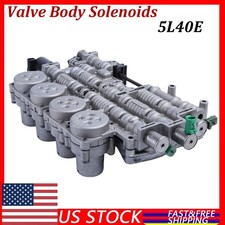
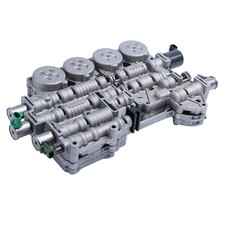
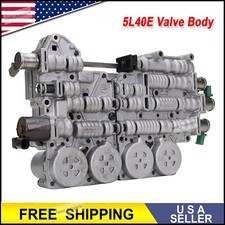
If your GM or BMW five-speed automatic is losing fourth-to-fifth gear, shifting harsh across the board, or throwing a gear ratio code, the valve body on the 5L40E is a common cause. This remanufactured 5L40E valve body covers 2003-2006 applications and replaces the hydraulic section as a bolt-in unit instead of chasing individual worn bores one at a time.
What the valve body does in a 5L40E
The 5L40E is a GM-designed five-speed, rear-wheel-drive automatic that GM also sold to BMW, where it was built and badged as the A5S 360R. Inside the transmission, the valve body is the hydraulic control center: pump pressure arrives at the main pressure regulator bore, which sets base line pressure, while a set of shift and safety-mode valves route that pressure to the clutch packs to carry out each shift. The TCC regulator valve inside the same casting controls torque converter clutch apply. Because every one of these valves oscillates constantly as the transmission shifts and the converter clutch cycles, the bores that control them are the first parts to wear.
Symptoms this part addresses
- No 4-5 shift, or the transmission hunting between 4th and 5th
- Stored gear ratio codes from low or unstable line pressure
- Harsh shifts across every gear from excess line pressure, or clutch slip from too little
- No TCC lockup, TCC shudder, or a lockup that won't release
- 3-2-1 bump on coast-down, or no engine braking in lower gears
How to confirm it before you buy
Low or unstable line pressure from a worn pressure regulator bore is the most common root cause behind the no 4-5 shift and gear ratio code complaint on this transmission, since the regulator valve is in constant motion and wears its own bore over time. A shop with a pressure gauge and a scan tool can confirm this by checking line pressure against spec and pulling stored codes before condemning the valve body. If the TCC side is acting up instead - no lockup, shudder, or lockup that won't release - that points at the separate TCC regulator valve bore rather than the main pressure regulator, so describe the exact symptom when you call if you want help confirming which circuit is worn.
Fitment
This valve body is listed for 2003-2006 5L40E applications. GM used the 5L40E (and the related, heavier-duty 5L50E) behind lighter V6 and inline-six engines in vehicles including the Cadillac CTS, and BMW used the same architecture as the A5S 360R behind its inline-six engines. The two sister transmissions and their valve bodies look alike at a glance, so match your casting marks and the pressure regulator bore size against your old unit before installing, or send us your year, make, model and VIN and we'll confirm the correct application.
Install notes
Change the filter and pan gasket at the same time as the valve body - see our 5L40E/5L50E Filter & Pan Gasket Kit - since debris from the worn unit is the most common reason a freshly installed valve body fails early. If the TCC or shift solenoids test out of spec, pair this valve body with our 5L40E Solenoid Kit rather than reusing worn ones, and inspect the sprag clutch while the transmission is apart if you have any no-engagement or burnt-clutch history. If your symptoms are specifically in the 1999-2003 production window instead, see our 5L40E Valve Body 1999-2003 listing.