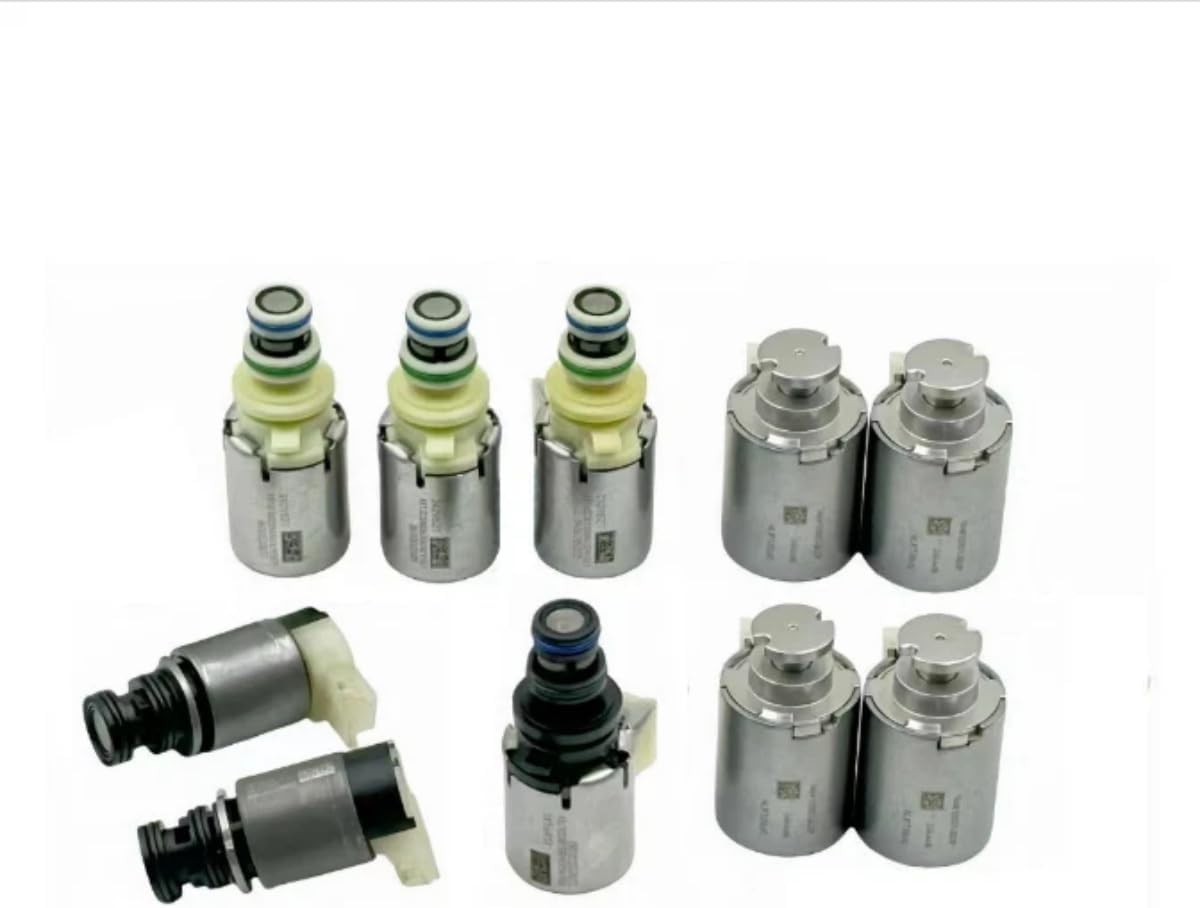
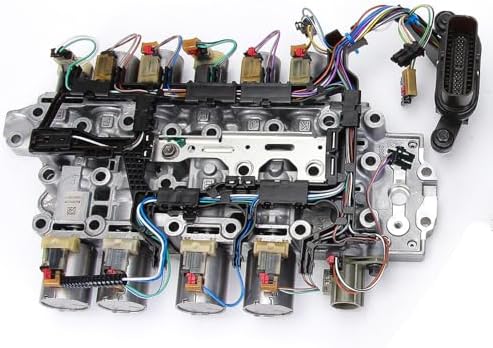
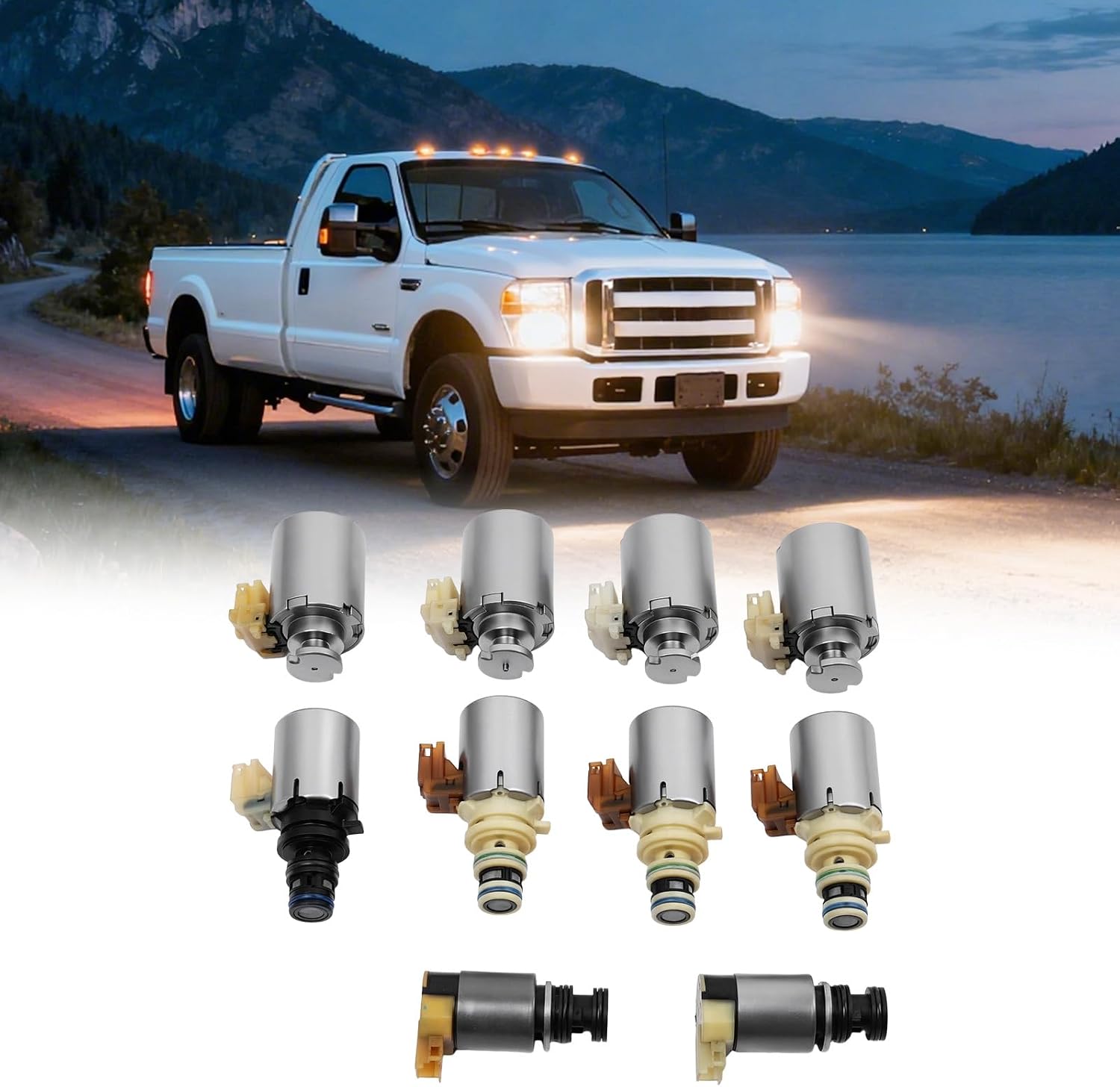
If your Acadia, XT5, XT6, Blazer or another GM crossover with the nine-speed automatic bangs into gear, flares between shifts at light throttle, or stores control-solenoid codes, the solenoids on the valve body are the first thing to rule in or out. This is a complete ten-piece set of pressure and shift solenoids for the GM 9T65, the higher-torque member of the 9T family, and the listing also covers the 9T45, 9T50 and 9T60. The OE references carried by the set are 24291625, 24284174 and 24053063.
What the solenoids do in a 9T65
The 9T family was co-engineered with Ford and shares its layout with the 8F35 and the earlier GM six-speeds, and the number after the 9T simply marks the torque rating. Shift feel in these units is set almost entirely by electronics. GM uses Direct Acting solenoids that push on control valves which have no return springs; each valve relies on hydraulic pressure on its bottom land to move it back toward the solenoid. One solenoid sets line pressure, others regulate apply pressure to individual clutches, and one controls torque converter clutch apply. Because there is no spring to overcome a sticky valve, a solenoid whose pintle is slowed by fine debris, or one that has worked loose in its bore, shows up immediately as a shift-quality complaint rather than a slow decline.
Symptoms that point to these solenoids
- Harsh or binding upshifts, or a bang into Drive or Reverse
- Flared or slipping shifts where engine speed climbs before the next gear takes
- Missing shifts or the transmission holding one gear in a failsafe mode
- Stored control-solenoid or pressure-control DTCs, including on low-mileage vehicles
- Converter clutch shudder at light cruise, which needs separating from a converter problem (see below)
Trade coverage of this family also points to the spring-steel retaining clips that hold the Direct Acting solenoids in the valve body. They loosen with time and let a solenoid move in its bore, and in extreme cases break. A loose solenoid gives the same harsh, flared or missed shifts as a worn one, so inspect the clips any time the cover is off.
How to confirm before you buy
Scan every module, not just the transmission, and record all codes. GM's diagnostic routine for this family then checks fluid level with the fluid at 85-95 C (185-203 F), verifies line pressure with a gauge (below 50 psi sends you to the low-pressure diagnosis instead), and road-tests while watching scan data. Our guide to reading transmission live data shows which commanded-versus-actual values to watch, and testing solenoids without a factory scan tool covers resistance and click checks. If fluid is dark, smells burnt or carries heavy metal, clutch damage is likely and solenoids alone will not fix it. Shudder deserves its own check: GM has published a bulletin tying 9T50/9T60 shudder on several crossovers to the torque converter clutch rather than the valve body, so work through our TCC shudder diagnosis before replacing solenoids for that complaint alone.
Fitment
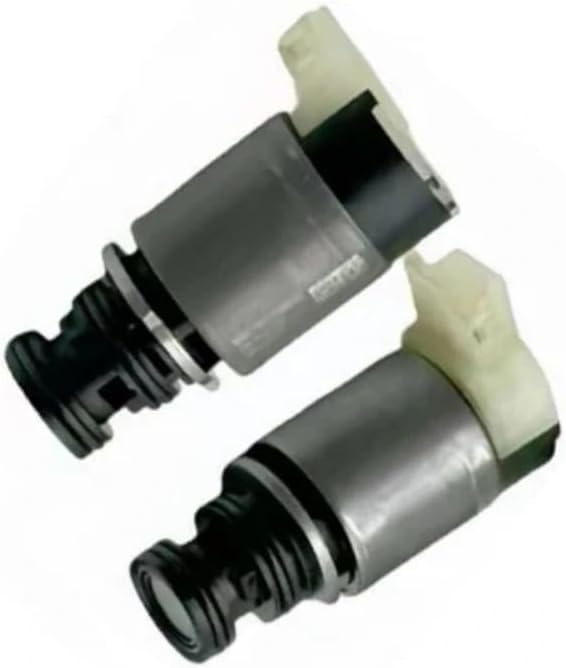
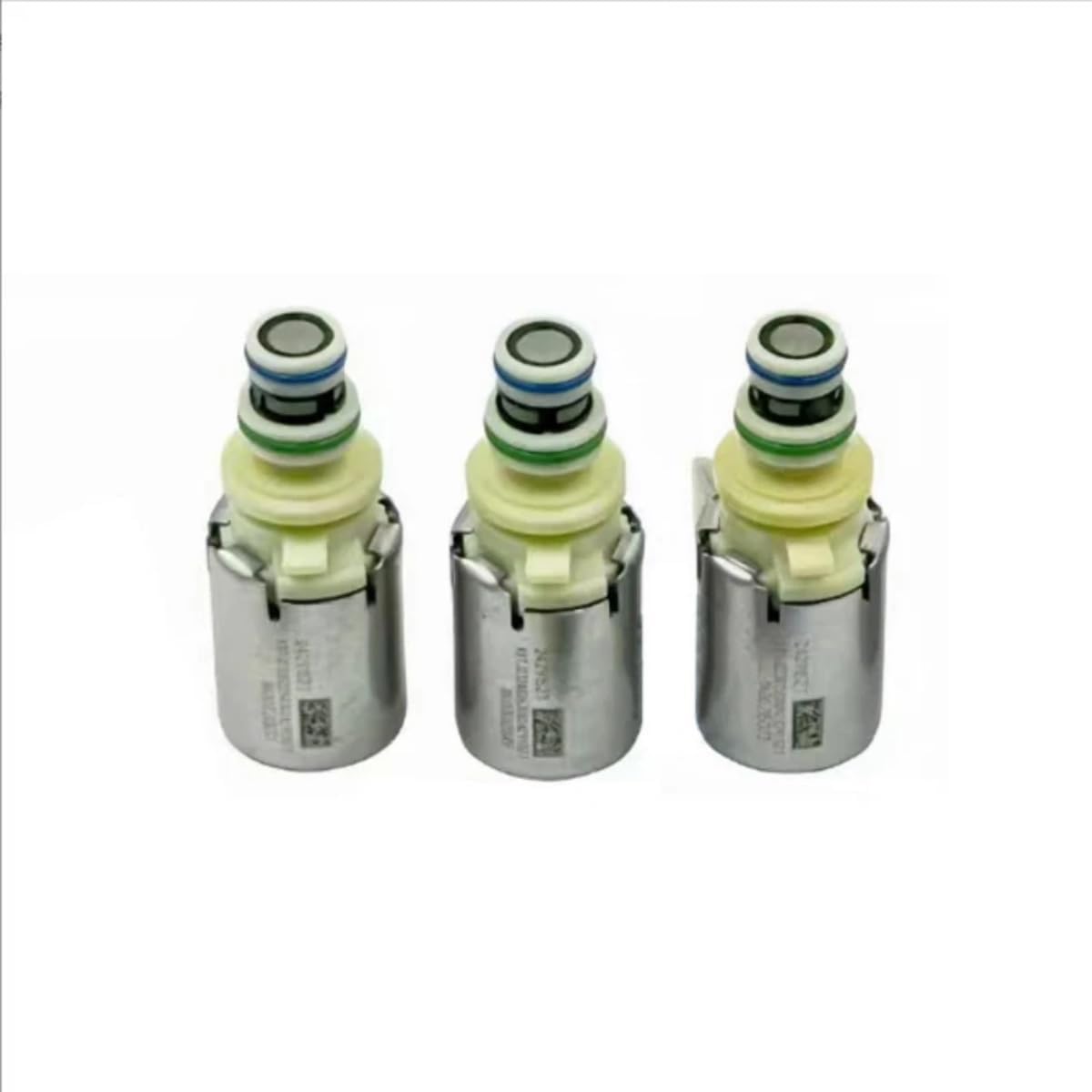
The listing covers the GMC Acadia and Terrain, Chevrolet Equinox, Malibu and Blazer, Buick Encore GX, and Cadillac XT5 and XT6 when equipped with a 9T45, 9T50, 9T60 or 9T65. Which of those units a given vehicle has depends on engine and year, and GM built first- and second-generation versions, shift-by-wire and shift-by-cable variants, across the run. Confirm your transmission with the RPO code on the service parts label and your VIN, then compare your old solenoid bodies and connector shapes with the photos before installing. Send us your year, model, engine and VIN if you want us to check. Other GM valve-body parts are grouped in our hard parts section.
Install notes
- Drain the fluid, remove the side cover and photograph the harness routing and every solenoid position before anything comes out.
- Change solenoids one at a time so none ends up in the wrong bore, and seat each connector until it latches; a half-seated clip reads as a circuit fault.
- Replace or repair the solenoid retaining clips rather than reusing loose ones.
- Look over the internal harness; if it is heat-cracked or the connectors are brittle, the 9T50 valve body with harness is the better repair.
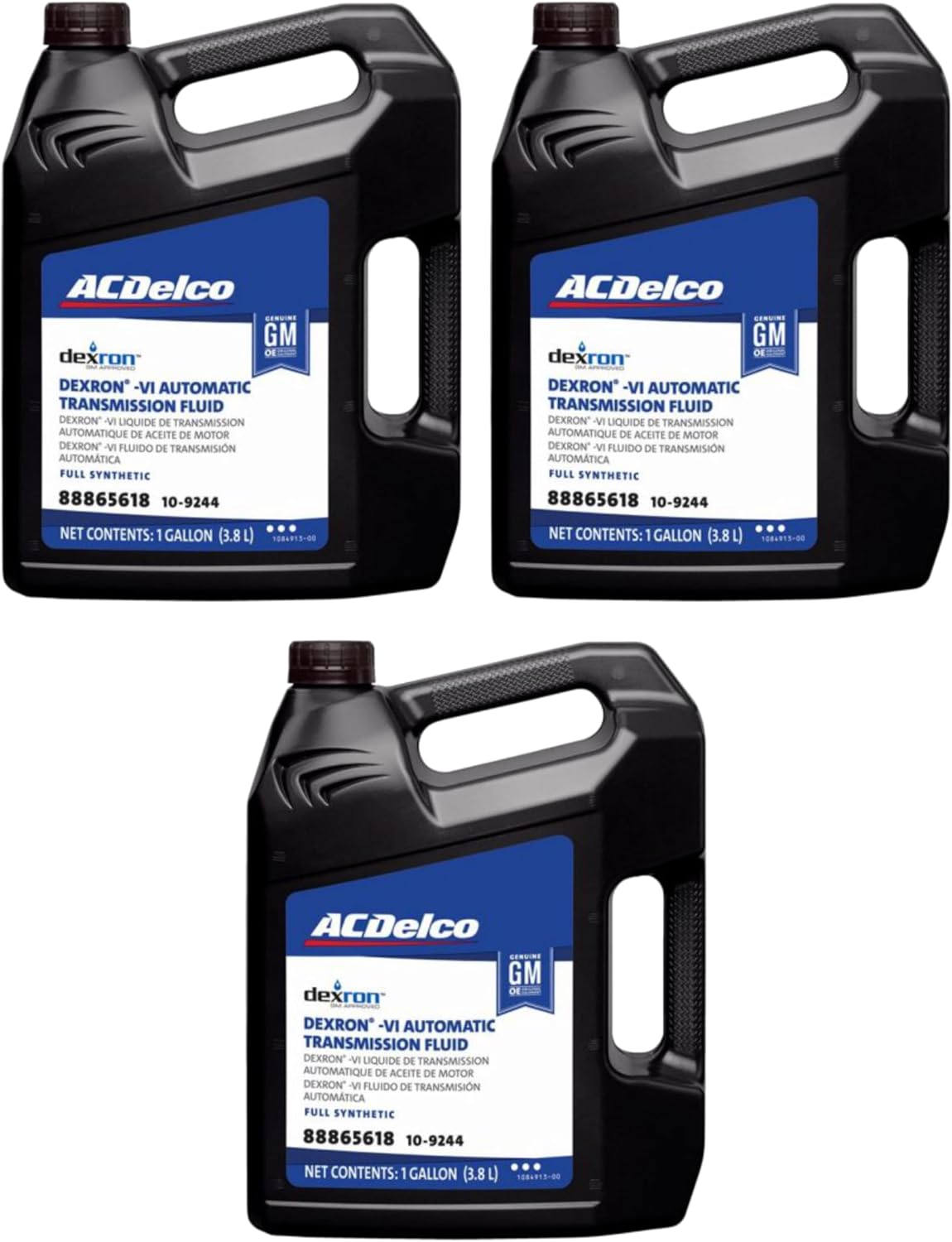
- Refill with DEXRON VI, such as ACDelco 10-9395, and set the level hot at the check plug.
- Clear codes and complete the adaptive learn with a capable scan tool; our relearn guide explains why shifts feel off until it is done.