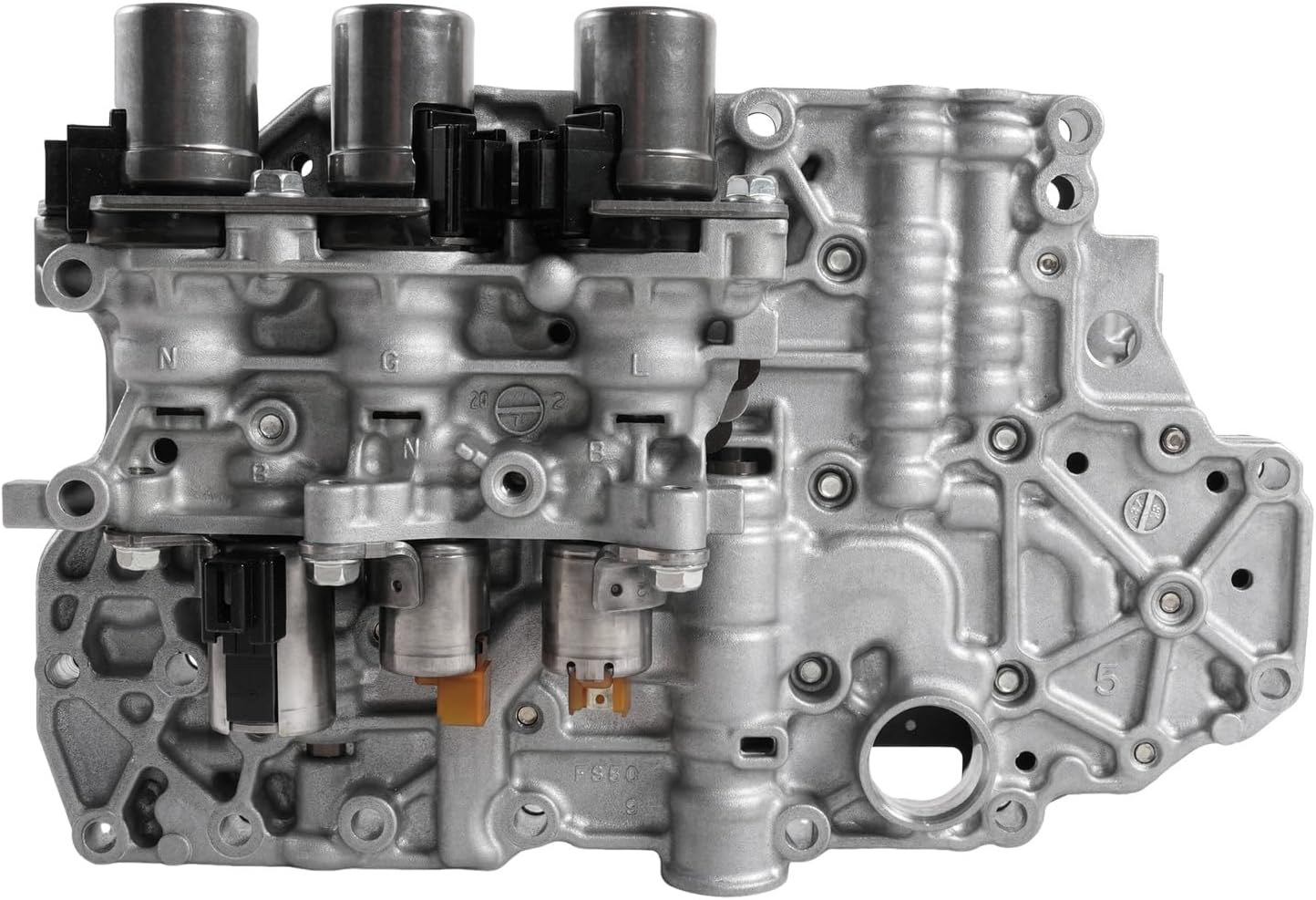
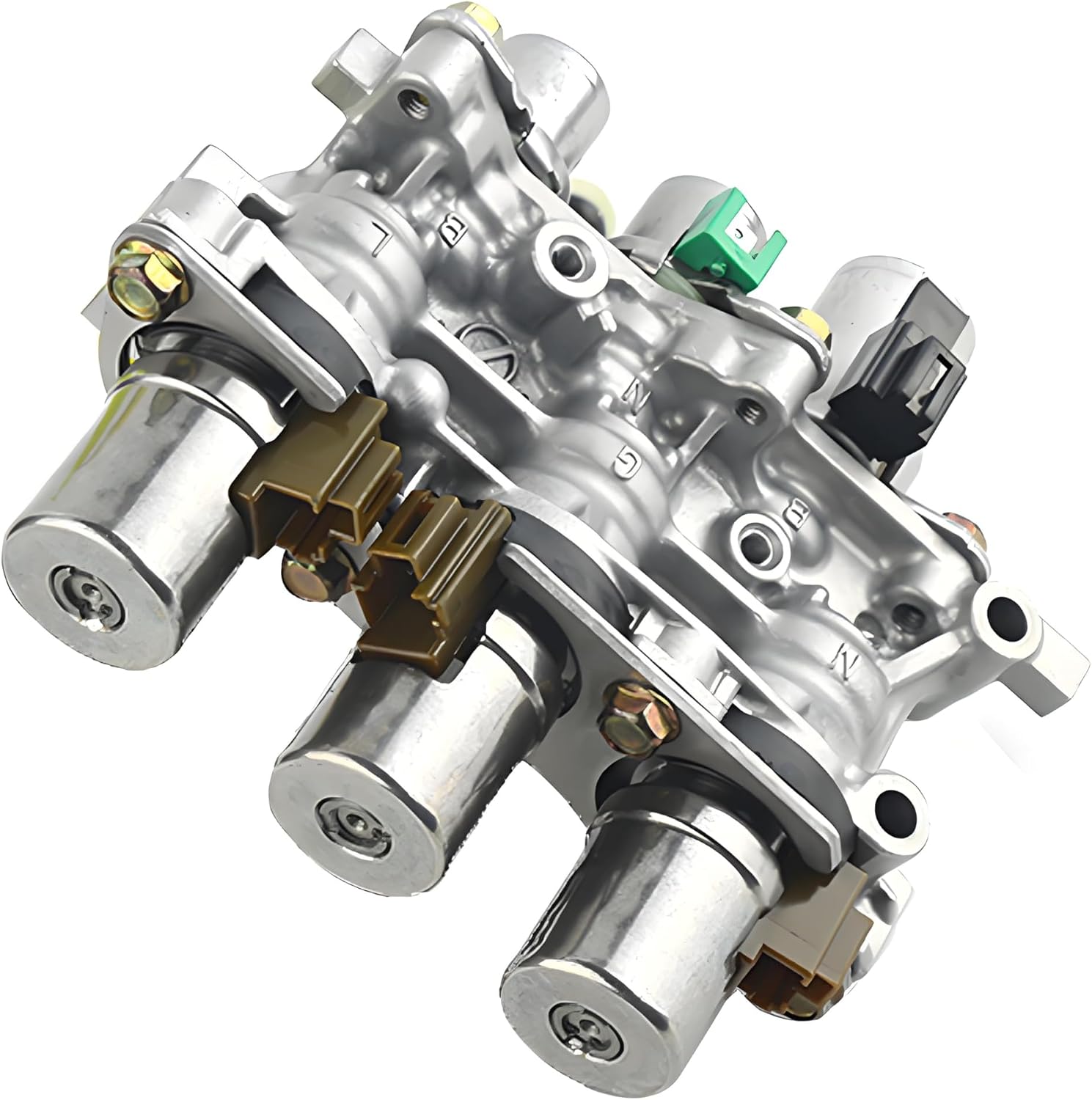
A Mazda 3, 5, 6 or 8, a 2006-2009 Ford Fusion, or a Mercury Milan dropping into limp mode with a shift solenoid code, flaring on the 2-3 shift, or banging into 1st once it is warm is describing a worn FNR5 valve body. This is the complete FNR5 valve body, assembled with its solenoids and separator plate, for the five-speed automatic Mazda calls the FS5A-EL and which shares its case with the FN4A-EL/4F27E family.
What the Valve Body Does in an FNR5
The FNR5 is an electronically controlled five-speed, and the valve body is where the computer's shift commands turn into actual hydraulic pressure. Line pressure from the pump routes through the valve body's bores to each clutch pack, and the pulse-width solenoids bolted to the body regulate how much pressure gets there and when. When those bores wear or a solenoid stops holding a commanded pressure precisely, the shift timing the computer requests and the shift quality the driver feels stop matching.
Symptoms of a Worn FNR5 Valve Body
- Delayed or flaring 2-3 upshift
- Hard 1-2 shift once the transmission is warm
- Slipping in 4th gear or no upshift past 3rd
- Limp mode with shift-solenoid or pressure-control codes (P0745, P0751, P0756, P0761, P0766)
- A stored P0771 or P0741 code, which on this transmission more often traces back to the torque converter clutch circuit or the lock-up valve than to the solenoid itself
How to Confirm It Before You Buy
Pull the codes and check fluid condition before ordering a valve body. If a P0771 is stored, swap solenoids D and E in their bores first - they are the same part - and road test; if the code follows the solenoid to its new bore, the solenoid was the fault, not the valve body. If the code stays put, the valve body's lock-up valve or worn pressure-regulator bore is the more likely cause. Our guide to flare versus slip covers how to describe what you are feeling accurately before you start ordering parts.
Fitment
This assembly fits the Mazda 3 2.3L, Mazda 5, Mazda 6 2.3L and 3.0L, Mazda 8, and the 2006-2009 Ford Fusion and Mercury Milan built with the 2.3L or 3.0L V6 and the FNR5/FS5A-EL five-speed. Confirm the case tag reads FNR5, FS5A-EL or FN4A-EL before ordering - the casting is close enough to the 4-speed 4F27E/FN4A-EL that older repair information for that transmission can send a diagnosis down the wrong path, so match the tag rather than the model year alone.
Install Notes
Drain the transaxle, drop the pan, unplug the internal harness connector at the case pass-through - the C134 connector on this transmission has a documented history of water intrusion, so inspect it while it is open - and pull the filter. Back the valve body bolts out from the outside in so the check balls and the two accumulator springs stay seated, and lay them out in order; the bolts are not all the same length. Seat the replacement on the case dowels, start every bolt by hand, then torque in a cross pattern. Fill with Mazda ATF M-V, or Ford Mercon LV on the Fusion and Milan, and set the level at the specified fluid temperature at the check plug. Clear the codes and run the adaptive relearn on a road cycle before judging the shift quality - expect the first few miles to shift firm while the computer re-adapts. The pan gasket and filter are not included with the valve body, so order the FNR5 filter and pan gasket kit with the job; reusing the old ones on a valve body replacement is a false economy.