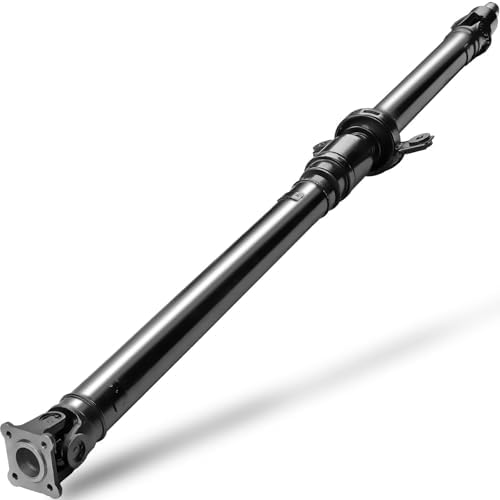
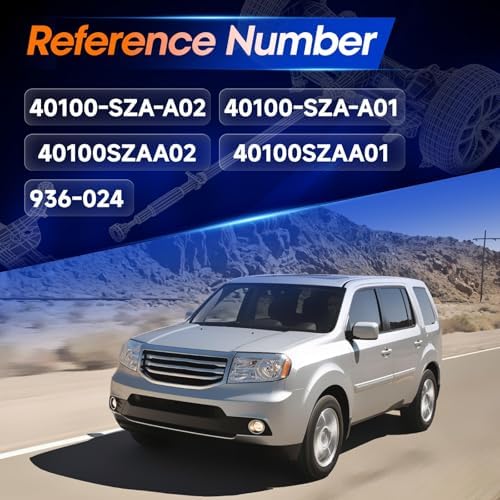
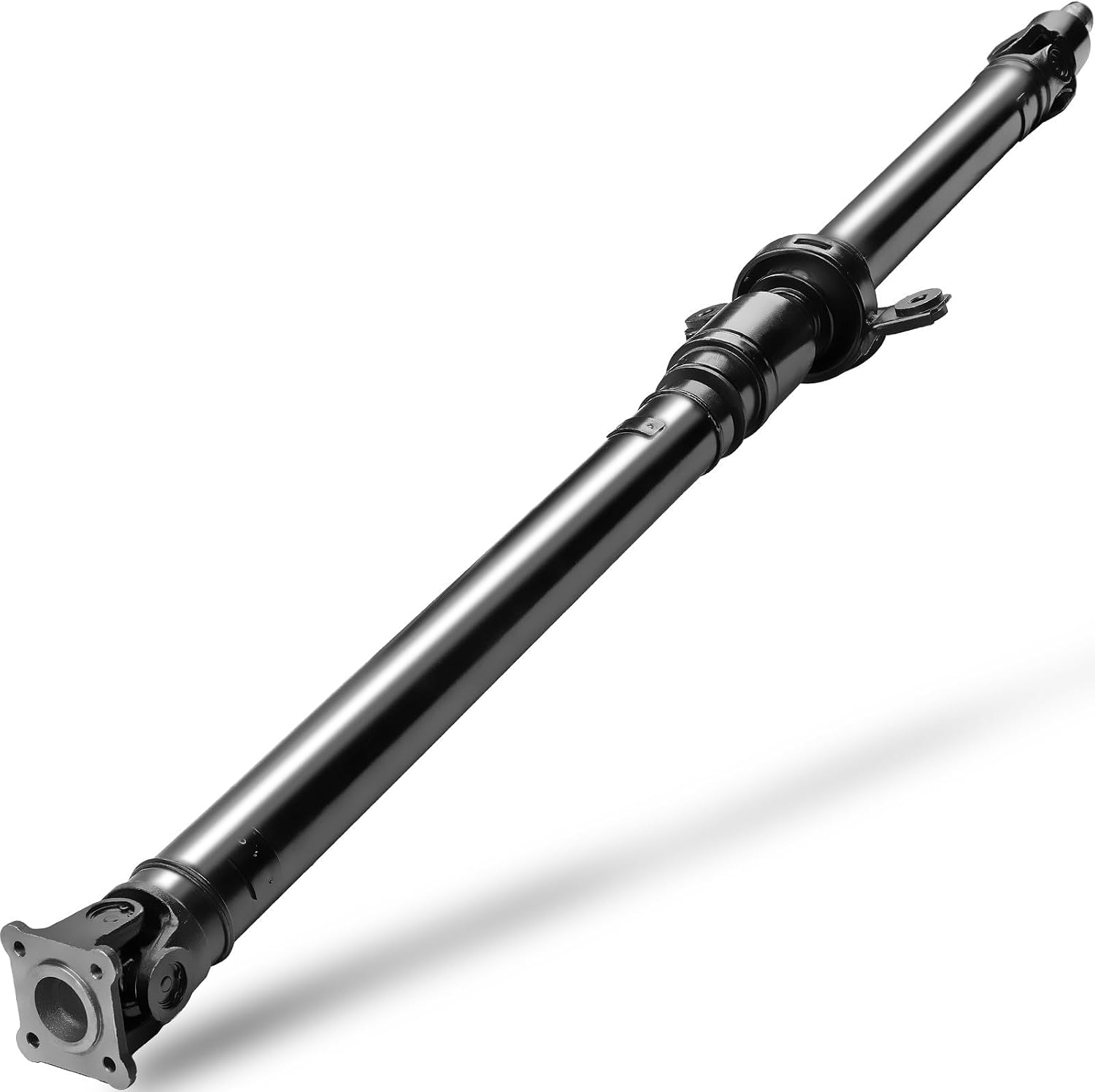
If your 2009-2015 Honda Pilot with four-wheel drive has a shake that builds with road speed, a thunk when you pull away from a stop, or a center bearing whose rubber has split and let the shaft sag, the rear propeller shaft is a likely culprit. This is a complete replacement assembly for the second-generation Pilot with the 3.5L V6 and five-speed automatic. It replaces Honda part numbers 40100-SZA-A01 and 40100-SZA-A02 (the A02 number superseded the A01) and cross-references to Dorman 936-024.
What the rear driveshaft does in a VTM-4 Pilot
The 4WD second-generation Pilot uses Honda's VTM-4 system. The transfer assembly bolted to the transaxle drives this two-piece propeller shaft back to the rear differential, where clutch packs decide how much torque reaches the rear wheels. Because the shaft is geared to the front drive, it turns any time the vehicle is rolling, even when the rear clutches are sending little or no torque. That is why a worn joint or tired center bearing shows up as a vibration at highway speed in everyday driving, not just in snow or on a boat ramp. The shaft is built in two sections joined at a rubber-isolated center support bearing, with a U-joint and bolt-on flange at each end.
Symptoms of a worn Pilot rear driveshaft
- Vibration felt through the floor and seat that rises with vehicle speed and does not change with engine RPM when you shift to neutral
- A clunk on takeoff, or when moving the shifter between drive and reverse
- A rhythmic squeak at low speed from a dry U-joint
- Center bearing rubber that is torn or collapsed, letting the middle of the shaft drop or rub
- A shudder under acceleration from a stop that fades once you are cruising
How to confirm the shaft is the problem before buying
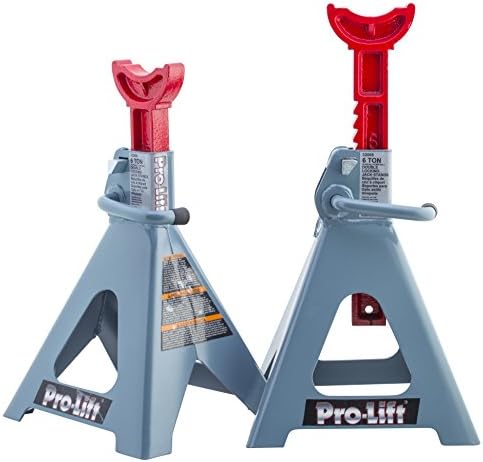
Rule out the cheap causes first: wheel balance, a separated tire belt and a bad front axle joint can all feel like driveshaft vibration. With the Pilot safely raised on jack stands, grab the shaft on each side of every U-joint and twist in opposite directions. Any free play, clicking or notchy feel means the joint is worn. Check the center support bearing rubber for cracks and push the shaft up and down next to it; it should feel firm. Look for a missing balance weight or a dent in either tube. Because these joints are part of the assembly, a worn joint or bearing usually means replacing the complete shaft rather than rebuilding it.
Fitment
Listed for 2009-2015 Honda Pilot 4WD models (LX, EX, EX-L, SE and Touring) with the 3.5L V6. Two-wheel-drive Pilots have no rear shaft, and the 2016-up Pilot uses a different drivetrain, so neither applies. The listed installation length is 86.42 to 88.39 inches. Measure your old shaft before you order and compare the end flanges and the center bearing bracket with the photos. If anything looks different, send us your year and VIN and we will confirm the match. You can browse other driveline components in our hard parts department.
Install notes
- Paint a mark across each flange and its mating companion flange before you remove anything so you can check the new shaft lines up cleanly.
- Support the shaft before you unbolt the center bearing bracket so the front section cannot drop and strain the transfer assembly output.
- Clean the flange faces, use new flange bolts if the old ones are stretched or rusted, and tighten them in a criss-cross pattern with a click torque wrench to the factory spec for your year.
- Reinstall the propeller shaft protector and any heat shields you removed.
- While you are under the vehicle, check the rear differential level. It takes Honda VTM-4 Differential Fluid, and a bottle fluid pump makes topping it off through the fill hole easy.
- A good time to service the five-speed too: it uses Honda ATF DW-1.
Road test at the speed where the vibration was worst. A smooth ride and no clunk on the drive-to-reverse shift means the job is done.