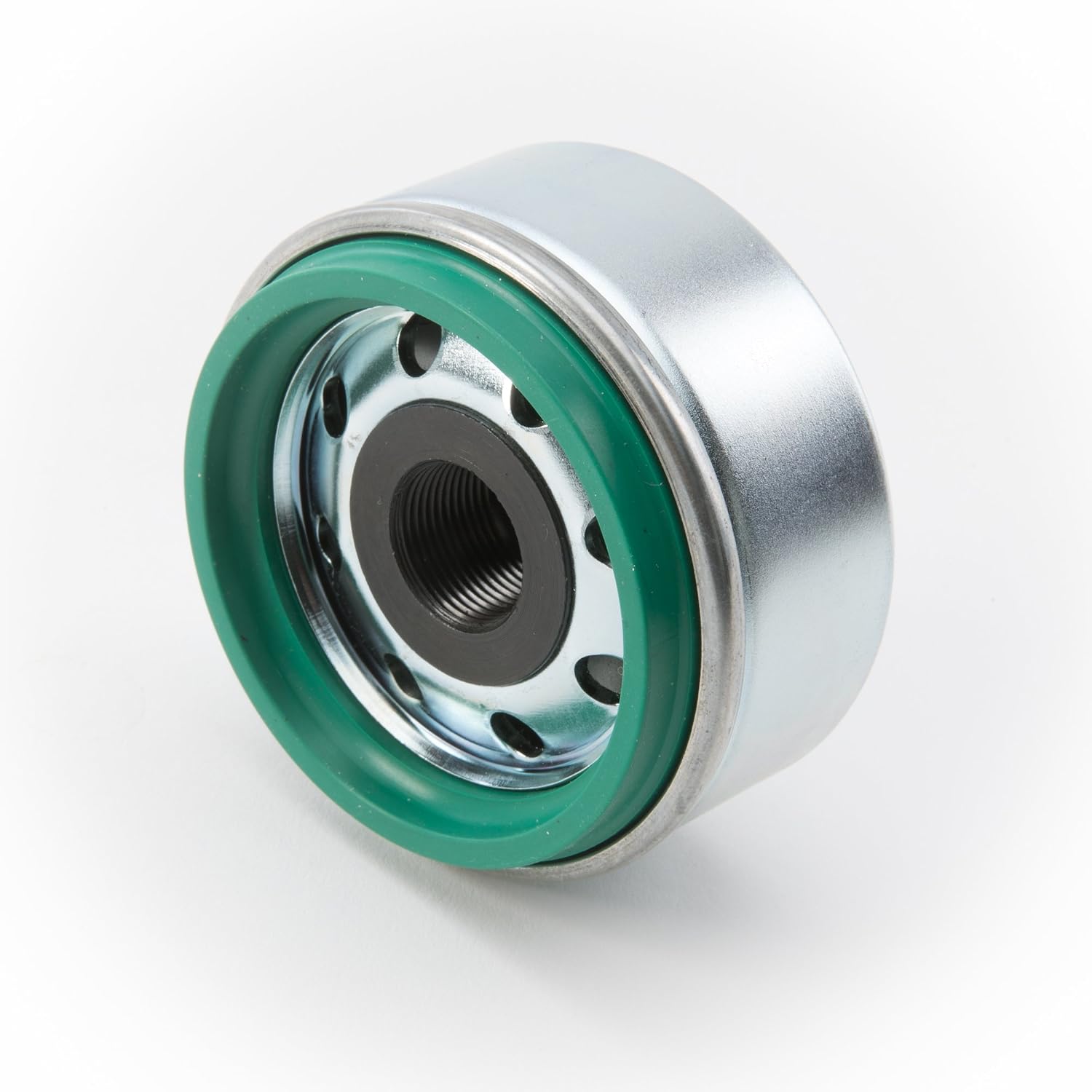
The Magnefine 3810000 is a 3/8 inch (10 mm) magnetic inline filter that splices into an automatic transmission cooler line, or a power steering return line, to catch debris the pan filter never sees. People shopping for it have usually just paid for a rebuild, a replacement transmission or a new torque converter and want to protect it, or they have a high-mileage truck with a cooler that may still be holding material from an earlier failure.
What an inline cooler filter does
An automatic transmission sends hot fluid out to the radiator cooler and any auxiliary cooler, then back into the case, where much of it goes straight to the lube circuit. The pan filter only cleans what the pump draws from the sump, so anything trapped in the cooler or lines comes back into the transmission unfiltered. Transmission Digest has described exactly that failure: a carefully rebuilt unit with a new converter and flushed lines that came back contaminated because debris was still lodged inside the cooler element. An inline filter on the return side is the backstop for that. This unit combines a magnet that the listing rates at about 3 microns for steel particles with pleated media rated at about 25 microns for non-ferrous material, plus a built-in bypass so flow continues if the element loads up or the fluid is cold and thick.
When this filter makes sense
- After any rebuild, exchange unit or converter replacement, as protection against leftover debris in the cooler
- After a failure that left metal or friction material in the pan, once the cooler has been flushed or replaced
- On a high-mileage tow vehicle where cooler condition is unknown
- After valve body or solenoid work, where small particles can make a new valve stick
- On a power steering system that has eaten a pump and needs the return side kept clean
How to confirm you need it and that it fits
A filter is not a substitute for cleaning the cooler. Flush and backflush the cooler and lines first, or replace the cooler if it has been through a major failure, then add the filter. Our guide to flushing a transmission cooler after a failure covers the procedure, and a can of Lubegard Kooler Kleen cooler flush handles the cleaning step. Measure the outside diameter of the line where you plan to splice in: this filter has 3/8 inch barbed ends, so it suits 3/8 inch hose and steel line connected with short sections of hose. Smaller 5/16 inch systems need a different size.
Fitment
This is a universal part. It fits any automatic transmission or power steering system that uses 3/8 inch cooler or return line and has a section of hose, or room to add one, where the filter can be clamped in. Heavy-duty trucks with large cooler lines or factory filtration may be better served by a dedicated setup such as the spin-on magnetic pre-filter for the Allison 1000. If you are not sure what line size your vehicle uses, send us the year, model and engine and we will help you check.
Install notes
- Identify the return line, the one carrying fluid from the cooler back to the transmission. Installing on the return side catches anything the cooler releases before it reaches the case.
- Point the printed FLOW arrow toward the transmission. Transmission Digest warns that an inline fitting installed backward can cut off cooler flow and destroy a converter and transmission.
- Use transmission-rated hose and secure each barbed end with a proper clamp. Keep the filter away from exhaust heat and moving parts, and support it so it does not hang on the line.
- Start the engine, check for leaks, then recheck the fluid level, since the filter and new hose hold some fluid.
- Replace the filter at your normal fluid service interval, and sooner after a rebuild if the bypass is likely to be open from break-in debris.
Quick-connect cooler fittings come apart more easily with the right tool, such as the OTC 7937 GM cooler line disconnect tool. For more cooler and line parts, see our hard parts category and our article on transmission cooler types and sizing.