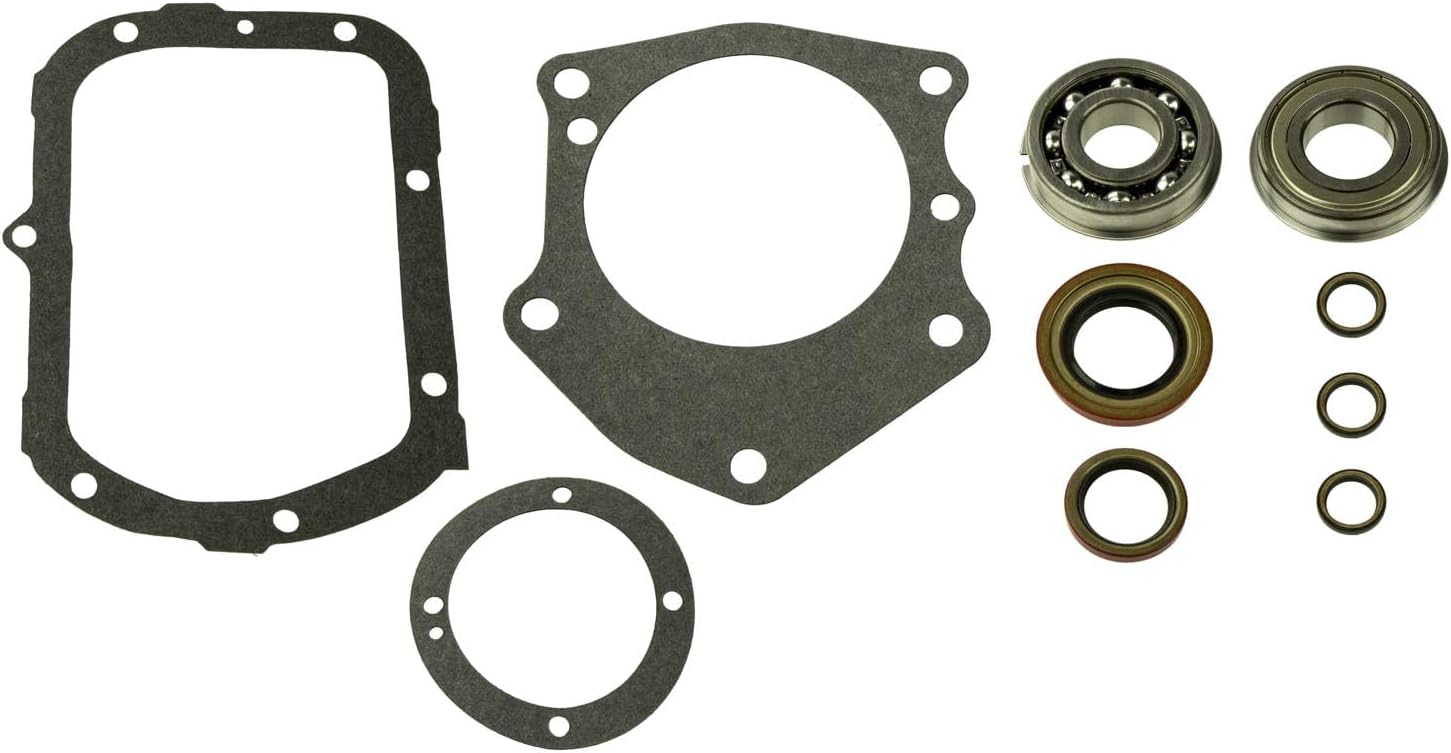
If the GM Saginaw four-speed or three-speed in your Nova, Chevelle, Camaro, Firebird, Vega, Monza or light truck has started to howl, rumble through the floor at cruise, or drip gear oil from the tailshaft or the front of the case, worn ball bearings and dried-out seals are the usual cause. The Motive Gear T301R is a bearing and seal overhaul kit for the Saginaw: the two main ball bearings that carry the input and the mainshaft, the input and rear lip seals, the small shift-shaft seals, and the side cover, front retainer and tail housing gaskets, as shown in the product photo.
What the bearings and seals do in a Saginaw
GM and Saginaw developed the four-speed in the early 1960s using Borg-Warner T10 ideas, and it stayed in production into the 1980s. It is easy to spot: a cast-iron case with a cast-iron, seven-bolt side cover, and the reverse lever lives on that side cover rather than on the tail housing. The input shaft rides in a large snap-ring ball bearing in the front of the case, held by the front retainer; the mainshaft is carried at the back by a second snap-ring ball bearing. The 1966-87 GM Saginaw parts breakdown lists those as 6207N (input) and 6306N (rear mainshaft) sizes. Everything else, the gear stack, synchros and counter gear, depends on those two bearings keeping the shafts on center. Once they wear, the shafts move under load, the gears mesh poorly and the noise starts.
Symptoms this kit fixes
- Whine or growl in first, second and third that goes quiet in fourth (direct drive), pointing at worn bearings and the counter gear support
- Rumble in neutral that changes when you push the clutch in, usually the input bearing
- Gear oil on the bellhousing or clutch, from the input retainer seal
- Drips at the tailshaft, from the rear seal or a worn tail bushing letting the yoke wobble
- Weeping at the side cover or shifter shafts, from the gasket and shift-shaft seals
How to confirm before you buy
Check the oil level at the side fill plug first; a box that is a quart low will whine on its own. Then listen: noise in the lower gears that disappears in fourth means the load path through the counter gear is involved, which is a bearing and counter gear job. Noise that changes when you push the clutch in with the car in neutral is the input bearing. Drain the oil and look for brass (synchro wear) versus steel glitter (bearing or gear wear). If you are deciding whether a rebuild is worth it, our manual versus automatic repair cost guide lays out the numbers, and what to check on a used transmission helps if you are weighing a swap-meet replacement.
Fitment
The T301R is listed for GM Saginaw three-speed and four-speed manual transmissions. Confirm you have a Saginaw: cast-iron case and side cover, reverse arm on the side cover, and a casting number starting with R for a four-speed or S for a three-speed. Input retainers differ between car and truck versions, and input shafts changed tooth counts over the years, so compare your old bearings and seals to the kit before the old parts go in the scrap bin. Not sure what you have? Send us a photo of the side cover and the casting number. More kits are in our rebuild kits collection.
Install notes
- Remove the side cover and forks, then drive the counter shaft out the back with a dummy shaft so the needle rollers and thrust washers stay in the counter gear.
- Pull the front retainer and the input with its bearing, then the mainshaft and rear bearing. Press new bearings on by the inner race only and reinstall every snap ring.
- This kit does not include counter gear needle rollers, thrust washers or synchro rings; inspect them and replace worn pieces now while the box is apart.
- Oil the seal lips, install the gaskets clean and dry or with a light sealer, and snug the side cover bolts evenly.
- Refill with a manual transmission oil safe for brass synchros, such as Red Line MT-90 75W-90 GL-4 or Royal Purple Synchromax, until it reaches the bottom of the fill hole.
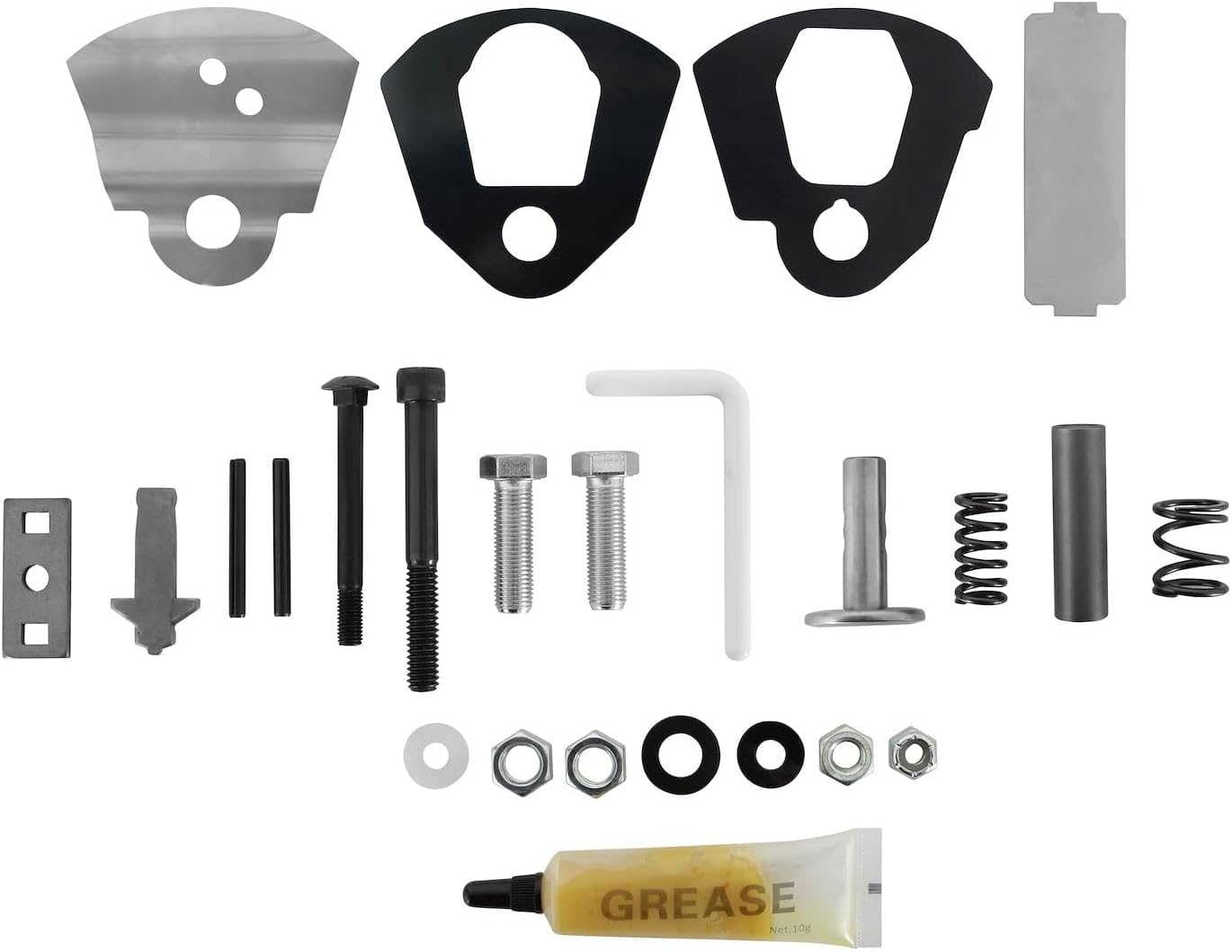
If the shifter is sloppy too, a Hurst Comp Plus shifter rebuild kit pairs well with a freshly rebuilt box. For gasket choices and sealer tips, see our gasket and seal materials guide.