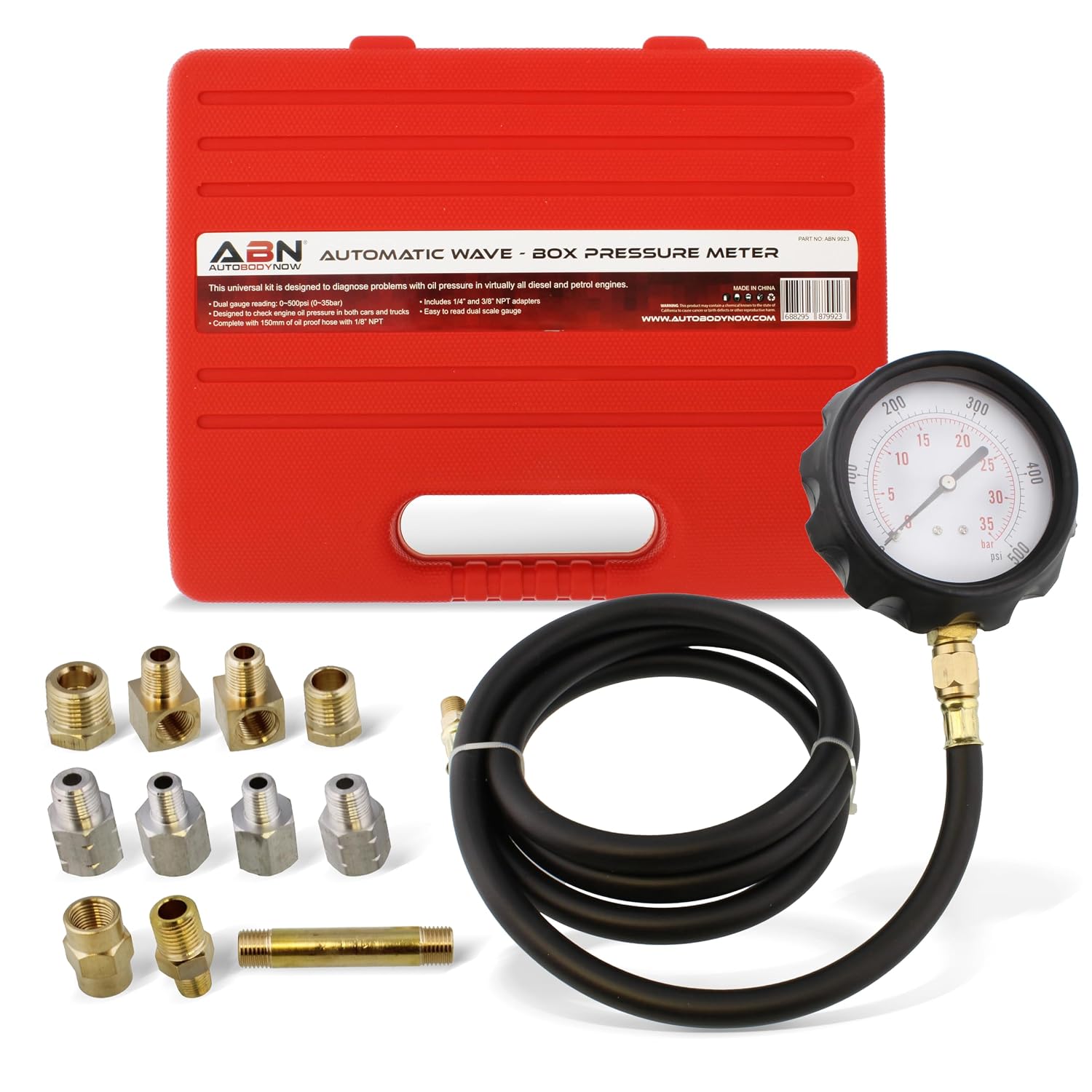
When a transmission slips, shifts late, or flares between gears, the fastest way to know whether the problem is the pump, the valve body, or something worn inside is to put a gauge on it and read the actual line pressure. A scan tool tells you what the computer commands; this tells you what the transmission is really making. You pull the pressure tap plug on the case, thread in the hose, and read the number in each gear against the factory spec. If the pressure is low across the board you are looking at a pump or a leak; if it drops off in one range you have narrowed it down before you ever pull the pan.
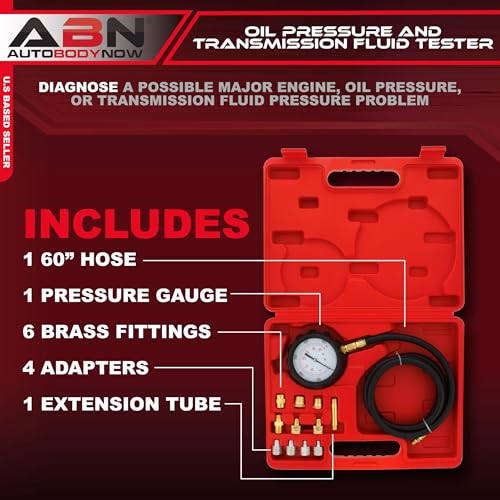
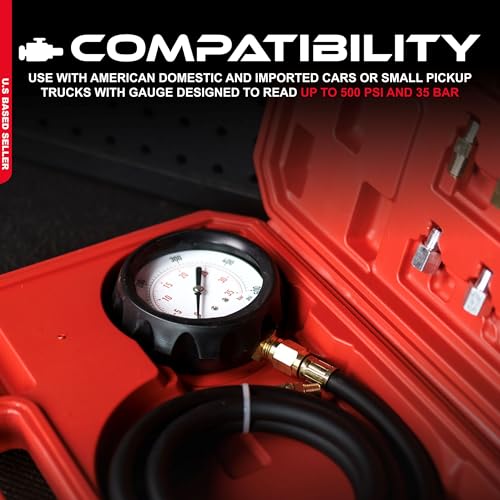
The gauge reads to 500 PSI and 35 Bar on a dual scale, which is the range you want for automatic line pressure, and it doubles as an engine oil pressure tester since it threads into the oil sending unit port the same way. The 60-inch rubber hose is long enough to route the gauge up where you can see it, and the kit comes with six brass fittings, four adapters, and a brass extension tube covering 1/8-inch to 3/8-inch NPT male and female plus a 90-degree elbow, so it reaches the ports on most domestic and import cars and small trucks.
Everything is solid brass rather than plated pot metal, the gauge has a protective coating, and it all drops into a blow-molded case so the adapters do not scatter. For the money it is the difference between diagnosing a transmission by feel and diagnosing it by the numbers.