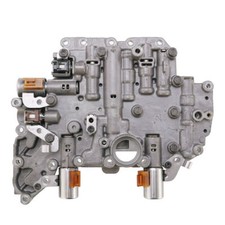
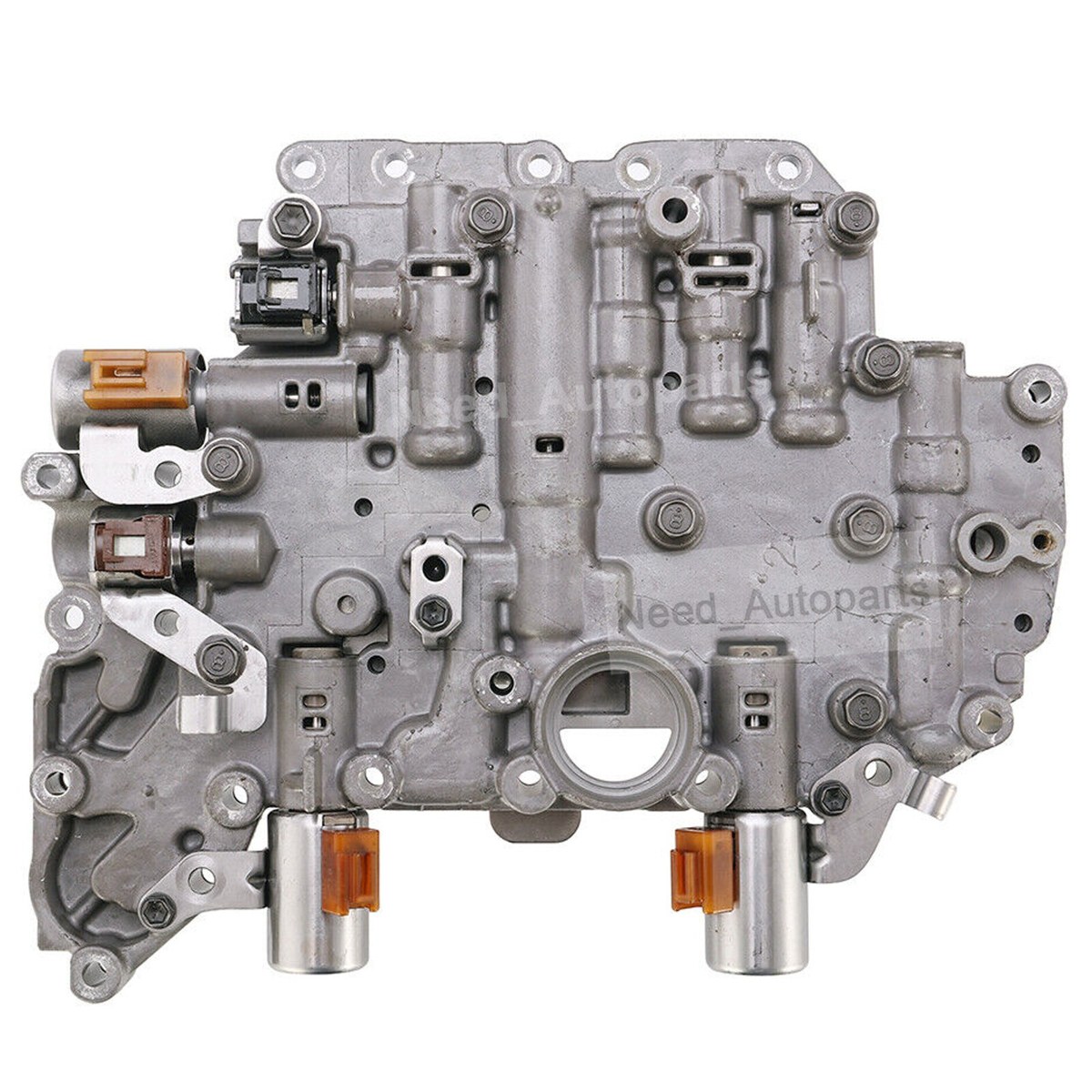
A U140E that bangs into gear, hangs onto a gear too long, slips on takeoff, or sets a shift-solenoid fault almost always traces back to the valve body rather than the clutches. This remanufactured unit is built for the 1998-2005 production window and goes in as a complete assembly, so you're not stuck reaming one bore or swapping one solenoid and hoping the rest holds up.
How the valve body runs the U140E
Picture the valve body as the traffic cop for every drop of fluid the pump moves. It takes raw line pressure and, through a maze of spool valves and sleeves, sends it exactly where the TCM says it belongs - into the clutch packs, onto the B2 brake band, or through the TCC circuit for converter lockup. The TCM leans on this hardware constantly: U140E control strategy is adaptive, meaning the computer is always nudging shift timing and firmness based on what the valve body reports back. A fresh, tight valve body lets that adaptive logic do its job. A worn one feeds the TCM bad information until the adapts run out of room to compensate, and that's usually when the complaint shows up seemingly overnight.
Symptoms this part addresses
- Bang or flare into 1-2, 2-3, or 3-4
- Slips under light-to-moderate throttle, or won't climb into the next gear
- Converter won't lock up smoothly, or shudders once it does
- Reverse is slow to engage or doesn't engage
- TCM has logged a shift-solenoid or lockup-circuit fault
How to confirm it before you buy
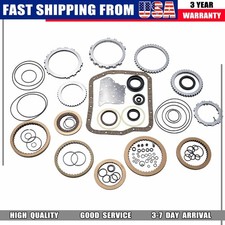
One diagnostic shortcut rebuilders use on this family: with the key on and engine off, unplug the transmission connector and try Reverse by hand with the linkage. If Reverse comes back once the solenoids are out of the picture, the valve body (or a stuck solenoid inside it) is the likely culprit rather than a mechanical clutch failure. Before you swap the part, it's also worth having a shop reset the TCM's learned shift adapts - a transmission that's been compensating for a slowly failing valve body for months can carry bad adapt values that make a brand-new valve body feel wrong for the first several miles until it relearns. For the bigger-picture rebuild, see our U140E Master Rebuild Kit.
Fitment
Listed for 1998-2005 U140E applications - the FWD Toyota Camry V6 and the related Lexus/Avalon platforms built on this transmission during that span. Toyota updated the internal casting, connector, and solenoid count more than once across these years, and those updates don't line up cleanly with model-year boundaries, so check your old unit's casting number and connector before ordering. If your vehicle sits right at the edge of this range, our U140E Valve Body 2001-05 and U140E Valve Body 2005 listings cover the adjacent windows - send your year, make, model and VIN if you want us to pin down the right one.
Install notes
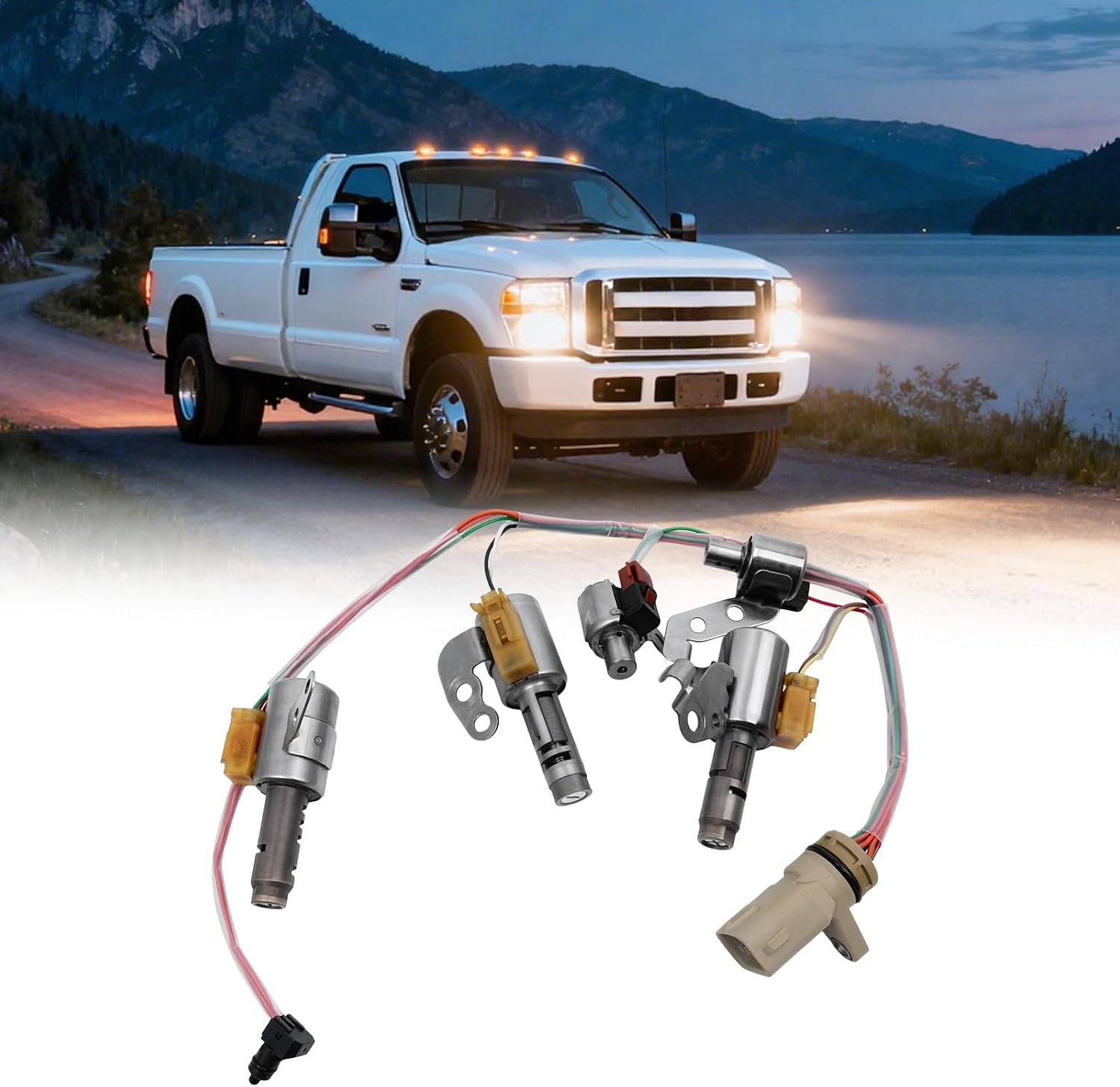
Pull the pan and swap the filter in the same job - old debris is the number-one reason a good valve body gets blamed for a bad shift a week later. Our U140E/U240E Filter & Pan Gasket Kit covers that part, and only Toyota-spec ATF should go back in. Tag each solenoid connector before disconnecting anything; the linear and on/off types are easy to swap by mistake and will reproduce the exact complaint you just fixed. Any solenoid or the internal harness testing out of range calls for our U140E Solenoid Kit with Internal Wiring Harness rather than reusing a marginal part. Once it's buttoned up, have the TCM's shift adapts cleared so the computer starts learning from the new hardware instead of the old one's wear pattern.