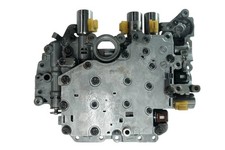
A Toyota or Lexus with the U151E 5-speed automatic that flares into gear, bangs or bumps between shifts, or slips the torque converter clutch is usually fighting a worn valve body, not a failing clutch pack. This listing is a remanufactured U151E valve body covering the 2001-2003 production range, cross-referenced against the related U150E casting for this generation.
What the valve body does in a U151E
The U151E's valve body is the hydraulic control center bolted into the bottom of the case. It carries the solenoids the transmission computer fires to shift, and it routes line pressure through a series of cast aluminum bores to the clutches and bands. Several of those bores run steel valves that oscillate constantly under pressure - the boost valve, the solenoid modulator valve, and a set of end plugs that seal the modulator, secondary regulator, and line pressure circuits. On a high-mileage U151E, those bores wear faster than the clutches do, which is why a transmission with plenty of life left in its gear sets can still shift like it is failing.
Symptoms of a failing U151E valve body
- Soft, inconsistent, or flaring shifts that change from one drive cycle to the next
- Bump or bang shifts, especially noticeable cold
- Low line rise in Drive or unusually high pressure in Reverse
- Torque converter clutch cycling, slip, or shudder
- Stored shift codes that come and go rather than staying constant
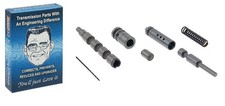
Sonnax, which rebuilds this valve body family for a living, traces most of that list to wear at the boost valve bore (soft shifts and abnormal Drive/Reverse pressure), the solenoid modulator valve bore (erratic shift feel, harsh upshifts, bind-up, TCC cycling, low cooler flow and overheating), and the OE end plugs, where leakage at the modulator and regulator circuits erodes clutch control until it eventually takes the clutches down with it.
How to confirm it is the valve body before you buy
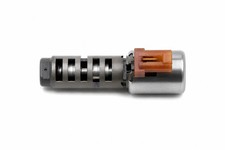
If the shift complaint moves around - smooth one trip, flaring the next, worse cold than hot - that points at internal leakage inside the valve body rather than a clutch that is simply worn out and getting steadily worse. A shop that can bench-test the valve body or check resistance on the linear solenoids (5-5.6 ohms at room temperature is the expected range for this family) can usually confirm a valve body fault before you spend money chasing the wrong part.
Fitment
This valve body is listed for the U151E, 2001-2003, with the related U150E casting noted on the part itself. Toyota used closely related 5-speed transaxles - U151E, U151F, and U250E - across multiple models and engine sizes through this era with running changes along the way, so matching by casting number, solenoid connector pattern, or your exact year, make, model, and VIN is the only reliable way to guarantee fit. Send us that information before ordering if there is any doubt.
Install notes
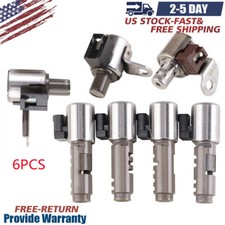
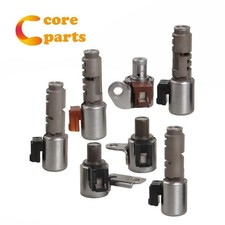
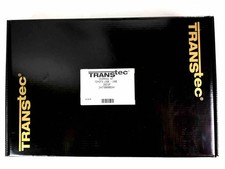
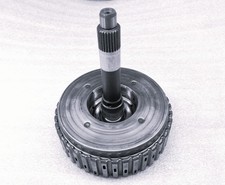
Pull the pan and old valve body, and keep the solenoid connectors and bolts organized by position since several of the linear solenoids in this family look identical but are not interchangeable. Change the fluid and filter at the same time with Toyota WS-spec ATF so debris from the old unit does not circulate into the replacement, and torque the valve body bolts to spec in the factory sequence. If your old solenoids are original and unverified, a U151E solenoid kit installed alongside this valve body removes that as a second failure point. A transmission already overdue for service is a good candidate for our U151E overhaul kit at the same time, and if the clutch drum itself shows wear, our clutch drum for this generation is worth checking before you button the pan back up. A torque converter clutch that was cycling or shuddering before the swap is also worth checking against our TCC solenoid listing so you are not chasing the same symptom twice.