No movement in any gear on a 10L80 means Drive and Reverse both do nothing, not just one of them. That distinction matters before you touch a single bolt, because a unit that has no reverse but pulls fine in Drive is pointing at one clutch circuit, while a unit that sits dead in every range is pointing at something every gear shares: TCM power, a common hydraulic feed, or an installation error that nobody noticed. Work this in order and you will usually have an answer before the pan comes off twice.
Rule out TCM power and failsafe before anything hydraulic
Per ATRA's GEARS Magazine diagnostic writeup on the 10L family, the control strategy is interactive with the rest of the powertrain, so a condition that looks like a dead transmission can originate somewhere else entirely. The first move is not a pan drop, it is a scan tool: pull codes across every module, not just the TCM, because another module's fault can alter shift strategy or hold the TCM in a protective state.
Failsafe behavior on this family is specific and worth knowing cold: if the TCM has no power, the transmission defaults to Park with high line pressure. With power restored, the TCM uses adaptive strategy to manage functional faults so the vehicle can still move while protecting the hardware from a destructive failure. That means a genuine no-move complaint with the TCM powered and communicating is not a simple default state, it is the TCM telling you something real is wrong downstream.
Identify the exact unit before you go further. The RPO code, read from the QR label on the driver's door B-pillar, tells you whether you have a Generation 1 or Generation 2 unit, ETRS (shift-by-wire) or a conventional cable-shifted unit, and whether Auto Start-Stop is in play. Those differences change where the no-move cause can hide, and chasing a Gen 1 fix on a Gen 2 valve body wastes a day.
The four elements every gear depends on
The 10L series, per GEARS, requires four components to be applied at once for power flow through the geartrain, referenced against the unit's clutch-and-solenoid apply chart for the specific gear being commanded. No movement in any gear, forward or reverse, means something in that shared chain is not happening: not enough line pressure to apply anything, a shared feed that is blocked or leaking to exhaust, or a control input the TCM needs before it will command an apply at all.
That is the useful diagnostic shortcut here. A failure confined to one clutch or one solenoid circuit shows up as no reverse, or no fourth gear, or a specific range missing, because the other three required elements for that gear are fine everywhere else. A failure that kills movement in every gear is almost always upstream of the individual clutch circuits, in something all of them share: the pump's output, the main line pressure path, or TCM command authority itself.
On the bench, use the scanner's bidirectional controls to command range changes directly rather than relying on the shifter, and try commanding a second-gear start with the paddle shifter (or 4WD Low on 4WD trucks, which also commands a second-gear start). If bidirectional commands produce nothing at all, you are looking at a line pressure or TCM command problem, not a single clutch.
The pump seal: the single most common shared-path cause
If this complaint started right after the pan was off for any reason — a filter change, a valve body swap, a prior repair — stop diagnosing individual valves and check this first. There is a steel-rubber pump seal that fits between the valve body and the case on these units. Transmission Digest's service-tips coverage of common Ford and GM 10-speed issues is direct about what happens when it is wrong: leaving it out, or getting it mispositioned, causes no movement and no line pressure. That is this exact complaint, named precisely, and it is a five-minute visual check compared to what chasing it as an internal clutch failure costs in labor.
A seal that is pinched or only partly displaced gives a lesser version of the same thing rather than a total failure, which is why it can present as "barely moves" instead of "will not move at all." Either way, pull the pan and look at that seal before you look at anything else, any time the no-move complaint follows recent service.
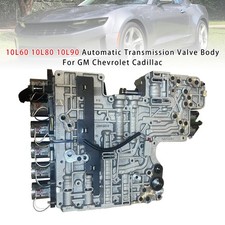
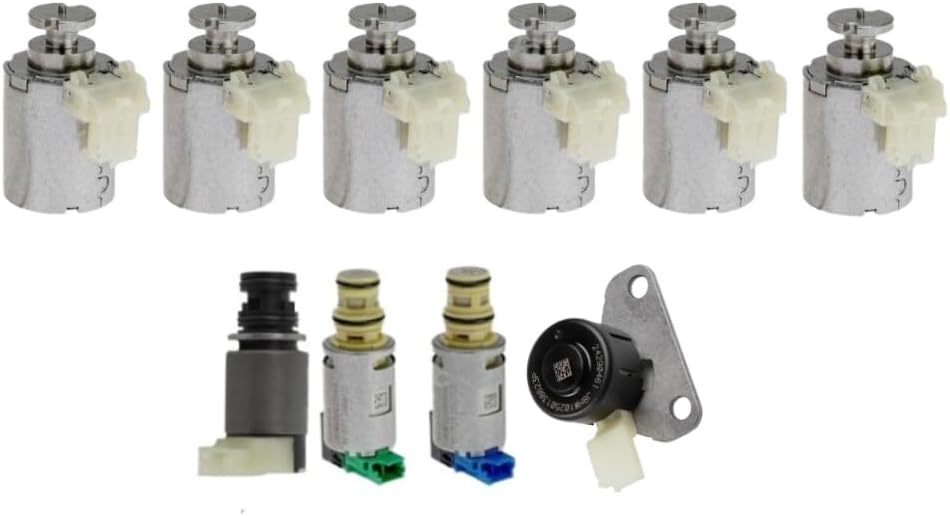
While the pan is down, also check the solenoid retainer clips. Ten-speed valve bodies use casting-integrated, direct-acting solenoids (CIDAS) held into the valve body bores with retainer clips, and GEARS lists weak or broken retainer clips among the top high-mileage wear items on this family, alongside sticking linear pintle solenoids, sticking clutch control valves, and a worn LPC accumulator bore. A solenoid that has backed out of its bore on its clip will not make clutch pressure, and depending on which solenoid it is, that can look like a shared-path failure even though the root cause is one component.
Shift-by-wire units: a no-move condition built in by a bad reinstall
If the vehicle has an ETRS (shift-by-wire, RPO EPH) 10L80 and the no-move complaint appeared immediately after a valve body was installed, GEARS names the two specific installation errors that produce it: an incorrectly installed valve body, and a park pawl actuator piston that was not engaged in the lever. Both set DTC P187E and/or P18AB, and both leave the unit mechanically unable to get out of park-equivalent behavior regardless of what the TCM commands electrically.
The documented correction is procedural, not a parts replacement:
- Place the park pawl actuator lever in the fully forward park position.
- Position the piston servo opening with its slot vertical, using a tool if the lever will not hold position on its own.
- Lower the valve body straight down without letting it contact the switch housing, magnet carrier, or lever end.
- Confirm the lever sits inside the piston servo opening before final torque. The valve body should seat without being forced.
If it does not drop in freely, do not force it down and torque it anyway. A forced installation with the lever out of position is exactly how this DTC pair and this no-move complaint get created in the first place, and it is a comeback waiting to happen even if the truck leaves the shop moving that day.
A real GM bulletin, and why it is not quite this complaint
GM's bulletin PIP6002A, covering 2024 Chevrolet Silverado and GMC Sierra trucks (L84, RPO MHT/MI2/MQB) and the 2024 Camaro, documents a 10L80 condition with no reverse and inability to shift past third gear, often with DTC P2732 (Transmission Control Solenoid Valve 6 Stuck Off) stored. The cause is an internal valve body defect, and the listed correction is to replace the valve body assembly.
Worth knowing, but worth being precise about: that is a partial-movement complaint, not a true no-movement-in-any-gear complaint. The unit still drives, just not into reverse and not past third. If your truck matches that symptom exactly, PIP6002A is the bulletin to check against your VIN before you do anything else, since it is a known, documented internal valve body fault with a published fix. If every gear is dead, forward and reverse both, this bulletin's narrower P2732/valve-body-circuit fault is not the full explanation and you should keep working the shared-path causes above instead.
Clutch control valve wear, when the complaint is reverse-specific
Sonnax's vacuum test guide for the GM 10L60/80/90 Generation 1 valve body ties specific clutch control valves to a no-reverse complaint: the D clutch control valve and B clutch control valve both produce no reverse when their bores wear, with the F valve also listed alongside them. Vacuum testing each bore (sealed with a thumb over the port, per the published spec for that valve) identifies which one has worn enough to leak, before you spend money replacing a whole valve body on a guess.
This is the same shared-chain logic from above, applied one level down: a bore wearing enough to leak signal or apply oil to exhaust will take out the specific clutch it controls, and if that clutch happens to be one of the four elements a given gear needs, that gear goes away. It is only a true no-movement-in-every-gear cause if the worn bore happens to feed something every range shares, which is uncommon; most clutch control valve wear shows up as one missing range, not all of them.
Fluid, battery, and charging: rule these out before you're sure it's internal
Most 10L80 applications have no dipstick; level is checked at a fill plug at a specified sump temperature, and it is easy to leave a unit low after a filter or pan service. Low or aerated fluid alone can produce a no-move or severely delayed-move complaint because the pump is pulling air instead of oil. This unit takes DEXRON ULV, GM's ultra-low-viscosity spec introduced alongside the 10-speed family, not DEXRON VI or HP. GM's own TechLink transmission capacities chart lists 7.7 liters (8.1 quarts) for a 10L80 fluid change.
Battery and charging matter more on this unit than on older designs. The casting-integrated direct-acting solenoids only make clutch pressure with current, so low system voltage is a transmission complaint here, not just a cranking complaint. Transmission Digest specifically flags 10-speed work trucks that sat a few days in a shop on a weak battery and drove badly afterward. Load-test the battery and confirm charging output before you condemn anything hydraulic.
Diagnostic order that avoids wasted teardowns
- Scan every module, not just the TCM. Note all stored and pending codes and freeze-frame data.
- Confirm TCM power and communication. No power means failsafe Park with high line pressure by design, not a fault to chase internally.
- ID the exact unit via the RPO code on the door B-pillar QR label: Gen 1 or Gen 2, ETRS or cable, Auto Start-Stop or not.
- Load-test the battery and check charging, especially if the vehicle has been sitting.
- Check fluid level at the correct sump temperature and condition. Correct DEXRON ULV, correct level, no foam.
- Command ranges with the scanner's bidirectional controls rather than the shifter. No response at all points upstream of individual clutches.
- If the pan was off recently for any reason, pull it and check the pump seal first, then the solenoid retainer clips.
- On ETRS units reinstalled after service, verify the park pawl actuator piston is engaged in the lever and check for P187E/P18AB.
- Check PIP6002A against the VIN if the actual complaint is no reverse plus no shift past third with P2732, since that is a documented partial-movement fault, not this article's full no-move complaint.
- Vacuum test the valve body's clutch control valves (D, B, F per Sonnax) only after the shared-path causes above are cleared.
10L80 Pressure Control Solenoid, OEM 24046408
The honest pitch: if bidirectional range commands produce nothing and line pressure tests confirm the unit can't build or hold pressure, the pressure control solenoid is the component governing that pressure in the first place. This is the OEM part number, not a guess-fit aftermarket unit.
Shop the part for this fix →If the diagnosis points at the valve body instead, the full 10L80 parts collection carries the shift solenoid kits, Sonnax feed-limit and latch valve repair kits, pump vanes, filters and pan gaskets.
Need parts for this job?
Valve bodies, solenoid kits, pressure control solenoids, pumps and pan hardware for the 10L80 are on our 10L80 parts page, with checkout on site. If the pan is coming down to check the pump seal, put the filter, pan gasket and fluid on the same order so it only comes down once.
FAQ
Why won't my 10L80 move in any gear?
Four separate things have to happen at once for a 10L80 to transmit power: four clutch/solenoid elements have to apply together. If the TCM has no power or has triggered a protective shutdown, the unit defaults to Park with high line pressure and nothing moves. If it has power but a shared hydraulic path is blocked, such as a dislodged pump seal between the valve body and case, you get no movement and no line pressure anywhere. Rule out power and grounds first, then chase the shared hydraulic path before you condemn a clutch.
Can a bad pump seal cause no movement on a 10L80?
Yes. There is a steel-rubber pump seal between the valve body and the case on these units, and Transmission Digest's 10-speed service tips report that leaving it out or getting it mispositioned causes no movement and no line pressure. A pinched or partly displaced seal gives a milder version of the same complaint. It is one of the first things to check if the pan has been off recently, before you chase anything electrical.
Is a 10L80 no-movement complaint the same as no reverse only?
No, and the distinction changes where you look. GM's bulletin PIP6002A documents a 10L80 condition limited to no reverse and no shift past third gear, with DTC P2732 (TCS6 stuck off) often stored, corrected by replacing the valve body. That is a single clutch/solenoid path failing, not the shared path every gear depends on. True no-movement in every gear, forward and reverse, points at the main line pressure path, the pump, or TCM power/failsafe rather than one circuit.
What happens on a shift-by-wire 10L80 right after a valve body is replaced?
On ETRS (shift-by-wire, RPO EPH) 10L80 units, GEARS Magazine's diagnostic writeup flags two specific installation errors that cause no movement right after service: an incorrectly installed valve body, and a park pawl actuator piston that was not engaged in the lever. Both set DTC P187E and/or P18AB. The fix is reseating the valve body with the park pawl actuator lever fully forward and the piston servo slot vertical before it is lowered into place, confirmed without forcing it.
What is the correct fluid for a 10L80 before chasing an internal cause?
DEXRON ULV, GM's ultra-low-viscosity spec introduced alongside the 10-speed family, not DEXRON VI or HP. GM's own TechLink transmission capacities chart lists 7.7 liters (8.1 quarts) for a 10L80 fluid change. Low or aerated fluid alone can produce a no-move or delayed-move complaint by starving the pump, so confirm level and condition before any teardown.
Related guides
- 10L80 No Reverse: Fix
- 10L80 Valve Body Symptoms
- 10L80 Limp Mode Causes
- 10L80 Slipping Causes and Fix
- 10L80 Delayed Engagement: Causes and Fix
Sources
- Gears Magazine (ATRA) — "Diagnosing The 10L Series Transmission." Backs the requirement that four components be applied at once for power flow through the geartrain; the TCM failsafe behavior defaulting to Park with high line pressure when the module has no power versus adaptive management of functional faults when it does; the RPO identification method via the QR label on the driver's door B-pillar and what it reveals (Gen 1/Gen 2, ETRS versus cable, Auto Start-Stop); the use of scanner bidirectional controls and paddle-shifter second-gear starts for diagnosis; the two documented ETRS/shift-by-wire installation errors (incorrectly installed valve body, park pawl actuator piston not engaged) that set DTC P187E and/or P18AB and the park-pawl-actuator reinstall procedure; and the high-mileage wear list of weak or broken solenoid retainer clips, sticking linear pintle solenoids, sticking clutch control valves and a worn LPC accumulator bore. gearsmagazine.com
- General Motors — Bulletin PIP6002A, "10L80 MHT No Reverse No Shift Past Third Gear P2732" (originally published 08/30/2024, revised 09/20/2024), via NHTSA. Backs the documented 10L80 condition of no reverse and inability to shift past third gear, often with DTC P2732 (Transmission Control Solenoid Valve 6 Stuck Off) stored; the affected 2024 Chevrolet Silverado and GMC Sierra (L84 engine, RPO MHT/MI2/MQB) and 2024 Camaro (MI2) applications; the stated cause of an internal valve body issue; and the correction of replacing the valve body assembly. static.nhtsa.gov (PDF)
- Transmission Digest — "Tips for common issues with Ford, GM 10-speed transmissions." Backs the steel-rubber pump seal fitted between the valve body and case, whose omission or misposition causes no movement and no line pressure; the casting-integrated direct-acting solenoids (CIDAS) that only produce clutch pressure with current and should be checked for bore tightness via their retainer clips; and the weak-battery-after-shop-stay condition documented on 10-speed work trucks. transmissiondigest.com
- Sonnax — Ford 10R60/10R80, GM 10L60/80/90 (Gen. 1) Vacuum Test Guide. Backs the D clutch control valve and B clutch control valve (with the F valve alongside them) as the documented valve body sources of a no-reverse complaint on the Generation 1 10L60/80/90 platform, and vacuum testing as the method for isolating which bore has worn enough to leak before replacement. sonnax.com
- General Motors — TechLink 2026 Model Year Transmission Fluid Capacities Chart. Backs the 10L80's fluid specification of DEXRON ULV and the fluid-change capacity of 7.7 liters (8.1 quarts) across its listed Silverado 1500, Sierra 1500 and Tahoe/Suburban applications. gm-techlink.com (PDF)