A 10L80 that takes three, four, six seconds to pick up Drive after sitting overnight is not slipping. It is waiting on oil. Somewhere between the pump and the apply piston, the clutch that has to fill for that range is getting fed slowly or getting fed and then leaking, and the TCM is holding line pressure up trying to make it happen. Delayed engagement is a fill-time problem, and on this unit there is a short list of places that steal fill pressure. Here is how to work it in order instead of guessing at a valve body.

What the complaint actually is
Pin the complaint down first. Three different things get called delayed engagement on a 10L80, and only one of them is this article:
- Cold-soak delay. Sits overnight, first Park-to-Reverse or Park-to-Drive of the day takes several seconds, sometimes followed by a bump. Normal the rest of the day. This is the classic and it is what we are chasing here.
- Delay at every engagement, hot or cold. Worse. That is a fill or pressure loss that no longer depends on drainback, and it usually means clutch or seal damage, not just valve wear.
- Engagement clunk that is not a delay at all. ATRA's Gears coverage of normal 10-speed behavior notes the customer may hear a clunk on a garage shift, delayed a few milliseconds while the clutches engage, and that later applications got a calibration update that varies the clamp load of the C2 (1-2-8-9-10 Reverse) clutch. A few milliseconds is not a delayed engagement. Do not sell a repair for it.
Get engine speed and the transmission input speed sensor on a scan tool, start the engine in Park, hold the brake and select Drive, then Reverse. Watch how long the input shaft takes to pull down. That number, not the customer's stopwatch, is the measurement you will be judging your repair against later.
Rule out the two things that are not the transmission
Fluid level and condition. Most 10L80 applications have no dipstick. Level is checked at the fill plug at a specified sump temperature, and it is easy to leave one low after a filter job. Low or aerated fluid gives you exactly this complaint, because the pump is pulling air and the fill takes longer. Transmission Digest lists overheating with incorrect ATF level among the most common 10-speed shop problems for a reason. This unit takes DEXRON ULV, an ultra low viscosity spec, not DEXRON VI or HP. GM's own 2025 transmission capacities chart lists 7.7 liters, 8.1 quarts, of ULV for a 10L80 fluid change across every application.
Battery and charging. This sounds like a dodge until it bites you. Transmission Digest specifically flags 10-speed work trucks that sat in the shop a few days on a weak battery and came back out driving badly after the repair. On a unit whose solenoids are casting-integrated direct-acting and only make clutch pressure with current, low system voltage is a transmission complaint.
The fill path a garage shift has to complete
The 10L series needs four elements applied at once for power flow through the geartrain, and per ATRA's diagnostic writeup on the family the TCM holds an oncoming and off-going clutch overlap of roughly 0.3 seconds during a shift. That tolerance tells you how little margin there is. A circuit leaking a small percentage of its apply oil does not fail outright, it just misses the fill window the calibration expects, and the engagement stretches.
After the engine sits, oil drains back out of the converter and the upper circuits, and the first start of the day has to refill all of it before a clutch sees apply pressure. A leak path that is survivable once the circuits are primed becomes the whole complaint on a cold start.
Cause 1: main pressure regulator valve bore wear
This is the single most common hydraulic cause on a Gen. 1 10L80, and it is the one Sonnax names directly. Wear at the outboard spool area of the main pressure regulator valve lets line pressure cross-leak to exhaust. The listed complaints for the repair kit are, in order, low line pressure, delayed engagement, poor shift quality and burnt clutches. That is this article's symptom list verbatim.
The mechanism is straightforward. The pressure regulator decides how much of the pump's output becomes line pressure. When its bore wears and signal oil bleeds past the spool, the valve cannot hold its commanded position, line pressure sags, and everything downstream fills slower. It is worst at idle, which is exactly where a garage shift happens.
The Sonnax repair (kit 105740-12K) uses an extended front valve spool 270% longer than the OE spool so it rides in unworn bore, plus an O-ringed end plug that seals the signal circuit instead of letting it weep to exhaust. Drop-in, no reaming. One note before you order: Sonnax states it will not function in 2023-and-later 10R140 units with casting numbers beginning with PC3P.
Cause 2: latch valve bore wear and spring buckling
The Gen. 1 GM 10L60/80/90 has four latch valves, and their job is to connect line pressure to the clutch packs. Per Sonnax's TASC Force writeup in Transmission Digest, during the beginning of apply, inlet pressure feeds the clutch between spools B and C; as the clutch starts to apply, that same pressure backs up onto spool C, which is larger than B, and drives the valve over until line pressure is connected straight to the clutch apply between spools A and B.
Two things go wrong there. The pressure on spool C is aggressive enough to force the stem into the retainer, damaging both and deforming the stem over time, and the spring buckles and hogs out the bore. Either way, leakage from bore wear lets regulated line pressure exhaust past the spring and clip, and the published symptom list is erratic shifts, delayed engagement, solenoid codes and burnt clutches. Worst case the valve hangs in the latched position and you get harsh shifts and bind-up instead of a delay.
There is a hard number to test against: vacuum should read 16 in-Hg or higher at all three test locations on each latch valve, with the bore sealed by your thumb. Anything less and the bore is leaking. Follow it with a flashlight inspection for spring-buckle damage, because a bore can be scored badly enough that ignoring it means an immediate comeback.
Cause 3: the pump seal, if the pan has already been off
If this delay started right after somebody was in the valve body, stop diagnosing valves. There is a steel-rubber pump seal that goes between the valve body and the case on these units. Transmission Digest reports that leaving it out or getting it mispositioned causes no movement and no line pressure, and a pinched or partially displaced one gives you the same thing in miniature: a bleeding main feed that shows up as slow engagement. It is a five-minute check compared to what chasing it as a valve problem costs.
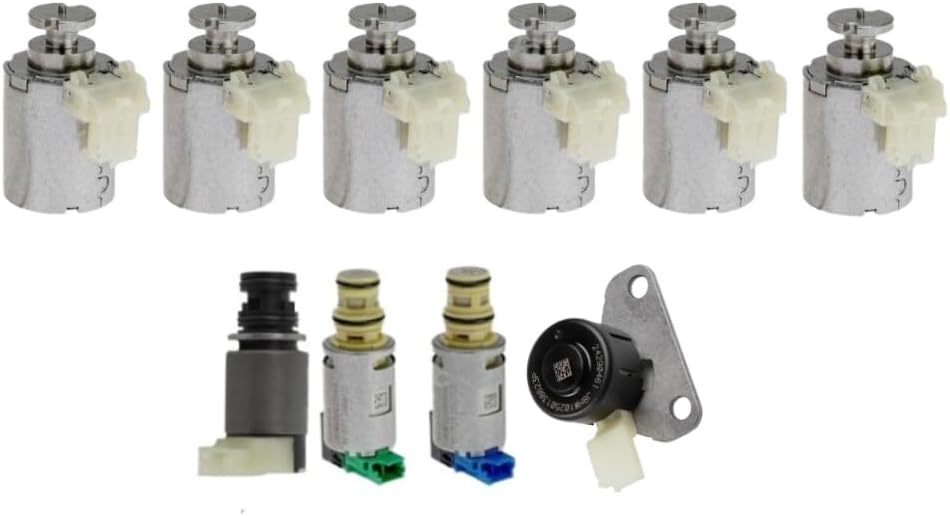
The same applies to solenoid retainer clips. Ten-speed valve bodies use casting-integrated, direct-acting solenoids (CIDAS) held tightly into the valve body with retainer clips, and they should be examined for bore tightness. ATRA lists weak or broken retainer clips among the top high-mileage wear items on this family, alongside sticking linear pintle solenoids, sticking clutch control valves and a worn LPC accumulator bore.
Cause 4: calibration, on the ones GM already addressed
Before you sell hydraulic work on a truck still inside its factory coverage, check calibration history. GM released Service Update 18169 (reference N182162210, May 2018) covering 2018 Cadillac Escalade, Chevrolet Tahoe and GMC Yukon models with the 10-speed (RPO MF6) and the 6.2L L86. The described condition is a 2 to 3 second delayed engagement when shifting between Park, Reverse and Drive, with a possible hard shift, bang or clunk, and a short roll-back if the vehicle is on an incline. The correction is a TCM reprogram with an updated calibration; GM lists no parts for the repair.
That is a narrow population, but the lesson is wider: a delayed engagement that appeared without any mechanical event is worth a calibration check before a teardown. To know exactly which 10L variant you have, ATRA's advice is to read the QR label on the driver's door B-pillar with a phone. That pulls the RPO list and tells you Gen. 1 or Gen. 2, ETRS shift-by-wire or cable, and whether the truck has Auto Start Stop.
Cause 5: clutch clearance, seals and bonded pistons
When the valve body checks out, the delay is in the clutch itself. Excessive clutch clearance is on ATRA's high-mileage list for this unit, and more clearance means more oil and more time to take it up. Hardened bonded piston seals leak on the apply stroke, which produces the same delay from the other end of the circuit.
One rebuild rule here is not optional: replace the rotating sealing rings. ATRA is blunt about it, reused sealing rings will leak and cause intermittent shift quality problems. On a unit this sensitive to fill time, a marginal ring is a comeback. And know the parts reality before you quote the job: the linear pintle solenoids are not available separately, so if one is the cause you are ordering a valve body and programming the supplied Part Unique Number (PUN) or Mechanical Characterization and Virtual Matching (MCVM) number.
The order of operations that works
- Confirm the complaint is cold-soak only. Have the vehicle sit overnight, then measure input shaft pull-down time on the first Park-to-Drive and Park-to-Reverse with the brake held. Record it.
- Check fluid level at temperature and check its condition. Correct ULV, correct level, no foam on the check.
- Load-test the battery and check charging, especially on a vehicle that has been sitting in the shop.
- Check TCM calibration history against available updates for that VIN.
- Line pressure test at idle. Low at idle with everything else right points at the pump, filter or main pressure regulator circuit.
- If the pan has been off recently, pull it and verify the pump seal before anything else.
- Vacuum test the valve body: main pressure regulator, TCC priority, TCC regulator, boost and all four latch valves. 16 in-Hg minimum at all three locations per latch valve, plus a visual for spring-buckle scoring.
- Only then go inside for clutch clearance, bonded piston seals and rotating sealing rings.
10L80 Sonnax Main Pressure Regulator Valve Kit 105740-12K
The honest pitch: if line pressure is low at idle and the main pressure regulator bore fails a vacuum test, this is the part that fixes the cause instead of the symptom. The 270% longer front spool rides in unworn bore, and the O-ringed end plug stops the signal leak. It is a Gen. 1 valve body part, so verify your generation first.
Shop the part for this fix →Doing the whole valve body while it is out? The full 10L80 parts collection carries the latch valve stem repair kit, solenoid stabilization retainers, the Sonnax Zip Kit, filters, pan gaskets and clutch modules.
Need parts for this job?
Solenoid kits, bonded pistons, clutch modules, filters and pan gaskets for the 10L80 are on our 10L80 parts page, with checkout on site. If the pan is coming down to vacuum test a valve body, put the filter, pan gasket and fluid on the same order so it only comes down once.
FAQ
Why does my 10L80 take several seconds to go into gear after sitting overnight?
Because oil drains out of the converter and the upper circuits while the vehicle sits, and the first start of the day has to refill all of it before a clutch can apply. If a valve bore in the valve body is leaking, that refill takes longer than the calibration expects and you feel it as a delay. The same leak is usually invisible once the circuits are primed, which is why the complaint disappears for the rest of the day.
Is a delayed engagement on a 10L80 the same as slipping?
No, and the difference matters for what you sell. Slipping is a clutch that is applied and cannot hold torque. A delayed engagement is a clutch that has not filled yet, so there is nothing to slip. They feel similar to a driver, but the diagnosis is different: slipping sends you to clutch capacity and gear ratio data, while delay sends you to line pressure, fill circuits and valve bore leakage.
What line pressure problem causes 10L80 delayed engagement?
The most commonly documented one is wear at the outboard spool area of the main pressure regulator valve, which lets line pressure cross-leak to exhaust. Sonnax lists low line pressure, delayed engagement, poor shift quality and burnt clutches as the complaints its repair kit addresses on Gen. 1 10L80 units. Latch valve bore wear does the same thing one circuit downstream, letting regulated line pressure exhaust past the spring and clip.
Can a TCM reprogram fix 10L80 delayed engagement?
On specific vehicles, yes. GM Service Update 18169 covers 2018 Escalade, Tahoe and Yukon models with the 10-speed and the 6.2L engine that show a 2 to 3 second delayed engagement on garage shifts, sometimes with a bang or clunk and a roll-back on an incline. The listed correction is a TCM reprogram with an updated calibration and no parts. Outside that population, treat calibration as a check to perform, not a fix to expect.
How do I test a 10L80 valve body for the leak causing the delay?
Vacuum test it. For the latch valves, the published specification is 16 in-Hg or higher at all three test locations on each valve, with the bore sealed by your thumb. Follow every vacuum test with a flashlight inspection of the bore, because spring buckling can score a bore badly enough to cause an immediate comeback even when a quick test looks acceptable.
Related guides
- 10L80 Slipping Causes and Fix
- 10L80 Valve Body Symptoms
- 10L80 P0748 Causes and Fix
- 10L80 Harsh Shift Causes
- 10L80 Filter and Pan Service
Sources
- General Motors — Service Update 18169, "10 Speed Transmission Delayed Shifting" (reference N182162210, released May 2018), via NHTSA. Backs the affected population of 2018 Cadillac Escalade, Chevrolet Tahoe and GMC Yukon / Yukon XL / Yukon Denali models with the 10-speed automatic (RPO MF6) and 6.2L L86 engine; the described condition of a 2 to 3 second delayed engagement when shifting between park, reverse or drive with a possible hard shift, bang or clunk and a short roll back on an incline; and the correction being a TCM reprogram with an updated calibration with no parts required. static.nhtsa.gov (PDF)
- Sonnax — Main Pressure Regulator Valve Kit 105740-12K product and application data. Backs the wear at the outboard spool area of the main pressure regulator valve allowing line pressure to cross-leak to exhaust; the complaint list of low line pressure, delayed engagement, poor shift quality and burnt clutches for GM 10L80 (Gen. 1) units; the extended front spool measuring 270% longer than the OE component so it actuates in unworn bore areas; the O-ringed end plug preventing critical signal fluid from leaking to exhaust; the drop-in Zip Valve installation with no reaming or special tools; and the exclusion of 2023-later 10R140 units with casting numbers beginning with PC3P. sonnax.com
- Transmission Digest — "Why Every 10-Speed Rebuild Needs Latch Valve Attention," Sonnax TASC Force Tips. Backs the four latch valves in the Ford 10R60/80 and GM Gen. 1 10L60/80/90 and their function of allowing line pressure to the clutch packs; the apply sequence in which inlet pressure feeds the clutch between spools B and C before backing up onto the larger spool C to stroke the valve and connect line pressure between spools A and B; the stem being forced into the retainer and deformed over the long term; spring buckling hogging out the bore; leakage from bore wear allowing regulated line pressure to exhaust past the spring and clip, causing erratic shifts, delayed engagement, solenoid codes and burnt clutches; the harsh shift and bind-up condition from a valve stuck in the latch position; and the 16 in-Hg minimum vacuum reading at all three locations per valve with the bore sealed by thumb. transmissiondigest.com
- Transmission Digest — "Tips for common issues with Ford, GM 10-speed transmissions." Backs overheating with incorrect ATF level as a common 10-speed problem; the casting-integrated direct-acting solenoids (CIDAS) held in with retainer clips that should be examined for bore tightness and that only produce clutch pressure with current; the valves most worth inspecting for wear (main pressure regulator, TCC priority, TCC regulator, boost and the latch valves that get beaten up by the retainer clip); the steel-rubber pump seal between the valve body and case whose omission or misposition causes no movement and no line pressure; and the weak-battery-after-shop-stay condition that produces post-repair complaints on 10-speed work trucks. transmissiondigest.com
- Gears Magazine (ATRA) — "Diagnosing The 10L Series Transmission." Backs the Generation 1 and Generation 2 split, the ETRS shift-by-wire versus cable-operated variants and the optional Auto Start Stop feature; the QR label on the driver's door B-pillar as the way to pull RPO configuration; the requirement that four components be applied for power flow through the geartrain; the TCM control strategy holding an oncoming and off-going clutch overlap of approximately 0.3 seconds; the high-mileage wear list of weak or broken solenoid retainer clips, sticking linear pintle solenoids and clutch control valves, worn LPC accumulator bore and excessive clutch clearance; the requirement to replace rotating sealing rings because reused rings leak and cause intermittent shift quality issues; and the fact that linear pintle solenoids are not available separately, requiring a valve body and programming of the supplied PUN or MCVM number. gearsmagazine.com
- Gears Magazine (ATRA) — "Is That Normal? Some GM 10-Speed Normal Customer Concerns." Backs the normal garage-shift clunk delayed a few milliseconds as the clutches engage, and the later-model calibration update that eliminated the concern by varying the clamp load of the C2 (1-2-8-9-10 Reverse) clutch. gearsmagazine.com