A half-ton comes in on a hook. Every forward gear works, the truck drives onto the lift under its own power, and reverse does absolutely nothing. That combination scares customers into authorizing a rebuild they usually do not need. On a GM 10L80, a dead reverse with good forward gears is a hydraulic control problem far more often than a mechanical one, and GM has published two separate bulletins that tell you exactly where to look.
The other thing worth knowing before you touch anything: the scan tool may be clean. GM states it flatly in bulletin 24-NA-181 — "Having no reverse, will not set DTC P2732." A quiet module does not clear the valve body.

What actually has to happen for a 10L80 to make reverse
The 10L80 is a four-gearset unit with six shift elements, and per ATRA it needs four components applied to route power through the geartrain in any range. Reverse is no exception. That is why so many different failures land on the same complaint: pull any one of the four elements reverse needs and reverse disappears, while the forward ranges that do not use that element keep working normally.
You do not have to guess which circuits are involved, because GM's own DTC descriptions name the gears each solenoid serves. Per ATSG, the definitions read P0776 — Transmission Control Solenoid Valve 2 Stuck Off (1-2-8-9-10-R) and P2732 — Transmission Control Solenoid Valve 6 Stuck Off (4-5-6-7-8-9-10-R). Reverse appears in both lists. Sonnax approaches the same valve body from the wear side and gets the same answer — four of the six clutch control valves list a reverse complaint when the bore wears:
| Clutch control valve | Symptoms Sonnax lists for a worn bore | Touches reverse |
|---|---|---|
| A | No forward or reverse, slips on take-off, gear ratio codes | Yes |
| B | No reverse, reverse slip, no 8th through 10th, gear ratio codes | Yes |
| C | 1-2 slip, no 2nd through 5th | No |
| D | No reverse, reverse slip, slips 2nd through 4th, gear ratio codes | Yes |
| E | No drive engagement, slips in 1st and 2nd, no 5th through 9th, gear ratio codes | No |
| F | No reverse, reverse slip, slips on 3-4, no 4th through 10th, gear ratio codes | Yes |
Read that table next to the DTC definitions and the picture gets useful. A no-reverse with good 8th, 9th and 10th argues against the B circuit. A no-reverse that also will not pull past 3rd points hard at the F circuit, which is exactly the pairing GM describes in bulletin 24-NA-181.
Before the pan comes down
Three checks, and they take less time than pulling a crossmember.
- Fluid level and fluid type. There is no dipstick. Level is set at the check plug at the specified fluid temperature, and the spec is DEXRON ULV, nothing else. GM's published fluid change capacity is 7.7 liters (8.1 quarts) for every 10L80 RPO — MQB, MQC, MHT, MI2 and MHS. A unit that is a quart and a half down will often lose reverse before it loses anything else.
- Scan every module, not just the TCM. This is a shift-by-wire truck. The Electronic Transmission Range Select system has no mechanical linkage to the transmission; it compares mode valve position, range select valve position and park servo position and will refuse a range it cannot confirm. P18A1, electronic transmission range select valve performance, belongs in this conversation as much as any clutch code.
- Verify the complaint cold and hot. Screen and check-ball failures are debris failures and frequently come and go with temperature and pressure. If reverse shows up after a ten minute drive and vanishes on the next cold start, you have already learned the fault is a sticking valve rather than a burnt clutch.
The torn spacer plate screen: GM bulletin 22-NA-258
This one explains a large share of the no-reverse 10L80s in the field, and the timing of it fools people. GM bulletin 22-NA-258 is titled "No Reverse When Temperatures Fall to -25°C (-13°F) or Colder" and covers 2021-2023 Escalade, Silverado 1500 and 1500 LTD, Suburban, Tahoe, Sierra 1500 and Sierra 1500 Limited and Yukon with the L84, L87, LM2 and LZ0 engines and transmission RPOs MQB, MQC, MI2, MHT and MHS.
GM's cause line: the valve body spacer plate "may have experienced a torn screen which caused a valve to stick," producing the DTCs and the loss of reverse. The DTC set is P0776, P18A1 and/or P2732. The bulletin is explicitly gated — GM says apply it only to vehicles that sat through an eight hour or longer cold soak at -25°C (-13°F) or colder, because vehicles that never saw that cold will not benefit from the repair.
Now the part that matters in the bay. GM's own note says the DTCs or no-reverse condition "may occur several miles and/or months after the cold weather event," and that engineering inspections of returned parts have found torn screens on valve bodies replaced in the summer months on vehicles whose delivery location shows they lived through extreme cold. So a June no-reverse in a northern truck is still a candidate. Do not rule this out because it is 80 degrees outside.
The ATSG technical line worked a textbook version of it: a 2021 Suburban with the 5.3L and a 10L80, towed in with no reverse and P0776 stored. The unit was pulled and looked fine inside. The tech was asked to check the valve body for a missing screen, found one gone, and located it lodged in the 1-2-8-9-10-R regulator valve — the valve controlled by solenoid valve 2 (B), which is precisely what P0776 names. ATSG also noted the real-world parts problem at the time: a new valve body ran around $750 if you could get one, with most on national back order, while a new spacer plate was about $45 with the part number printed on the plate.
P2732, worn check balls and a rough spacer plate
The second GM bulletin is 24-NA-181, November 2024, for 2024 Silverado 1500 and Sierra 1500 with the L84 and transmission RPO MHT. Condition: no reverse, will not shift past 3rd gear, MIL illuminated, with P2732 (transmission control solenoid valve 6 stuck off) in the TCM. GM's cause is an internal valve body concern and the correction is to replace the control valve body. The causal part is valve assembly 24065351, and the unique labor operation is 8486418 at 3.0 hours.
ATRA went a layer deeper on why that circuit hangs up. In GM 10-speed applications with RPOs MI1, MI4, MHT, MI2 and MQB, the chamfer on the spacer plate holes where the check balls seat is coming through too rough, which wears the balls prematurely. The worn balls show up with a visible difference in ball diameters, and they either stay jammed in the plate holes or pass through entirely. Either way the 4-5-6-7-8-9-10-R clutch regulator valve circuit ends up restricted, and you lose reverse. ATRA reports it surfacing within roughly 20,000 miles after an overhaul, which is the detail that stings — this bites rebuilders who reused a plate.
ATRA's short list for a restricted clutch feed circuit is worth working in order: speed sensors, solenoid circuits, sticking valves, damaged solenoid clips, clutch leakage, and a worn or damaged check ball. Replacing the plate is what stops the ball wear from repeating.
The service-part version: GM 25-NA-080
GM added a third no-reverse bulletin in 2025, and it is aimed at repairs that already happened. Bulletin 25-NA-080 (Version 2, revised June 5, 2025) covers the 2021–2023 Silverado 1500 and Sierra 1500, including the 2022 1500 LTD and Sierra Limited, with the L84, L87, LM2 and LZ0, plus the 2021–2024 Camaro. The condition is the same pair you see in 24-NA-181: no reverse and no shift past 3rd with P2732. The cause is different: "a mis-stamped spacer plate and worn check ball internal of the control valve." The fix is a new spacer plate and check balls, not a valve body.
The gate is narrow. It only applies when service valve body 24047993 or 24065351, or a service transmission, went in during calendar year 2024 and the truck came back within 15,000 miles (24,000 km). If you split the valve body and find no undersized check ball, GM sends you back to 22-NA-258 or a valve body. On the trucks, note that GM says the MQB spacer plate is engine specific: 24299519 for the L84 and L87 gas engines and 24299518 for the LM2 and LZ0 Duramax. There are five loose check balls in the body (GM part 96020431), the spacer plate bolts torque to 80 lb-in, and characterization and Service Fast Learn are not required afterward. Labor operation 8486508 pays 2.1 hours on the diesels and 3.5 to 3.9 hours on the gas trucks. The 10L90 Camaro version of this repair is covered in our 10L90 no reverse guide.
When it is actually mechanical
If the valve body checks out, the reverse elements themselves are next. Air check the clutches with the valve body off, and pay attention to what the air test is really proving: it confirms the piston moves and the circuit holds, not that the pack has clamping capacity. Steels distorted and locked to the hub, or a pack assembled loose, will air check acceptably and still refuse to move a truck. Sonnax also flags a mistake that produces a no-move and looks catastrophic: the steel-rubber pump seal between the valve body and the case, misplaced or omitted, costs you line pressure and movement entirely.
Do not reuse what you should not reuse
Two warnings from ATRA apply directly to the repair you are about to do. First, reused sealing rings will leak, giving you intermittent shift quality after the job. Second, on shift-by-wire units, a no-move with P187E and/or P18AB after valve body service means the park pawl actuator piston is missing or not engaging — set the actuator lever fully forward in park, get the piston servo opening slot vertical, and let the valve body drop in without force.
One more thing about ordering a replacement valve body: the linear pintle solenoids are not sold separately, and the replacement assembly has to be matched by Part Unique Number (PUN) or MCVM number. A valve body pulled off the shelf without matching that number is a comeback waiting to happen.
The repair order that works
- Verify fluid level at the check plug and confirm DEXRON ULV. Scan all modules and record every code, including chassis codes.
- Note the exact gear pattern. No reverse with a good 8-9-10 versus no reverse plus no shift above 3rd points at different circuits.
- Drop the pan. Cut the filter open and read the debris. Metal and friction material moves you to the clutch side; clean fluid with a missing screen moves you to 22-NA-258.
- Pull the valve body and inspect every spacer plate screen and every check ball. Compare ball diameters. Look inside the 1-2-8-9-10-R and 4-5-6-7-8-9-10-R regulator valve bores for lodged debris.
- Vacuum test the A, B, D and F clutch control valve bores before you condemn anything electrical. A low reading is bore wear, and a Zip Kit fixes what a cleaning cannot.
- Replace the spacer plate rather than reusing it, replace all sealing rings, and reprogram the TCM to the latest calibration as both bulletins require.
The valve body repair kit for the bores that kill reverse
If your vacuum test shows wear in the A, B, D or F clutch control valve bores, the Sonnax Zip Kit for the 10L80 Gen. 1 and 10R80 rebuilds those circuits without a whole new valve body. This is the honest first move when the plate and screens are intact but the bores read low.
See the 10L80 Sonnax Zip Kit →FAQ
Why does my 10L80 have no reverse but all the forward gears still work?
Because reverse and the forward gears share most of their apply elements, and the one or two circuits that are unique to reverse are the ones that failed. Sonnax's vacuum test guide lists no reverse or reverse slip as a wear symptom for four of the six clutch control valves in this valve body: A, B, D and F. If the B or F circuit is the one hanging up, the unit can still build every forward gear that does not need it, which is why a truck drives away fine and just will not back up.
Does no reverse on a 10L80 always set a trouble code?
No, and GM says so in writing. Bulletin 24-NA-181 carries the note that having no reverse will not set DTC P2732. The transmission control module sets P2732 from solenoid and slip data, not from the absence of reverse, so a truck can come in with a dead reverse and a clean scan. Treat a no-code no-reverse the same way you would treat a coded one and go after the valve body.
Can cold weather really make a 10L80 lose reverse?
Yes. GM bulletin 22-NA-258 covers no reverse when temperatures fall to -25C (-13F) or colder and instructs that it only be applied to vehicles that sat through an eight hour or longer cold soak at that temperature. A screen in the valve body spacer plate tears, the loose screen sticks a valve, and reverse goes away. The bulletin also warns that the condition can show up several miles or several months after the cold event, so the failure often lands in the middle of summer.
Is the fix for a 10L80 with no reverse always a new valve body?
GM's answer is yes: both 22-NA-258 and 24-NA-181 direct the technician to replace the control valve body, and 24-NA-181 lists valve assembly 24065351 as the causal part with 3.0 hours of labor under operation 8486418. On the independent side there are two legitimate alternatives, a replacement spacer plate when a torn screen is the only damage, and Sonnax valve kits when a vacuum test proves the wear is in one bore. What you cannot do is clean the valve body, put it back and call it repaired.
How much fluid does a 10L80 take after a valve body replacement?
GM's published fluid change capacity for the 10L80 is 7.7 liters, or 8.1 quarts, across RPO codes MQB, MQC, MHT, MI2 and MHS, and the specification is DEXRON ULV. That is the fluid change figure, not the dry fill, so expect to add more after a valve body job that drains the cooler and lines. Nothing else goes in this unit. Regular DEXRON VI is not a substitute.
Need parts for this job?
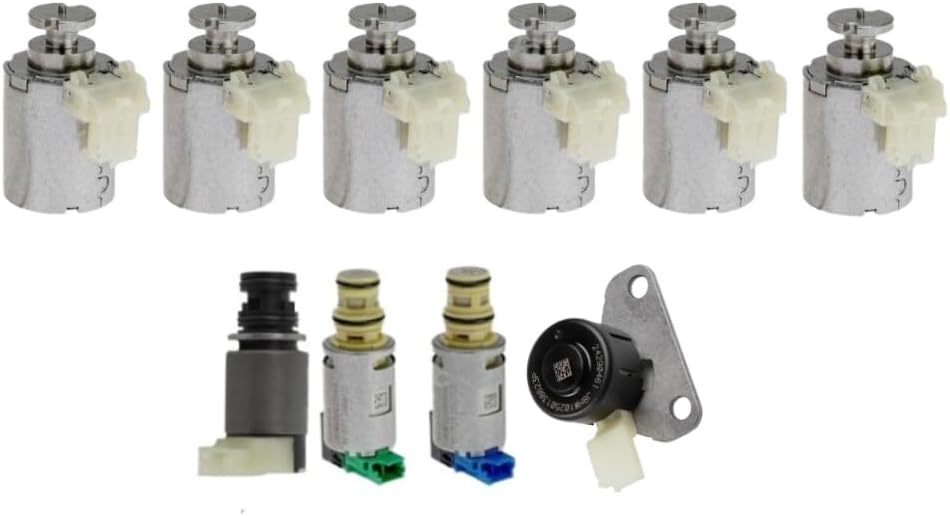
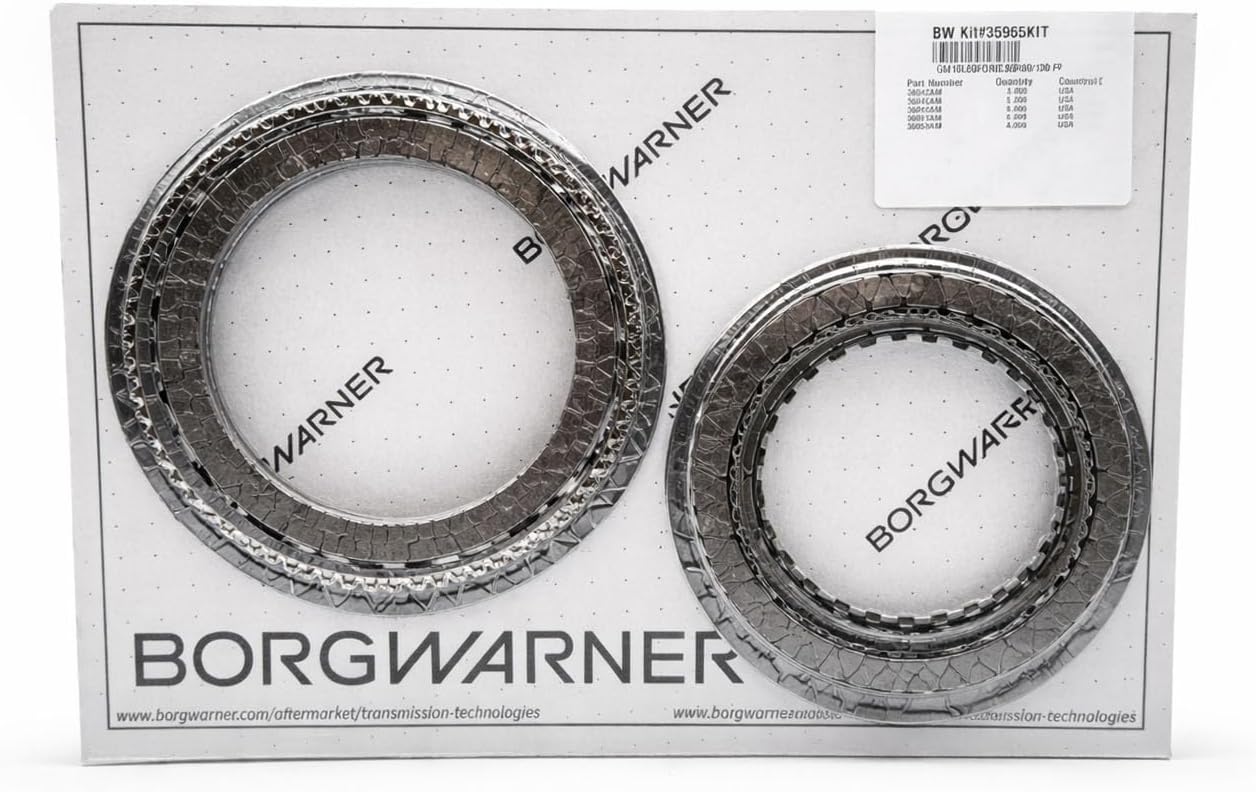
Solenoid kits, friction modules, filters and pan gaskets for the 10L80 are on our 10L80 transmission parts page, priced and in stock, with checkout on our own site. If the diagnosis lands on a burnt reverse element rather than a stuck valve, the friction module is the part you want on the bench before the unit comes apart.
Sources
- General Motors — Service Bulletin 24-NA-181, "No Reverse, Will Not Shift Past 3rd Gear, Malfunction Indicator Lamp (MIL) Illuminated - DTC P2732 Set," November 13, 2024. Backs the condition list of no reverse plus no shift past 3rd gear with the MIL on; the note that having no reverse will not set DTC P2732; the definition of P2732 as transmission control solenoid valve 6 stuck off; the stated cause of an internal valve body concern and the correction to replace the control valve body; application to 2024 Silverado 1500 and Sierra 1500 with engine L84 and transmission RPO MHT; causal part number 24065351 (valve assembly with body and valves); DEXRON ULV fluid part numbers 19352619 (US) and 19352620 (Canada); and labor operation 8486418 at 3.0 hours. nhtsa.gov (PDF)
- General Motors — Service Bulletin 22-NA-258, "No Reverse When Temperatures Fall to -25°C (-13°F) or Colder, Malfunction Indicator Lamp (MIL) Illuminated - DTC P2732, P0776 and/or P18A1 Set," March 2024 version. Backs the eight hour or longer cold soak at -25°C (-13°F) qualifier; the affected 2021-2023 Cadillac Escalade, Chevrolet Silverado 1500 and Silverado 1500 LTD, Suburban, Tahoe, GMC Sierra 1500, Sierra 1500 Limited and Yukon models with engines L84, L87, LM2 and LZ0 and transmission RPOs MQB, MQC, MI2, MHT and MHS; the DTC definitions for P0776, P18A1 and P2732; the cause of a torn spacer plate screen sticking a valve and causing loss of reverse; the correction of updating TCM software and replacing the control valve body; and the note that the condition may occur several miles or months after the cold weather event, with engineering finding torn screens on valve bodies replaced in summer months. nhtsa.gov (PDF)
- Transmission Digest / ATSG — "Transmission Issues in the Cold," Wayne Colonna, May 12, 2025. Backs GM service update bulletin N222389722 covering a transmission control body screen detaching from the spacer plate in extremely cold weather on 2021-2023 Escalade, Silverado 1500 LTD, Suburban, Tahoe, Sierra 1500 Limited and Yukon models; the DTC definitions with their gear lists, P2732 (4-5-6-7-8-9-10-R), P0776 (1-2-8-9-10-R) and P18A1 ETRS valve performance; and the ATSG helpline case of a 2021 Chevrolet Suburban 5.3L with a 10L80 towed in with no reverse and P0776 stored, in which a missing spacer plate screen was found lodged in the 1-2-8-9-10-R regulator valve controlled by solenoid valve 2 (B), along with the roughly $750 back-ordered valve body versus the $45 spacer plate. transmissiondigest.com
- ATRA / GEARS Magazine — "No Reverse, Possible P2732, and Other Shift Related Concerns, Yours May Vary!" Backs P2732 as control solenoid 6 stuck off affecting the 4-5-6-7-8-9-10-R clutch regulator valve circuit on GM 10-speed RPOs MI1, MI4, MHT, MI2 and MQB; the root cause of excessive roughness on the spacer plate chamfer where check balls seat causing premature ball wear; the observed difference in worn ball diameters and balls sticking in or passing through the plate holes; the appearance of the symptom within roughly 20,000 miles after an overhaul; the inspection list of speed sensors, solenoid circuits, sticking valves, damaged solenoid clips, clutch leakage and a restricted clutch feed circuit from a worn or damaged check ball; and the repair of replacing the spacer plate. gearsmagazine.com
- Sonnax — "GM 10L60/80/90 (Gen. 1); Ford 10R60, 10R80, 10R90 Critical Wear Areas & Vacuum Test Locations," 10L80-VacTestGuide, revised December 22, 2022. Backs the per-valve symptom list used in the table: A clutch control valve (no forward or reverse, slips on take-off, gear ratio codes), B clutch control valve (no reverse, reverse slip, no 8th through 10th), C clutch control valve (1-2 slip, no 2nd through 5th), D clutch control valve (no reverse, reverse slip, slips 2nd through 4th), E clutch control valve (no drive engagement, slips in 1st and 2nd, no 5th through 9th) and F clutch control valve (no reverse, reverse slip, slips on 3-4, no 4th through 10th); plus solenoid stabilization parts 105740-01K and 105740-19K and TCC repair kit 105740-03K. sonnax.com
- Sonnax — "Tackling Ford & GM 10-Speed Valve Body Problems, Failing Batteries & More." Backs the impregnated plate filters coming loose and causing valves to stick; the solenoid retainer clip failure that lets solenoids move in the bore; and the misplaced or omitted steel-rubber pump seal between the valve body and case causing a complete loss of pressure and movement. sonnax.com
- ATRA / GEARS Magazine — "Diagnosing The 10L Series Transmission." Backs the requirement that four components be applied for power flow through the geartrain; the shift-by-wire no-move condition after service with DTC P187E and/or P18AB caused by a park pawl actuator piston that is missing or not engaged, and the correct valve body installation sequence; the warning that reused sealing rings leak and cause intermittent shift quality; and the fact that linear pintle solenoids are not available separately, requiring a complete valve body matched by Part Unique Number (PUN) or MCVM number. gearsmagazine.com
- General Motors — GM TechLink "2025 Transmission Capacities & Fluids" reference chart (U.S. and Canada). Backs the DEXRON ULV fluid specification for 10L80 applications and the 7.7 liter (8.1 quart) fluid change capacity across RPO codes MQB, MQC, MHT, MI2 and MHS. gm-techlink.com (PDF)
- General Motors — Service Bulletin 25-NA-080, “No Reverse, No Shift Past Third Gear - DTC P2732 Set,” Version 2, revised June 5, 2025 (NHTSA-hosted). Backs the 2021–2023 Silverado 1500 and Sierra 1500 and 2021–2024 Camaro application; the 2024 service valve body (24047993, 24065351) or service transmission gate with return within 15,000 miles; the mis-stamped spacer plate and worn check ball cause; spacer plates 24299519 (L84, L87) and 24299518 (LM2, LZ0); check ball 96020431; the 80 lb-in torque; characterization and SFL not required; and labor operation 8486508 times. nhtsa.gov (PDF)