A 10L90 that pulls forward through all ten gears and then does nothing when you pull the lever into Reverse is one of the more confusing failures on this unit, because the car feels healthy right up to the moment you try to back out of a parking spot. The good news is that it is rarely the geartrain. On GM's 10-speed family, a lost reverse is almost always a valve body problem: a stuck regulator valve, a worn check ball, a torn spacer plate screen, or a worn clutch control valve bore. GM has written three bulletins about it, and one of them names the Camaro by name.
This guide is for the 10L90 in the cars it actually ships in: the Camaro SS and ZL1 with the LT1 and LT4, the Cadillac CT4-V, CT5-V and CT6, and the Escalade-V, which GM lists as RPO MHO. The facts come from GM service bulletins hosted by NHTSA, ATRA's GEARS magazine, Transmission Digest and Sonnax, all listed at the bottom. Where something is my own bench opinion, I say so.
| What you have | Most likely cause | Where to look first |
|---|---|---|
| No reverse, will not shift past 3rd, P2732, recent valve body or transmission replacement | Mis-stamped spacer plate and undersized check ball (GM 25-NA-080) | Spacer plate and the five check balls |
| No reverse after a hard cold soak, P0776, P2732 or P18A1 | Torn spacer plate screen jamming a valve (GM 22-NA-258) | Every screen on the spacer plate, both regulator valve bores |
| No reverse, no code at all | Same valve body faults; GM says no reverse alone does not set P2732 | Valve body inspection and vacuum test |
| Reverse engages with a delayed clunk | Normal C2 clutch garage shift characteristic, not a failure | Calibration level |
| No movement in any range after your own valve body job, P187E or P18AB | Park pawl actuator piston missing or not engaged | Your installation, before any parts |
Why a 10L90 loses reverse and keeps its forward gears
Every range on the 10-speed needs four elements applied at once, per ATRA's Keith Clark in Diagnosing the 10L Series Transmission. Reverse shares most of those elements with forward gears, so the part that fails has to be something reverse depends on that most forward gears do not. The DTC names tell you where to look. GM defines P0776 as transmission control solenoid valve 2 stuck off and P2732 as solenoid valve 6 stuck off. Transmission Digest's ATSG write-up lists the circuit each one feeds: solenoid 2 (B) runs the 1-2-8-9-10-R clutch regulator valve, and solenoid 6 runs the 4-5-6-7-8-9-10-R clutch regulator valve. Both circuits end in R. That is why a truck or a Camaro with one of those circuits hung up can still build the forward gears that do not need it and simply refuse to back up.
Note what "stuck off" means here. The TCM is not telling you the solenoid is electrically dead. It commanded pressure and saw slip data that says the element never applied. The cause is usually downstream of the solenoid: a valve that cannot move, a check ball that no longer seals, or a bore worn enough to bleed off the apply. Swapping solenoids on a P2732 without looking at the valve body is the most common wasted afternoon I see on these units.
The Camaro bulletin: 25-NA-080
GM service bulletin 25-NA-080 (Version 2, revised June 5, 2025) is the one to read first on a 10L90 car, because it lists the 2021–2024 Chevrolet Camaro with the LGX, LT1 and LT4 engines alongside the 2021–2023 Silverado and Sierra 1500. The condition is no reverse and no shifting past 3rd, with P2732 set. GM's cause statement: "a mis-stamped spacer plate and worn check ball internal of the control valve." The correction is to replace the spacer plate and check balls, not the whole valve body.
The bulletin has a narrow gate, and it matters. It only applies to vehicles that got service valve body 24047993 or 24065351, or a service transmission, installed in calendar year 2024 and then came back within 15,000 miles (24,000 km) with no reverse, no shift past 3rd and P2732. In other words, it is a fix for a bad batch of service parts. If you open the valve body and do not find an undersized check ball, GM says to review 22-NA-258 or plan on a valve body, with more diagnosis required.
The details worth having on the bench:
- A 10EPL internal Torx Plus socket is required to split the valve body.
- There are five loose check balls in the control valve body. Lower it with the worm trail face up or they will be on the floor. Only the undersized ball has to be replaced; GM orders five (check ball 96020431) as spares for the ones you lose.
- Spacer plate part numbers are engine specific: 24299519 for L84, L87, LGX, LT1 and LT4, and 24299518 for the LM2 and LZ0 diesels. A Camaro gets 24299519.
- Spacer plate bolts torque to 9 N·m (80 lb-in). The aluminum fastener goes to 3 N·m (27 lb-in) plus 30 degrees.
- Characterization and Service Fast Learn are not required after this repair, per the bulletin.
- Labor operation 8486508 pays 1.8 hours on any Camaro, versus 3.5 to 3.9 hours on the gas trucks. In my experience the Camaro's valve body is the easier one to get to.
Worn check balls when it is not a service part
ATRA's GEARS magazine traced the same failure on original-equipment units in GM 10-speed applications with RPOs MI1, MI4, MHT, MI2 and MQB: the chamfer on the spacer plate holes where the check balls seat comes through too rough and wears the balls. The worn balls show a visible difference in diameter, and they either jam in the plate holes or pass through them. Either way the 4-5-6-7-8-9-10-R regulator circuit is restricted and reverse goes away. GEARS reports it showing up within roughly 20,000 miles after an overhaul, which is the part that bites rebuilders who reused the old plate.
My practice: on any 10L90 that is in for a no-reverse, I lay all five balls next to each other on a clean shop towel and mike them. A ball that is visibly smaller than its neighbors is the answer. The plate goes in the scrap bin with it, because a new ball in a rough seat wears the same way.
The cold-soak screen failure
GM bulletin 22-NA-258 covers no reverse after temperatures fall to -25°C (-13°F) or colder for an eight hour or longer cold soak, with P2732, P0776 and/or P18A1. The cause is a torn screen on the valve body spacer plate sticking a valve. Its application list is the 2021–2023 trucks and SUVs with RPOs MQB, MQC, MI2, MHT and MHS; the 10L90 Escalade-V's MHO is not on it, and no Camaro is. I still inspect every screen on a 10L90 plate, because the screen construction is shared across the family and a loose screen does the same damage whatever the RPO. The ATSG case in Transmission Digest found exactly that on a 10L80: a missing screen lodged in the 1-2-8-9-10-R regulator valve, which is the circuit P0776 names.
GM also notes the condition can surface several miles or months after the cold event. A northern car that loses reverse in July is still a candidate.
When there is no code at all
GM bulletin 24-NA-181 carries a sentence every 10-speed tech should remember: "Having no reverse, will not set DTC P2732." The code comes from solenoid and slip data during forward operation, not from the car refusing to back up. A 10L90 with a dead reverse and a clean scan is still a valve body candidate.
This is where the vacuum test earns its keep. Sonnax's vacuum test guide for the GM 10L60/80/90 Gen. 1 and Ford 10R family lists no reverse or reverse slip as a wear symptom for four of the six clutch control valves: A (no forward or reverse, slips on take-off), B (no reverse, reverse slip, no 8th through 10th), D (no reverse, reverse slip, slips 2nd through 4th) and F (no reverse, reverse slip, slips on 3-4, no 4th through 10th). Match the forward symptoms you do or do not have against that list and you usually know which bore to test before the valve body is on the bench.
Things that look like no reverse but are not
The delayed reverse clunk. GEARS magazine's "Is That Normal?" piece covers a GM characteristic on 2020–2025 10-speed vehicles, with the 10L90's MHO and MHX RPOs on the list: a clunk slightly delayed after selecting reverse, from the C2 clutch applying with elevated engine speed. Later calibrations reduced it by adjusting clamp load. If reverse engages and the car backs up, that is a calibration conversation, not a valve body.
The no-move after your own repair. On shift-by-wire units, Clark describes a no-move with P187E and/or P18AB after valve body service when the park pawl actuator piston is missing or not engaged. The actuator lever goes fully forward in Park, the piston servo opening slot must be vertical, and the valve body should drop in without force. Sonnax adds another self-inflicted no-move: the steel-rubber pump seal between the valve body and the case, misplaced or left out, costs you line pressure entirely.
The diagnostic order that works
- Confirm the exact pattern. No reverse only, or no reverse plus no shift past 3rd. The second one points straight at the P2732 circuit.
- Scan every module and note the history. Ask whether the valve body or transmission was replaced in 2024. That single question decides whether 25-NA-080 applies.
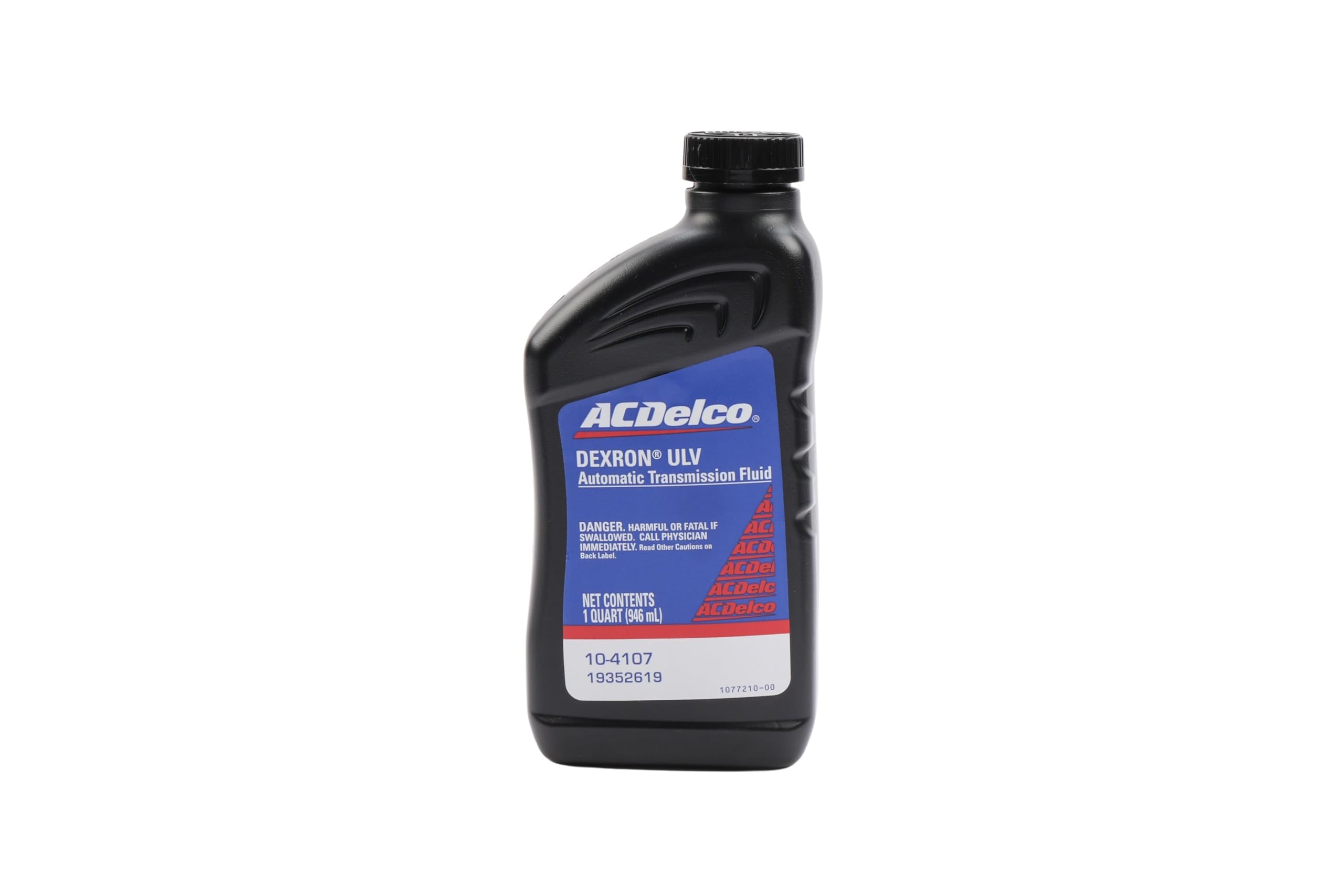
- Check fluid level at temperature with DEXRON ULV only. GM's 10L90 installation sheet specifies P/N 19352619 (US) or 19352620 (Canada) and says not to use DEXRON VI or HP.
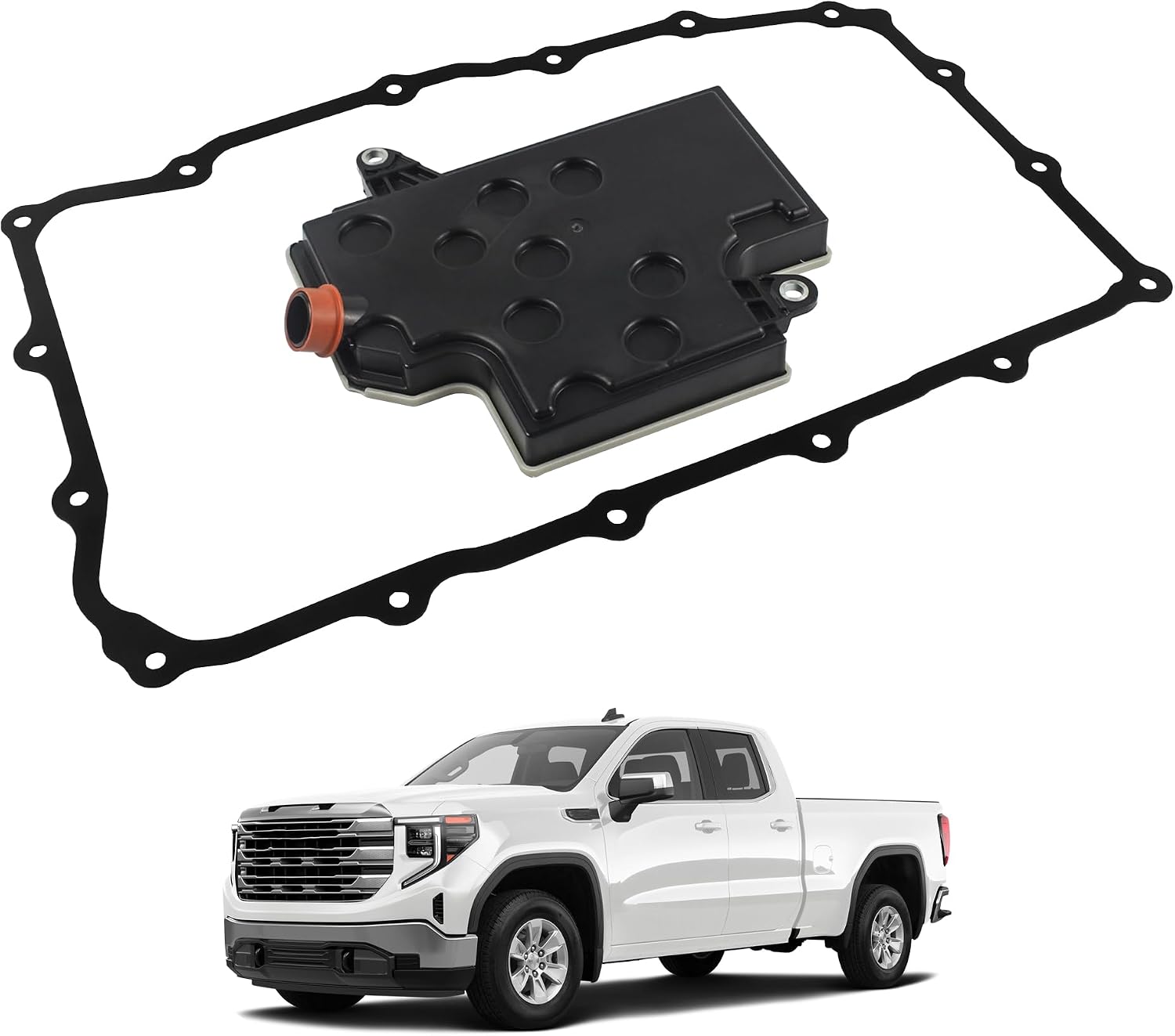
- Drop the pan and read the filter. Clean fluid points to the valve body. Friction material and metal move you toward the reverse clutch packs.
- Split the valve body. Mike the five check balls, inspect the spacer plate chamfers and every screen, and look into the 1-2-8-9-10-R and 4-5-6-7-8-9-10-R regulator bores for debris.
- Vacuum test the A, B, D and F bores before condemning anything electrical.
- Replace the plate and all sealing rings. GEARS warns that reused sealing rings leak and cause intermittent shift quality.
The repair, and what not to buy
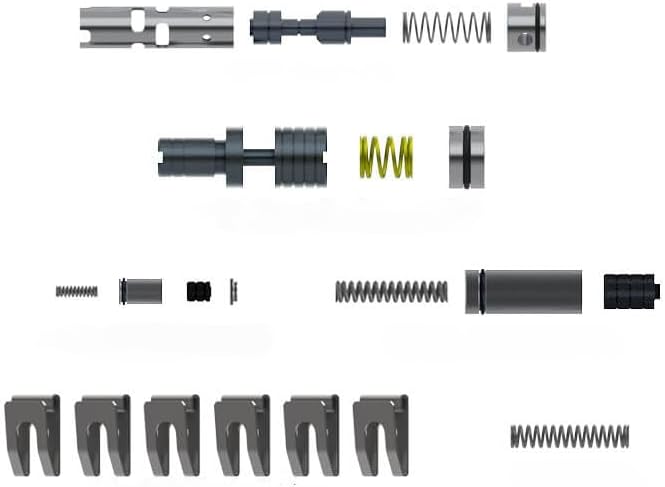
If the ball and plate are the fault, the plate and balls are the fix, exactly as 25-NA-080 lays out. If the vacuum test shows a worn bore, a Sonnax Zip Kit restores those clutch control valve circuits without a whole valve body. If the valve body is beyond that, GEARS points out that the linear pintle solenoids are not sold separately, so a replacement valve body has to be matched by Part Unique Number (PUN) or MCVM number. A valve body pulled off a shelf without matching that number is a comeback.
After any valve body work, refill with DEXRON ULV. GM's published pan-and-filter figure for the 10L90 is 7.7 liters (8.1 quarts), but a valve body job drains more than a service does, so have extra on hand for the level set.
10L90 Sonnax Zip Kit (10L80-G1-10R80-ZIP)
When the vacuum test shows wear in the A, B, D or F clutch control valve bores, this kit rebuilds those circuits instead of replacing the whole valve body.
See the 10L90 Sonnax Zip Kit →FAQ
Why does my 10L90 have no reverse but all the forward gears work?
Because the circuits that fail are the ones reverse depends on. P0776 points at the 1-2-8-9-10-R clutch regulator valve and P2732 at the 4-5-6-7-8-9-10-R clutch regulator valve, and a stuck valve, worn check ball or torn spacer plate screen in either circuit can kill reverse while leaving the forward gears that do not need it working. Sonnax's vacuum test guide lists no reverse as a wear symptom for the A, B, D and F clutch control valves.
Is there a GM bulletin for no reverse on a Camaro 10-speed?
Yes. GM bulletin 25-NA-080 lists the 2021-2024 Camaro with the LGX, LT1 and LT4 for no reverse, no shift past 3rd and P2732, caused by a mis-stamped spacer plate and worn check ball. It applies only when a service valve body 24047993 or 24065351 or a service transmission was installed in 2024 and the car came back within 15,000 miles.
Can a 10L90 with no reverse be fixed without a new valve body?
Often, yes. GM's own 25-NA-080 fix is a new spacer plate (24299519 for LT1 and LT4 engines) and check balls, paid at 1.8 hours on a Camaro, with no characterization or Service Fast Learn required. If a vacuum test shows a worn clutch control valve bore, a Sonnax Zip Kit repairs that circuit. A full valve body is needed only when the damage goes beyond that, and it must be matched by PUN or MCVM number.
Does no reverse on a 10L90 always set a trouble code?
No. GM bulletin 24-NA-181 states that having no reverse will not set DTC P2732, because the code comes from solenoid and slip data, not from the missing gear. A clean scan does not clear the valve body.
Sources
- General Motors — Service Bulletin 25-NA-080, “No Reverse, No Shift Past Third Gear - DTC P2732 Set,” Version 2, revised June 5, 2025 (NHTSA-hosted). Backs the 2021–2024 Camaro application with LGX, LT1 and LT4 engines; the gate of service valve body 24047993 or 24065351 or a service transmission installed in 2024 and returning within 15,000 miles; the mis-stamped spacer plate and worn check ball cause; the five loose check balls and check ball 96020431; spacer plates 24299519 and 24299518; the 10EPL socket; the 80 lb-in and 27 lb-in plus 30 degree torques; characterization and SFL not required; and labor operation 8486508 at 1.8 hours for Camaro. View source (PDF)
- General Motors — Service Bulletins 22-NA-258 (March 2024) and 24-NA-181 (November 2024), NHTSA-hosted. 22-NA-258 backs the -25°C (-13°F), eight hour cold soak qualifier; the DTC definitions for P0776, P18A1 and P2732; the torn spacer plate screen cause; the RPO list MQB, MQC, MI2, MHT and MHS; and the delayed onset after the cold event. 24-NA-181 backs the statement that no reverse will not set DTC P2732 and the internal valve body cause for no reverse with no shift past 3rd. 22-NA-258 (PDF) • 24-NA-181 (PDF)
- ATRA / GEARS Magazine — “No Reverse, Possible P2732, and Other Shift Related Concerns, Yours May Vary!”; Keith Clark, “Diagnosing the 10L Series Transmission”; and “Is That Normal? Some GM 10-Speed Normal Customer Concerns.” Back the rough spacer plate chamfer wearing check balls, the visible difference in ball diameter, the restricted 4-5-6-7-8-9-10-R circuit and onset within roughly 20,000 miles after an overhaul; the four applied elements per range, the P187E/P18AB post-service no-move and installation sequence, the sealing ring warning and PUN/MCVM valve body matching; and the C2 clutch delayed reverse clunk on RPOs including MHO and MHX. No Reverse, P2732 • Diagnosing the 10L • Is That Normal?
- Transmission Digest / ATSG — Wayne Colonna, “Transmission Issues in the Cold.” Backs the regulator valve circuits for P0776 (1-2-8-9-10-R) and P2732 (4-5-6-7-8-9-10-R) and the case of a missing screen lodged in the 1-2-8-9-10-R regulator valve. View source
- Sonnax — “GM 10L60/80/90 (Gen. 1); Ford 10R60, 10R80, 10R90 Critical Wear Areas & Vacuum Test Locations.” Backs the A, B, D and F clutch control valve symptom lists used above. View source
- Chevrolet Performance — 10L90 Transmission Kit for LT1/LT4 Crate Engines, installation instructions 19420481. Backs DEXRON ULV only (P/N 19352619 US, 19352620 Canada), no DEXRON VI or HP, and the 7.7 L (8.1 qt) pan and filter capacity. View source (PDF)