A wet 45RFE gets a lot of parts thrown at it. I have seen trucks come in with a new pan gasket, a bottle of stop-leak in the tube and a front seal on the work order, and the actual problem was a cooler line fitting dripping onto the pan rail and running back to the lowest point. ATF goes wherever gravity and air flow take it. The spot where it drips is rarely the spot where it starts.
This guide covers the places a 45RFE or 545RFE really leaks, how each one looks on the truck, the factory torque spec for the parts involved, and the fix. The torque figures and leak paths come from Chrysler's 45RFE/545RFE service information. The shift shaft seal part numbers come from a Chrysler parts tech tip. The full list of sources is at the bottom.
Step One: Make Sure It Is Actually a Leak
Chrysler's service information tells techs to confirm a few things before tearing into a converter housing leak, and they hold for the whole transmission.
- Is it ATF at all? Chrysler notes that fluid around the converter area may really be an engine oil leak, and that factory fill fluid is red, so it can be told apart from engine oil (Chrysler Fluid Leakage). Be careful with that test on an older truck, though. Chrysler also says the red dye is not permanent, and ATF+4 normally darkens toward brown in use (Chrysler Automatic Transmission Fluid). Old ATF and engine oil can look a lot alike under a truck. Smell and feel help. Dye settles it.
- Is it leftover fluid? Chrysler says some suspected converter housing leaks are not leaks at all. They are residual fluid in the housing, or fluid spilled during the factory fill or the fill after a repair (Chrysler Converter Housing Fluid Leak). A truck that just had a pan service or a transmission swap will often drip for a few days and then stop.
- Is it overflow? This is the one people miss most. Chrysler explains that an overfilled transmission lets the gear train churn the fluid into foam, foam makes the fluid expand, and the expanded fluid can come out of the vent or fill tube. Chrysler's own wording is that this overflow can easily be mistaken for a leak (Chrysler Effects of Incorrect Fluid Level). Fluid sprayed across the top of the transmission and the back of the engine, with dry seals underneath, is usually the vent.
So before you replace anything, check the level the way Chrysler specifies: level ground, selector in Park, engine idling for at least one minute. At normal operating temperature, about 180°F (82°C), the level should sit in the HOT cross-hatched area of the dipstick. At 70°F it reads about at the upper COLD hole. After adding fluid, wait at least two minutes for it to drain down the fill tube before checking again. Chrysler also points out that true fluid temperature can only be read on a scan tool in Reverse or a forward gear (Chrysler Fluid Level Check). A truck someone topped off cold, by the hot marks, will puke out of the vent the first time it gets warm.
Clean It, Dye It, Drive It
If the level is right and it is still wet, degrease the whole transmission, the bottom of the engine and the transfer case. Then let it drive. Chrysler says some leaks are hard to find, and that a Mopar-approved dye should be used to locate and confirm the source when needed (Chrysler Converter Housing Fluid Leak). Dye is also the only thing Chrysler allows you to add to the fluid. Its ATF page strongly recommends against any additive other than the specified ATF+4, makes an exception only for leak-detection dyes, and says transmission "sealers" should be avoided because they may harm the seals (Chrysler Automatic Transmission Fluid). A stop-leak that swells the seals swells the ones you are not having trouble with too.
Use ATF+4 for any top-off. Chrysler lists Mopar ATF+4 as the recommended fluid for the 45RFE/545RFE and says Dexron II is not recommended, and that improper fluid can cause clutch chatter (Chrysler Automatic Transmission Fluid). Our 45RFE fluid type and capacity guide covers the fill volumes.
The Leak Map: Where a 45RFE Actually Leaks
Here are the spots I check, in roughly the order I find them on trucks that come through the shop, with the factory torque for each part from Chrysler's 545RFE specifications (Chrysler 545RFE Specifications). The 45RFE and 545RFE share these parts and specs.
| Leak point | What you see | Factory torque |
|---|---|---|
| Oil pan rail | Wet pan lip all the way around, drips from the lowest corner | Pan bolts 12 N-m (105 in-lb) |
| Cooler line fittings at the case | Wet fittings on the right side of the case, fluid running down onto the pan | 17.5 N-m (155 in-lb) |
| Cooler return filter (545RFE) | Wet spin-on filter and the case around it | 9.5 N-m (84 in-lb) |
| Input and output speed sensors, line pressure sensor | Wet sensor bodies and connectors on the side of the case | Retaining bolts 12 N-m (105 in-lb) |
| Pressure test port plugs | A single wet plug, usually after someone ran a gauge | 5 N-m (45 in-lb) |
| Manual shift shaft seal | Wet shift lever and the case below it | Shaft retaining screw 28 N-m (250 in-lb) |
| Extension housing (2WD) / transfer case mating face (4WD) | Wet tail housing or the seam at the transfer case | Extension housing 54 N-m (40 ft-lb); transfer case nuts 35 N-m (26 ft-lb) |
| Front pump seal, pump O-ring or bolts, converter | Fluid dripping from the bottom of the bellhousing | Oil pump bolts 28 N-m (250 in-lb) |
1. The oil pan rail
Still the most common leak on these, and most of them are self-inflicted. Someone drops the pan for a service, smears new RTV over old RTV or over a rail still wet with fluid, and runs the bolts down with a ft-lb wrench. The spec is 105 inch-pounds. Lean on it and you dimple the pan around the bolt holes, the rail goes wavy, and no gasket will seal it again. Scrape both rails to bare metal, get them dry, use either a reusable gasket or a thin bead of RTV but not both, and torque in a crisscross pattern. If the rail is bent, replace the pan. Our 545RFE filter and pan service guide covers the full procedure.
2. Cooler line fittings
These are the leak that impersonates every other leak. The fittings sit up on the right side of the case, so a slow weep runs down the case, along the pan rail and drips from wherever the rail is lowest. Check them before you blame the pan gasket. The case fittings torque to 155 in-lb. Some applications use quick-connect fittings at the case, and Chrysler has a specific disconnect and connect procedure for them, including making sure the dust cap snaps into place (Chrysler Cooler Line Quick Connect Fitting). A fitting that was forced apart or put back without the retainer fully seated will weep. While you are there, follow both lines forward. Rubbed-through hose sections and the crimped joints near the radiator leak too, and that fluid ends up on the transmission because the air carries it back.
3. Speed sensors, line pressure sensor and test plugs
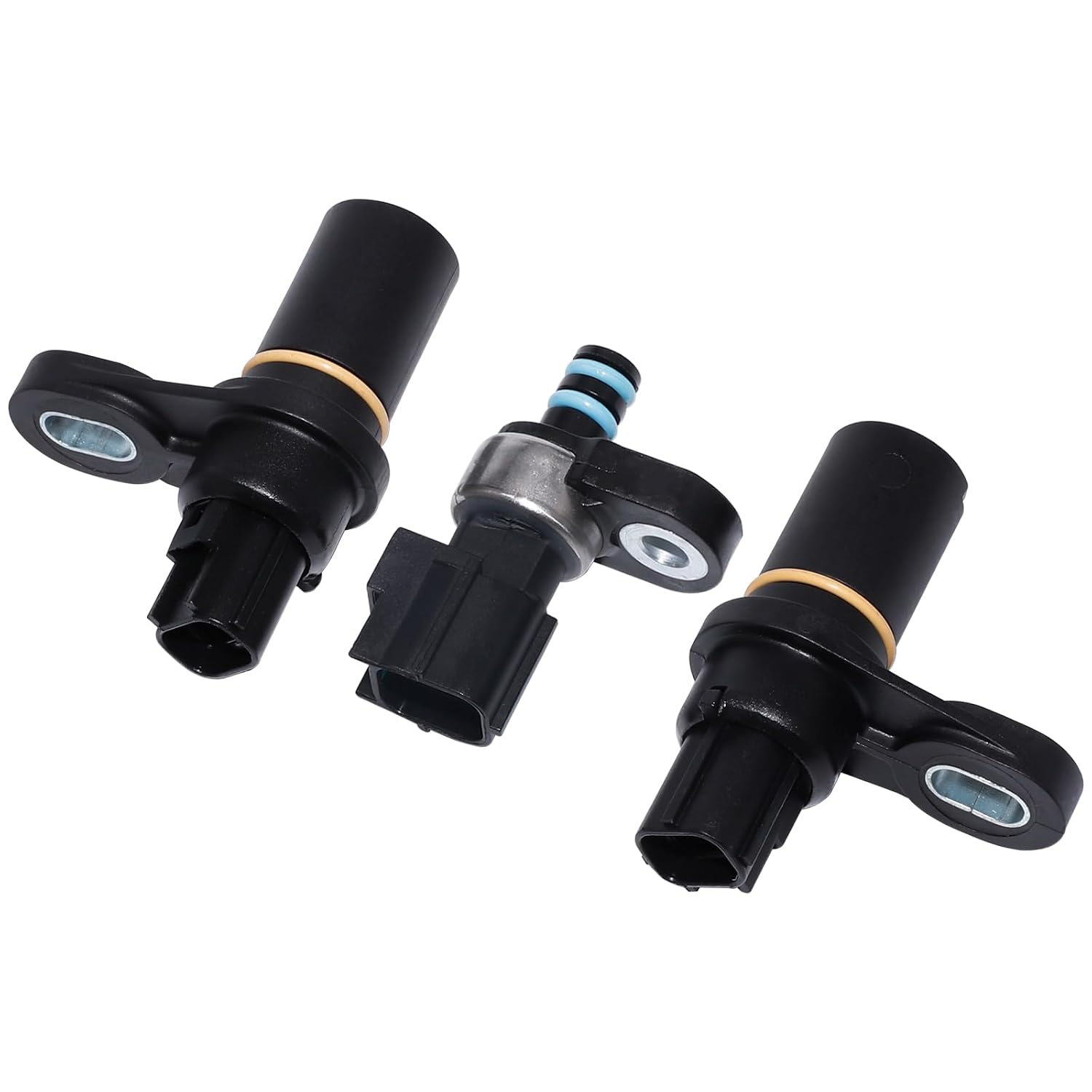
The input speed sensor, output speed sensor and line pressure sensor are all held in by bolts torqued to 105 in-lb, and they all seal to the case with an O-ring. After 150,000 miles of heat cycles those O-rings flatten and go hard, and the sensors start to weep. A wet line pressure sensor is worth a second look. Keep fluid and degreaser out of that connector, because a dirty or corroded terminal there gives you intermittent pressure readings. Pull the sensor, put a new O-ring on it lubed with ATF, and torque to spec. If the sensor is that old and you are pulling it anyway, many techs just replace it. The pressure test plugs only take 45 in-lb. The ones that leak are usually ones that were cross-threaded or overtightened by someone running a pressure gauge.
4. The manual shift shaft seal
This one is common enough that Chrysler put out a parts tech tip about it. GPOP tech tip 9002901, dated January 30, 2014, covers the shift shaft seal on RFE transmissions, part number 04799346. It says that seal can be replaced with seal kit 68235551AA, which includes the seal and a retainer, and that the kit is applicable to all 45RFE and 545RFE transmissions. The bulletin lists 1999-2012 Dakota, Durango, Ram, Grand Cherokee, Liberty, Commander and related platforms (Chrysler GPOP Tech Tip 9002901, via NHTSA). If the shift lever and the case under it are wet, order the kit with the retainer, not just a bare seal.
The seal can usually be replaced with the transmission in the truck once the shift lever is off. Do not scratch the shaft or the bore when you pry the old seal out, and push the new one in square.
5. Extension housing and transfer case seam
On 2WD trucks the rear seal rides on the driveshaft slip yoke. A seal that keeps leaking after replacement usually means the yoke surface is grooved or rusty, or the output bushing is worn and lets the yoke move around. Check the yoke and the bushing before you install another seal. The extension housing bolts torque to 40 ft-lb. On 4WD trucks, fluid at the transmission-to-transfer case seam can be from the transmission or the transfer case. Dye in one of them settles it. The transfer case nuts torque to 26 ft-lb.
6. The bellhousing: pump seal, pump body and converter
A drip from the bottom of the bellhousing is the one everybody fears, because most of the fixes mean the transmission has to come out. Chrysler's service information gives a useful way to read the leak path before you pull it (Chrysler Fluid Leakage):
- Pump seal leaks move along the converter drive hub and onto the rear of the converter. Pump O-ring and pump body leaks follow the same path.
- Pump attaching bolt leaks generally show up on the inside of the converter housing, not on the converter itself.
- Pump seal or gasket leaks usually travel down the inside of the converter housing.
- Converter leaks come from the outside-diameter weld or the hub weld.
Pull the inspection cover and look before anything else. Fluid flung in a ring around the converter points to the hub or the seal. Fluid on the front of the converter housing near the engine, with a dry converter, sends you back to the rear main seal. When the transmission comes out for a front seal, check the converter hub for wear where the seal rides. A grooved hub chews up a new seal quickly. Check the pump bushing too, since a worn bushing lets the hub wobble against the seal lip. Torque the pump bolts to 250 in-lb on reassembly.
Internal Leaks That Never Hit the Floor
Not every 45RFE leak makes a puddle. The solenoid/pressure switch assembly bolts to the valve body and seals each circuit with O-rings, insulators and switch diaphragms. Sonnax's solenoid spacer and service kit for 2004-later 45/545RFE units replaces exactly those parts and lists the connector seal among them. Sonnax says worn solenoid blocks set false or intermittent pressure switch codes, specifically 841, 846, 871, 876 and 988, because the circuit board flexes under pressure and the switch sticks (Sonnax 44836-02K). That is a leak too. It just shows up on the scan tool instead of the driveway. Our 45RFE limp mode guide covers how those codes are diagnosed.
Why a Small Leak Becomes a Big Repair
A slow drip does not sound urgent, but Chrysler spells out what low fluid does. The pump takes in air with the fluid, pressure is low and builds slowly, and air bubbles cause overheating, oxidation and varnish that interfere with valve, clutch and accumulator operation (Chrysler Fluid Level Check). On an RFE that shows up as delayed engagements, flare-ups between gears and eventually pressure switch codes. Customers often wait until the truck slips before they bring it in for a leak, and by then they need a rebuild. If a leaking 45RFE is already slipping or showing burnt fluid, see our 45RFE slipping guide before you spend money on seals.
How I Would Work a Wet 45RFE
- Check the level hot in Park against the dipstick. Overfill and overheating explain a lot of "leaks" from the vent and fill tube.
- Degrease everything, add Mopar-approved dye and drive the truck until it is wet again.
- Work from the top down: cooler lines and fittings, sensors, shift shaft seal, test plugs, then the pan rail.
- Read the bellhousing leak path through the inspection cover before deciding on a pull.
- Fix the source with the right seal or gasket, torque to Chrysler's spec, and never add a sealer.
- Refill with ATF+4, set the level hot and recheck after a road test.
45RFE master rebuild kit with full gasket and seal set, at Core Transmission Parts
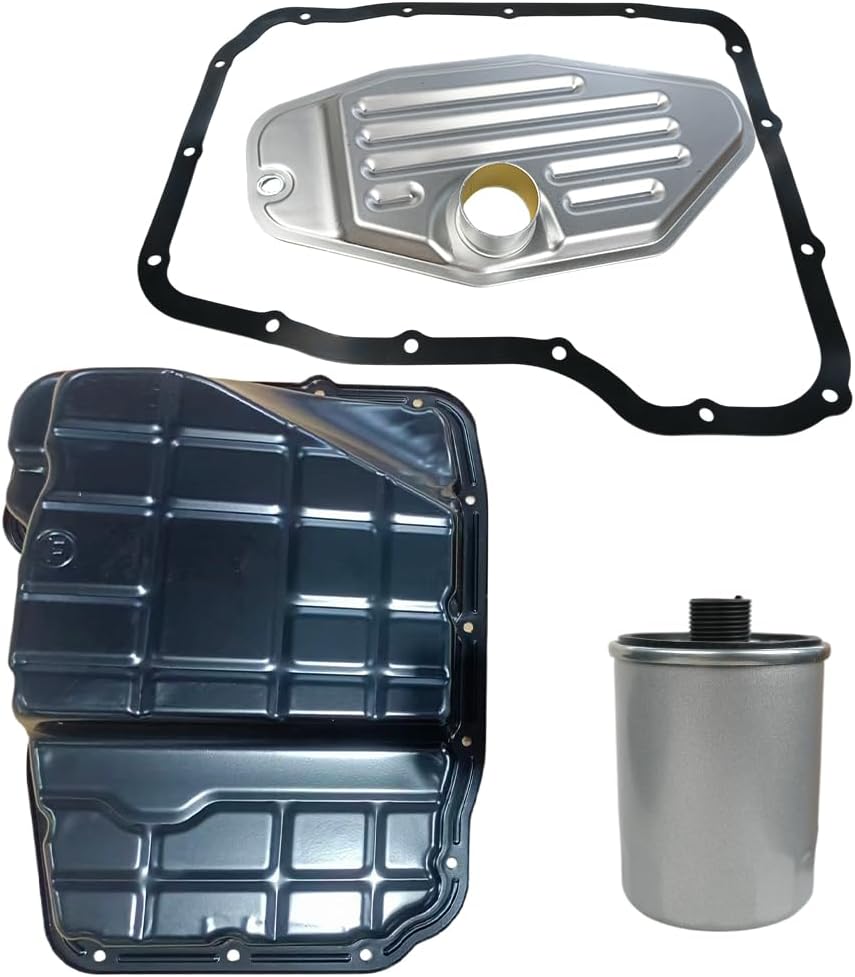
If the transmission is coming out for a pump seal or converter leak, this kit has the full gasket and seal set, the O-rings, lip seals and sealing rings, plus frictions, steels and a filter, so you only pull it once.
View the 45RFE master rebuild kit →45RFE gasket and seal kits, pans and filter kits, speed and pressure sensors and rebuild kits, shipped fast from the USA.
Shop 45RFE parts →Related guides
- 45RFE Fluid Type and Capacity
- 545RFE Filter and Pan Service
- 545RFE Overheating Prevention
- 45RFE Delayed Engagement Fix
- 45RFE Limp Mode Causes and Fix
FAQ
Where does a 45RFE usually leak?
The usual spots are the oil pan rail, the cooler line fittings at the case, the front pump seal at the bellhousing, the manual shift shaft seal, and the O-rings on the speed sensors and line pressure sensor. On 2WD trucks the extension housing seal is also on the list. Fluid coming out of the vent or fill tube is often an overfill or overheat problem rather than a seal failure.
How do I tell a 45RFE front pump seal leak from a rear main seal leak?
Look at the color and the path. Chrysler notes that factory fill ATF is red and can be told apart from engine oil, and that pump seal leaks travel along the converter drive hub onto the rear of the converter. Pump bolt leaks show up on the inside of the converter housing instead of on the converter. If the fluid is brown engine oil on the engine side of the flexplate, look at the rear main seal first.
Can I use a stop-leak or seal conditioner in a 45RFE?
Chrysler says no. Its service information strongly recommends against adding anything to the transmission other than the specified ATF+4, with leak-detection dye as the only exception, and it says transmission sealers should be avoided because they may harm the seals. Find the leak and replace the seal or gasket.
What is the 45RFE oil pan bolt torque?
Chrysler's 45RFE/545RFE specification is 12 N-m, or 105 inch-pounds, for the oil pan bolts. That is inch-pounds, not foot-pounds. Overtightening bends the pan rail, and a bent rail weeps no matter what gasket or RTV you use.
Why is my 45RFE leaking from the vent tube?
Chrysler explains that an overfilled transmission lets the gear train churn the fluid into foam, and that foam expands and can push fluid out of the vent or fill tube, where it is easy to mistake for a leak. Check the level hot in Park at about 180 degrees F before replacing any seals. Overheating from towing or a blocked cooler can do the same thing.
Sources
- Chrysler 45RFE/545RFE service information: Fluid Leakage and Converter Housing Fluid Leak. Checking for engine oil first, red factory fill, residual and spilled fluid mistaken for leaks, using Mopar-approved dye, and the leak paths for the pump seal, pump O-ring and body, pump bolts, gasket and converter welds. Fluid Leakage, Converter Housing Fluid Leak
- Chrysler 45RFE/545RFE service information: Fluid Level Check and Effects of Incorrect Fluid Level. Overfill foaming and overflow from the vent or fill tube mistaken for a leak, the hot level check procedure, and what low fluid does to pressure, temperature and varnish. Fluid Level Check, Effects of Incorrect Fluid Level
- Chrysler 545RFE Specifications (torque table) and Cooler Line Quick Connect Fitting procedure. Pan bolts 105 in-lb, cooler line fitting 155 in-lb, cooler return filter 84 in-lb, speed and line pressure sensor bolts 105 in-lb, test port plug 45 in-lb, oil pump bolts 250 in-lb, extension housing 40 ft-lb, transfer case nuts 26 ft-lb, and ATF+4 as the specified fluid; plus the cooler line quick-connect disconnect and connect procedure. Specifications, Cooler Line Quick Connect Fitting
- Chrysler 45RFE/545RFE service information: Automatic Transmission Fluid. ATF+4 recommended and Dexron II not recommended, red dye not permanent, no additives except leak-detection dye, and transmission sealers to be avoided. Automatic Transmission Fluid
- Chrysler GPOP Tech Tip 9002901 (January 30, 2014), hosted by NHTSA. Shift shaft seal 04799346 replaced by seal kit 68235551AA with retainer, applicable to all 45RFE and 545RFE transmissions, MY1999-2012 platforms. static.nhtsa.gov
- Sonnax: Solenoid Spacer & Service Kit 44836-02K. Fitment to 2004-later 45/545RFE, O-rings, insulators, diaphragms and connector seal to prevent leaking, and the 841/846/871/876/988 pressure switch codes caused by solenoid block circuit board flex. sonnax.com