The Chrysler 45RFE and its five-speed sibling the 545RFE sit behind a huge chunk of Dodge, Jeep, and Ram iron — Ram 1500s, Durangos, Dakotas, Grand Cherokees, and the Liberty among them. It is a clutch-to-clutch automatic with no bands, which means precise hydraulic control is everything. When one of these units comes in with no reverse, a stall at idle, a burnt overdrive clutch, or a pressure-switch code, the part everyone wants to blame is the solenoid pack. But on this transmission the real trouble usually lives one layer deeper: in the valve body, where worn bores make good electronics look bad.
This is what actually goes wrong inside a 45RFE/545RFE valve body, how to read the symptoms and codes, and a numbered bench procedure to test it so you fix the cheap thing instead of throwing a solenoid pack or a whole unit at a hydraulic fault.
The short version: The 45RFE/545RFE family has been plagued by solenoid switch valve bore wear since it launched in 1999. That single wear area, plus pressure regulator and TC limit valve wear, produces most of the no-reverse, engine-stall, low-cooler-flow, burnt-clutch, and pressure-switch-code complaints on these units. Per Sonnax, worn valve body bores and switch valve plugs cause code P0871 about 90% of the time. Confirm the valve body hydraulically before you condemn the solenoid pack — and always run the KOER Reverse test first to clear out wiring.
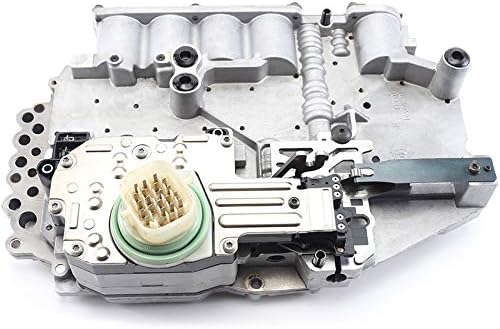
How the 45RFE Controls Clutches (and Where It Goes Wrong)
The 45RFE arrived in 1999 as part of a Chrysler family that also includes the 545RFE, 62TE, and 68RFE. Because there are no bands, every gear is a clutch application, and three components do the work of getting oil to the right clutch at the right time: the solenoid pack (on/off solenoids plus internal pressure switches), the pressure switches, and the solenoid switch valve in the valve body. The solenoid pack bolts to the valve body and, on the RFE, uses a five-pressure-switch system.
The solenoid switch valve is the star of the show. Its main job is to direct fluid between the low/reverse (L/R) clutch and the torque converter clutch (TCC), and it also routes oil to the 2nd and overdrive clutches through two shuttle valves — the "plugs" — at the end of its bore. When the aluminum bore wears (Chrysler's castings are not known for great alloy), the valve and its plugs stick, and a single worn bore can throw a whole spread of unrelated-looking symptoms.
| Valve body component | What it does | Common failure symptoms |
|---|---|---|
| Solenoid switch valve & plugs | Directs L/R vs. TCC oil; feeds 2nd and OD clutches | No reverse, bind-up, burnt OD/4th clutch, engine stall, no lockup, failsafe, pressure-switch codes |
| Pressure regulator valve | Sets and stabilizes line pressure | Erratic/high line pressure, broken parts, or low pressure → soft shifts and burnt clutches |
| TC limit valve | Controls converter release pressure | Low cooler flow, engine stall, delayed engagement, loss of power |
| Low/reverse switch valve | L/R clutch apply circuit | Burnt L/R clutch, delayed reverse, no reverse |
The Symptoms, and What They Actually Point To
Because so many complaints trace back to the same handful of bores, the driving symptoms overlap. Here is how the classic 45RFE/545RFE complaints map to the valve body:
No reverse or delayed reverse
The L/R clutch and its switch valve feed reverse. A worn low/reverse switch valve or a stuck solenoid switch valve produces no reverse, delayed reverse, or a burnt L/R clutch. Reverse works forward-and-back through the same circuit the TCC shares, which is why a converter or lockup complaint can travel with a reverse complaint on this unit.
Engine stall and low cooler flow
These two travel together and point at the TC limit valve. Its bore controls converter release pressure; when it wears, you get low cooler flow, engine stall (often at idle or on engagement), delayed engagement, and loss of power. Sonnax flags stalling and low cooler flow as complaints this family has carried since 1999.
Burnt overdrive or 4th clutch, harsh or soft shifts
A stuck solenoid switch valve can misroute apply oil and cook the OD or 4th clutch. Separately, a worn pressure regulator valve bore lets line pressure drift — erratic or high pressure breaks parts, while low pressure causes soft shifts and burnt clutches across the board.
Pressure-switch and TCC codes, failsafe mode
Sticking switch valve components set a recognizable code cluster: P0841, P0868, P0871, P0988, P1775, and P1776, often with bind-up, failsafe (limp) mode, and no lockup. P0871 is the overdrive pressure switch rationality code and is the one you will chase most.
Our remanufactured 45RFE/545RFE valve bodies come with the solenoid switch valve, pressure regulator, and TC limit bores already reamed and fitted with oversized valves — the exact wear areas that set P0871 and cause no-reverse and stall complaints. Shipped fast from the USA.
Shop remanufactured 45RFE valve bodies →How to Test Your 45RFE Valve Body
The order below matters because the price swings from a checkball correction to a full teardown. Rule out wiring, then the pressure switches, then prove the bores are worn — do not pull the unit until the electrical side is clean.
- Pull codes and note the exact one. P0841/P0868/P0871/P0988/P1775/P1776 all live in the switch valve and pressure-switch world. "Pressure switch" or "solenoid" in the description does not prove the electrical part is bad — on the RFE it is usually hydraulic.
- Run the KOER Reverse test first. With the engine running and the selector in Reverse, all five pressure switches should read open. An open state confirms 12.6–14.4V is reaching the controller and the wiring is intact. While you watch scan-tool PSW data, gently wiggle the connectors and harness to expose any intermittent electrical fault. Fix wiring problems before anything else — a broken or grounded signal wire reads exactly like a closed switch.
- Verify each pressure switch by gear. The overdrive PSW should be open in 1st, 2nd, and 3rd and closed in 4th, 5th, and 6th. A switch closes at about 22 psi and reopens at about 11 psi; open reads system voltage at the controller, closed reads roughly 25–50mV. An OD switch that stays open in 4th while the truck clearly makes 4th gear is a failed switch — usually a ripped pressure-switch lip seal in the solenoid pack, not a valve body fault.
- Watch for the intermittent-closed condition. If the OD pressure switch flickers closed in 2nd or 3rd gear and the KOER Reverse test came back clean, suspect a worn solenoid switch valve bore and worn outer plugs. Per Sonnax, that combination causes P0871 roughly 90% of the time.
- Scope it when in doubt. For an intermittent code you cannot pin down, put a pressure transducer on the clutch circuit and a voltage channel on the PSW signal wire (a Pico-class scope with 100V capability, since a cut solenoid circuit spikes to 42–46V). If the transducer shows the switch getting pressure and closing before the signal changes, the fault is hydraulic in the valve body. If the signal drops with no pressure present, it is electrical.
- Vacuum-test the bores on the bench. With the valve body off, vacuum testing is the fastest, most reliable way to find bore wear on this family. Test the solenoid switch valve and its plugs, the pressure regulator valve, the TC limit valve, and the low/reverse switch valve. A low vacuum reading at a test port means that bore is leaking and needs to be reamed and fitted with an oversized valve.
- Measure the switch valve before you repair it. The 45RFE group originally used a 0.420" diameter large spool; a revised 0.453" large spool design appeared around the 2010 model year. Both share the same 0.453" plug diameter, so you must measure the switch valve's large spool to pick the correct oversized kit and tooling. Wrong tooling on the wrong casting can ruin the valve body.
- Confirm the basics before condemning the casting. Check the separator plate and checkball configuration against the correct chart for that casting — wrong plates, a misplaced checkball, or the wrong-year channel casting will set pressure-switch and ratio codes all on their own. Also inspect the input drum's UD/OD sealing O-ring, since a chunked or mis-seated ring mimics P0871 with an immediate bind-up.
Causes and Replacement
Once testing points at the valve body, you have three paths, in rough order of cost:
1. Ream and oversize the worn bores (repair)
The textbook RFE fix is to recondition the worn bores and drop in oversized valves — an oversized solenoid switch valve and plug kit for the switch valve, an oversized pressure regulator valve kit for line pressure, and an oversized TC limit valve kit for the stall/low-cooler-flow circuit. This restores the valve body to better-than-new sealing. It requires the correct reaming tooling and, critically, the right kit for your 0.420" or 0.453" switch valve.
2. Install a remanufactured valve body (drop-in)
If you do not have the tooling, or the casting shows erosion and porosity beyond repair — and some RFE switch valve bores genuinely are — a remanufactured valve body with the wear areas already corrected is the clean answer. It removes the guesswork and the comeback risk, and it is a fraction of the cost of a full unit. This is where most shops and DIYers land on a high-mileage 45RFE/545RFE.
3. Replace the solenoid pack or pressure switches (electrical)
Genuine solenoid pack and pressure-switch failures do happen — a torn lip seal, a warped internal board, a shorted solenoid — but they are the last thing to condemn, not the first, precisely because worn bores set the same codes. Only replace the pack after the KOER Reverse test and scope work prove the fault is electrical.
Follow the test order and the 45RFE's most common failures stop being a guessing game. A large share of "pressure switch" and "no reverse" complaints on this unit are a stuck solenoid switch valve or a worn PR/TC limit bore — correctable for far less than a solenoid pack or a reman transmission that a shotgun approach would have charged for.
Doing the job? Our line pressure testing walkthrough and fluid-condition guide both apply directly to diagnosing these RFE symptoms before you open anything up.
Sources
- Sonnax — Chrysler 45RFE, 545RFE, 65RFE, 66RFE, 68RFE Valve Body Layout, identifying the solenoid switch valve, pressure regulator valve, TC limit valve, and low/reverse switch valve and the symptoms (no reverse, engine stall, low cooler flow, burnt clutches, codes 841/868/871/988/1775/1776) their wear produces. sonnax.com/tech_resources/621
- Sonnax — All in the Family: Identification & Repair of Chrysler Solenoid Switch Valve Problems, on the solenoid switch valve's function (L/R vs. TCC, plus 2nd and OD clutch feed), the.420"/.453" large-spool designs, and bore-wear symptoms. sonnax.com/tech_resources/85
- Sonnax — Dodge RFE Pressure Switch Diagnosis & Code P0871, on the five-pressure-switch system, the KOER Reverse test, switch open/closed thresholds (22/11 psi), and worn bores/plugs causing P0871 ~90% of the time. sonnax.com/tech_resources/1438
- Sonnax — Chrysler 45RFE, 545RFE, 65RFE, 66RFE, 68RFE Vacuum Test Guide, on critical wear areas and vacuum test locations for the solenoid switch valve, pressure regulator valve, TC limit valve, and low/reverse switch valve. sonnax.com/tech_resources/618
- Sonnax — Chrysler 545RFE Transmission (unit overview), reference for the 45RFE/545RFE clutch-to-clutch architecture and common valve body wear points. sonnax.com/units/154-545rfe
- Gears Magazine (ATRA), Jim Mobley — Dodge RFE Pressure Switch Diagnosis and Code P0871, industry-published walkthrough of the KOER Reverse test and hydraulic-vs-electrical diagnosis on RFE units. gearsmagazine.com/magazine/dodge-rfe-pressure-switch-diagnosis-and-code-p0871