A 46RE that leaves a red spot on the driveway is not news. These units are 20 to 30 years old, and what costs people money is guessing. A front seal gets replaced when the real leak was an overfilled unit pushing fluid out of the vent. A pan gasket gets replaced three times when the leak was a cracked case at the cooler fitting, dripping off the pan rail.
This guide covers the spots where we actually find 46RE leaks, roughly in the order we find them: the cause, how to confirm it, and the right repair. The 46RE is the gas-truck four-speed behind the 5.2L and 5.9L Magnum V8s in Ram, Durango and Dakota. Most of it also applies to the 47RE and 48RE. Sources are at the end.

Before You Replace Anything: Find the Highest Wet Point
ATF runs downhill and blows backward at highway speed. By the time a 46RE has leaked for a few months, the whole bottom of the unit is wet and the drip falls from the lowest point of the pan or the crossmember, which is almost never where the leak starts. So the first job is always the same.
- Check the level first, the right way. Chrysler's procedure is a hot check: fluid at about 180°F (82°C), engine idling, selector in Neutral, truck level. A cold reading or a check in Park on a truck that drains back reads wrong, and owners chasing a "low" reading often overfill it. Overfill is a leak cause by itself (see the vent section below).
- Clean it. Degrease the bellhousing, case, pan, cooler fittings and extension or adapter housing. Dry it.
- Add dye and drive. A few drops of ATF-compatible UV dye, 15 to 20 minutes of driving to get it hot, then a UV light. The brightest wet point at the top of the trail is your leak.
- Note when it leaks. A leak that drips with the engine off is gravity-fed: pan, drain plug, cooler fittings below the fluid line. A leak that only shows up after a highway run, or only while running, is pressure- or heat-fed: front seal, vent, cooler line under pressure.
Use ATF+4 for any top-up. Chrysler's Mopar ATF+4 part number is 05013457AA, per FCA bulletin 21-046-15, and nothing else (Dexron, Mercon, "universal" fluids) belongs in a 46RE. For reference, Chrysler's Ram fluid capacity chart lists the 46RE at 3.79 liters (8 pints) for a pan-and-filter service and 8.99 to 9.46 liters (19 to 20 pints) for an overhaul fill. If someone has dumped five or six quarts into a pan service, the unit is overfull.
1. Pan Gasket and Pan Rail
This is the most common 46RE leak and the most misdiagnosed, because every other leak on the unit ends up dripping off the pan. Confirm the pan rail itself is the wettest point before you buy a gasket.
When it really is the pan, the cause is a gasket that has taken a set, a pan rail bent by overtightening, or a pan dented by a rock or a jack. Chrysler's pan bolt torque is 17 N·m (13 ft-lb). Bolts run in with an impact gun dimple the rail around the holes, and no gasket seals a wavy rail.
Fix: Drop the pan and lay the rail on a flat surface. If it rocks or shows dimples around the bolt holes, tap the dimples flat with a hammer and a block, or replace the pan. Clean both surfaces of old gasket and oil, use a new gasket dry or as the gasket maker specifies, and torque in a crisscross pattern to 17 N·m. While the pan is off, replace the filter (screws are 4 N·m, 35 in-lb) and look at the magnet. A pan that has a drain plug added later is one more seal to check; the plug washer is cheap and should be replaced every time.
2. Cooler Line Fittings and a Cracked Case
The two steel cooler lines thread into fittings on the right side of the case. When this area is wet, look closely at the case around the fittings with a light and a mirror before you replace a line, because a lot of these are not fitting leaks. They are cracked cases.
Sonnax describes the problem plainly: on late-model Chrysler rear-wheel-drive units, including the 46RE, a common complaint is a cracked or leaking case caused by installing the cooler lines. The OE fittings use tapered pipe threads and have no stop, so every time someone cranks one tighter to cure a weep, the taper wedges the aluminum boss apart. Eventually it fractures, and the leak may require replacing the case.
Fix: If the case is not cracked, clean the threads, use a thread sealant rated for ATF, and tighten the fitting to the factory value, 18 N·m (13 ft-lb). Do not go past it. If the boss has a hairline crack or the threads are pulled, Sonnax's cooler line repair kit (22000-01K) salvages the case without removing the transmission. It includes five cooler line adapters and a special tap. The adapters have straight threads instead of tapered ones and seal on their leading edge, so fluid never reaches the threads where cracks start. Note the sizing: the kit is for cases with 1/4-inch pipe fittings, and the single adapter (22000-01) is for cases with .250-inch fittings. Check which one you have.
Also check the rubber hose sections and clamps at the radiator cooler and any auxiliary cooler. Old hose gets hard and weeps at the clamp, and the drip lands on the transmission. After any cooler line repair, confirm flow. Mike Brown's cooler test in GEARS magazine is a good one: blow air into the rear cooler fitting with no more than 40 psi, and it should enter with minimal resistance. Restricted cooler flow means more heat, and heat is what hardens every seal on this list.
3. Front Pump Seal (Leak at the Bellhousing)
Fluid dripping from the bottom of the bellhousing, or the inspection cover, usually gets called a front seal. Sometimes it is. But on a high-mileage 46RE, a new seal by itself often leaks again within a few thousand miles, and the reason is the pump bushing behind it.
The converter hub rides in a bushing in the pump body. As Gregg Nader of the Sonnax TASC Force explains, that bushing does more than support the hub. It controls how much converter oil escapes past the hub toward the front seal and its drainback hole. Excessive converter oil flow past the hub bushing contributes to front seal leaks. His numbers make the point: on a 2-inch converter hub, an extra .003 inch of hub-to-bushing clearance has essentially the same area as a .100-inch hole. That is a lot of oil being fed to a lip seal that was only designed to handle drainback. Add a hub that wobbles in a worn bushing and the seal lip gets worked side to side with every revolution.
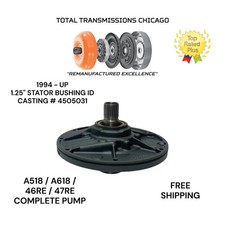
Fix: Pull the transmission. Check the converter hub for a groove where the seal lip rides and for scoring where it rides in the bushing. A grooved or scored hub means a new or rebuilt converter, not a polished one. Check the pump bushing for wear; if the hub has noticeable play in it, replace the bushing (or the pump) along with the seal. While the pump is accessible, replace the outer pump-to-case O-ring and the pump bolt sealing washers, because fluid leaking past either one shows up in exactly the same place.
Not every bellhousing drip is the transmission. Engine oil from a rear main seal or oil pan gasket also collects in the bellhousing. ATF+4 is red; old engine oil is brown or black. Smell and color it before you pull anything.
4. The Vent: Overfill, Overheat and Foam
A 46RE that "leaks only after a highway run" and has no clear wet seal is often pushing fluid out of its vent, and that fluid runs down the bellhousing and looks exactly like a front seal leak. The three usual causes:
- Overfill. Too much fluid lets the rotating parts churn it into foam, and foam takes up more room than liquid. The extra volume leaves through the vent. Re-check the level hot, in Neutral, and drain to the correct mark.
- Overheating. Hot fluid expands. A towing truck with a restricted cooler or a slipping converter clutch can vent fluid with a correct cold level. Fix the heat source.
- Wrong or contaminated fluid. Fluid that foams easily (wrong type, water contamination, mixed fluids) vents sooner. Drain and refill with ATF+4.
The clue is timing: seal leaks drip with the engine off; vent loss shows up after hard or hot driving and then stops.
5. Manual Shaft Seal and Throttle Lever Shaft
On the driver side of the case, the manual (shift) lever shaft and the throttle valve lever pass through the case. Wetness around the shift linkage or throttle cable bracket points here.
The manual shaft seal itself is a simple part, but Sonnax identifies why a new one often does not last on these Chrysler RWD units: the manual shaft case bore wears, which lets the shaft move too much, and oil escapes past the seal. A new seal in an oval bore leaks again. Sonnax's shift lever case bore repair sleeve (22179-02) oversizes the bore and installs a steel bushing that locates the shaft and gives it a wear-resistant surface. It can be done on the bench or in the vehicle with the valve body removed. Note that Sonnax lists the required tool kit (56361-TL) as no longer in production, so check with a distributor before you plan the job around it.
The throttle lever shaft has its own small seal or O-ring on the same lever assembly. If the throttle cable or linkage has been binding and side-loading the lever, expect that seal to weep too. Replace both while you are there.
6. Park/Neutral Switch or Range Sensor
Earlier 46RE trucks use a screw-in park/neutral switch threaded into the case, and later units moved to a push-in transmission range sensor. The screw-in switch seals with a washer or O-ring, and the push-in sensor seals with an O-ring. Both can weep after years of heat. The switch sits low on the driver side of the case, so this leak is easy to mistake for the pan. Replace the seal or the switch; on the screw-in type, do not try to cure a weep by over-tightening it into the aluminum case.
7. Electrical Connector and Dipstick Tube
The harness connector passes through the case to feed the governor pressure solenoid and sensor inside the pan. When its O-ring hardens, fluid wicks out around the connector and into the terminals. Replace the O-ring, clean the terminals, and check for governor or transducer codes. The dipstick tube also seals to the case with an O-ring or grommet; make sure the tube is fully seated and its bracket is tight.
8. Rear Seal, Extension Housing, and 4WD Adapter
At the back of the unit, the leak sources depend on the drivetrain.
- 2WD: the rear (extension housing) seal around the driveshaft slip yoke. A seal that keeps leaking usually means a worn extension housing bushing letting the yoke wobble, or a yoke with a rusted or grooved sealing surface. Replace the seal with the bushing, and replace the yoke if it is pitted where the seal rides.
- 4WD: the overdrive/adapter housing gasket between the transmission and the transfer case adapter, and the transfer case input seal. On many of these trucks the transfer case is also filled with ATF+4, so color will not tell you which unit is leaking. Check both levels and see which one drops.
- Both: the speed sensor or speedometer adapter on the extension or adapter housing seals with an O-ring. It is a cheap part and a common weep.
When a Leak Means Rebuild
Most 46RE leaks are a gasket, a seal and an afternoon. A few are not. If the front seal is leaking because the pump bushing is worn out on a 200,000-mile unit, and the fluid is dark with friction material on the magnet, you are looking at a transmission that is going to need the pump, bushings, and frictions anyway. Doing a front seal job on that unit means pulling it twice. Look at the magnet and the fluid before you decide on the scope of the job; our 46RE rebuild wear points guide covers what to check.
How to Keep It Dry
Set the level hot in Neutral, keep the cooler clear so heat does not harden the seals, torque the pan (17 N·m) and cooler fittings (18 N·m) by wrench instead of by impact gun, and use ATF+4 only. Skip the stop-leak; it delays a seal job, it does not replace one.
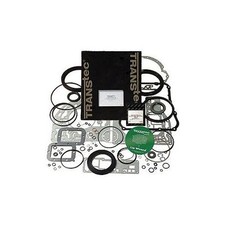
RE-Family Overhaul Gasket & Seal Kit (1990-2002)
Front pump seal, pump O-ring, pan gasket, manual shaft and rear seals in one kit, for when you are chasing more than one leak. Core Transmission Parts lists it under the 48RE; the 46RE shares the same A518-family case, but confirm the year range against your unit before you order.
View the gasket and seal kit →Shop RE-family transmission parts →
Frequently Asked Questions
Where does a 46RE usually leak?
The most common spots are the pan gasket and pan rail, the cooler line fittings on the case, the front pump seal at the bellhousing, and fluid pushed out of the vent from overfill or overheating. Less common are the manual shaft seal, the park/neutral switch, the harness connector O-ring, the dipstick tube seal and the rear seal or adapter housing. Clean the unit and use UV dye to find the highest wet point before replacing anything.
Why does my 46RE leak from the bellhousing?
It is usually the front pump seal, the pump O-ring or pump bolt washers, or fluid vented from an overfilled or overheated unit. On high-mileage units a worn pump bushing feeds extra converter oil to the front seal, so a new seal alone often leaks again. Check the color too, because engine oil from a rear main seal collects in the same place.
What is the torque spec for 46RE pan bolts?
Chrysler specifies 17 N·m (13 ft-lb) for the 46RE pan bolts, tightened in a crisscross pattern. Overtightening bends the pan rail and crushes the gasket, which causes leaks instead of stopping them. The filter screws are 4 N·m (35 in-lb).
Can tightening the cooler line fittings crack a 46RE case?
Yes. Sonnax notes that the OE cooler fittings on late-model Chrysler RWD units have tapered threads and no stop, so overtightening wedges the case and can crack it. Torque them to 18 N·m (13 ft-lb). A cracked boss can often be saved in the vehicle with Sonnax's straight-thread cooler line repair kit, 22000-01K.
Can overfilling a 46RE cause a leak?
Yes. Too much fluid gets churned into foam, which takes up more room and is pushed out of the vent, usually after highway driving. It runs down the bellhousing and looks like a front seal leak. Check the level hot, about 180 F, engine idling in Neutral, and drain to the correct mark.
Sources
- Sonnax, Cooler Line Repair Kit 22000-01K (and Cooler Line Adapter 22000-01). Backs the cracked or leaking case caused by tapered, stopless OE cooler line fittings on late-model Chrysler RWD units including the 46RE, the kit contents (five adapters and a tap), straight-thread leading-edge seal design, in-vehicle repair, and the 1/4-inch vs .250-inch fitting sizes. sonnax.com
- Sonnax, Shift Lever Case Bore Repair Sleeve 22179-02. Backs worn manual shaft case bores as the cause of leaking manual shaft seals on Chrysler RWD units including the 46RE, the steel-bushing repair, in-vehicle installation with the valve body removed, and the 56361-TL tool being out of production. sonnax.com
- Gregg Nader, Sonnax TASC Force, "Anatomy of a Transmission: Oil Flow in the Pump-PR-Converter-Cooler-Lube Circuits." Backs excessive converter oil flow past the converter hub bushing contributing to front seal leaks, the front seal drainback hole, and the .003-inch clearance vs .100-inch hole comparison on a 2-inch hub. sonnax.com
- Mike Brown, GEARS Magazine (ATRA), "A Dead Stop! A Typical Dodge 47RE Problem With an Unexpected Solution" (August 2022). Backs the cooler flow check: air into the rear cooler fitting at no more than 40 psi should enter with minimal resistance, and looping the cooler lines to rule out restriction. gearsmagazine.com
- DaimlerChrysler / Ram Body Builder, 2004 Ram Truck (DR) fluid capacities chart. Backs the 46RE service fill of 3.79 L (8 pints) and overhaul fill of 8.99-9.46 L (19-20 pints). rambodybuilder.com (PDF)
- FCA US LLC, Service Bulletin 21-046-15, "Low Transmission Fluid Level" (July 16, 2015), hosted by NHTSA. Backs the Mopar ATF+4 part number 05013457AA. static.nhtsa.gov (PDF)
Pan bolt (17 N·m), filter screw (4 N·m) and cooler line fitting (18 N·m) torques and the hot fluid-level check procedure are from Chrysler's 2001 Dodge Ram Truck service manual, 46RE section.