The 46RE is the gas-truck member of Chrysler's RE family, the four-speed behind the 5.2L and 5.9L Magnum V8s in Ram 1500 and gas 2500 trucks, Durangos and Dakotas. Most of them now have well over 150,000 miles, and plenty have unknown fluid history. So the question at the counter is always the same: does this truck get a flush or a pan drop?
The answer depends on the truck, not on the price sheet. A 46RE that shifts right and has clean fluid needs something different from one that just came back from a tow job smelling burnt. This guide covers what Chrysler's own bulletin says about flushing, how much fluid each method really replaces on a 46RE, why the electronic governor circuit makes this unit touchier about loose debris than an older RH, and how to do either service without creating a comeback. Sources are listed at the end.
The Short Answer
For a 46RE that shifts normally and has red, sweet-smelling fluid, do a pan and filter service on schedule and skip the flush. For a 46RE with dark or burnt fluid and no shift problems, do two or three pan services a few hundred miles apart, or a gentle fluid exchange through the cooler return line using ATF+4 only. For a 46RE that already slips, flares or has a lockup shudder, do not sell a flush as a fix. Diagnose it first. A flush will not repair worn bands or clutches, and it can move debris into the one circuit on this transmission that cannot tolerate it.
What Chrysler Actually Says About Flushing
Chrysler put its position in writing in service bulletin 26-003-07, "Fluid Flushing Requirements," dated March 30, 2007. The bulletin states that Chrysler Group vehicle fluid systems "do NOT require regular flushing," and transmission oil is on the list along with engine oil, axle lube, brake fluid, power steering fluid and refrigerant. The only exceptions it allows are cases where "a failure has occurred and/or the system has become compromised, contaminated or overheated beyond the normal operating range."
It goes further on chemicals. Chrysler says it does not recommend aftermarket chemicals to flush the transmission, because they can damage elastomeric seals and contaminate the fluid. When a flush is necessary, the bulletin says to use only the original approved fluid and approved equipment. The bulletin was written for 2005-2007 models, so it does not name the 46RE trucks, but it is the factory's general policy for its automatics.
Read plainly, that is two rules. A healthy 46RE does not need a flush as routine maintenance. A 46RE that has failed, overheated or been contaminated may need one, and it should be done with ATF+4, not a can of cleaner.
How Much Fluid Each Method Replaces on a 46RE
Chrysler's Ram fluid capacity chart (the 2004 DR Ram sheet, which still listed the 46RE) gives two numbers for this unit:
- Service fill: 3.79 liters (8 pints, 4 quarts). That is what a pan and filter change replaces.
- Overhaul fill: 8.99 to 9.46 liters (19 to 20 pints). That is the whole system: pan, valve body, converter, cooler and lines.
Divide one by the other and a single pan drop replaces about 40 to 42 percent of the fluid. The rest stays in the converter, the cooler and the lines. That is a better ratio than the diesel 47RE and 48RE get, because those units share the same 8-pint pan but hold 29 to 33 pints overall on the same chart. On a 46RE, repeated pan services actually work as a fluid change.
Here is the math, assuming the new fluid mixes completely with the old between services (it does after a few hundred miles of driving):
| Pan services | Original fluid still in the system |
|---|---|
| 1 | About 59% |
| 2 | About 35% |
| 3 | About 21% |
Three pan services spaced a few hundred miles apart get you to roughly 80 percent new fluid with no machine, no pressure, and three looks at the pan magnet along the way. That last part matters more than the percentage.
The overhaul range is a range for a reason. As our 46RE fluid type and capacity guide covers, Chrysler's manual notes that the dry fill depends on the cooler type and size, the length and inside diameter of the lines, and whether there is an auxiliary cooler. A truck with a big add-on cooler or a deep pan holds more than 20 pints.
Why the 46RE Is Touchy About Loose Debris
The 46RE shifts first through third hydraulically, but governor pressure is made electronically. As Dave Skora explained in ATRA's GEARS magazine (October 2006), a duty-cycled governor pressure solenoid builds that pressure, and governor pressure "strokes the shift valves," the same way it did on a TH350 or a C-4. Governor pressure should read zero at a stop and rise about one psi per mph up to roughly 40 mph. Above that, the system routes mainline pressure to the governor port.
That small circuit is where loose material does its damage. GEARS lists the causes when the PCM is commanding governor pressure and none shows up on the gauge: a faulty governor solenoid, or "a blockage in the circuit, either in the pressure feed to the solenoid, or between the solenoid and the governor pressure circuit." The solenoid's inlet is screened (that is why governor solenoid kits ship with a filter), and a screen that loads up with band lining or clutch material starves the circuit. The truck holds first, upshifts late, or shifts erratically.
The pressure transducer that reports governor pressure to the PCM is just as sensitive. Per the GEARS voltage chart for 1996-2003 gas trucks, the transducer signal (PCM pin B29) should read 0.60 to 0.66 volts at zero psi, about 3.0 volts at 60 psi and about 4.5 volts at 110 psi. If you suspect a flush moved debris into the circuit, put a gauge on the governor port and compare it with scan-tool desired and actual governor pressure. All three should match. If they do not, the problem is in the governor circuit, not the fluid.
This is the real reason a 46RE that was shifting fine sometimes comes back after an aggressive flush with a late 1-2 or a governor code. The flush did not hurt anything mechanically. It moved debris that had been sitting in the bottom of the converter or the cooler into a screen that is a fraction of the size of the main filter.
The Cooler Circuit: What a Flush Can Plug
The other place debris ends up is the cooler. Sonnax's Bob Warnke wrote that on the 46/47RH and RE family, cooler restriction is the most common flow problem. Restriction points include the drainback fitting, the radiator or auxiliary cooler, and the lines. When the converter clutch is not applied, a restriction pushes on the largest diameter of the switch valve, which can stage the valve mid-circuit and restrict converter and cooler flow further. Warnke notes the effect can become a problem as head pressure approaches 80 psi or more.
The symptoms Sonnax lists are worth memorizing, because they are what a customer complains about after a bad flush or a neglected cooler: converter clutch codes (P0740 family), converter slip under high torque, delayed engagements, slow converter fill, excessive stall speed and hydraulic noise. The Sonnax test is simple. Temporarily bypass the cooler circuit and retest. If the problem goes away, the restriction is in the cooler or lines. A second check is to watch cooler flow from Drive at idle through lockup. Low flow until the converter clutch applies, plus a slow or shuddering apply, points to restricted release oil inside the converter.
When a Full Exchange Is the Right Call
Chrysler's own exceptions line up with what we see on the bench. A cooler-line exchange makes sense when:
- The fluid is overheated. Dark, burnt-smelling fluid on a truck that still shifts right. The friction modifiers are tired and the converter is full of the same fluid. Our ATF color and smell chart helps you decide.
- The fluid is contaminated. The wrong fluid went in (Dexron or a universal fluid in place of ATF+4), or coolant got into the cooler.
- A repair just happened. After a valve body, solenoid or rebuild job, the old fluid in the converter and cooler should not be left to mix with new parts.
That last case is the one Transmission Digest has covered for years. Pat Barrow of Lubegard wrote that contaminated coolers are often the cause of premature failure of replacement transmissions, because the cooler and lines hold "dirt, grease, sludge, clutch material, metals shavings and particles." He also gives the limit: if the old unit came apart and filled itself with metal, it may not be possible to remove all of the debris no matter how you clean it. In that case, the cooler gets replaced, and some rebuilders void their warranty if it is not.
Barrow's practical tip applies to any 46RE exchange. Catch what comes out in a clear container and look at it. Lots of metal or friction material means the cooler needs replacing. Little or none means a purge is enough, and an inline filter on the return line adds protection.
How to Do a 46RE Pan and Filter Service
The torque figures below are from Chrysler's 2001 Ram service manual, 46RE section, and match our fluid and capacity guide.
- Drain it warm. Drive first, so debris is suspended and comes out with the fluid.
- Drop the pan and look before you clean. A fine gray paste on the magnet is normal wear. Brass flakes, steel slivers, or black band material are not, and they change the plan from "service" to "diagnose."
- Replace the filter. Filter screws are 4 N·m (35 in-lb). Do not overtighten them into the valve body.
- Reinstall the pan. Pan bolts are 17 N·m (13 ft-lb). Overtightening crushes the gasket and warps the rail.
- Refill by the procedure, not the capacity number. Chrysler's procedure starts with 3 pints (1.5 quarts) of ATF+4 after a filter change, then runs the engine, shifts through the ranges, and tops up to the dipstick. Final check is hot, about 180°F (82°C), engine idling, selector in Neutral. Have 5 to 6 quarts on hand.
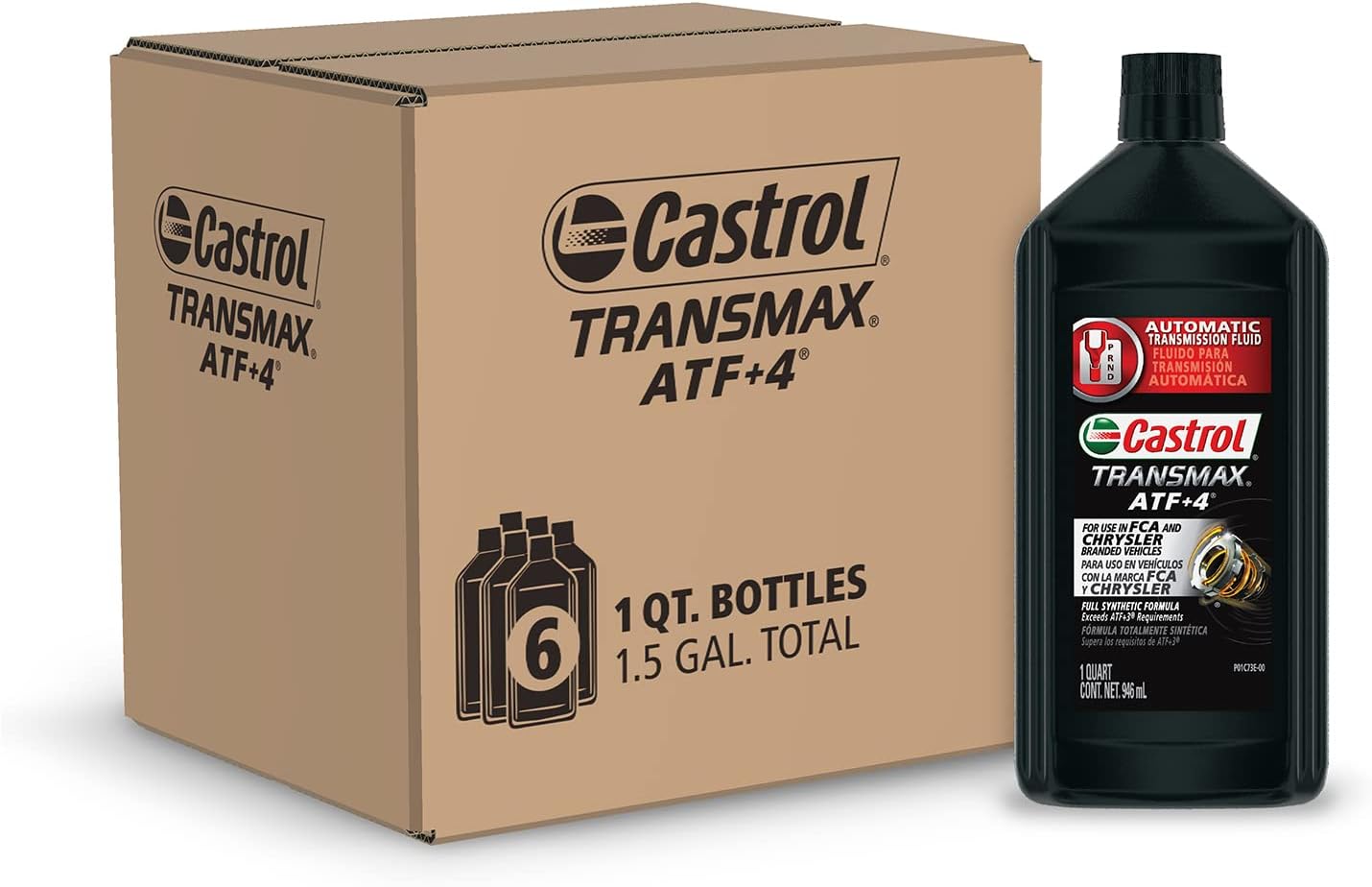
Use ATF+4 that lists Chrysler MS-9602. The Mopar part number is 05013457AA, per FCA bulletin 21-046-15 (written for the 62TE, but it is the same ATF+4 used across Chrysler automatics). ATF+3 is not a substitute.
How to Do a Gentle Exchange Without a Machine
If the fluid is dark and the truck shifts fine, this is the low-pressure way to turn over the converter and cooler fluid. It uses the transmission's own pump, so nothing is forced backward through the circuit.
- Do a pan and filter service first, so the new filter catches what the exchange stirs up.
- Disconnect the line coming back from the cooler and route it into a marked container. Leave the line going to the cooler connected.
- With a helper, start the engine in Neutral. Fluid pumps through the cooler into the container. Shut the engine off after about 2 quarts come out. Never let the level drop off the dipstick.
- Add the same amount of fresh ATF+4 through the fill tube. Repeat until the fluid coming out looks like the fluid going in. On a 46RE that usually takes 10 to 12 quarts total.
- Reconnect the line (cooler line fittings at the transmission are 18 N·m, 13 ft-lb), set the level hot in Neutral, and check cooler flow.
- Look at the fluid in the container. If you see glitter or friction material, stop treating this as maintenance and start diagnosing.
Do not use solvent or "flush fluid" in the transmission. That is Chrysler's own rule in bulletin 26-003-07.
Our Call
On a 46RE, the pan drop is the default and the best tool. The pan holds about 40 percent of the system, it gives you a look at the magnet, and two or three of them back to back do most of what a flush does without moving debris. Save a cooler-line exchange for overheated or contaminated fluid, or after a repair, and do it with ATF+4 only. Never flush a slipping 46RE to fix it. If it slips, it has a mechanical problem, and the fluid is the evidence you need to find it.
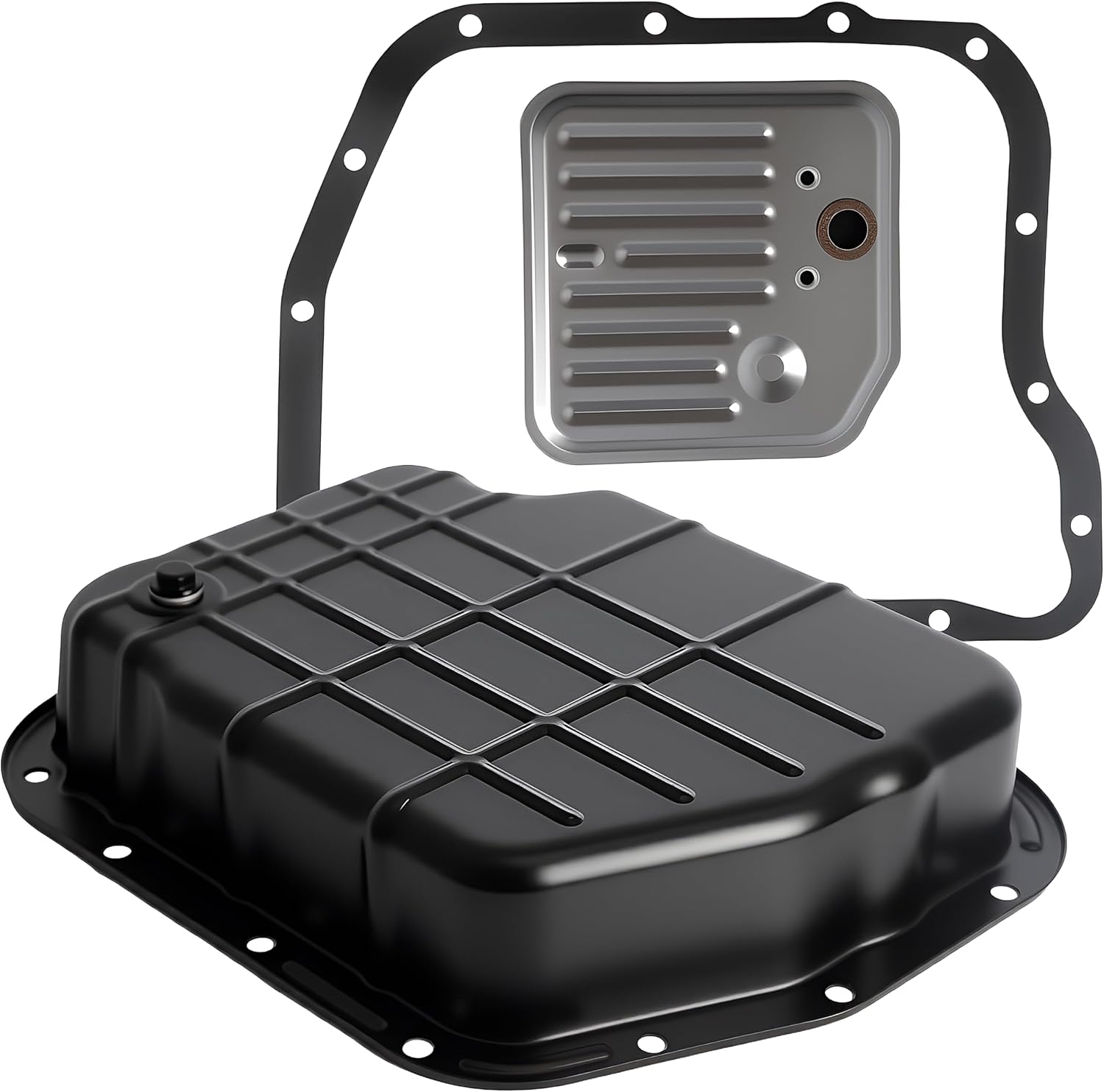
RE-Family Transmission Filter with Gaskets (1998-2009)
The filter and pan gasket for the pan service above. Core Transmission Parts lists it under the 48RE; the 46RE shares the same A518-family case and pan pattern, but hold your old filter next to the listing photo before you order.
View the filter and gasket kit →Shop RE-family transmission parts →
Frequently Asked Questions
Should I flush or drain-and-fill my 46RE?
For a 46RE that shifts normally, do a pan and filter service on schedule. If the fluid is dark or burnt but the truck shifts fine, do two or three pan services a few hundred miles apart, or a gentle exchange through the cooler return line with ATF+4 only. Do not flush a slipping 46RE as a fix; diagnose it first.
How much fluid does a 46RE pan drop replace?
Chrysler's Ram fluid capacity chart lists a 46RE service fill of 3.79 liters (8 pints) and an overhaul fill of 8.99 to 9.46 liters (19 to 20 pints). One pan and filter change replaces about 40 to 42 percent of the fluid. Three pan services spaced a few hundred miles apart get the system to roughly 80 percent new fluid.
Does Chrysler recommend transmission flushes?
No, not as routine maintenance. Chrysler bulletin 26-003-07 says its vehicle fluid systems, including transmission oil, do not require regular flushing, except after a failure or when the system is contaminated or overheated. It also says not to use aftermarket flush chemicals, only the approved fluid.
Can a flush cause shifting problems on a 46RE?
A flush can move debris from the converter or cooler into the governor pressure circuit or the cooler itself. On a 46RE that can show up as late or missing upshifts, governor codes, or converter clutch slip. If that happens, compare gauge governor pressure with scan-tool desired and actual pressure, and check cooler flow.
What fluid does a 46RE take after a flush or pan service?
ATF+4 that meets Chrysler MS-9602. The Mopar part number is 05013457AA. ATF+3, Dexron and Mercon are not substitutes. After a filter change, start with 3 pints and top up by the dipstick, checked hot at about 180 F in Neutral with the engine idling.
Sources
- DaimlerChrysler / Ram Body Builder — 2004 Ram Truck (DR) fluid capacities chart. Backs the 46RE service fill of 3.79 L (8 pints) and overhaul fill of 8.99-9.46 L (19-20 pints), and the 47RE/48RE overhaul fill of 29-33 pints for comparison. rambodybuilder.com (PDF)
- Dave Skora, ATRA GEARS Magazine, "Troubleshooting the 42-47RE Transmissions" (October 2006). Backs governor pressure behavior (zero at a stop, about 1 psi per mph to about 40 mph), the governor feed blockage diagnosis, crossleak and limp-mode notes, and the PCM pin B29 transducer voltages. atracom.blob.core.windows.net (PDF)
- Bob Warnke, Sonnax, "46-47RH/RE Cooler and Converter Flow." Backs cooler restriction as the most common flow problem, the restriction points, switch valve staging near 80 psi head pressure, the symptom list, and the cooler bypass and cooler flow tests. sonnax.com
- Pat Barrow (Lubegard), "To Flush Or Not To Flush," Transmission Digest (June 1, 2019). Backs contaminated coolers as a cause of replacement-transmission failure, the limit after a catastrophic failure, the clear-container inspection, and the return-line inline filter. transmissiondigest.com
- FCA US LLC — Service Bulletin 21-046-15, "Low Transmission Fluid Level" (July 16, 2015), hosted by NHTSA. Backs the Mopar ATF+4 part number 05013457AA. static.nhtsa.gov (PDF)
Chrysler bulletin 26-003-07 is quoted from the factory document; torque, fill-procedure and maintenance-schedule figures are from Chrysler's 2001 Dodge Ram Truck service manual, 46RE section.