Every few months someone brings in a 48RE after a quick-lube shop sold them a "transmission flush" on a truck that was shifting fine. Half the time nothing bad happens. The other half, the truck comes back a week later with a flare on the 2-3 or a converter shudder that was not there before, and the owner wants to know what the flush did. The honest answer is usually: it did not do anything to the transmission, it just moved whatever was already loose in there somewhere new.
This is not a style preference. Chrysler has a written position on flushing, and it is more conservative than most shops that sell flushes as a standing maintenance item. Below is what the factory bulletin actually says, how much fluid each method really replaces on this specific unit, and where a flush earns its place instead of creating a problem.

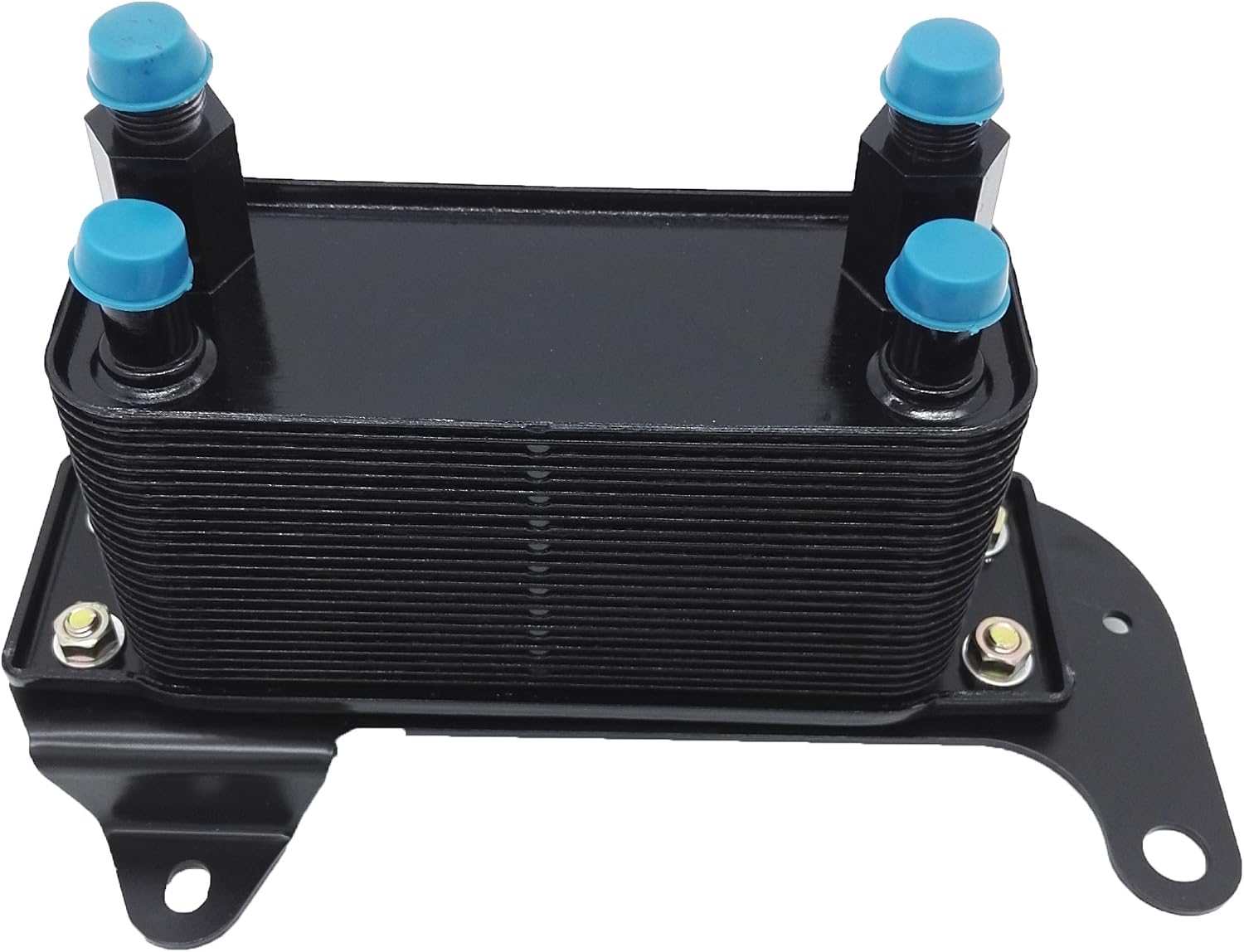
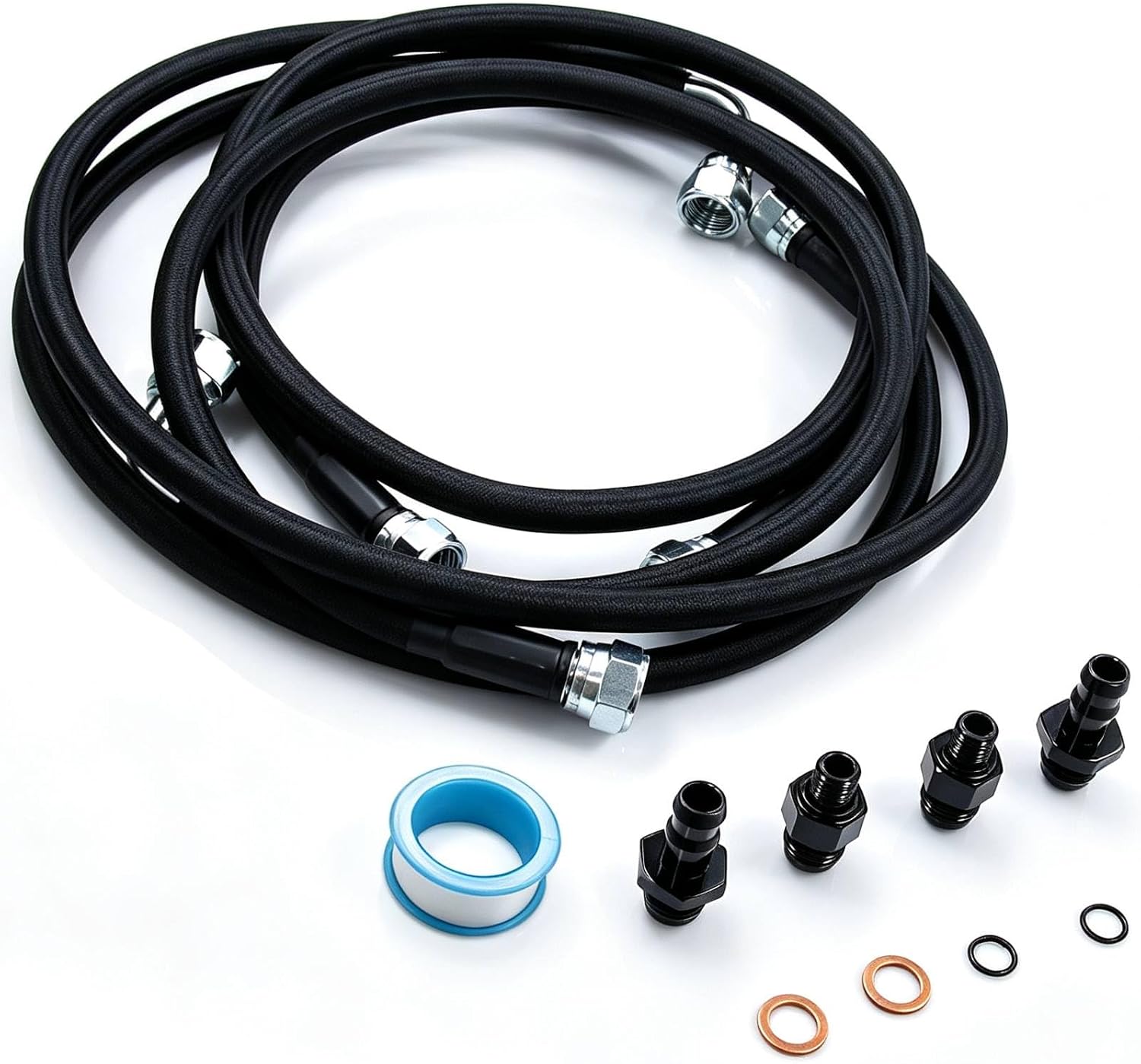
The Two Methods, and What Each One Actually Touches
Drain-and-fill (pan drop) means pulling the pan, dropping the filter, and refilling with what drains out plus a bit more. On a 48RE that is about 8 pints of the roughly 29 to 33 pints the system holds dry, per the capacity figures in our 48RE fluid type and capacity guide. Do the math and a single pan drop replaces around a quarter of the fluid in the truck. The torque converter, the cooler, and the lines running to it keep the rest, untouched.
Flush (fluid exchange) means forcing fluid through the system under power, either with a machine connected to the cooler lines or by cycling drain-and-refill several times, so that most of the converter and cooler volume turns over along with the pan. Done right, it gets close to the full 29 to 33 pints out and new fluid in, instead of the 8 pints a pan drop replaces. The 48RE's converter has no drain plug of its own, so an exchange through the cooler line is the only way to turn over that fluid without pulling the converter off the truck.
What Chrysler Actually Says About Flushing
Chrysler issued bulletin 26-003-07, "Fluid Flushing Requirements," on March 30, 2007, covering a long list of models including the 2005-2007 Ram Truck (DR/DH), the exact trucks still running a 48RE at that point. The bulletin is blunt: "Chrysler Group vehicle fluid systems do NOT require regular flushing." It names the covered systems directly — engine oil, transmission oil, axle lube, brake fluid, power steering fluid, and refrigerant — and says the only built-in exception is whatever the published maintenance schedule calls for, such as engine coolant.
The bulletin then narrows the exception for everything else: flushing is justified "only [in] those instances where a failure has occurred and/or the system has become compromised, contaminated or overheated beyond the normal operating range." It also tells technicians not to reach for aftermarket flush chemicals on the transmission, brakes, or steering, because those chemicals can attack elastomeric seals and contaminate the fluid, which cuts the other way against durability. If a flush is warranted, Chrysler's position is to use the original approved fluid and OEM-approved equipment, not a chemical additive sold as a "flush fluid."
Read plainly, that is a factory statement against selling flushes as a standing mileage-interval service on a healthy 48RE, and a factory statement in favor of a full exchange specifically when something has already gone wrong. Those are two different trucks, and the bulletin treats them differently.
The Debris Problem a Flush Can Create
The risk is not the exchange process itself, it is what the exchange moves around. Pat Barrow, product-technical manager at Lubegard, wrote for Transmission Digest that contaminated transmission coolers and lines are a known cause of premature failure in a freshly serviced or rebuilt unit, because the cooler and lines hold "dirt, grease, sludge, clutch material, metal shavings and particles that will quickly destroy" new fluid and, eventually, new parts. His piece is specifically about purging a cooler circuit before reconnecting it, and the same logic applies to flushing a 48RE that already has worn band lining or clutch material circulating: an aggressive flush can knock that material loose from where it was sitting relatively harmlessly and drive it straight into the valve body, the solenoids, or the governor circuit. Barrow is also direct about the limit of any cleaning method here: "If the transmission failed catastrophically... it may not be possible to remove all the debris, no matter what method of cleaning you selected."
That is the real argument for Chrysler's conservative stance. A 48RE that is shifting fine does not have a debris problem to move around, so a flush on that truck is low-risk busywork. A 48RE that already has a shudder, a flare, or a known contamination event is exactly the truck where an aggressive flush can relocate material into a part that was clean a day earlier. The industry's own reference for inspecting and flushing a torque converter, SAE paper 841196 by Frank Slocum, treats converter flushing as a deliberate, bench-level evaluation procedure with pressure checks and stall testing built around it, not something to run blind through a cooler line on a truck still on the road.
Whichever service you pick, prove the cooler circuit afterward. GEARS Magazine's ATRA coverage of the Chrysler heavy-duty units calls for at least about one gallon per minute of cooler flow, measured with a flow meter or into a bucket. Sonnax's Bob Warnke documented on the RE family that a cooler restriction stages the switch valve mid-circuit and cuts converter and cooler flow further as head pressure climbs toward 80 psi; his test is to bypass the cooler temporarily and retest. A flush that dislodges material into the cooler is exactly how that restriction starts.
Where a Pan Drop Falls Short
The flip side is that a pan drop alone is not a real fluid change on a truck that has been neglected. Chrysler's 2006 Ram fluid capacity sheet lists a 48RE service fill of 3.8 L (8 pints) against an overhaul fill of 14-16 L (29-33 pints), so a pan drop replaces roughly a quarter of what is in the system. That does freshen additive package and friction modifier somewhat, but it leaves three-quarters of the old, oxidized fluid sitting in the converter and cooler circuit. On a towing or plowing truck where the fluid has gone dark or started to smell burnt — covered in our ATF color and smell diagnosis chart — a single pan drop will not bring the fluid back to a healthy state. That is a case for either two or three pan services spaced a few hundred miles apart, which is the low-risk way to approximate an exchange without machine equipment, or a proper fluid exchange if the shop has the equipment and the truck's history does not suggest internal debris.
Our Call
Drain-and-fill, on a regular interval, is the right default for a 48RE that shifts correctly and has no history of overheating or contamination. It is lower risk, it is the service Chrysler's bulletin implicitly endorses by exempting scheduled maintenance, and it is the service most pan and filter kits are designed around. Step up to a full fluid exchange only when one of these is true: the fluid already tests dark or burnt, the truck is about to tow hard for the first time in years on unknown fluid history, there has been a converter shudder complaint, or a repair just put the pan back on after any internal part failed. In every one of those cases, exchange with the OEM-approved ATF+4 fluid itself, never an aftermarket flush chemical, and inspect what comes out before you write off the converter.
Doing a Drain-and-Fill Right
- Drain hot, right after a drive, so suspended debris and moisture come out with the fluid instead of settling back into the pan.
- Drop the pan, replace the filter, and inspect the pan magnet and sump for metal or friction material before you reinstall anything. That inspection is the whole point of doing this yourself instead of a drive-through flush.
- Torque the pan bolts to 125 in-lb (about 10 ft-lb) per the Chrysler service manual figures in our fluid and capacity guide. Overtightening here is the most common way a fresh pan gasket starts weeping.
- Refill with Mopar ATF+4 or an equivalent that lists Chrysler MS-9602 on the label only (Amalie's ATF+4 data sheet, for example, lists MS-9602 and MS-7176E/D). Plan on 5 quarts on hand for a pan and filter job so you are not short mid-service.
- Check the level hot, in Neutral, by the dipstick, not by a fixed quart count. The exact procedure is in the same fluid and capacity guide.
48RE Transmission Oil Pan Kit with Filter (1998-2006)
Pan, gasket, and filter in one kit, sized for the pre-2007 48RE drain-and-fill described above. A little more work to track down the exact kit for your year beats guessing at a generic filter.
View the 48RE pan and filter kit →Shop 48RE transmission parts →
Frequently Asked Questions
Should you flush or drain-and-fill a 48RE transmission?
For routine maintenance on a 48RE that is shifting fine, a drain-and-fill (pan and filter) on a regular interval is the safer default. Save a full fluid exchange or flush for a unit with already-contaminated, burnt, or unknown-history fluid, or after a repair that put metal or friction material into the system.
What does Chrysler say about transmission fluid flushes?
Chrysler bulletin 26-003-07, Fluid Flushing Requirements, states that Chrysler Group vehicle fluid systems, including transmission oil, do not require regular flushing, with exceptions only for a failure or contamination. It also says Chrysler does not recommend aftermarket chemicals to flush the transmission.
How much fluid does a drain-and-fill actually replace on a 48RE?
A pan and filter service on a 48RE drains about 8 pints out of a system that holds 29 to 33 pints dry, so a single pan drop replaces roughly a quarter of the total fluid. The torque converter, cooler, and lines hold the rest and are untouched by a pan drop alone.
Can a transmission flush damage a 48RE?
A flush itself does not damage a healthy 48RE, but flushing a unit that already has worn band or clutch material, or a cooler with trapped debris, can push that debris back into the valve body and solenoids instead of removing it. That is why Chrysler limits its flush recommendation to failure or contamination cases.
When is a full fluid exchange worth it on a 48RE?
An exchange is worth it after a torque converter shudder complaint of unknown fluid history, after any internal repair, before towing season on a truck that has not had one in years, or any time the fluid comes back dark or burnt-smelling on a dipstick check.
Sources
- DaimlerChrysler Service Bulletin 26-003-07, "Fluid Flushing Requirements" (March 30, 2007). Backs the statement that Chrysler Group fluid systems, including transmission oil, do not require regular flushing except after a failure, contamination, or overheating event, and the warning against aftermarket flush chemicals. Covers 2005-2007 Ram Truck (DR/DH) among its listed models. viperclub.org (PDF)
- Pat Barrow (Lubegard), "Transmission Cooler Flushing," Transmission Digest (June 1, 2019). Backs the contamination risk from un-purged coolers and lines, the warning that catastrophic internal failures can leave debris no cleaning method fully removes, and the inline-filter mitigation. transmissiondigest.com
- Frank H. Slocum, SAE Paper 841196, "Torque Converter Field Inspection, Evaluation and Test Procedures" (SAE, 1984). Backs converter flushing as a deliberate, bench-level evaluation procedure built around stall and pressure testing, the industry's long-standing technical reference for the process. saemobilus.sae.org
- Amalie Oil Company — Full Synthetic ATF+4 product data sheet (2/2024). Backs the Chrysler MS-9602 and MS-7176E/D specifications any ATF+4 used in an exchange or pan service on a 48RE must meet. Replaces a Mobil ATF+4 data sheet link that no longer resolves. amalie.com (PDF)
- Chrysler / Ram Body Builder — 2006 Ram Fluid Capacities. Backs the 48RE service fill of 3.8 L (8 pints) and overhaul fill of 14-16 L (29-33 pints). rambodybuilder.com (PDF)
- Sonnax — "46-47RH/RE Cooler and Converter Flow," Bob Warnke, December 22, 2005. Backs the switch valve staging mid-circuit with a cooler restriction, the roughly 80 psi head pressure threshold, and the cooler-bypass retest. sonnax.com
- GEARS Magazine (ATRA) — Chrysler 48RE/68RFE/AS68RC transmission overheating. Backs the minimum cooler flow of about one gallon per minute and the flow-meter or bucket test. gearsmagazine.com