A Ram 3500 with a 5.9L Cummins and a 47RE rarely comes in with a shift complaint while it is empty. It comes in after a trip: it would not stay in overdrive on the grade, the O/D OFF light came on by itself, it hunted between third and fourth with the trailer on, or it flared on the 3-4 shift and never felt right after. The truck has usually been unhooked by the time it reaches the shop, so it drives fine on the road test and the owner hears that nothing is wrong.
This guide is about those loaded-and-hot shift problems on the 1996-2002 Ram 3500. The governor, TV cable and valve body side of shift timing is already covered in our 47RE Ram 2500 Cummins shift problems guide, and the same truck's slip complaints are in the 47RE Ram 3500 slipping article. Here the question is different: when the truck is working, is the PCM changing the shifts on purpose, or is something actually failing?
How the 47RE Decides on Fourth Gear and Lockup
First through third on a 47RE are hydraulic shifts, controlled by governor pressure against TV pressure. Fourth gear and converter lockup are not. They are direct PCM commands through the overdrive and converter clutch solenoids, and the PCM has a list of reasons to refuse them. Chrysler's 1998 Ram Truck service manual (Group 21, 46/47RE) lists the conditions under which a shift to fourth will not occur: [1]
- The overdrive switch is off
- Transmission fluid temperature is below 10°C (50°F) or above 121°C (250°F)
- The shift to third has not finished yet
- Vehicle speed is too low for the 3-4 shift
- Battery temperature is below -5°F
Lockup follows the overdrive switch. With the switch in its normal ON position, the manual says the converter clutch engages after the shift to fourth, above about 45 mph. With overdrive switched off, it engages in third at about 35 mph at light throttle. [1] The PCM also runs four separate governor pressure curves: one for fluid at or below 30°F, one for normal driving at 50°F and up, one for wide-open throttle, and one for when the transfer case is in low range. [1] A 3500 that shifts differently in 4-Low, or when it is pulled hard at full throttle, is running a different curve. That alone is not a fault.
The fluid temperature reading comes from a thermistor built into the governor pressure sensor, which sits in the fluid all the time. Chrysler gives about 1000 ohms at room temperature as its normal resistance. [1] Keep that in mind. On these trucks, the part that reports temperature is the same part that reports governor pressure.
Complaint 1: Drops Out of Overdrive on a Grade and the O/D OFF Light Comes On
This is the classic 3500 towing complaint, and most of the time the PCM is doing exactly what it was programmed to do. Per the factory manual, when fluid temperature passes 126°C (260°F) the PCM forces a 4-3 downshift and applies the converter clutch on the third-gear lockup schedule. The O/D OFF lamp lights when that shift back to third happens, and fourth gear will not come back until the fluid cools to about 110°C (230°F). [1] Locking the converter in third stops the converter from making heat while the truck pulls the grade.
Diesel trucks with an automatic have a second layer. The Group 14 fuel system section describes a transmission temperature sensor in the cooler line on the side of the transmission. Above about 280°F it signals the PCM to force a 4-3 downshift and turn on an instrument panel transmission temperature warning lamp. The manual says that lamp is only used on certain heavy-duty automatic applications. [1] So a Cummins truck that drops to third and lights a lamp on a long pull has not suffered an electrical failure. It is telling you the fluid is past 260-280°F.
How to diagnose it: do not start by replacing the overdrive solenoid. Put a scan tool on the truck and log transmission temperature on a loaded drive. Check it against an infrared reading on the cooler outlet line. If the scan tool says 265°F and the line agrees, the problem is heat. If the scan tool says 265°F and the line reads 180°F, suspect the sensor. The governor pressure sensor assembly is also the temperature sensor, so check its resistance against Chrysler's room-temperature value, and look at its connector before you condemn the transmission.
Where the heat comes from: Sonnax's tech note on 46-47RH/RE cooler and converter flow calls cooler restriction by far the most common problem on this family. It lists converter clutch slip at high torque, delayed engagements and 740/1740 converter codes as the symptoms, and flags head pressure above about 80 psi as a restriction. The note recommends temporarily bypassing the cooler to prove it. [2] On a 3500 that tows, check the radiator tank cooler, the auxiliary cooler in front of the condenser, and the drainback valve in the cooler outlet line. [1][2] A partly plugged cooler gives you exactly this complaint: fine empty, out of overdrive ten minutes up the hill.
Complaint 2: Hunting Between Third and Fourth With a Trailer
On a rolling highway with a heavy trailer, a 47RE can cycle 3-4-3-4 every time the throttle moves. Each 4-3 kickdown unlocks the converter and makes heat, and each 3-4 shift puts another apply on the overdrive clutch. This is a driving-strategy problem before it is a transmission problem, and the factory gave the driver a tool for it. The O/D OFF switch in the shift lever is a momentary switch. One press turns overdrive off and lights the lamp, a second press turns it back on, and it defaults back to overdrive ON every time the key is cycled. [1] With overdrive off, lockup is still available in third from about 35 mph at light throttle. [1] Third gear locked on a hill runs cooler than a converter slipping in fourth.
If the truck hunts even on light grades, check the TV cable next. Too tight a cable makes part-throttle downshifts too sensitive, and on a Cummins the throttle lever moves very little near idle, so a small error matters. The setup procedure is in the 2500 guide linked above.
Complaint 3: 3-4 Flare Under Load, or Slips Only in Fourth
Now you are looking at a failing part. Chrysler's road test analysis is clear: the overdrive clutch applies only in fourth gear. The overdrive direct clutch and overrunning clutch apply in every range except fourth. If the truck slips during the 3-4 shift or only in fourth, the overdrive clutch is slipping. [1] If it is solid in third and flares going into fourth with a load behind it, the problem is in the overdrive unit, not the front of the transmission.
Prove it with the factory overdrive clutch pressure test (Test Six). Put a 300 psi gauge on the overdrive clutch pressure port, turn the O/D switch on, and drive until the 3-4 shift happens. The manual calls for 68-72 psi at closed throttle, rising to 90-120 psi at half to three-quarter throttle, and about 130 psi at full throttle. [1] Low pressure in fourth only points to the overdrive clutch piston seal or a check ball problem, per the pressure test analysis chart. [1]
There is a design reason 3500s cook this clutch. Sonnax's comparison of the 48RE with its predecessor shows the 46/47RE raises line pressure only about 10-15 psi in third with lockup and in fourth. The 48RE raises it 22-28 psi. Sonnax ties the extra clamping force on the converter clutch and the overdrive clutch to heavy-duty use, especially towing. [3] A 47RE at its limit behind a gooseneck has little pressure to spare, so hot fluid and a little valve body wear show up in fourth first. Sonnax's 46/47RE vacuum test guide connects lockup boost valve bore wear to converter clutch slip under load, no line rise when lockup applies in fourth, an overheated converter and lockup cycling. [4] If the gauge reads low in fourth but the piston seals check good, look at the valve body.
Complaint 4: After the Trip, No Reverse and No Engine Braking in Manual 2
Some 3500s come back from a hot towing trip with weak or no Reverse and no coast braking in manual 2. That pair of symptoms points to the overdrive direct clutch. The factory road test notes that if the direct clutch fails, the transmission loses both Reverse and overrun braking in manual second. [1] The direct clutch is applied by a large spring, not by hydraulic pressure. TransGo's technical page for its high-temp overdrive direct clutch spring says the original spring fades. Clamping force drops, the plates burn, and the result is Reverse slip and reduced or no coast braking in 2nd and 1st. TransGo says the spring can be replaced without pulling the transmission. [5] If the plates are already burned, the overdrive unit has to come apart.
Complaint 5: No Fourth on Cold Mornings
Fleet trucks that sit outside get this one in winter: no fourth and no lockup for the first few miles. That is the factory strategy again. Below about 50°F the PCM will not engage the overdrive clutch or the converter clutch, and below 30°F it runs the cold governor curve. [1] If fourth never comes in, even fully warm, Chrysler says to check the overdrive switch, the overdrive solenoid and the case connector wiring for continuity with a 12-volt test lamp or an ohmmeter whenever the transmission fails to shift into fourth. [1] Check the switch first, since it resets to ON at every key cycle and the lamp tells you which state it is in.
Complaint 6: Shift Points Wrong on Full-Throttle Pulls, or Governor Codes When Loaded
A loaded 3500 spends a lot of time at or near wide-open throttle, so it runs the WOT governor curve more than an empty truck does. ATRA's Dave Skora, in GEARS magazine's 42-47RE troubleshooting article, says to make a full-throttle pull and watch Governor Actual if a governor code sets in third or fourth. More than about 105 psi means excessive line pressure or a bad transducer. Above about 40 mph the governor circuit is fed mainline pressure, so the transducer is really reading line pressure. [6] A truck with a firmed-up valve body or a bad TV cable setting can set a governor code only when it is pulling hard. Skora's broader point holds here too: if governor pressure checks good on a gauge, the electronics are not causing the shift problem. [6]
The Fix, by What You Found
- Drops to third with the lamp on, temperature confirmed over 260°F: restore cooler flow. Flush or replace the cooler and lines, check the drainback valve, and bypass-test as Sonnax describes. [2] Add cooler capacity if the truck tows at its limit.
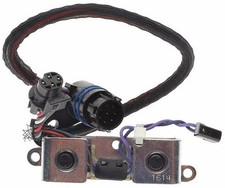
- Drops to third, but the fluid is not actually hot: test the governor pressure sensor and thermistor assembly and its connector. [1]
- Hunts 3-4 on rolling terrain: tow with overdrive off on grades, and set the TV cable correctly.
- Flares 3-4 or slips in fourth, Test Six low: overdrive piston seals and check ball, and inspect the overdrive clutch pack. [1] Check the lockup boost valve bore if the seals are good. [4]
- No Reverse and no manual-2 coast braking: overdrive direct clutch spring, and plates if they are burned. [1][5]
- No fourth when warm: overdrive switch, overdrive solenoid and case connector wiring. [1]
When a 3500 has been run hot long enough to burn the overdrive or direct clutch, the fluid is usually dark and smells burnt, and a solenoid or a cooler alone will not bring it back. That is a rebuild, and it should go back together with a clean cooler circuit, or the new clutches will cook the same way.
Keeping a Towing 47RE Shifting Right
- Watch temperature, not just the lamp: a gauge or scan-tool readout gives you warning before the 260°F downshift. [1]
- Use O/D OFF on long grades: it keeps the truck locked in third instead of hunting. [1]
- Check cooler flow at every service: restriction is the most common cause of trouble on this family. [2]
- Keep the bands and fluid right: ATF+4, correct level checked hot, and band adjustments to the factory spec in our 47RE fluid type and capacity guide. A transmission fluid spec chart covers the rest of the fleet.
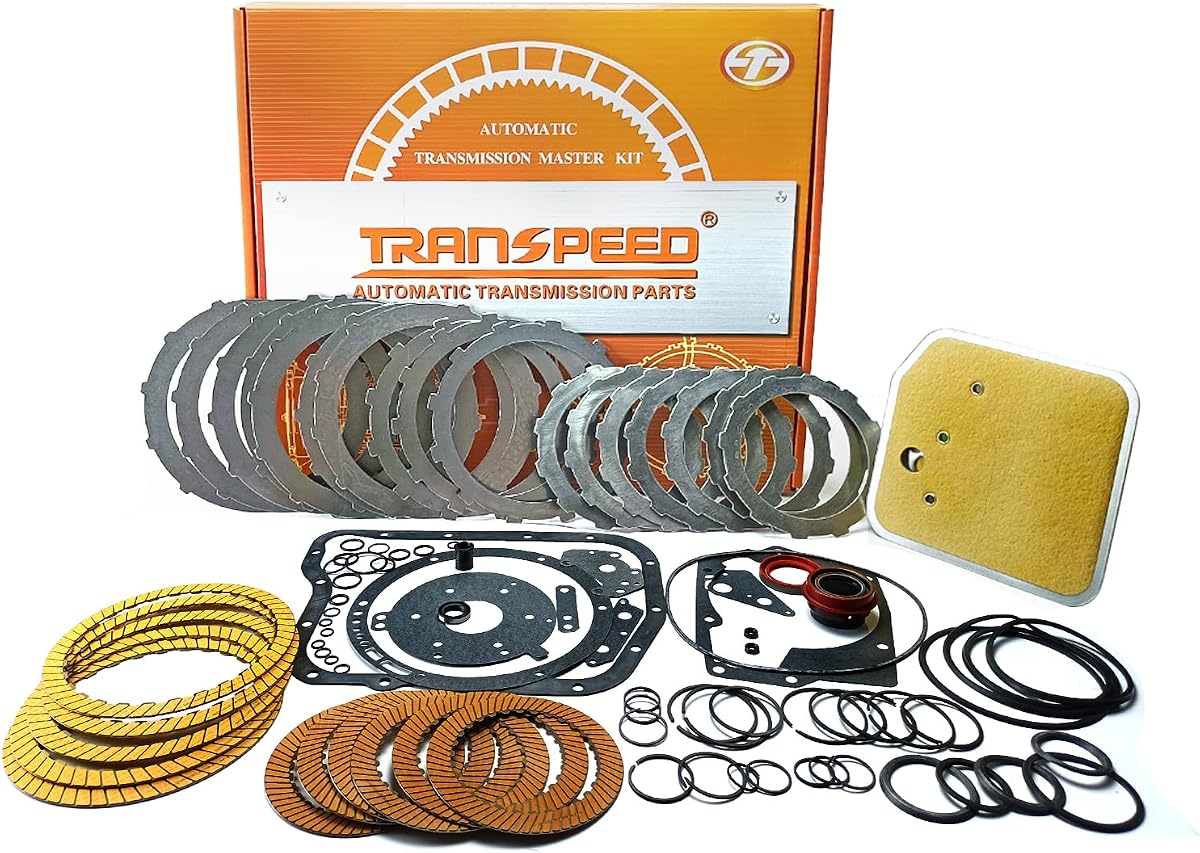
47RE master rebuild kits, transmission coolers, overdrive and lockup solenoids, governor pressure sensor kits and valve bodies for the 1996-2002 Ram 3500 Cummins — shipped fast from the USA.
Shop 47RE parts →Shop the part for this fix
When the overdrive or direct clutch is burned from towing, the Raybestos 1988-2002 friction clutch kit has the plates to rebuild those packs on a 47RE.
Shop the 88-02 friction kit → All RE-series partsFAQ
Why does my 47RE drop out of overdrive when towing up a hill?
Usually because the fluid is too hot. Per Chrysler's service manual, above about 260 degrees F the PCM forces a 4-3 downshift, locks the converter in third and lights the O/D OFF lamp, and it will not allow fourth again until the fluid cools to about 230 degrees F. Check cooler flow before you replace any solenoid.
Should I tow with overdrive off on a 47RE?
On long grades or rolling terrain with a heavy trailer, yes. With O/D off the converter can still lock in third at about 35 mph at light throttle, which stops the 3-4-3 hunting that unlocks the converter and makes heat. The switch goes back to overdrive ON every time you cycle the key.
What does a 3-4 flare on a towing 47RE mean?
The overdrive clutch applies only in fourth, so a flare on the 3-4 shift or a slip only in fourth points to the overdrive clutch. Run the factory Test Six: about 68-72 psi at closed throttle and 90-120 psi at half to three-quarter throttle at the overdrive clutch port. Low pressure in fourth means piston seals or a check ball problem.
Why is there no reverse and no engine braking in 2 after towing?
Those two symptoms together point to the overdrive direct clutch. It is applied by a large spring that loses clamping force when it gets hot, and the plates then burn. The spring can be replaced without removing the transmission, but burned plates mean the overdrive unit has to come apart.
Related 47RE guides
Sources
- Chrysler — 1998 Ram Truck 1500-3500 Service Manual, Group 21 Automatic Transmission 46/47RE (pp. 21-212 to 21-219) and Group 14 Fuel System (p. 14-123). Backs the conditions that block the 3-4 shift (O/D switch off, fluid below 50°F or above 250°F, battery below -5°F); the thermistor in the governor pressure sensor (about 1000 ohms at room temperature); the 260°F forced 4-3 with third-gear lockup and the O/D OFF lamp, and the return to fourth at about 230°F; the four governor curves including WOT and transfer case low range; lockup above about 45 mph in fourth and about 35 mph in third with O/D off; the momentary O/D OFF switch and its key-cycle reset; the road test analysis (overdrive clutch in fourth only, direct clutch failure costing Reverse and manual-2 coast braking); the switch, solenoid and wiring checks; Test Six overdrive clutch pressures (68-72, 90-120 and about 130 psi) and the low-pressure-in-fourth diagnosis; the cooler outlet drainback valve; and the diesel cooler-line temperature sensor that forces a 4-3 and lights a warning lamp above about 280°F. archive.org
- Sonnax Tech Resources — "46-47RH/RE Cooler and Converter Flow." Backs cooler restriction as the most common issue on this family, the TCC slip at high torque, delayed engagement and 740/1740 symptom list, the roughly 80 psi head pressure threshold, and the temporary cooler bypass test. sonnax.com
- Sonnax Tech Resources — "Dodge 48RE Hydraulic Features Revealed." Backs the 46/47RE line pressure rise of about 10-15 psi in third with TCC on and in fourth, against 22-28 psi on the 48RE, and the added clamping force for the converter and overdrive clutches being needed in heavy-duty towing use. sonnax.com
- Sonnax Tech Resources — "Chrysler 46RE, 46RH, 47RE, 47RH Vacuum Test Guide." Backs the lockup boost valve wear symptoms: TCC slip under load, no line rise during TCC apply in fourth, an overheated converter and TCC cycling. sonnax.com
- TransGo — High-Temp Overdrive Direct Clutch Spring, technical product page. Backs the overdrive direct clutch being spring-applied, the spring fading and losing clamping force, burnt overdrive direct plates, slip in Reverse, reduced or no coast braking in manual 2nd and 1st, and replacement without removing the transmission. transgo.com
- ATRA GEARS Magazine, October 2006 — "Troubleshooting the 42-47RE Transmissions," Dave Skora. Backs the full-throttle Governor Actual check (more than about 105 psi meaning excessive line pressure or a bad transducer), mainline feeding the governor circuit above about 40 mph, and the rule that good governor pressure clears the electronics. atracom.blob.core.windows.net (PDF)
The temperature and lockup figures above are from the 1998 manual. PCM calibrations changed over the 1996-2002 run, so confirm the exact values for your model year in its own service manual.