A second-gen Ram 2500 with a Cummins and a 47RE that "shifts funny" is one of the most common trucks to come through a transmission shop, and one of the most commonly misdiagnosed. The complaint arrives as a late 2-3, a truck that holds second until the driver lifts, a third-gear start, a 1-2 that hunts back and forth, or an overdrive that comes and goes. Somebody has usually already thrown a solenoid at it. Sometimes two.
The 47RE is a hydraulically shifted TorqueFlite with an electronic way of making governor pressure. Diagnose it like an old governor unit, with a gauge in the governor port, and most shift complaints sort out fast. This guide covers the 1998.5-2002 24-valve Ram 2500 and the late 12-valve trucks that carry the 47RE. If your complaint is a slip rather than shift timing, start with our 47RE Ram 2500 Cummins slipping guide instead.
How the 47RE Actually Decides When to Shift
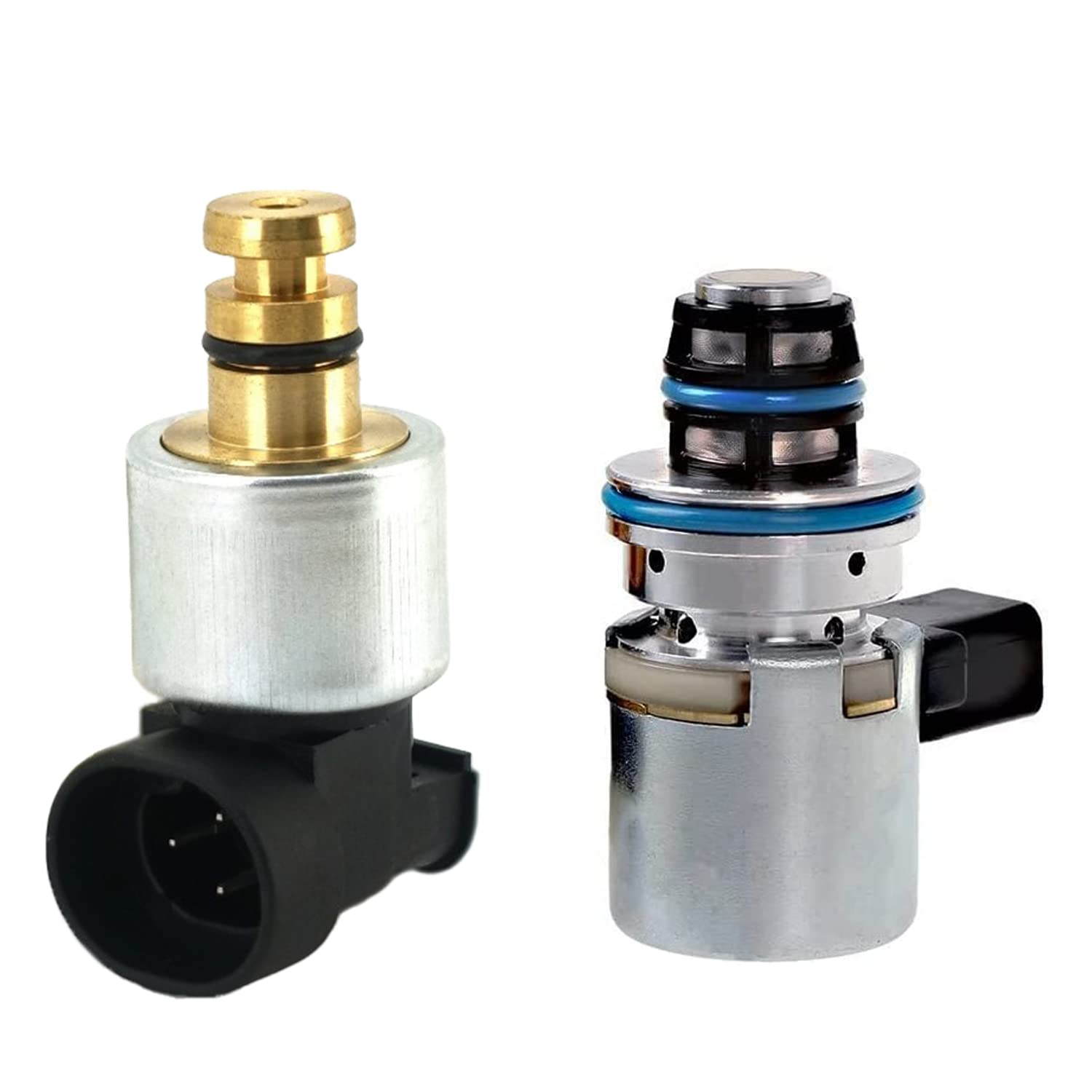
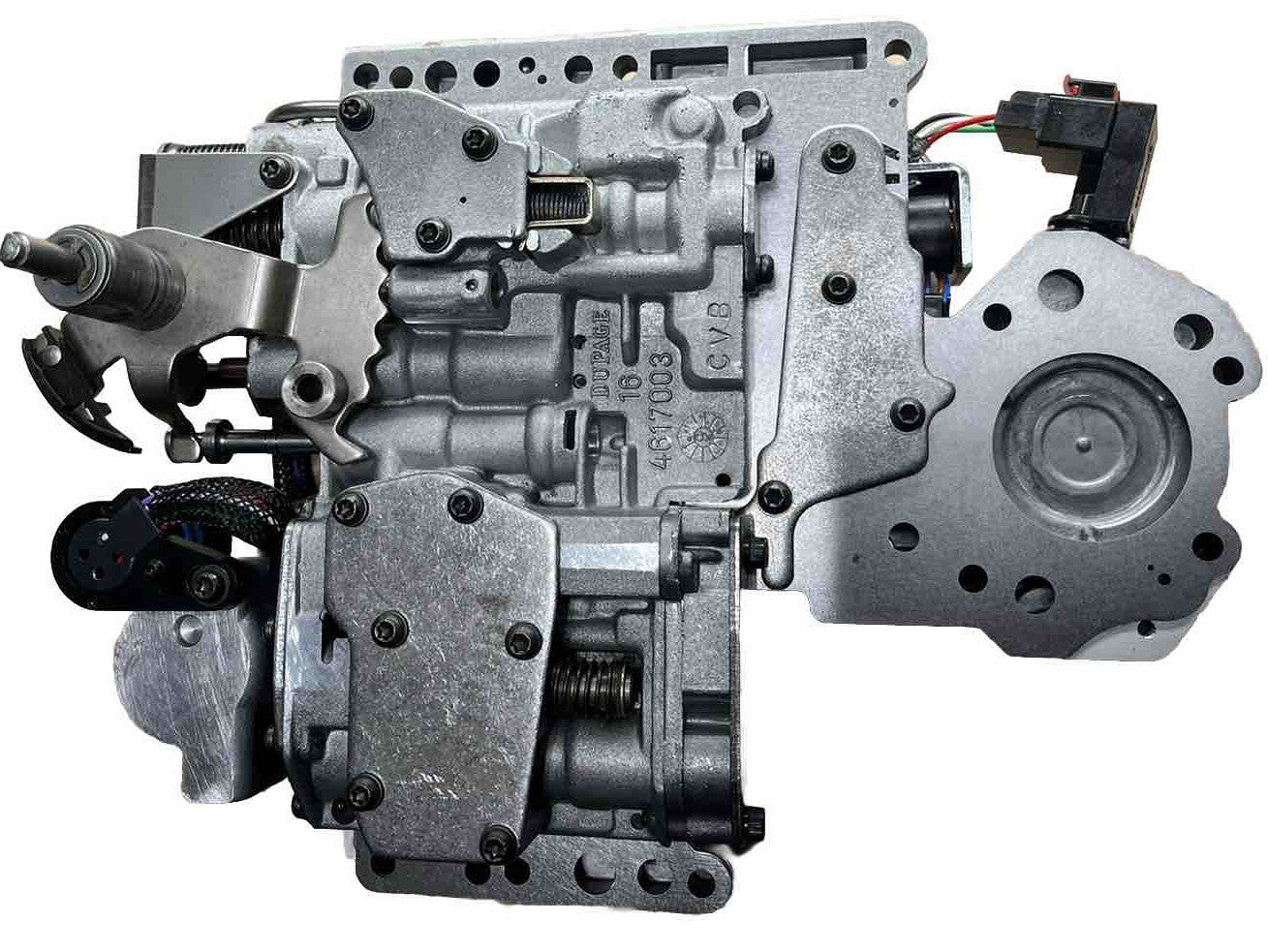
Per ATSG's 46RE/47RE/48RE overview, first through third gear on these units are controlled by an electronic governor solenoid mounted on the valve body, while the shift into fourth and the converter clutch each have their own separate solenoid.[1] That split is the whole diagnostic map:
- 1-2 and 2-3 shifts happen when governor pressure on one end of the shift valve beats throttle (TV) pressure and spring force on the other end. The PCM only builds governor pressure.
- The 3-4 shift and lockup are direct PCM commands through the overdrive and TCC solenoids. Those are electrical problems first.
- TV pressure comes from the throttle valve cable. Every 47RE behind a Cummins uses the cable. ATSG notes that Dodge did not replace the cable with the electronic Transmission Throttle Valve Actuator (TTVA) until the 2005 model year, on 48RE trucks with the 5.9L diesel.[1]
Dave Skora put it plainly in ATRA's GEARS magazine: these are basically hydraulically controlled transmissions for the first three ranges, and governor pressure strokes the shift valves, just like a TH350 or a C4.[2] So when a 2500 shifts late, early, or not at all between first and third, the only two questions are: is governor pressure right, and is TV pressure right?
Step 1: Put a Gauge on the Governor Port
Do not start with the code list. Skora's own advice in the October 2006 GEARS troubleshooting article is that working governor faults from the DTC tree usually takes longer than working them from the symptom, and that you should always verify the scan tool with a gauge, because the scan tool only knows what the computer tells it.[2]
Tee a 0-160 psi gauge into the governor pressure tap, hook up the scan tool, and take a drive. Watch three numbers side by side:
- Governor Desired (what the PCM is commanding the solenoid to make)
- Governor Actual / Measured (what the transducer is reporting back)
- Your gauge
All three should agree. Governor pressure should be zero at a stop and climb about 1 psi per mph up to about 40 mph. Above roughly 40 mph the system routes mainline pressure to the governor port, so it stops tracking road speed.[2] ATRA's chart for these units lists the transducer signal at about 0.60-0.66 V at zero psi, about 3.0 V at 60 psi and about 4.5 V at 110 psi, with a 5-volt reference.[2] (That chart was drawn up for the gas trucks' PCM pinout; use it for the transducer voltage curve, and pull pin locations for the diesel from the wiring diagram for your year.)
The single most useful line in that article: if governor pressure is okay, the electronics are not causing the shift problem. Look for sticking shift valves and burnt clutches, the same things you would chase on an old fully hydraulic unit.[2]
Step 2: Match the Gauge Reading to the Complaint
Won't upshift, stays in first
If Governor Desired is zero or barely moving, the PCM is not even trying, usually because it does not believe the truck is moving. Check the Output Shaft Speed sensor signal and its wiring. ATRA lists about 3.0 V AC on the OSS signal at 30 mph as a reference.[2] If OSS is good, check the transducer: a false high pressure signal can convince the PCM it is already making pressure when it is not. If Desired looks right but the gauge and Actual stay low, it is the governor solenoid itself or a blockage in its feed or outlet.[2]
Third-gear starts
This is the classic Cummins truck complaint, and it has two very different causes that feel identical from the seat. In limp mode the PCM de-energizes the governor solenoid, which opens it fully and dumps mainline into the governor circuit, so the truck starts in third.[2] But a cross-leak in the governor circuit or a sticking shift valve can give you third-gear starts with no limp mode at all. The PCM only goes to limp if it sets a code or loses power.[2]
Sort it with the gauge in Park, Reverse and Neutral. There should be zero governor pressure in those ranges because the manual valve closes the passage that feeds the governor circuit. Pressure there means a cross-leak in the case, valve body or governor body, and ATRA calls a loose or warped governor body a common problem.[2] If it is zero in P/R/N but pressure jumps the instant you pull it into Drive while stopped, look at the scan tool: indicated gear range should read Drive (anything else leaves the solenoid off), OSS must read 0 mph sitting still (AC noise or EMI on that circuit looks like road speed to the PCM), and transmission case connector pin 1 must have battery voltage with the key on. Lose power on pin 1 and the system goes to limp and sends full mainline to the governor circuit.[2]
On the Cummins trucks, that pin 1 feed runs through the transmission control relay. The governor-related DTCs in the P1760 range (P1763 and P1764 for governor pressure sensor voltage high and low, P1765 for the transmission 12-volt supply relay circuit) are the ones you will see most, but follow Skora's advice and let the gauge lead.
Goes into limp while driving
If it sets at low speed, compare gauge to scan tool again. If the gauge follows Desired right up until the code sets, the transducer is lying. If the gauge follows Actual, suspect the governor solenoid, a warped valve body adapter, or an internal leak.[2] If it sets in third or fourth, do a wide-open-throttle pull and watch Governor Actual. More than about 105 psi means excessive line pressure or a bad transducer.[2] Remember that above about 40 mph the governor solenoid is off and the transducer is really watching line pressure, so a hard-working Cummins truck with a valve body that has been "firmed up" can set a governor code simply because line pressure went too high.
Holds second at wide-open throttle, shifts when you lift
This one fools people into rebuilding valve bodies. A GEARS case study on a 2003 Dodge 5.9L diesel with the cable-operated TV (a 48RE, but the same governor and TV hydraulics as the 47RE) had exactly this complaint: 1-2 fine, no 2-3 at full throttle until the driver backed off.[3] The 2-3 valve needs governor pressure to overcome TV pressure, and at wide-open throttle TV is at maximum. Governor has to reach about 36 psi before the TV limit valve cuts TV off one land and lets the 2-3 valve stroke.[3]
The shop in that story had already overhauled the valve body and replaced the governor solenoid and transducer. The real problem was the brand-new aftermarket governor solenoid: on the scope its output was unstable and never reached line pressure when the PCM commanded 1% duty cycle. An OE solenoid fixed it, and the author notes that virtually every problem unit shifted normally after an OE swap.[3] If your truck started doing this right after a cheap solenoid went in, that is the first suspect.
Step 3: Check the TV Cable Before Anything Comes Apart
Governor pressure sets the speed side of the shift equation. The TV cable sets the load side. On a Cummins the cable runs from the transmission throttle lever up to the engine's throttle linkage, and the engine side moves very little at idle compared to a gas engine, so a small error matters.
The factory check is simple: ignition off, and the transmission throttle lever must move at the same moment the engine throttle lever moves off idle. No lag, no preload. A cable set too loose gives early, soft shifts and slip between shifts. Too tight gives delayed shifts and part-throttle downshifts that are too sensitive. The adjustment is made with the lock on the engine end of the cable housing, not by bending anything. Also check for a kinked housing or a cable that sticks and does not return.
Sonnax's vacuum test guide for the 46RE, 46RH, 47RE and 47RH ties the TV circuit to almost the same symptom list: its throttle valve kits are listed for shift timing concerns, throttle buzz, poor kickdown, late 2-3 shifts and an overly sensitive 3-2.[4] If the cable checks out and those symptoms remain, the wear is inside the valve body.
Step 4: Valve Body Wear That Mimics Electrical Faults
A high-mileage 47RE valve body wears in predictable places, and two of them produce shift complaints that look exactly like governor solenoid failures:
- Governor plug bores. Sonnax lists its governor bore plug kit (22771-14K) for a 1-2 shuttle, overly sensitive 2-3 and 3-2 shifts, difficulty adjusting shift timing with the TV linkage, and early upshifts.[4] Worn governor bores bleed governor pressure, and because leakage changes with fluid viscosity, the shift timing drifts as the truck warms up. A truck that shifts right cold and lazy hot, or the reverse, is a strong hint.
- 2-3 shift circuit. Sonnax's Zip Kit for the 46-47RH/RE is listed for late 2-3, overly sensitive 2-3, and release pressure build-up during lockup.[4]
One more trap when replacing parts: the governor pressure sensor changed. Sonnax's 42RE/46RE/47RE valve body identification guide splits 47RE valve bodies into 1999-and-earlier and 2000-and-later, and says the early pressure sensor has an oval-shaped connector while the late one is plastic and rectangular.[5] Order the transducer, solenoid kit or valve body for the connector that is actually on the truck, not just the model year on the paperwork.
Step 5: Overdrive and Lockup Complaints
Since 3-4 and lockup are commanded by their own solenoids, a truck that will not go into fourth, or drops in and out of overdrive, is an electrical check first: the overdrive switch, the overdrive solenoid circuit, and the transmission temperature reading. ATRA notes the PCM changes its shift strategy based on fluid temperature, and that starting in 1999 some trucks switched from a negative to a positive temperature coefficient sensor. If the temperature reads hot at a cold start and then "cools off" as you drive, somebody installed the wrong thermistor.[2] A wrong temperature reading will hold off overdrive and lockup on a perfectly good transmission.
Remember the hydraulic side too. On the 46/47RE the regulator only raises line pressure about 10-15 psi in third with the converter clutch applied and in fourth, versus about 22-28 psi on the 48RE, and the 46/47RE feeds the TCC solenoid from the 1-2 shift valve, so lockup is cancelled in manual 2 and 1.[6] With Cummins torque and that thin pressure margin, a worn 47RE often shows up as a soft 3-4 or a lockup that feels like a shift. Our 47RE won't shift into overdrive guide covers that side in depth.
The Fix: What to Replace for What You Found
- Gauge, Desired and Actual all agree and are correct: the electronics are fine. Check the TV cable, then vacuum test the valve body. Do not buy a solenoid.
- Desired correct, gauge and Actual low or unstable: governor pressure solenoid. Use an OE-quality unit; the GEARS case shows a new aftermarket part can be the fault.[3]
- Gauge correct, Actual wrong: governor pressure transducer (match the oval or rectangular connector).[5]
- No Desired: OSS sensor or wiring, then the PCM after checking all powers and grounds.[2]
- Governor pressure in Park, Reverse or Neutral: cross-leak. Check governor body bolts and flatness, then the valve body and case.[2]
- Timing drifts with temperature, 1-2 shuttle, early upshifts: governor plug bore wear. Ream and plug, or install a valve body with the bores already addressed.[4]
- Late or harsh shifts across the board: TV cable adjustment first, then the throttle valve and its bore.[4]
Keep the basics right while you are in there: Mopar ATF+4, the correct level checked hot, and both bands adjusted at every service. Our 47RE fluid type and capacity guide has the fill numbers, and the transmission fluid spec chart covers the rest of the fleet.
47RE governor pressure solenoids, transducers, solenoid kits and Sonnax-updated valve bodies for the 1996-2002 Ram 2500 Cummins — shipped fast from the USA.
Shop 47RE parts →Shop the part for this fix
When the gauge says the governor solenoid or transducer is the fault, this kit pairs the 4617210-style governor pressure solenoid with the pressure sensor so both ends of the circuit are new.
Shop the governor solenoid and sensor kit → All RE-series partsFAQ
Why does my 47RE Cummins start in third gear?
Either the PCM has gone into limp mode and turned the governor solenoid off, which sends full line pressure to the governor circuit, or there is a cross-leak or sticking shift valve. Put a gauge on the governor port: any pressure in Park, Reverse or Neutral means a cross-leak, often a loose or warped governor body. If it is zero there, check for codes, power at case connector pin 1, and a 0 mph OSS reading at a stop.
What should governor pressure read on a 47RE?
Zero at a stop, rising about 1 psi per mph up to about 40 mph. Above about 40 mph mainline is routed to the governor port, so the reading stops following road speed. The transducer signal is about 0.60-0.66 V at zero psi, about 3.0 V at 60 psi and about 4.5 V at 110 psi.
Why won't my 47RE shift into third until I let off the throttle?
At wide-open throttle TV pressure is at its maximum, and governor pressure has to reach about 36 psi before the TV limit valve lets the 2-3 valve stroke. If governor pressure is low or unstable, the shift waits until you lift. An unstable aftermarket governor solenoid is a documented cause, as is a TV cable adjusted too tight.
How do I know if the TV cable is out of adjustment on a 47RE?
With the ignition off, the transmission throttle lever should start moving at the same moment the engine throttle lever leaves idle. Too loose causes early, soft shifts and slip between shifts. Too tight causes late shifts and very sensitive part-throttle downshifts.
Do I need a new governor pressure solenoid or the sensor?
Compare Governor Desired, Governor Actual and a gauge on the governor port. If Desired is correct but the gauge and Actual are low or unstable, it is the solenoid. If the gauge is correct and Actual disagrees, it is the transducer. Match the sensor connector, since early 47RE sensors use an oval plug and 2000-up use a rectangular plastic one.
Related 47RE guides
Sources
- ATSG — 46RE/47RE/48RE Technical Manual (preview). Backs first through third gear being controlled by an electronic governor solenoid on the valve body, separate solenoids for fourth and the converter clutch, and the 2005 changeover from the throttle valve cable to the TTVA on 5.9L diesel 48RE trucks. https://atsg.biz/images/48REDEMO.pdf
- ATRA GEARS Magazine, October 2006 — "Troubleshooting the 42-47RE Transmissions," Dave Skora. Backs the governor Desired/Actual/gauge comparison, zero psi at a stop and about 1 psi per mph to about 40 mph, transducer voltages, OSS reference, limp mode and third-gear starts, zero governor pressure in P/R/N, loose or warped governor body, case connector pin 1, the 105 psi WOT check, and the NTC/PTC temperature sensor change. https://atracom.blob.core.windows.net/gears/2006/2006-10/2006_10_46.pdf
- ATRA GEARS Magazine — "It Can't Be the Solenoid... I Replaced It!" Backs the no 2-3 at wide-open throttle case on a cable-TV 5.9L diesel, the roughly 36 psi governor requirement before the TV limit valve cuts TV, and the unstable aftermarket governor solenoid corrected with an OE part. https://gearsmagazine.com/magazine/it-cant-be-the-solenoidi-replaced-it/
- Sonnax Tech Resources — "Chrysler 46RE, 46RH, 47RE, 47RH Vacuum Test Guide." Backs the throttle valve kit symptom list (shift timing, throttle buzz, poor kickdown, late 2-3, sensitive 3-2), the 22771-14K governor bore plug kit symptoms (1-2 shuttle, sensitive 2-3/3-2, hard to set timing with TV linkage, early upshifts), and the Zip Kit symptoms. https://www.sonnax.com/tech_resources/529-chrysler-46re-46rh-47re-47rh-vacuum-test-guide
- Sonnax Tech Resources — "Chrysler 42RE, 46RE, 47RE Valve Body Identification." Backs the 1999-and-earlier vs 2000-and-later 47RE valve body split and the oval (early) vs rectangular plastic (late) pressure sensor connector. https://www.sonnax.com/tech_resources/253
- Sonnax Tech Resources — "Dodge 48RE Hydraulic Features Revealed." Backs the 46/47RE line rise of about 10-15 psi in third with TCC on and in fourth versus 22-28 psi on the 48RE, and the 46/47RE TCC feed from the 1-2 shift valve with lockup cancelled in manual 2 and 1. https://www.sonnax.com/tech_resources/239-dodge-48re-hydraulic-features-revealed