A 48RE that sets P0740 usually drives fine. It shifts, it pulls, and the customer only notices the check engine light, a little more RPM on the highway than they remember, or a transmission that runs hot on a long tow. That is exactly why this code eats so many parts. It looks like an easy solenoid job, the solenoid gets replaced, and the light is back before the truck has made it through two tanks of fuel.
The code is not telling you a part failed. It is telling you the PCM asked for converter lockup and did not get it. Here is what the computer is actually measuring, the two code numbers you may see on these trucks, and the checks that separate a converter, a cooler circuit, a worn valve body, and a bad installation from each other before you spend money.
What Chrysler Says P0740 Means
Chrysler's own code table is more useful here than any generic code book. The 1998 Ram Truck service manual lists P0740 as "Torq Conv Clu, No RPM Drop At Lockup", set when the relationship between engine speed and vehicle speed indicates no torque converter clutch engagement. Read that carefully. The PCM is not measuring the solenoid. It commands lockup, watches engine RPM against road speed, and expects to see engine speed fall as the converter clutch takes up the slip. If the drop does not happen, P0740 sets.
Two related codes keep the diagnosis honest:
- P0743, TCC solenoid/trans relay circuits. Per the same manual, this is an open or shorted condition in the converter solenoid control circuit. That is your electrical code. If the wiring or the solenoid coil were dead, you would expect P0743, not just P0740.
- P1740, TCC or O/D solenoid performance. In the 1998 manual's Cummins code table, the slip fault is listed as P1740, a problem detected in the converter clutch and/or overdrive circuits, for diesel trucks with the 4-speed automatic. Depending on engine and calibration, a 48RE truck may show you either number.
Sonnax technical specialist Ed Lee, writing in Transmission Digest, treats 740 and 1740 as one family: both indicate excessive slip at the TCC clutch. The controller compares engine speed and output speed to calculate slip. If the slip criteria are met in a gear while TCC apply is not commanded, a gear ratio code sets instead. If the slip criteria are met while TCC apply is commanded, the 740 slip code sets. So the code means the converter clutch is not holding when the computer says it should be, for whatever reason.
Where the 48RE Is Different From a 46RE or 47RE
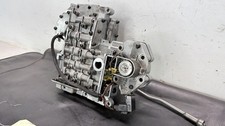
Most published RE-family TCC information is written around the 46RE and 47RE, so it helps to know what changed. ATSG's 46RE/47RE/48RE booklet lists the 48RE behind the 5.9L Cummins and the 8.0L V10 in 2003-2007 Ram pickups, and notes that 2005-up diesel trucks traded the throttle valve cable for an electronic Transmission Throttle Valve Actuator. The first three gears are still governor-controlled. Fourth gear and the converter clutch are controlled by their own separate solenoids on the valve body.
Sonnax's Jim Dial documented two 48RE hydraulic changes that matter for a lockup code:
- The TCC solenoid feed comes from the manual valve in any Drive position. On the 46/47RE it comes from the 1-2 shift valve, and manual 2 or manual 1 cancels lockup hydraulically. On the 48RE the TCC can apply in manual 2nd and 1st if the controller asks for it.
- The boost valve raises line pressure harder. With TCC on in 3rd or in 4th, the 48RE boost valve raises line pressure about 22-28 psi, compared with about 10-15 psi on the 46/47RE. Sonnax describes this as added TCC and overdrive clamping force for heavy-duty use and towing.
That second point is why a 48RE that sets P0740 is worth taking seriously. Chrysler built extra clamping force into this unit on purpose. If the converter clutch still slips with that boost behind it, something is leaking, restricted, or worn.
When the PCM Expects Lockup
You cannot judge a no-lockup complaint without knowing when lockup is supposed to happen. The 1998 Chrysler service manual describes the RE-family baseline: converter clutch engagement in third or fourth is controlled by the PCM from coolant temperature, engine RPM, vehicle speed, throttle position and manifold vacuum. With overdrive on, the clutch engages after the shift to fourth and above roughly 45 mph. With the overdrive switch off, it engages after the shift to third at roughly 35 mph at light throttle. Calibrations vary by year and engine, so treat those as the family baseline and confirm against the scan tool's commanded TCC state.
Temperature changes the rules. Per the same manual, the PCM will not allow converter clutch or overdrive engagement when fluid temperature is below about 50 degrees F. Above about 260 degrees F, it forces a 4-3 downshift and engages the converter clutch on the third-gear schedule. The temperature sensor in the governor pressure sensor has a thermistor of about 1000 ohms at room temperature. A cold morning drive that never commands lockup is not a P0740 truck. A truck that shows commanded lockup with no RPM change is.
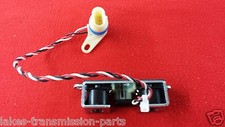
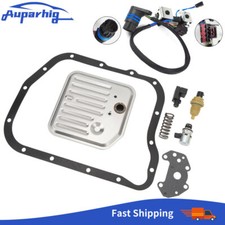
48RE Overdrive and Lock-Up Solenoid Assembly, 2003-2007
The overdrive and lockup solenoids on the 2003-2007 48RE come as one valve-body assembly. If your electrical testing does point at the solenoid, this is the assembly to replace while the pan is down.
Get the 48RE OD and lock-up solenoid assembly →Need a filter, valve body, pump or rebuild kit instead? Browse the full 48RE parts collection.
The Causes Worth Chasing
1. The converter clutch is worn out
On a high-mileage Cummins truck that has towed, this is the honest answer more often than not. The lockup clutch is a single friction surface handling diesel torque, and once it glazes or wears thin it will slip under load even with full apply pressure behind it. The 1998 manual is direct about the converter: it is a sealed, welded unit, not repairable, and serviced as an assembly. It must be replaced if a transmission failure leaves large amounts of metal or fiber contamination in the fluid. Clean up the other possibilities first, because a converter is the most expensive part on this list.
2. The converter is installed wrong, or its flow path is blocked
This one catches fresh rebuilds. In the same Transmission Digest article, Ed Lee describes the converter charge oil path: oil comes in through the turbine shaft, travels through grooves at the turbine hub bushing, fills the area in front of the lockup piston, and exits as lube oil. When TCC applies, charge oil goes to the cooler and release oil vents past the switch valve. A restriction in either path can keep the clutch from applying.
He gives the measurements for Chrysler rear-drive overdrive units:
- Converter depth. Push the converter back until the hub bottoms in the pump, then measure from the flex plate to the converter pad. It should be 0.125 to 0.250 inch. A bent flex plate that let the converter move rearward caused a 740 code in his example.
- Bushing height. The bushing should sit flush to 0.020 inch above the top of its bore. One installed 0.080 inch below flush blocked flow completely and caused a 740 code.
- Thrust washers. Solid brass, fiber or phenolic washers, or a one-side-grooved washer installed flat side up, can restrict the flow path.
If the code showed up right after a rebuild or a converter swap, start here before you blame the new converter.
3. The cooler circuit is restricted
Sonnax's Bob Warnke wrote the reference article on RE cooler and converter flow, and 740/1740 codes are first on his symptom list, along with TCC slip at high torque, delayed engagement, slow converter fill and excessive stall. The mechanism: with TCC not applied, cooler restriction acts on the largest diameter of the switch valve and pushes it toward its spring, and the spools can stage mid-circuit and restrict converter and cooler flow even further. Sonnax notes this can become a problem as cooler head pressure approaches 80 psi or more. The most common restrictions are the drainback fitting, auxiliary or radiator-mounted coolers, and the lines.
His verification test is simple: temporarily bypass the cooler circuit and retest. If the problem disappears, the restriction is in the cooler side. GEARS Magazine's Mike Brown gives a flow benchmark for these trucks: cooler line flow should be at least 1 gallon per minute, checked with a flow meter or into a bucket. He also gives the reason to care: each 20 degrees F above 200 degrees F roughly halves expected transmission life. A truck that slips the converter on a tow runs hot, and a hot truck kills the converter faster.
4. Apply pressure is bleeding off
Ed Lee's list of non-converter causes is short and worth memorizing: a restricted cooler or cooler line, fluid with incorrect frictional properties, worn valve body bores, and a pump with excessive clearance or cross leaks. Warnke adds that a worn converter cover bushing or crankshaft pilot can let the turbine shaft sealing rings cross leak, which affects both TCC apply and release oil. Chrysler's manual notes the switch valve directs apply pressure to the converter clutch in one position, releases it in the other, and limits converter pressure to 130 psi. A worn switch valve bore lets that oil leak straight past.
5. The wrong fluid
The RE family is built around ATF+4. A universal fluid with different friction properties can make a healthy converter clutch slip enough to set the code, which is why Ed Lee lists incorrect frictional properties as a non-converter cause. If you do not know what is in the pan, drain it and refill with ATF+4 before you condemn anything.
The Diagnostic Order That Works
- Pull all codes and freeze frame. P0743 with it means an electrical problem first. P0720 (low output speed sensor RPM above 15 mph) means the PCM's speed math is suspect, and the slip calculation is only as good as that signal.
- Check fluid level, condition and type. Burnt fluid points at a slipping converter. Unknown fluid gets replaced with ATF+4 before you go further.
- Road test with the scan tool. Warm the fluid past 50 degrees F, get into fourth above about 45 mph, and watch commanded TCC against engine RPM. A locked converter shows a clear RPM drop when lockup is commanded. Commanded lockup with no change is your P0740 condition.
- Check the solenoid circuit. Confirm the solenoid is getting power through the transmission control relay and that the PCM is grounding it. If the circuit is good and P0743 is not set, the solenoid is usually not the problem.
- Test cooler flow. At least 1 gallon per minute. Bypass the cooler temporarily and retest if flow is low or the code follows a heavy tow.
- If it is a fresh rebuild, measure converter depth and bushing height. 0.125 to 0.250 inch at the flex plate, bushing flush to 0.020 inch proud.
- Then look at the valve body and pump. Switch valve bore wear, pump clearance and cross leaks are what is left when the easy checks pass.
- Only after all of that, condemn the converter. If you replace it, flush the cooler and lines, because debris from a slipping clutch goes straight to the cooler and back into the valve body you just cleaned.
Worked in that order, most 48RE P0740 trucks turn out to be a tired converter, a cooler restriction, a valve body that leaks apply oil, or an installation error on a fresh rebuild. Worked backwards, they are a solenoid on the shelf and a customer who is back next month.
FAQ
What does P0740 mean on a 48RE?
Chrysler defines P0740 as torque converter clutch, no RPM drop at lockup. The PCM commanded the converter clutch on, then compared engine speed to vehicle speed and did not see the drop that a locked converter produces. It is a performance code, not a wiring code. An open or shorted TCC solenoid circuit sets P0743 instead.
Is P0740 the same as P1740 on a Dodge Ram?
They describe the same slip problem from two different code tables. In Chrysler's 1998 Ram service manual the gas-engine table lists P0740, while the Cummins table lists P1740 as TCC or overdrive solenoid performance. Sonnax and Transmission Digest treat 740 and 1740 as one family: excessive slip at the converter clutch while apply is commanded. Diagnose them the same way.
Can a new torque converter still set P0740?
Yes, and it happens more than people admit. Transmission Digest documented a 740 code caused by a converter hub bushing installed 0.080 inch below flush, which blocked converter flow completely, and another caused by a bent flex plate that let the converter sit too far back. Check converter depth and bushing height before blaming the new unit.
Can a restricted cooler cause P0740 on a 48RE?
It can. Sonnax notes that cooler restriction acts on the largest diameter of the switch valve and can stage it mid-circuit, which restricts converter and cooler flow, and lists 740 and 1740 codes among the symptoms. A quick test is to temporarily bypass the cooler circuit and road test again. If the code and the slip go away, the restriction is in the cooler side.
Should I replace the TCC solenoid first for P0740?
Only after the electrical and hydraulic checks point there. A dead solenoid circuit normally sets P0743, not P0740. If the solenoid clicks and the circuit is good, P0740 usually traces to converter clutch wear, low apply pressure from a worn pump or valve body, a converter flow restriction, or the wrong fluid. The solenoid is a cheap part, but swapping it blind is the most common comeback on this code.
Sources
- Chrysler — 1998 Dodge Ram Truck Service Manual (Group 21 Transmission and Group 25 Emission Control DTC tables), archive.org full text. Backs the P0740 definition (no RPM drop at lockup, engine speed versus vehicle speed), the P0743 open or shorted TCC solenoid circuit definition, the P1740 TCC or O/D solenoid performance listing in the diesel table, P0720 output speed sensor set condition, TCC engagement inputs and the roughly 45 mph fourth gear and 35 mph third gear schedules, the 50 F and 260 F temperature rules, the 1000 ohm thermistor, the 130 psi switch valve limit, and the converter being a sealed non-repairable assembly. archive.org
- Transmission Digest — Ed Lee (Sonnax), “740/1740 Codes and Chrysler Converter Flow,” September 2005. Backs 740/1740 indicating excessive TCC slip, the controller's slip calculation and how it chooses a ratio code versus a 740 code, the converter charge and release oil flow path, the non-converter causes (cooler restriction, wrong-friction fluid, worn valve body bores, pump clearance or cross leaks), the 0.125-0.250 inch converter depth check, the bent flex plate case, and the bushing height spec with the 0.080 inch below-flush failure. transmissiondigest.com
- Sonnax — Bob Warnke, “46-47RH/RE Cooler and Converter Flow,” December 2005. Backs the 740/1740 symptom list, switch valve staging from cooler restriction, the roughly 80 psi head pressure threshold, the common restriction points (drainback fitting, auxiliary or radiator coolers, lines), the cooler bypass test, and turbine shaft ring cross leak from a worn cover bushing or crank pilot. Written for the 46/47RE; the 48RE shares the converter and cooler circuit layout. sonnax.com
- Sonnax — Jim Dial, “Dodge 48RE Hydraulic Features Revealed.” Backs the 48RE TCC solenoid feed coming from the manual valve in any Drive position, TCC apply being possible in manual 2nd and 1st, the 22-28 psi line rise with TCC on versus 10-15 psi on the 46/47RE, and the added TCC and overdrive clamping force. sonnax.com
- ATSG — 46RE/47RE/48RE Technical Service Information booklet (2011), introduction and application chart. Backs the 48RE application in 2003-2007 Ram pickups with the 5.9L diesel and 8.0L V10, the 2005-up diesel Transmission Throttle Valve Actuator, governor control of first through third, and fourth gear and the converter clutch each having their own solenoid on the valve body. atsg.biz (PDF)
- GEARS Magazine (ATRA) — Mike Brown, “48RE/68RFE/AS68RC Transmission Overheating,” September 2019. Backs the minimum cooler line flow of 1 gallon per minute and the rule that each 20 F above 200 F roughly halves expected transmission life. gearsmagazine.com