The 4L60E has been behind GM trucks, vans and rear-drive cars since 1993, and it has a well-earned reputation for going a long way when it is maintained and failing early when it is not. The design is not the problem on most high-mileage units that come across my bench. The problem is a fluid service that got skipped at 100,000 miles, a valve body bore that wore out quietly with no code to flag it, or an accumulator piston that cracked years ago and has been bleeding pressure ever since. None of that shows up on a dipstick check. This is the checklist I actually run on a 4L60E past the 100,000-mile mark, in the order I run it, with the real wear points behind each item.
The short version: Service the fluid and filter with Dexron VI every 50,000 miles if the history is unknown. Check for TCC isolator/regulator bore wear if there is a harsh 1-2 shift or a P1870 code — GM has a TSB on exactly this. Inspect the forward accumulator piston (OE 8686017 / 24200126) for cracking, since it is a documented age-related failure, not just a high-mileage one. Pull the pan and read the fluid and the magnet before you decide anything else.


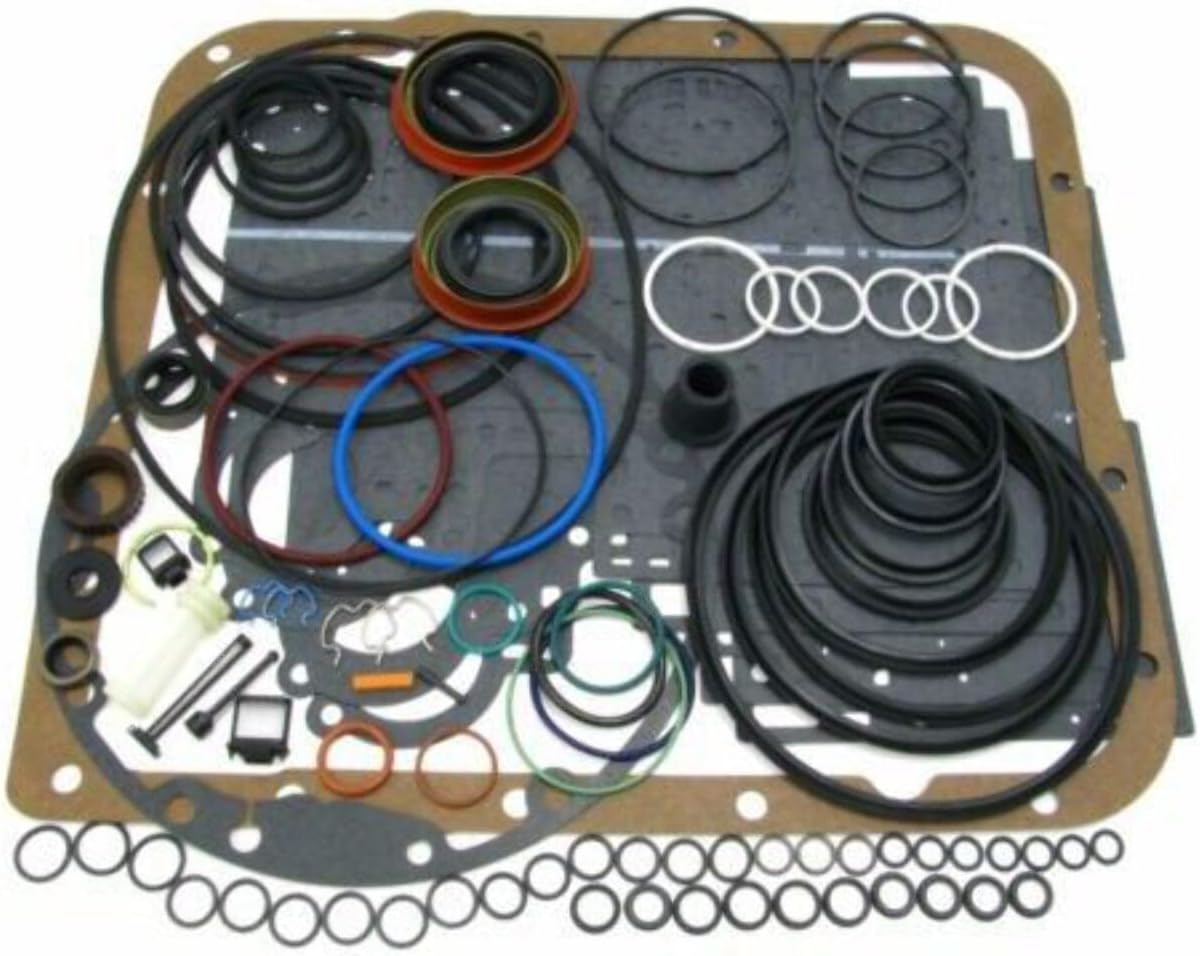
1. Fluid and Filter Service
Start here even if nothing is wrong yet. GM's published maintenance schedule calls for a transmission fluid and filter change every 100,000 miles under normal conditions, cut to every 50,000 miles under severe duty — and severe duty includes stop-and-go driving, hilly terrain, sustained highway speed, heavy loads, and temperature extremes above 100°F or below 0°F. Most daily-driven trucks and tow vehicles meet that severe-duty definition without the owner ever thinking about it. If you do not know the fluid history on a 4L60E you are inheriting, service it now on the severe-duty interval rather than waiting for a symptom to tell you.
Use Dexron VI. GM's GMW16444 global service-fill specification — documented in SAE technical paper 2006-01-3242, “General Motors DEXRON-VI Global Service-Fill Specification” — was built specifically to replace Dexron III while remaining backward-compatible with every application that originally called for it, the 4L60E included. There is no 4L60E application where staying on Dexron III is the better call once Dexron VI is available; GM's own specification work was aimed at exactly this kind of long-service backward fill.
A pan-drop service refills roughly 4 to 5 quarts; a full fluid exchange through the converter and cooler lines moves closer to 10 to 12 quarts. The pan drop is the more useful service on a high-mileage unit anyway, because you get to look at the pan contents before you button it back up. A thin film of gray clutch material on the magnet is normal wear. Visible metal flakes, a burnt smell, or chunks of friction material are not, and mean you are not done after a fluid service.
Torque the Pan Correctly
The pan bolts thread into an aluminum case, and the number is lower than most people guess. GM's Chevrolet Performance Supermatic spec sheet, which covers the 4L65-E and 4L70-E built on the same case and pan rail as the 4L60E, lists oil pan to case at 18 ft-lb (24 N·m) and the oil drain plug at 25 ft-lb (34 N·m) (GM Supermatic spec sheet). Snug every bolt by hand first, then bring them to spec in a crisscross pattern over two or three passes rather than torquing each one down in sequence on the first pass. That uneven first pass is what causes a leak six months later even with a good gasket. The same sheet lists DEXRON-VI as the fluid and a dry capacity of about 10.6 L (11.2 qt) with a 300 mm converter, which is why a pan drop takes back only a fraction of the total.
2. Check for TCC Isolator/Regulator Bore Wear (P1870, Harsh 1-2 Shift)
This is the single most common high-mileage complaint I see on a 4L60E that otherwise feels fine: a harsh 1-2 upshift, sometimes with the Check Engine light on and a P1870 code in history. GM's own technical service bulletin 01-07-30-023A covers this directly on 1996-2000 vehicles built before January 15, 1999, and traces it to wear in the control valve body bore that houses the TCC isolator and regulator valves — wear that results in poor or no TCC apply. These vehicles had typically covered more than 20,000 miles before the condition showed up, and the shift can be hard to reproduce below 200°F fluid temperature, which is why it gets missed on a short test drive. GM's fix in the bulletin is a control valve body with the revised TCC regulator and isolator valves.
The mechanism does not stop at the 1999 cutoff. Sonnax's technical writeup on 4L60-E series isolator bore wear explains that later EC3-controlled valve bodies have the same TCC regulator and isolator valves constantly oscillating in an aluminum bore, and that oscillation wears the casting and lets critical apply pressure exhaust — a leading cause of the P1870 slip code and overheated torque converters on units well past the original TSB's model years. The fix at the aftermarket level is to ream the worn bore and install a wear-resistant valve kit sized for it, which restores the seal without replacing the entire valve body casting.
If you are chasing a harsh 1-2 shift and the fluid service in step one did not fix it, this bore is where to look next, not the band or the accumulator spring.
3. Inspect the Accumulator Pistons
The 4L60E uses accumulator pistons to cushion the pressure rise during shift apply, and two of them are known high-mileage failure points. Per Sonnax, the forward accumulator piston — OE part number 8686017 or 24200126 — is a plastic piece that is known to crack with age, and the aluminum bore it rides in wears from the piston's constant reciprocation on every shift. Either failure drops fluid pressure at that bore, and the symptom is delayed engagement, a slipping shift, or a burnt clutch or band, not a stored code.
The 1-2 and 3-4 accumulator bores wear the same way for the same reason: thousands of reciprocating cycles over the life of the transmission eventually wear the piston pin bore interface, and once that wear reaches a critical point the pump cannot keep up with the fluid loss through it. None of this shows up as anything you can see from outside the case. If a unit has unexplained shift-quality complaints and the valve body bore in step two checks out fine, pull the accumulator pistons and look for cracking or scoring before you start chasing clutch packs.
4. Cooler Flow and Overheat History
Heat is what turns a normal-wear 4L60E into a short-life one. Before you put a serviced unit back into regular duty, confirm the cooler lines flow freely in both directions and that the external cooler, if the vehicle has one, is not restricted. This matters more than it looks. Sonnax's Gregg Nader explains that the pump, pressure regulator valve, converter, cooler and lube circuits work in series, with the PR valve acting as a priority valve that feeds line pressure first and the converter and cooler second. When pump output falls short, at hot idle or from internal leaks eating pump volume, line pressure can read close to normal while cooler flow drops to little or nothing (Sonnax, "Oil Flow in the Pump-PR-Converter-Cooler Lube Circuits"). A good pressure reading alone does not prove the cooler is getting oil. A transmission that has already overheated once — towing, a stuck thermostat, a collapsed cooler line — needs the cooler flushed before it goes back to work, since burnt clutch material circulating through a marginal cooler is exactly what takes out a fresh accumulator piston kit or a freshly serviced valve body a second time.
GM puts it more bluntly. Bulletin 02-07-30-052J, which covers 2011 and earlier GM cars and light trucks with automatic transmissions, warns that insufficient flow through the ATF cooling system will cause premature transmission failure. GM's J-45096 TransFlow tool measures flow against a minimum that depends on fluid temperature, and it won't run with supply oil below 65°F (GM 02-07-30-052J). The same bulletin lists the 4L60-E cooler connections: feed exits the transmission at the bottom fitting and return enters at the top. Lines swapped during a cooler or radiator job reverse flow through the cooler, so check the direction before you blame anything inside the unit. Without a flow machine, disconnect the return line at the transmission, run it into a container at idle in Park, and look for a strong, steady stream rather than a weak or pulsing one.
5. Line Pressure and a Road Test
Close out the checklist with a line pressure check and a full-range road test, not just a parking-lot shift check. Confirm pressure at idle in Drive and under load matches expectations for the unit's condition, and run the truck through every gear including a TCC lockup event on the highway. A unit that shifts fine at light throttle in the driveway can still be hiding a worn isolator bore or a cracked accumulator piston that only shows up under load or at full operating temperature.
For the deeper failure points once you are past routine service — slipping causes, valve body wear, and the P1870 code specifically — see our companion guides on 4L60E slipping causes and P1870 TCC slippage real causes.
4L60E Service and Rebuild Parts
Pan/filter service kits, Sonnax accumulator piston kits, and complete overhaul gasket and seal kits — shipped fast from the USA.
Shop 4L60E parts →FAQ
How often should I change the fluid and filter on a high-mileage 4L60E?
GM's own severe-duty schedule calls for a fluid and filter service every 50,000 miles, against 100,000 miles for normal use. On a 4L60E that is already past 100,000 miles with an unknown service history, treat it as severe duty and service it now rather than waiting for a symptom, since a pan drop also gives you a look at what is accumulating on the magnet and in the filter before it becomes a drivability complaint.
Should I use Dexron III or Dexron VI in a high-mileage 4L60E?
Use Dexron VI. GM's GMW16444 global service-fill specification, documented in SAE technical paper 2006-01-3242, was developed specifically to replace Dexron III as a backward-compatible service fluid, and GM approves it for every application that originally called for Dexron III, including every 4L60E. There is no scenario where sticking with Dexron III on a high-mileage unit is the better choice.
What causes a harsh 1-2 upshift or a P1870 code on a high-mileage 4L60E?
On 1996-2000 4L60E-equipped vehicles built before January 15, 1999, GM's own TSB 01-07-30-023A traces this directly to wear in the control valve body bore that houses the TCC isolator and regulator valves, which results in poor or no TCC apply. Sonnax's technical writeup on the same wear pattern explains the mechanism on later EC3-controlled valve bodies too: constant oscillation of those valves wears the aluminum bore and lets apply pressure exhaust, which is a leading cause of the P1870 slip code and overheated converters on units well past the 1999 cutoff.
Is accumulator piston wear a real high-mileage problem on the 4L60E?
Yes. Per Sonnax, the forward accumulator piston (OE part number 8686017 or 24200126) is known to crack with age, and the aluminum piston bores wear from the piston's constant reciprocation during every shift. Either failure mode loses fluid at that bore, which shows up as delayed engagement, slipping shifts, or burnt clutches and bands rather than a code you can pull.
How long should a 4L60E last if it is serviced on schedule?
In my bench experience, a 4L60E that gets a fluid and filter service every 50,000 miles and has its cooler flow checked after any failure routinely sees 150,000 to 200,000 miles before it needs internal work. The units that fail early are almost always the ones running original fluid past 100,000 miles or towing without a supplemental cooler, not units with a bad design.
Sources
- SAE International — Paper 2006-01-3242, “General Motors DEXRON®-VI Global Service-Fill Specification.” Backs the GMW16444 Dexron VI specification as a backward-compatible replacement for Dexron III across GM automatic transmissions, including the 4L60E. saemobilus.sae.org
- General Motors via NHTSA — Technical Service Bulletin 01-07-30-023A, “Harsh 1-2 Up-shift, SES, MIL, or CEL Illuminated, DTC P1870 Set (Replace Control Valve Body),” for 1996-2000 vehicles with 4L60-E transmissions built before January 15, 1999. Backs the control valve body bore wear at the TCC isolator and regulator valves, the P1870 code, the 20,000-mile-plus onset, the below-200°F reproduction difficulty, and the revised valve body repair. static.nhtsa.gov
- Sonnax — “Understanding 4L60-E Series Isolator Bore Wear & How to Address It,” January 27, 2025. Backs the EC3 valve body oscillation wear mechanism on later units, the P1870 slip code and converter overheating link, and the ream-and-sleeve repair approach. sonnax.com
- Sonnax — Forward Accumulator Piston parts reference, OE Part No. 8686017 / 24200126. Backs the forward accumulator piston cracking failure and the aluminum bore wear from piston reciprocation on 4L60-E, 4L65-E and 4L70-E units. sonnax.com
- General Motors / Chevrolet Performance — Supermatic Transmission (4L65-E/4L70-E) installation and specification sheet. Backs the oil pan to case torque of 18 ft-lb (24 N·m), the 25 ft-lb (34 N·m) drain plug, DEXRON-VI fluid, and the 10.6 L (11.2 qt) dry capacity with a 300 mm converter. chevrolet.com
- Sonnax — Gregg Nader, “Anatomy of a Transmission: Oil Flow in the Pump-PR-Converter-Cooler Lube Circuits,” September 2005. Backs the series relationship of the pump, PR valve, converter, cooler and lube circuits, the PR valve as a priority valve, and low cooler flow with near-normal line pressure when pump output falls short. sonnax.com
- General Motors Bulletin 02-07-30-052J (May 2015), “Automatic Transmission Oil Cooler Flow Test Essential Tool J-45096 TransFlow,” hosted by NHTSA. Backs coverage of 2011 and earlier GM cars and light trucks, insufficient cooler flow causing premature transmission failure, the temperature-based minimum flow and 65°F supply oil minimum, and the 4L60-E cooler line direction (feed bottom, return top). NHTSA: GM 02-07-30-052J (PDF)