A 4L60E that makes noise is not automatically a 4L60E that is dying. Some of the most common complaints on this transmission — a whistle that only shows up in 3rd gear, a single clunk on the 2-3 upshift — are documented, non-destructive characteristics that GM itself has written service bulletins about. Other noises, like a steady pump whine or a rattle that tracks with load, point at real wear that gets worse if you ignore it. The job is sorting which is which before you start pulling parts.
This guide works through the three places transmission noise actually comes from, then maps the specific whine and clunk complaints GM, Sonnax and ATRA have documented on the 4L60E to their real causes, so you are not replacing a pump over a sound the factory already explained.
Three Sources of Noise, and How to Tell Them Apart First
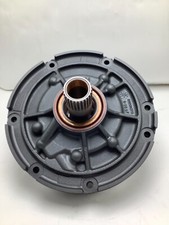
Every automatic transmission makes noise from one of three places: the torque converter, the pump, or the planetary geartrain. ATRA's own technical magazine, Gears, lays out a field test for isolating which one you have before you touch anything. With the vehicle stationary, listen in Park and Neutral first. A noise that is present there, with the engine running, and that rises in pitch as you raise engine RPM, is the pump — it spins constantly any time the engine runs, even before the vehicle moves, and most transmissions run higher line pressure in Reverse, which is why pump noise is often loudest there.
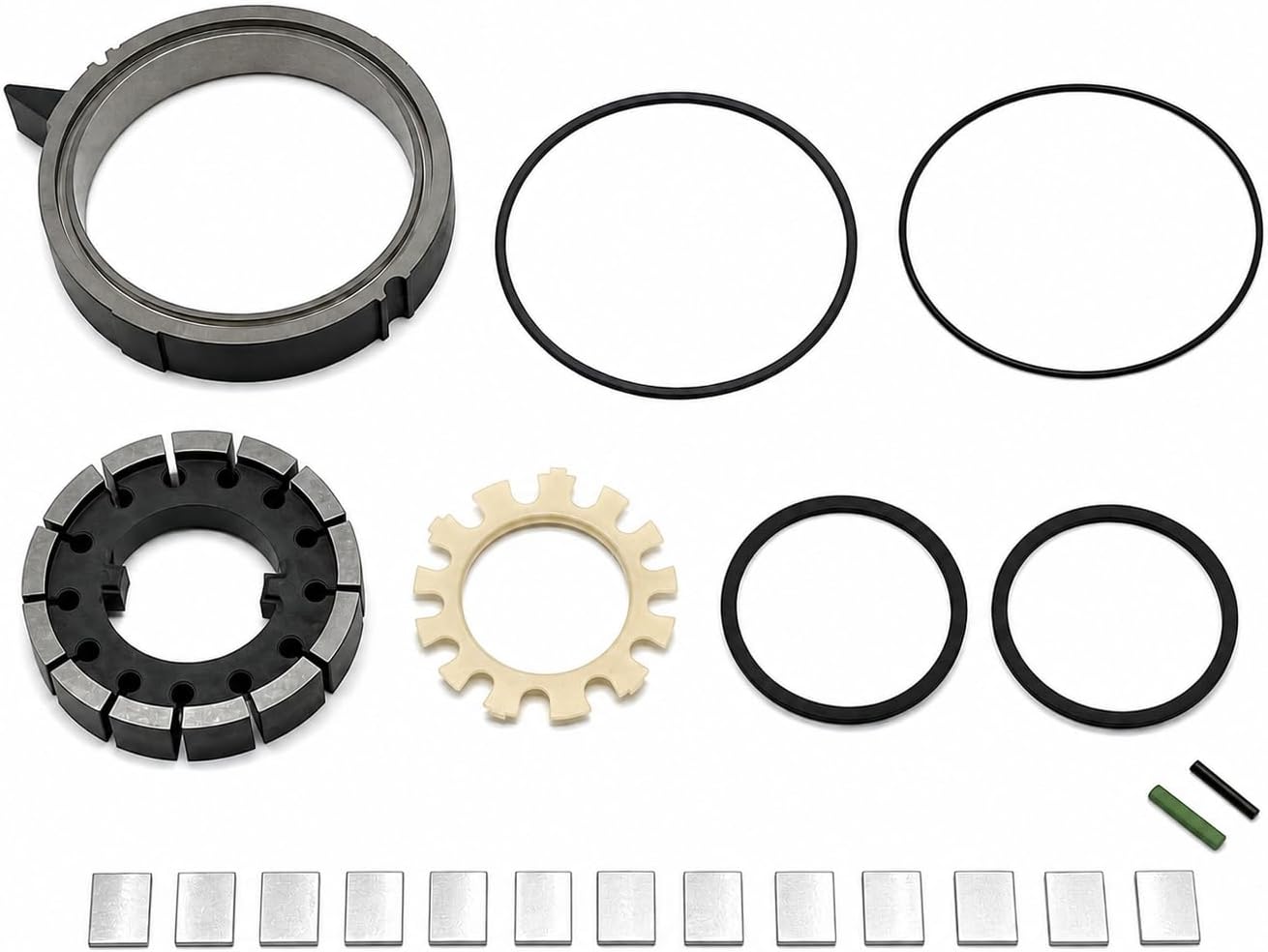
On a 4L60E, a pump whine that is loudest in Reverse is often more than worn gears. Sonnax lists "excess pump noise" alongside erratic line pressure, low line rise, 3-4 clutch failure and reverse chatter as symptoms of a worn pressure regulator valve bore. Per Sonnax, that bore wear lets oil leak and contributes to erratic pump slide movement. Sonnax's confirming test is a dyno or gauge check that shows line pressure 50 to 100 psi below spec in Reverse, or a vacuum test at the regulator bore that will not hold the minimum. The repair is an oversized regulator valve (Sonnax 77917-07) in a reamed bore. Because the casting is hard, Sonnax recommends its carbide reamer kit.
Torque converter noise, per the same method, usually shows up differently: quiet in Neutral, then present once you are in gear and accelerating gently, growing louder as you add throttle. Geartrain noise is the hardest to isolate because different planetary members do the work in each gear; the tell is that it changes character, or disappears entirely, in a 1:1 gear, since nothing in the planetary set is working against anything else at that ratio. A noise that sounds identical in every gear and does not care about load is almost never the geartrain.
Worn or collapsed engine and transmission mounts are worth ruling out too — they are there specifically to isolate normal internal transmission noise from the cabin, and a bad mount can turn an ordinary sound into a customer complaint that has nothing to do with the transmission's internal condition.
Whine in 3rd Gear Only: GM Already Documented This
If the whine or whistle is specific to 3rd gear, worse while coasting, and sounds like a tea kettle, stop guessing: GM wrote this up directly. Preliminary Information bulletin PIP5059, issued September 2012, covers 2010-2013 Chevrolet Colorado, Express and Silverado and GMC Canyon, Savana and Sierra models equipped with the 4L60E (RPO M30). The bulletin describes customers commenting on a whistle or whine in 3rd gear, most prevalent while coasting, present whether the torque converter clutch is engaged or not, with the noise much less noticeable in 2nd or 4th gear and absent in 1st.
GM's own stated cause is machining marks on the low roller clutch inner race, a specific internal part, not generalized wear. The recommended fix is to inspect that race for machining marks or damage and replace it as necessary, which means the repair is targeted and does not require condemning the pump, the valve body, or anything else in the unit. If your 4L60E whine matches this description exactly — gear-specific, worse coasting, absent in 1st — this bulletin is the fastest path to the actual part.
Pump Whine Is a Different Animal
A whine that is present in Park, in every gear, and that climbs in pitch with engine RPM is pointing at the pump, not the low roller clutch race. The 4L60E pump sits at the front of the case and is driven directly by the torque converter hub, so it spins whenever the engine runs, which is exactly why pump wear shows up as noise before the vehicle even moves. Pump-related whine commonly travels with other symptoms the PIP5059 condition does not produce: delayed engagement, slipping under load, and line pressure that drops further as the fluid heats up. If you have those symptoms alongside the whine, you are looking at bushing and rotor clearance wear inside the pump itself, not a 3rd-gear-only cosmetic noise.
The 2-3 Clunk GM Calls Normal
A single, repeatable clunk on the 2-3 upshift, or on the 3-2 downshift, is one of the most common calls a 4L60E shop gets — and one of the least often a real problem. During that shift, the 2-4 band releases at essentially the same moment the 3-4 clutch applies, and the timing of that handoff produces a brief torque reversal at the output shaft. GM's own technical service bulletin on this exact complaint, 01-07-30-042 (revision G, September 22, 2011, covering 2012 and earlier 4L60-E, 4L65-E and 4L70-E equipped cars and light trucks, as summarized in Motor Age by ATSG president Wayne Colonna), states plainly that this is a normal condition and that no repair should be attempted; GM also notes it can be more pronounced on 4WD trucks because of the additional mechanical tolerance in the transfer case.
Do not confuse that clunk with a 2-3 flare, where engine RPM jumps between gears. A flare means the band let go before the 3-4 clutch caught. Sonnax's Gregg Nader, writing in Transmission Digest, lists low line pressure and internal leaks of 3rd gear oil as the common causes, and documented a case where a computer that shut the B shift solenoid off too slowly (about two seconds versus a fraction of a second for the A solenoid) produced the same flare. Watch input and output speed on the scan tool through the shift: a clean ratio change with a noise is the bulletin condition; an RPM jump is a hydraulic or electrical fault.
The practical test: does the clunk happen on that one shift, every time, and nowhere else? If yes, you are very likely dealing with the documented condition above, and chasing it with a valve body or band replacement is how comebacks happen on a transmission that was never broken. A clunk that shows up on multiple shifts, that is accompanied by a delayed engagement or a flare, or that is getting worse over time, is not this condition and should be diagnosed as a real fault.
Clunk or Rattle That Tracks With Load: Look at the Geartrain
A clunk or rattle that changes with load, that is present across multiple shifts rather than one specific shift, or that is joined by extra play, points toward wear inside the planetary geartrain rather than the documented output-shaft torque reversal above. Sonnax's own technical documentation on the 4L60-series identifies bushing failure and reaction carrier shaft damage as a known wear pattern across the 4L60, 4L60E, 4L65E and 4L70E family. Its fix is an oversized reaction sun gear bushing, one and a half times the width of the factory part, built from steel-backed bronze and precision machined to hold minimal clearance against the mating shaft, specifically to stop the shaft from moving more than it should inside a worn bore.
That extra shaft movement inside a worn bushing bore is what turns into noise and clunk under load: the shaft has room to shift position slightly every time torque is applied or released, and that movement is what you hear. It is a wear-driven, mileage-related condition, different in both cause and severity from the documented 2-3 clunk above, and it does not go away on its own.
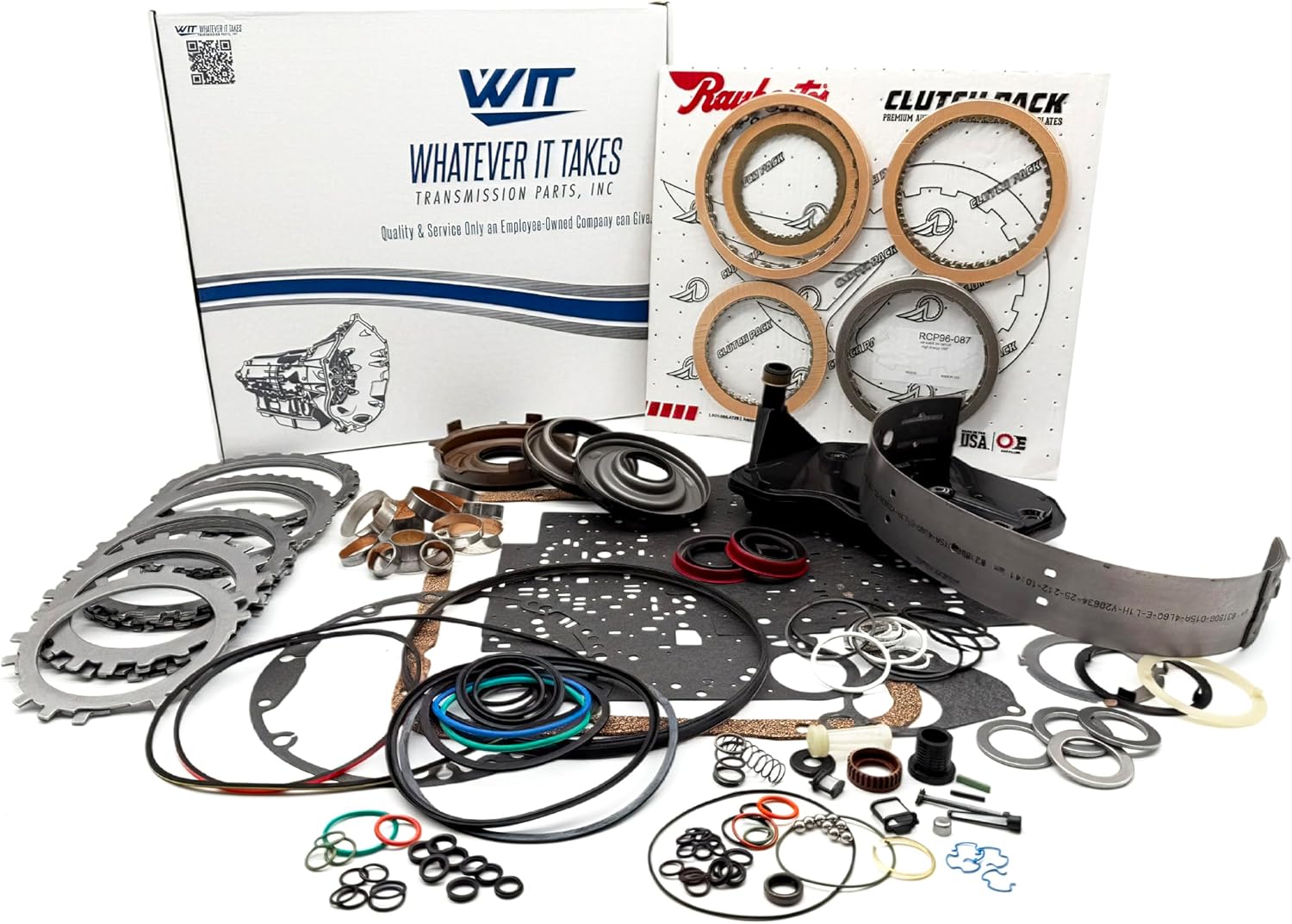
4L60E / 4L65E Super Master Rebuild Kit
If the geartrain itself is the noise source — worn bushings, tired clutch packs, a reaction shell showing its age — a full internal rebuild with Raybestos clutches, steels, pistons and a Borg Warner band addresses the wear as a set instead of chasing one part at a time.
View the 4L60E Super Master Rebuild Kit →When It Is Not Wear: The Bang That Means Stop Driving
A single loud bang or grinding noise, followed immediately by a total loss of drive in every gear, is not on the same spectrum as the whine and clunk conditions above. That combination, especially paired with noticeable play when you wiggle the driveshaft or axle by hand, points to a broken output shaft or a failed U-joint rather than routine internal wear. This is a tow-it condition: continuing to drive on a shaft that has already partially failed risks turning a parts-and-labor repair into a full driveline replacement.
Diagnostic Order
- Confirm fluid level and condition at operating temperature first. Low fluid or the wrong fluid will produce noise and symptoms that mimic worn hardware, and it is free to check.
- Listen in Park and Neutral with the engine running. Noise present here that climbs with RPM is the pump.
- Note exactly which gear the noise occurs in. A whistle isolated to 3rd gear, worse coasting, matches GM's PIP5059 condition and the low roller clutch inner race.
- If the complaint is a single clunk on the 2-3 upshift or 3-2 downshift only, compare against GM bulletin 01-07-30-042 before recommending any repair, and confirm on the scan tool that there is no RPM flare through the shift.
- If noise or clunk tracks with load, happens on multiple shifts, or is joined by extra driveline play, inspect the reaction sun gear bushing and shaft for wear per Sonnax's documented failure pattern.
- A bang or grinding sound with total loss of drive and detectable driveshaft play means stop driving and inspect the output shaft and U-joints before anything else.
Most 4L60E noise complaints resolve in the first three steps above, for free, because they match a condition GM has already written down. The ones that do not match — noise that tracks load, happens on more than one shift, or shows up with real driveline play — are the ones worth opening the unit for.
FAQ
Why does my 4L60E only whine in 3rd gear?
GM documented this exact complaint in Preliminary Information bulletin PIP5059 for 2010-2013 Colorado, Express, Silverado, Canyon, Savana and Sierra models with the 4L60E (RPO M30). The bulletin describes a whistle or whine most noticeable while coasting in 3rd gear, present whether the torque converter clutch is locked or not, and traces it to machining marks on the low roller clutch inner race. It is a specific, documented wear pattern tied to one part, not generic pump or bearing wear, which is why it shows up in 3rd and barely at all in 1st.
Is the clunk on a 2-3 upshift something I need to fix?
Usually not. GM's long-running service bulletin on 2-3 upshift and 3-2 downshift clunk explains that releasing the 2-4 band while applying the 3-4 clutch creates a brief torque reversal at the output shaft, and GM's own position is that this is a normal characteristic with no repair needed. It can be more noticeable on 4WD trucks because of extra driveline tolerance in the transfer case. A single, repeatable clunk only on that one shift is this condition. A clunk that happens on multiple shifts, gets worse, or is joined by a delay or slip is a different, real problem.
What is the difference between pump whine and gear noise?
Per the diagnostic method published in Gears Magazine, pump noise is present in Park and Neutral with the engine running, rises in pitch with engine RPM, and is usually louder in Reverse because most transmissions run higher line pressure in that gear. Planetary geartrain noise, by contrast, changes or disappears depending on which gear you are in, because different planetary members are driving or held in each gear. If a noise is identical in Park, Drive and Reverse and tracks engine RPM, start at the pump; if it changes character gear to gear, look at the geartrain instead.
Can worn bushings cause a rattle or clunk inside the 4L60E?
Yes. Sonnax's own tech documentation for the 4L60-series identifies bushing failure and reaction carrier shaft damage as a known wear pattern in the 4L60, 4L60E, 4L65E and 4L70E family, and sells an oversized wide reaction sun gear bushing specifically to stop it. A worn bushing lets the shaft move more than it should inside its bore, which shows up as extra play and noise under load or on a shift, separate from both pump whine and the documented 2-3 clunk.
What noise means the transmission is about to leave me stranded?
A single loud bang or grinding noise followed by a total loss of drive in every gear, especially paired with noticeable play when you wiggle the driveshaft or axle, points to a broken output shaft or a failed U-joint, not routine wear. That is a tow-it, do-not-drive-it symptom, different in kind from the whine and clunk conditions covered above, which are gradual and usually still drivable while you get them diagnosed.
Sources
- General Motors — Preliminary Information Bulletin PIP5059, "Whistle Or Whine Noise In 3rd Gear May Be More Pronounced On A Coast," September 2012. Backs the model coverage (2010-2013 Chevrolet Colorado, Express, Silverado; GMC Canyon, Savana, Sierra, with the 4L60E/RPO M30), the exact symptom description (tea-kettle whistle, worse coasting, present with TCC engaged or disengaged, much less noticeable in 2nd/4th, absent in 1st), and the documented cause (machining marks on the low roller clutch inner race). static.nhtsa.gov (PDF)
- Gears Magazine (ATRA) — "The Sound of Silence: Diagnosing Transmission Noises," January/February 2025. Backs the three-source noise model (torque converter, pump, geartrain) and the field test for isolating each: pump noise present in Park/Neutral and rising with RPM, louder in Reverse on higher line pressure; converter noise appearing under load in gear; geartrain noise changing or disappearing in a 1:1 ratio gear; and worn mounts producing false noise complaints. gearsmagazine.com
- Sonnax — Tech Tip 677, "How to Install Sonnax 4L60-Series Wide Reaction Sun Gear Bushing." Backs the documented wear pattern (bushing failure and reaction carrier shaft damage) across the 4L60, 4L60E, 4L65E and 4L70E family, and the replacement bushing's specifications (one-and-a-half times OE width, steel-backed bronze, precision-machined for minimal shaft clearance). sonnax.com
- Fewkes, Calcut and Willis (General Motors), “DEXRON-VI: A Revolutionary Specification” (SAE 2006-01-3242), SAE Powertrain & Fluid Systems Conference, October 2006. Backs the correct current fluid specification for GM stepped-gear automatics including the 4L60E: GM factory-filled DEXRON-VI starting in early 2005 because it clearly exceeded DEXRON-III performance on friction durability, viscosity stability, aeration/foam control and oxidation resistance, then upgraded the service-fill spec to DEXRON-VI so an equivalent fluid is available for repairs — relevant to ruling out low or incorrect fluid before treating a noise as a hardware fault. The Mobil DEXRON-VI product page previously cited here now returns an access-denied error; this cites GM's own specification paper instead. saemobilus.sae.org
- Sonnax — Oversized Pressure Regulator Valve 77917-07 (4L60-E, 4L65-E, 4L70-E pump). Backs pressure regulator bore wear causing leakage and erratic pump slide movement; the symptom list including excess pump noise, erratic line pressure, low line rise, 3-4 clutch failure and reverse chatter; the 50-100 psi low Reverse line pressure test; and the carbide reamer recommendation for the hard pump casting. sonnax.com
- Motor Age (VehicleServicePros), Wayne Colonna — "A Problem That Isn't a Problem," January 2020. Backs GM bulletin 01-07-30-042G (September 22, 2011) covering 2012 and earlier 4L60/65/70-E units, the 2-4 band release and 3-4 clutch apply timing on the 2-3 and 3-2 shifts, the momentary output shaft torque reversal, the note that it can be worse on 4WD due to transfer case tolerances, and GM's "no repairs should be attempted" direction. vehicleservicepros.com
- Transmission Digest, Gregg Nader (Sonnax TASC Force) — "4L60-E Flares on 2-3 Shift (Now What?)," November 2006. Backs low line pressure and 3rd gear oil leaks as common 2-3 flare causes, and the computer case where the B solenoid took about two seconds to drop out, letting the band release before the 3-4 clutch applied. transmissiondigest.com